


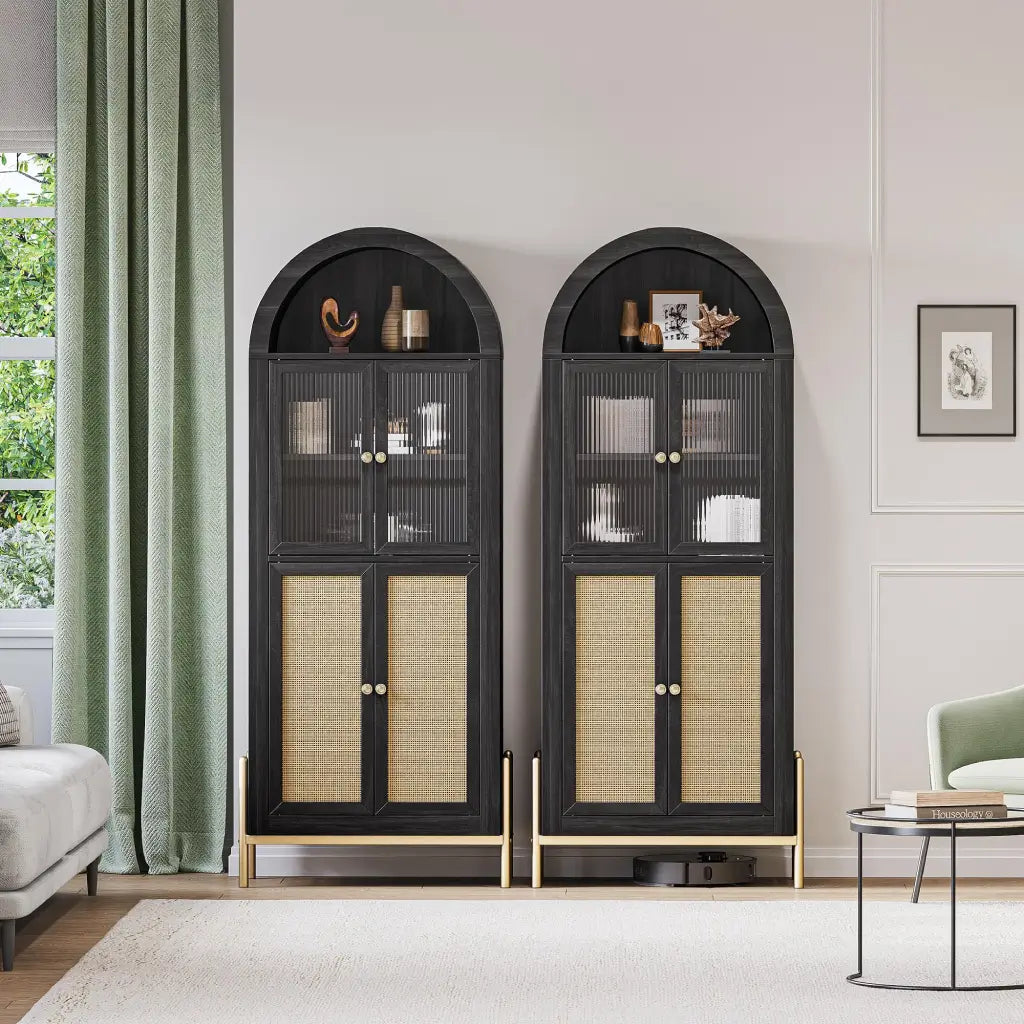
Standard bookcase dimensions typically span 10 to 12 inches in depth, 24 to 48 inches in width, and anywhere from 36 to 84 inches in height. The range exists because no single size works for every room, ceiling height, or collection.
Getting the dimensions wrong tends to trigger a chain reaction: a shelf too deep crowds a narrow hallway, a width that looks fine on paper bows under dense hardcovers within a year, and a unit too tall turns the top shelves into dead storage. This guide walks through each dimension so you can shop with specific numbers in mind.
Standard bookcase dimensions:
- Depth: 10–12 inches (fits most hardcovers)
- Width: 24–48 inches (varies by room size)
- Height: 36–84 inches (most common residential range)
- Best all-around size: approximately 60" H × 24–36" W × 10–12" D
What Are Standard Bookcase Dimensions?
Standard sizing emerged from two practical realities: the average dimensions of common book formats and the proportions of most U.S. residential rooms. A 10-to-12-inch depth clears the spine of a standard hardcover with about an inch to spare. Widths between 24 and 36 inches fit naturally in bedrooms and alongside doorways without blocking them.
The table below groups common dimension ranges by size category so you can quickly identify which fits your room and storage needs.
Matching the bookcase's overall volume to the room's square footage matters more than any single measurement. A 7-foot-tall, 48-inch-wide unit placed in a 10-by-10 bedroom creates visual weight that makes the room feel smaller. In a spacious living room or study with 9-foot ceilings, that same unit looks proportional and anchored.
| Height Range | Best For | What to Keep in Mind |
| Under 36 in | Under windows, kids’ rooms, bedside storage | Easy to reach, keeps sightlines open |
| 36–72 in | Living rooms, bedrooms, home offices | Best all-around range for most homes |
| Over 72 in | Large collections, high-ceiling rooms, library walls | Top shelves are better for decor or less-used books |
How Tall Should a Bookcase Be?
Ceiling height and daily access narrow your height options fastest. A good starting point: subtract 6 to 12 inches from your ceiling height and treat that as the maximum for any freestanding unit. This gap prevents the bookcase from feeling jammed into the space and leaves room for crown molding or minor floor-level variations.
Who uses the bookcase and how often also shape the decision. The three height ranges below cover most residential scenarios.
Short Bookcases (Under 36 Inches)
Under-36-inch bookcases fit naturally in children's rooms, where the goal is independent access without climbing. At that height, a young child can reach the top shelf safely, and the unit doubles as a display surface for toys or a lamp.
These units also work well beneath windows, where taller furniture would block natural light. Against an otherwise empty wall, a row of two or three short bookcases provides the same linear storage as one tall unit without creating a visual barrier across the room.
Medium Bookcases (36–72 Inches)
This is the most common residential height range and, for most rooms, the safest starting point. A 60-inch unit fits comfortably in a bedroom or living room without dominating the surrounding furniture, and its top shelf sits within easy reach for most adults.
For a home office where you access books from a seated position, keep the maximum at 60 inches. Reaching above shoulder height while seated at a desk becomes awkward quickly, and a shelf you cannot reach comfortably tends to collect clutter rather than books you use.
Even at medium heights, families with young children should anchor the unit to the wall. A 60-inch bookcase can tip if a child grabs a lower shelf to pull themselves up, and wall anchoring takes under ten minutes.
Tall Bookcases (Over 72 Inches)
Tall bookcases are the best solution for housing large collections in rooms with high ceilings, and they work particularly well when you want a dramatic library wall effect. Many tall bookcases in this range measure 30 to 36 inches wide, with depth typically staying near 10 to 12 inches unless the unit is designed for larger formats.

Reserve the top shelves for decorative items, framed photos, or books you rarely open. Anything above 72 inches requires a step stool for most adults, so treating that zone as display space rather than active storage makes daily use much easier.
How Wide Should a Bookcase Be?
| Width Range | Best For | What to Keep in Mind |
| Under 24 in | Tight corners, small rooms, apartments | Good for compact spaces, but holds less |
| 24–36 in | Bedrooms, home offices, general book storage | Safe starting point for most rooms |
| 36–48 in | Living rooms, larger walls, mixed book-and-decor use | Check shelf support if storing heavy books |
| Over 48 in | Large walls and expansive storage setups | Wider shelves may need center support to prevent sagging |
Width should scale to the room. Bedrooms typically accommodate 24 to 36 inches without the unit overpowering the space. Living rooms can take 48 inches or more, especially when the goal is to fill a long blank wall. If you are comparing bookshelf dimensions across multiple retailers, width is usually the first number listed and the easiest to check against your available wall space.
The risk with wider shelves is structural, not just visual. Shelves spanning more than 36 inches in lower-cost materials like particleboard are prone to bowing under heavy loads if there is no center support. Solid wood or plywood construction holds up better across the same span, but that difference is reflected in the price.

Narrow Bookcases (Under 24 Inches)
Narrow bookcases are best suited for what designers call dead zones: the landing at the top of a staircase, the wall beside a doorframe, or a 90-degree corner where standard furniture cannot fit. A width of 15 to 20 inches also works well for media storage, holding CDs, DVDs, or small collectibles in spaces where a standard unit would block traffic flow.

Standard to Wide Bookcases (24–48+ Inches)
Wider units are the natural choice for filling a large blank wall, but they often need a vertical center support to prevent shelf deflection under heavy loads. Without it, a 48-inch particleboard shelf loaded with hardcovers can bow noticeably within a year.
If a single wide unit feels like too much commitment, there is a practical middle ground. A cost-effective alternative is to combine two or three standard-width units side by side. The result carries the visual weight of a built-in bookcase at a fraction of the cost of permanent carpentry, and each unit can be repositioned independently if you move.
How Deep Should a Bookcase Be?
| Depth Range | Best For | What to Keep in Mind |
| 6–8 in | Paperbacks, decor, tight walkways | Too shallow for many hardcovers and larger books |
| 10–12 in | Most hardcovers, general home use | Best all-around depth for standard book storage |
| 13–15 in | Binders, oversized books, mixed storage | Takes up more floor space, so check walkway clearance |
A 12-inch depth is the practical standard for most hardcover books, clearing the average spine with about an inch of margin. Before settling on a depth, measure your largest items (an oversized art book, a binder, or a vinyl record) and confirm that none of them overhang the shelf edge. An overhanging spine creates a snag point and increases the chance of a book falling when you brush past.
Depth also determines how much floor space the bookshelf consumes in front of it. Maintain at least a 30-to-36-inch circulation path between the front edge of the bookcase and any nearby furniture or doorway to keep the walkway comfortable and accessible.
For multi-use spaces where you want enclosed storage alongside open shelving, deeper display cabinets with doors typically offer around 15 to 16 inches of depth, enough for bulky items while protecting fragile pieces from dust and handling.
What Bookcase Shelf Spacing Do You Need?
Vertical spacing between shelves determines how much of the bookcase's height you actually use. Standard shelf spacing is 10 to 12 inches (about 25 to 30 cm), which fits most paperbacks and hardcovers. Decorative items like vases, framed photos, or small plants often need 12 to 15 inches to clear properly.
The table below maps item types to recommended spacing so you can estimate how many usable shelves your unit needs.
| Item Type | Recommended Shelf Spacing | Keep in Mind |
| Paperbacks | 8–10 in | Usually fit well on shallow to standard shelves |
| Hardcovers | 10–12 in | Best match for most standard bookcases |
| Oversized, art, and coffee table books | 13–15+ in | May also need extra shelf depth |
| Decor and display items | 12–15 in | Adjustable shelves make styling easier |
Adjustable shelves are worth prioritizing if your collection mixes formats. A fixed-shelf unit designed for novels becomes largely unusable once you add a row of coffee table books. If you are still working out the best layout for your space, the guide on where to put a bookcase covers placement decisions by room type.

How to Measure Your Space for a Bookcase
Accurate measurements take about ten minutes and prevent most purchase mistakes. Follow these three steps before adding anything to your cart:
- Record floor-to-ceiling height. Subtract 6 to 12 inches for clearance. This becomes your maximum height.
- Determine available wall width. Leave a few inches on each side of the planned footprint for breathing room.
- Calculate depth clearance. Measure from the wall to the nearest obstacle (a door swing, sofa edge, or hallway wall) and confirm at least 30 inches remain open in front of the unit.
Two details that often get overlooked:
- Entry points: Measure every doorway and staircase turn between the front door and the intended room. Most interior doors are around 30 inches wide, though sizes range from 24 to 36 inches. A unit wider or taller than the narrowest entry point needs to arrive flat-packed or be partially disassembled.
- Baseboard depth: Many baseboards project around half an inch or more from the wall, and older homes can vary considerably. Units with a solid back panel may sit slightly away from the wall rather than flush, which affects both the visual fit and the effective depth clearance in the room.
Bookcase Dimensions: Common Questions
What size bookcase fits through a standard doorway?
Most interior doors fall between 30 and 32 inches wide, though the range runs from 24 to 36 inches. Units with one packaged dimension under about 28 inches are generally easier to move through a standard doorway, but assembled height, stair turns, and turning space all factor in. If the unit ships assembled, always check the boxed dimensions as well — packaging can add several inches on each side.
How much weight can a bookcase shelf hold?
Weight capacity varies widely by material, shelf thickness, and span. Longer shelves in particleboard are more likely to flex under dense loads than the same span in plywood or solid wood. Always check the manufacturer's listed weight rating before loading a shelf with heavy reference books or binders, and add a center support if none is included.
Should a bookcase touch the ceiling?
No. Leave at least 6 to 12 inches between the top of the unit and the ceiling. This gap maintains visual balance, accommodates crown molding, and gives you room to place or remove tall items from the top shelf without scraping the ceiling.
What are standard bookcase dimensions in centimeters?
Standard freestanding bookcases roughly measure 60 to 120 cm wide, 90 to 210 cm tall, and 25 to 35 cm deep. These ranges cover most ready-made units available in the U.S. and internationally.
Find the Right Bookcase Dimensions for Your Home
The right bookcase comes down to matching three numbers to three constraints: depth to your largest item, height to your ceiling clearance, and width to your available wall space and room scale. A 12-inch-deep, 60-inch-tall unit covers most living room and bedroom scenarios. Wider or taller needs require more attention to structural material and delivery logistics.
Once you have your measurements in hand, the shortlist gets much easier. Whether you need a compact 36-inch unit for a bedroom or a full-height shelf for a dedicated reading room, browse the tall modern bookcases at Belleze to compare sizes, depths, and styles in one place.




Leave a comment
This site is protected by hCaptcha and the hCaptcha Privacy Policy and Terms of Service apply.