


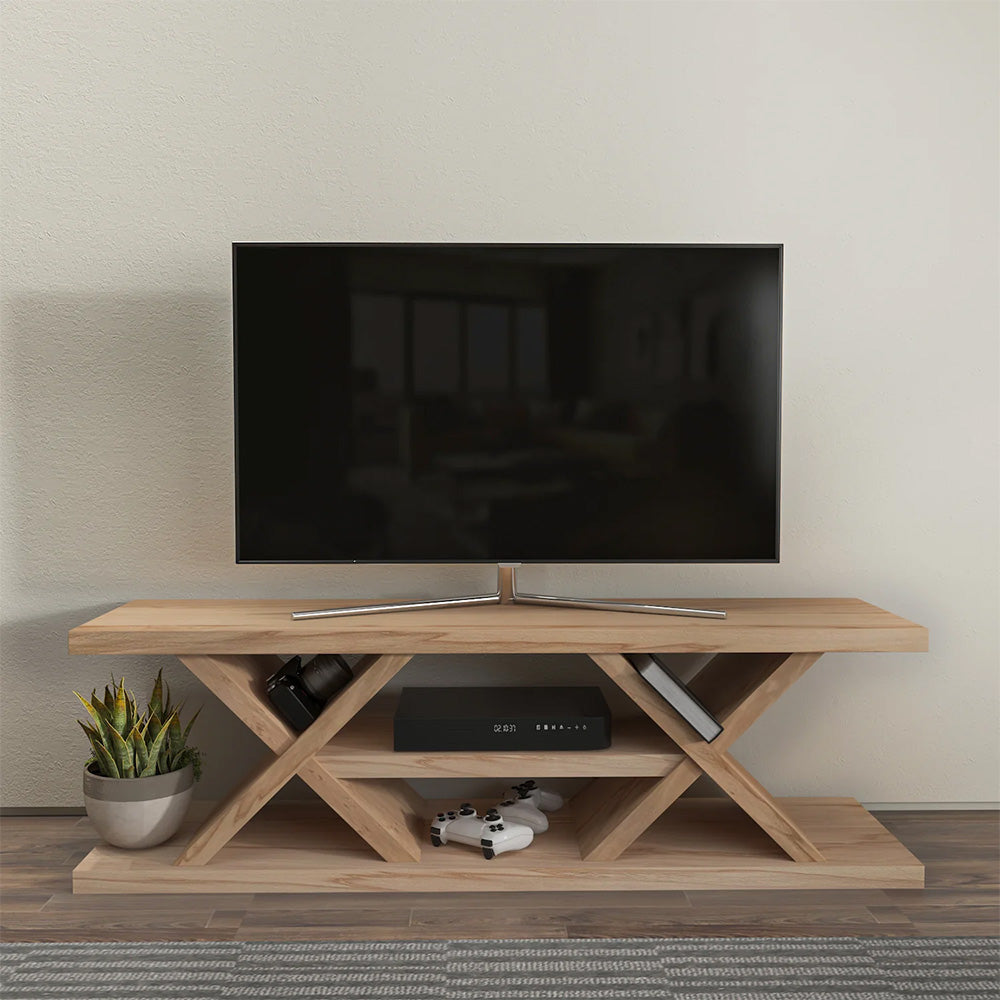
Wondering if you can put a TV on a console table? Yes, you definitely can, if it's the right size, supports the TV's weight, and offers a comfortable viewing height. This guide explores using a console table as a TV stand alternative, with practical tips to help you choose wisely for your space.
What Is a Console Table?
A console table is a slim, narrow table, often long, designed to sit against a wall. It is commonly used in entryways, hallways, living rooms, or behind a sofa, where it may also be called a sofa table.
Most console tables are made for display and light storage, such as keys, decor, books, lamps, or everyday items. Because they are usually narrower and shallower than TV stands, they need to be checked carefully before being used to support a television.

The table under a TV is usually called a TV stand or TV console. A console table can sometimes fill that role, especially below a wall-mounted TV, but the name alone does not make it suitable for holding a screen. The more important checks are width, depth, weight capacity, and stability.
Difference Between a Console Table and a TV Stand
Before getting into why you should choose a console table to house your TV, it is important to take a quick look at the difference between a console table and a traditional TV stand to define your needs more precisely.
Appearance and Design
- Console tables are usually narrower, shallower, and about the same height as a normal table. This makes them lighter-looking and gives a more simplistic feel while being more decor-oriented.
- TV stands, on the other hand, are more functional in design to be wide and low enough to securely hold not only the TV itself but also provide ample room for other forms of entertainment. Moreover, there are TV stands designed with particular attention to the heat dissipation of the equipment and have special line management for avoiding wire clutter and preventing overheating when the equipment is in use for a long period.
Functionality
- Console tables, firstly, were designed to provide additional space both for storing and displaying things, and quite often used to display various items of decoration, photos, books, or everyday objects.
- Primarily, a TV stand is intended to provide appropriate support and management space for the TV and other electronic equipment that is connected to it. It also has various compartments and drawers that are designed for organizing equipment, such as remote controls, sound systems, Blu-ray players, game consoles, and others.
Flexibility of Use
- Nothing else is different. A console table can be placed in the house: it may come in at the entry, hall, dining, or living room. It may answer various needs: storing, displaying, or even a temporary workplace.
- TV stands are set up in the living room or entertainment room, mainly to provide stable support and storage for the TV and equipment, with one function but more in line with home entertainment needs.
Can You Use a Console Table as a TV Stand?
Thinking of using a console table as a TV stand? It can work in the right setup, but only if the table is wide, deep, sturdy, and stable enough for your TV.
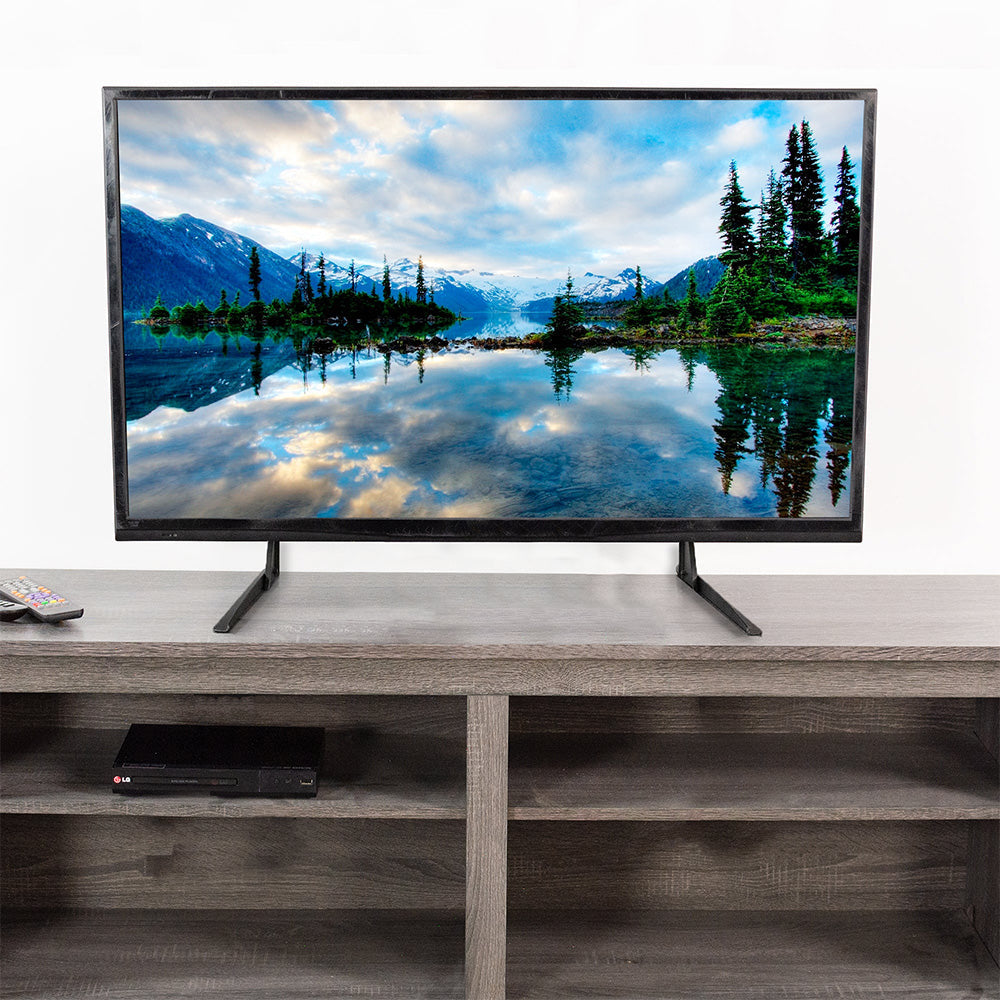
A console table can work as a TV stand only when the TV sits fully on the top surface, the base does not overhang, and the table can support more than the combined weight of the TV and connected devices. If the table is narrow, lightweight, easy to wobble, or not designed for electronics, a purpose-built TV stand is the safer choice, especially for larger screens, homes with children or pets, or setups with speakers and game consoles.

Height is another important factor. Many console tables are similar in height to standard TV stands, which can place the screen close to eye level when you are seated. If the table is too tall or too low, long viewing sessions may lead to neck strain.
Console tables may not include built-in cable management like many TV stands, but cords can still be kept tidy with a cable box, ties, or clips. The space behind the table can also help route wires more neatly.
Considerations Before Putting Your TV on a Console Table
If you do plan to use the console table as a TV stand, here are some details to consider when shopping. Here are just some practical tips that might help you out:
Size
A console table needs to be deep enough and wide enough to hold a lot of equipment, such as TVs, set-top boxes, stereos, and plenty of cables.
One easy way to shop for a console table is to remember that it should ideally be a few inches wider on either side than the TV that will sit atop it to create visual balance.
Height
For the best viewing experience, the center of your TV screen should generally be at eye level. If your console table is too high or low, long viewing sessions can lead to neck strain.
To get a good starting point, measure your eye level when seated, then subtract half of your TV's screen height. This will give you a rough estimate for the console table height, but remember it's just a guideline—always fine-tune it to what feels most comfortable for you.
Support and Stability
The console should be sturdy and stable enough to bear a TV, consoles for playing games, blurry players, and audio equipment without tilting and swaying.
Available Space
Before you buy a console table, measure the space where you want to place it to find out if it will fit comfortably in the space without feeling cramped.
You are also supposed to leave enough room such that you can navigate around it without causing interference to access or block a walkway for the area to remain smooth and roomy.
If your TV is mounted on the wall and you are mainly deciding what should sit below it, this guide on what to put under a mounted TV is a more specific next step.
Managing Cords
Keep in mind the organization of the wires: you may cut a hole in the back of the table or attach cable ties or clips to clean up your cords and prevent a mess of cords. This will keep your area tidy and organized as well.
Conclusion
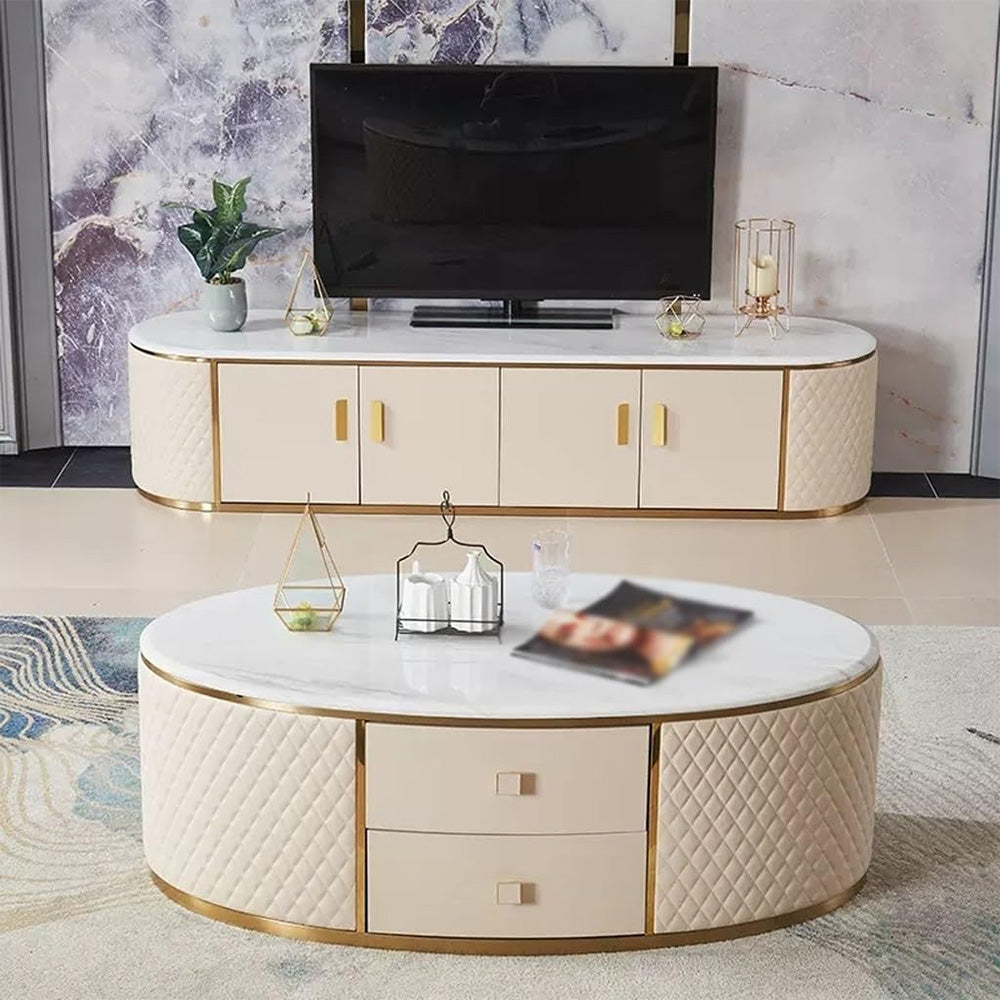
So, yes, today's console table can definitely hold your TV. With their typically clean lines and versatile design, stylish console tables offer a great, practical alternative to traditional TV stands, adding both function and flair to your space.
Related Reading:
Can You Use a Sideboard as a TV Stand?
Furniture Alternatives for TV Stands

Leave a comment
This site is protected by hCaptcha and the hCaptcha Privacy Policy and Terms of Service apply.