


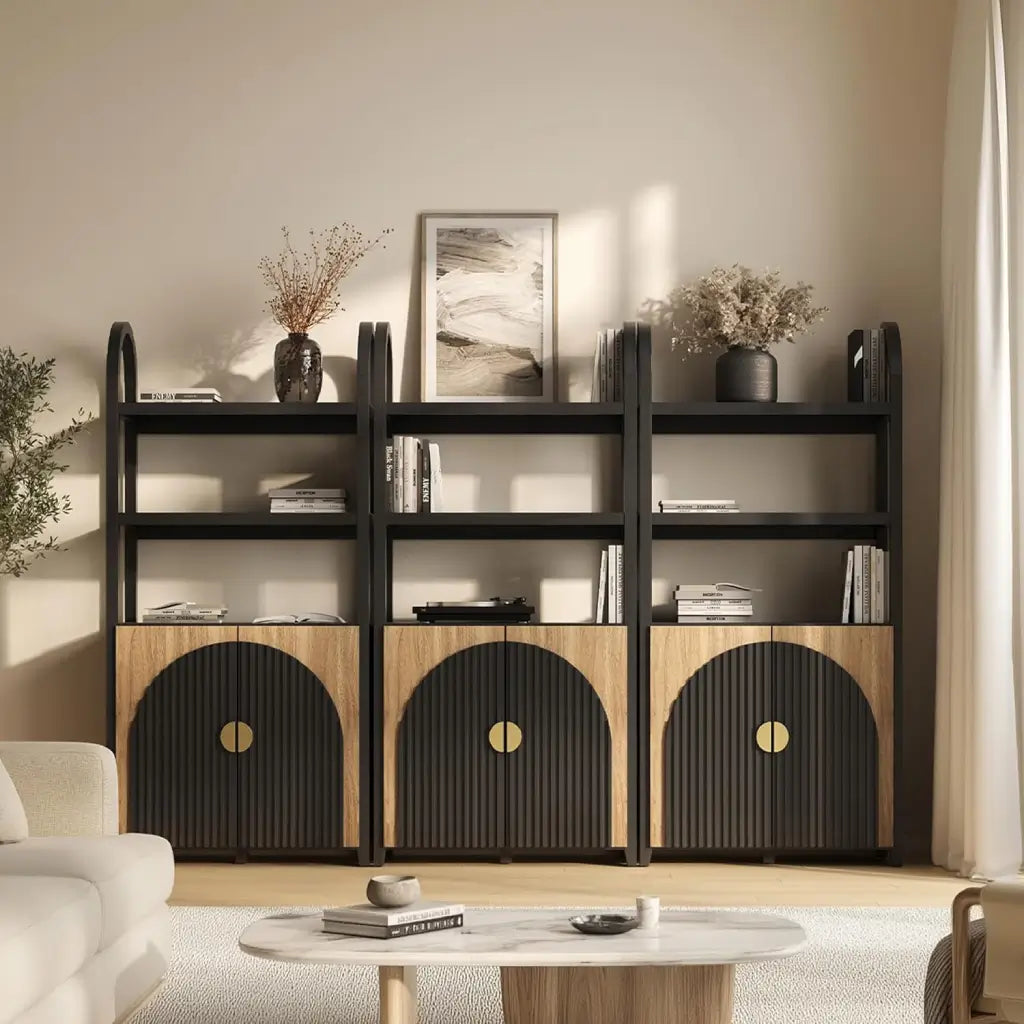
A freestanding bookcase should be secured with a mechanical anti-tip kit or L-bracket attached to a wall stud when possible and a solid part of the furniture frame. A child climbing, a pet bumping the frame, a pulled shelf, or a small quake can all turn a loaded bookcase into a safety risk.
This guide uses bookcase and bookshelf to mean freestanding shelving furniture that can tip forward, not floating wall shelves.
Tools and Hardware You'll Need
Start with the anti-tip hardware supplied with the bookcase or a furniture-rated anti-tip kit. Then match the wall-side fastener to your wall material.
- Tools: stud finder, pencil, tape measure, drill, drill bits, screwdriver, level, and safety glasses.
- Hardware: stud screws for wood studs, masonry fasteners for brick or concrete, and rated metal toggle bolts only when the kit and wall condition allow them.
Many bookcases include basic brackets, but the included screws may not fit every wall type. Picture hooks, small plastic anchors, and flimsy hardware are not appropriate for tip-over prevention.

How to Anchor a Bookcase Safely
For most drywall-over-wood-stud installations, the recommended basic method is to fasten the wall side into a stud and attach the furniture side to a solid upper rail, top panel, or side frame.
Step 1: Clear and Position the Bookcase
Empty the bookcase, move it into its final position, and check that it sits level before marking the wall. Remove books and decor first so the unit is safer to move.
A leaning bookcase starts with less margin for error. Shim the base only when the manufacturer allows it, and make sure the back of the frame can sit close enough for the restraint to work.
Still choosing where to put a bookcase? Pick the location first, then anchor the bookcase once it is in place. Anchoring first and moving later usually means drilling twice.
Step 2: Find the Wall Studs
Find the nearest wall stud behind the bookcase and mark its center at the height where the bracket or strap will attach. Wood studs are preferred anchor points for heavy freestanding furniture.
Studs are often spaced 16 or 24 inches apart in many U.S. homes, but do not treat that as a promise. Mark the stud center, not just the edge, so the screw has better bite.
Shifting the bookcase slightly can help the anchor line up with solid wood. Do not rely on small plastic drywall anchors alone for a tall or loaded bookcase.
Step 3: Install the Bracket on the Wall
Hold the bracket against the marked stud, mark the screw holes through the bracket, drill pilot holes according to the kit instructions, then fasten it until the bracket sits flush and does not move.
Do not drill if the area may contain wiring, plumbing, or other hidden utilities. Use live-wire detection when available, and hire a professional when the wall location is uncertain.
Step 4: Install the Bracket on the Bookcase
Attach the furniture-side bracket to a solid upper part of the bookcase, not to the thin back panel. Look for a thick top rail, top panel, or side frame close to the rear of the unit.
Fiberboard backing, thin veneer, decorative trim, and glued edges can split or fail under tipping force. Pilot holes can reduce cracking in engineered wood.
Use two restraints when the bookcase is tall, wide, heavily loaded, placed in a child's room, or located in an earthquake-prone area. A flexing frame or a unit with no solid anchor point needs manufacturer guidance or professional help.
Step 5: Tighten and Test the Hold
Connect the wall-side and furniture-side hardware, tighten the strap or bracket, and test the bookcase before reloading it. The restraint should be snug without bending the furniture frame.
Perform a firm but controlled pull test from the top of the unit. Nothing should shift, loosen, or pull away. Check both the wall connection and the furniture connection.
Pick the Right Anchor for Your Wall
The right bookcase wall anchor depends on whether you are fastening into wood studs, hollow drywall, plaster, masonry, or metal studs.
Check the furniture instructions and anti-tip kit package first. This table helps match the wall-side fastener to the wall type, but it does not replace the hardware instructions.
| Wall | Hardware | Watch For |
| Wood-stud drywall | Anti-tip strap or L-bracket with wood screws | Hit the stud center. |
| Hollow drywall | Heavy-duty metal toggle bolt only when rated for the use | Use only as a fallback; studs are safer for tall or loaded units. |
| Plaster | Find the stud and use appropriate screws | Older plaster can crack. |
| Brick or concrete | Masonry bit with concrete screws or sleeve anchors | Drill into solid material. |
| Metal studs | Hardware rated for metal studs | Wood-stud screws may not apply. |
| Unsure wall type | Confirm the material before buying hardware | Ask a pro if utilities or wall type are unclear. |
Can You Anchor a Bookcase Without Drilling?
For most tall or heavy bookcases, no-drill adhesives are not a safe replacement for mechanical wall anchors. General-purpose removable adhesive strips, Velcro, tape, and adhesive-only products should not be the standalone anti-tip restraint for a tall or loaded freestanding bookcase. Renters can ask permission for small, patchable screw holes, but lease rules vary.
Risk-reduction steps still help: place heavy items low, keep top shelves light, avoid climbable shelf layouts, and keep toys out of reach. These steps reduce risk, but they do not replace anchoring.
A bookcase with no solid top rail, a flexing frame, or only a thin fiberboard back panel may not be practical to anchor safely. In that case, tall bookcases and office bookshelves with a solid upper frame can help.
Considering a replacement? The Jagger 72" Tall Bookcase Cabinet is a cabinet-style option for readers who want enclosed lower storage, while the Bijou 71" Tall 5-Tier Bookcase fits readers who want a taller display piece with open shelving. Review the product instructions and anchoring points before installation.


Anchoring IKEA BILLY and Other Flat-Pack Bookcases
For IKEA BILLY and similar flat-pack bookcases, follow the manufacturer's bracket location and avoid fastening hardware to the thin back panel.
For IKEA BILLY specifically, IKEA says the bookcase must be anchored with the provided wall-attachment device and suitable screws and plugs for the home. For other ready-to-assemble bookcases, follow that product's own instructions.
Anchoring an Open-Backed Bookcase
An open-backed bookcase needs a solid top rail, top panel, or thick side frame for the furniture-side bracket because there is no strong back panel to hold hardware.

Thin decorative rails, glued joints, and flexible frames should not carry the anchor load.
No solid anchor point means the next step is the manufacturer guidance or a handyman. Screwing a bracket into the wrong part of a weak frame can create a false sense of safety.
Extra Precautions for Earthquake-Prone Areas
No strap makes a bookcase fully earthquake-proof, but properly installed restraints can reduce the chance of tipping during shaking.
California, the Pacific Northwest, and other earthquake-prone areas call for a more cautious default. Follow the kit instructions for the number of restraints; many furniture anti-tip kits use two straps for added security, especially for tall, wide, or heavily loaded units.
Use hardware labeled for furniture restraint or seismic/lateral use when available, and install it into studs or solid masonry as instructed. Inspect bookcase earthquake straps after a tremor, furniture move, or room rearrangement.
Final Safety Check Before You Reload the Shelves
Before reloading the shelves, test the anchored bookcase, check the straps and screws, and place heavier items on the lower shelves.
Straps should be snug, straight, not frayed, and not pulling at an awkward angle. Screws should sit securely without stripping the wood or pulling out of the wall.
Reload with the heavy-low, light-high rule. The guide to organize a bookcase can help once the anchoring work is done. Check the anchor after moving the furniture, after a tremor, or yearly.
Consider hiring a professional when masonry, metal studs, hidden utilities, rental restrictions, or unusually heavy furniture make the right fastener or drilling location uncertain.
Common Questions About Anchoring a Bookcase
What screws should I use to anchor a bookcase to the wall?
Use the screws specified by the anti-tip kit. For wood studs, long coarse-thread wood screws are common, but no screw size is universal. Brick or concrete needs masonry fasteners, and hollow drywall may need a rated heavy-duty toggle bolt.
Can I use Command strips or Velcro to secure a bookshelf?
No. General-purpose adhesive strips and Velcro should not be the standalone anti-tip method for a tall, heavy, or loaded freestanding bookcase.
What if I cannot find a stud behind the bookcase?
Move the bookcase slightly if possible. A heavy-duty toggle bolt may be a fallback only when the kit, anchor, and wall condition allow it, but studs are preferred for heavy bookcases and child-room furniture.
How high up on the wall should you anchor a bookcase?
Most anti-tip restraints attach near the upper portion of the bookcase because higher placement reduces forward pull. The furniture-side bracket still needs to reach a solid panel, rail, or frame at that height.
Do heavy bookcases still need wall anchors?
Yes. Heavy bookcases can still tip, especially when weight sits high, the unit is narrow, a child pulls on the shelves, or shaking moves the furniture.
Do short bookcases need to be anchored too?
Short bookcases are usually lower risk, but height alone does not decide tip-over risk. Children, pets, heavy upper shelves, uneven floors, and earthquake-prone areas are reasons to anchor lower units.
Choose a Bookcase You Can Anchor
When buying a new bookcase, look for a solid top rail or top panel, clear anchor instructions, and a stable base that sits flush without rocking. Review Belleze office bookshelves with those anchoring points in mind.



Leave a comment
This site is protected by hCaptcha and the hCaptcha Privacy Policy and Terms of Service apply.