


Small homes demand constant compromise: you need storage to control clutter, yet every piece of furniture chips away at your breathing space.
A sideboard can help. It tucks away items and keeps surfaces clear, but it also claims floor space you already lack.
This guide focuses on that balance — not decorating for appearance, but finding ways to add storage without making your space feel cramped or hard to navigate.
How to Tell If a Sideboard Actually Fits Your Space
Start with Purpose, Not Measurements
Before you grab a tape measure, think about what you actually need. Are you hiding clutter like cables, remotes, and paperwork? Then you need drawers or closed cabinets. Do you just need a spot for keys and a lamp? A console table might work better.
Open shelving looks lighter and airier. But if the items on display aren't tidy, you're trading one problem for another. Sideboards hide the mess behind doors—that's often worth the extra depth.
Sideboard vs. Console
Here's a practical difference worth knowing. A console table typically runs 12–14 inches deep. A sideboard sits around 16–18 inches. That 4–6 inch gap matters in tight hallways or behind sofas. If storage isn't the priority, choose the slimmer option. Save those inches for walking space.

The 30-Inch Clearance Rule
Measure your walking path before committing. If adding a sideboard leaves less than 30 inches of clearance, the room will feel cramped—no matter how good the piece looks. This is especially important in entryways and dining areas where people move through regularly.
Vertical vs. Horizontal
A wide sideboard isn't your only option. In some layouts, a tall narrow chest of drawers solves the same storage problem while using less wall space.
But if you're placing furniture below a window, a low-profile sideboard keeps sightlines open and lets natural light flow through. Consider what's behind or above the piece before deciding.
What Makes a Sideboard "Small-Space-Friendly"?
Standard furniture dimensions assume standard-sized rooms. Placing a full-depth buffet in a studio apartment can make the space feel like a storage unit. A small-space-friendly sideboard isn't just smaller. It's designed with specific proportions that respect tight layouts.

Narrower or Lower
- Depth matters most: Look for units between 12 and 16 inches deep. Standard sideboards often run 18 inches or more. Those extra inches eat into walkways and make rooms feel tighter than they are.
- Height affects sightlines: Units under 30–32 inches keep views open across a room. A lower sideboard can also double as a window seat or plant shelf without blocking light.
Finding these dimensions in regular stores can be tricky. Our sideboards for small spaces collection features pieces designed to meet these constraints.
Modular or Stackable Design
Small spaces are often temporary. You might rent now and own later. Modular sideboards let you start with one piece and expand as your living situation changes.
Stackable designs also let you build upward. Adding a hutch or second unit creates bookcase-style storage without claiming more floor space. Think of it as a flexible investment that adapts to your next move.
Explore our modular sideboards if you need a setup that can grow with you.
Lightweight Appearance
Furniture that sits flat on the floor feels heavier than it is. A sideboard on tall, slim legs reveals the floor beneath. This simple trick makes any room feel more open.
Colour and material play a role too. Glass-front doors break up solid masses. Light woods and white finishes blend into walls instead of demanding attention. Dark, bulky pieces do the opposite, they anchor the eye and shrink the perceived space around them.

Placement Matters More Than Pretty Looks
Before buying anything, use painter's tape to mark the sideboard's footprint on your floor. Live with it for a day. Walk around it. See if you bump into the "ghost" sideboard. A beautiful piece in the wrong spot becomes an expensive obstacle. Placement should prioritise how you move through the space, not visual symmetry.
Keep Pathways Clear
Identify your main traffic routes—entry to kitchen, sofa to bathroom. These lines need to stay open. Aim for 36 inches of clearance along these paths if possible.
Door swings deserve special attention. Check that the sideboard won't collide with a room door or cabinet door when opened. Leave roughly 3 inches from any door casing to avoid daily frustration.
Mind the Corners and Visual Line
In narrow passageways, sharp corners at hip height cause painful collisions. Rounded edges or placing the unit in a recessed alcove prevent these bumps.
Sightlines matter too. Position the sideboard so it doesn't block window views or visually chop the room in half by jutting past a corner wall.
Maintain Visual Lightness
Avoid wedging furniture tightly between other pieces. A few inches of breathing room makes the arrangement look intentional rather than cramped. The top surface needs discipline, too. One lamp and one plant keep things light. A cluttered top makes the entire room feel smaller.
Small-Space Sideboard Ideas by Scenario
"Small space" means different things—a studio, a narrow hallway, an awkward living room. Each layout presents its own challenge and calls for a different solution.
Studio Apartment Choices
A sideboard with a finished back can work perpendicular to the wall, creating separate sleeping and living zones without blocking light the way a wall would. Multi-functional features add value here. A drop-down leaf or pull-out surface lets the sideboard double as a temporary desk or dining spot.
Small Spaces Require Maximised Storage
Zero closet space means you need concealment, not display. Skip the open shelves. Drawers and doors hide paperwork, chargers, and linens—the clutter you don't want visitors seeing.
Adjustable interior shelves prove essential in compact units. Being able to shift shelf heights accommodates tall bottles or stacked plates, squeezing more utility from every inch.
Extremely Narrow Spaces
Wall-mounted cabinets eliminate the footprint problem entirely. They make cleaning easier and keep the floor fully visible, which helps tight spaces feel more open. In hallways, consider sliding doors or flip-down compartments so nothing swings into the path. Curved or angled fronts soften sharp corners in squeeze points.

TV Space Needs for a Small Living Room
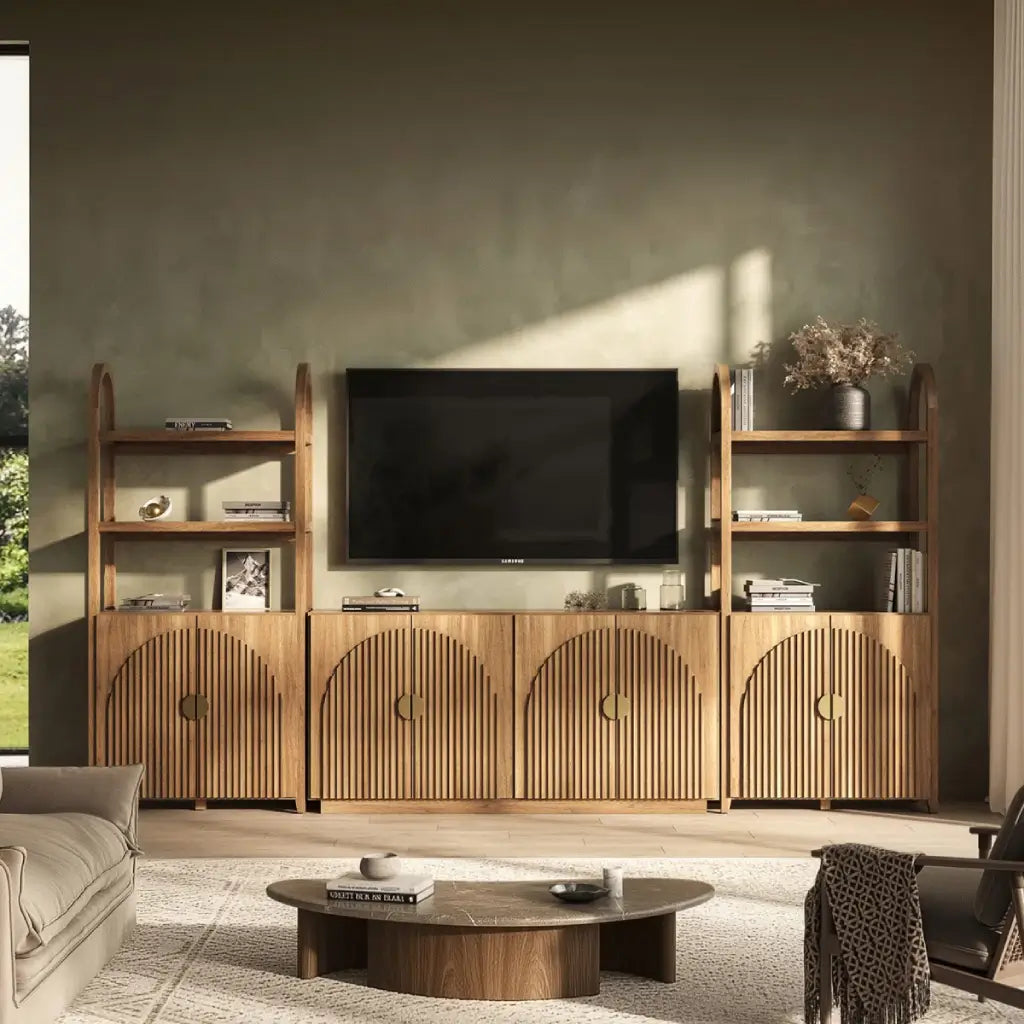
A compact living room rarely has space for both a TV stand and a sideboard. A low unit—around 20–30 inches high—handles both jobs comfortably. In open-plan layouts, try positioning a low sideboard behind a floating sofa. It acts as a console table on one side while supporting the TV or defining the media zone on the other.
Making the Most of Your Small Space Sideboard
Choosing a sideboard for a small space goes beyond appearance. The right dimensions—narrow depths and lower profiles—preserve your room's openness. Proper placement keeps pathways functional.
For added impact, maintain one cohesive style throughout the room. A mirror positioned above a low sideboard reflects light and creates the illusion of greater depth.
Start by measuring your clearance zones and checking door swings before shopping. This article focuses on small-space constraints, but for a broader look at sizing, layout, and storage trade-offs across different rooms, see our sideboard buying guide.
Related Reading:


Leave a comment
This site is protected by hCaptcha and the hCaptcha Privacy Policy and Terms of Service apply.