


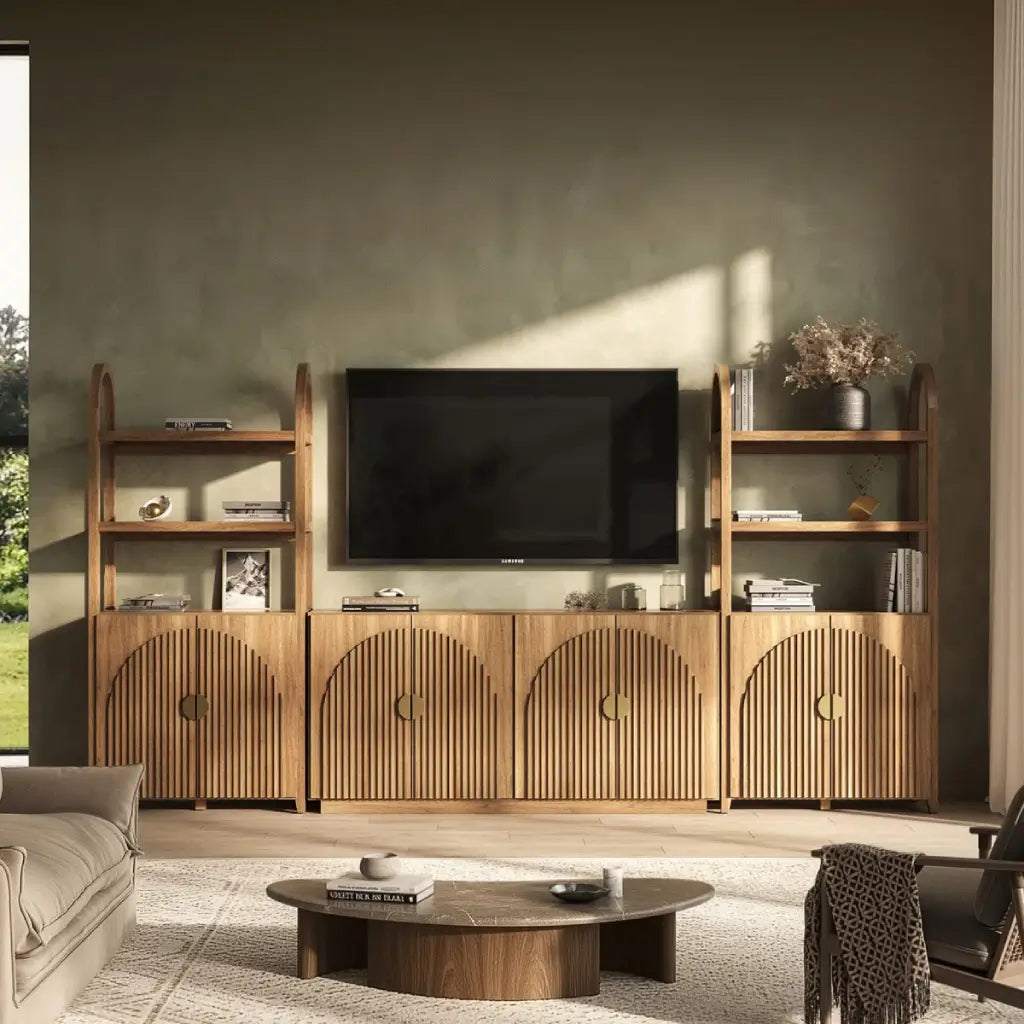
Entertainment centres aren't outdated in 2026. But bulky, one-piece wall units? Those don't fit how people live anymore. If you've wondered whether it's time to ditch yours, you're not alone. That concern makes sense. Oversized designs can feel stuck in another era.
The real issue isn't the furniture category. It's the design logic behind certain styles. This article breaks down which types no longer work. Then we'll look at what actually suits modern spaces.
Reasons Entertainment Centres Are Perceived as Outdated
This shift has little to do with style trends or specific products. It's about how daily life has changed. These changes quietly reveal the limits of furniture designed for a different era.
Living spaces are shrinking
Many modern flats and starter homes offer less floor space than they once did. The wall space is tighter. Layouts leave less room to work with. Large, deep furniture now competes with walkways, seating arrangements, and everyday movement. A full wall unit can make a smaller living room feel closed-in—before you've even added a sofa.
Renters move more often
Renters and younger homeowners tend to relocate, resize, or reconfigure their spaces more frequently. Heavy, one-piece furniture doesn't travel well. It rarely fits the next home the same way. A unit that worked perfectly in your previous flat might block a window or crowd a doorway in your new one.
TVs are thinner than ever
Modern televisions are wider and far slimmer than older models. Many are wall-mounted or paired with low consoles. Deep cabinets built for bulky CRT or early flat-screen TVs now feel oversized and awkward. The screen looks sleek. The furniture beneath it? Still stuck in another decade.
Living rooms now serve multiple purposes
Your living room probably does more than one job. It's an entertainment space. A workspace. A play area. A spot for hosting friends. Fixed furniture layouts struggle to keep up with these overlapping uses. A rigid entertainment centre locks the room into a single setup—one that may no longer match how you actually spend your time there.

Issues with Traditional Entertainment Centre Designs
The furniture category isn't the problem. The issue is design logic rooted in older living patterns. Traditional entertainment centres assume stable homes, fixed layouts, and specific media needs. Once those assumptions no longer apply, the furniture starts to feel out of place.
One-piece wall units
These are built as a single large structure meant to dominate one wall. They offer little flexibility once installed.
Recognition signal: If rearranging your room means the unit no longer fits anywhere else, that's already a limitation.
Fixed dimensions
Shelf heights, cabinet widths, and TV openings are locked in place. Technology and room needs change faster than this furniture can adapt.
Recognition signal: Upgrading your television or adding new equipment forces compromises—not simple adjustments.
Old-media storage
Many units were designed around DVDs, CDs, and other physical formats. Those compartments now sit empty or collect clutter.
Recognition signal: Storage exists, but it no longer matches what you actually own or use.
Visual bulk
Deep cabinets, tall towers, and heavy frames visually dominate the room. In smaller homes, this creates a sense of crowding.
Recognition signal: The furniture draws more attention than the television or the room itself.

Which Entertainment Centres Are Truly Obsolete by 2026
Not every entertainment centre has become outdated. But certain types consistently fail in modern homes. Recognising these designs helps you decide when replacement actually makes sense.
One-Piece, Wall-Filling Units
These were built as permanent fixtures rather than adaptable furniture. They assume stable home sizes and predictable layouts—conditions that no longer reflect how most people live.
Clear sign: The unit only functions on one specific wall. Move it anywhere else, and it either doesn't fit or blocks something important.
Designs Built Around Old Media
Some units feature large sections meant specifically for DVDs, CDs, or other physical formats. These compartments don't translate well to streaming-focused setups.
Clear sign: Large portions of the unit serve no clear purpose in your daily routine. Storage exists, but nothing fills it.
Overly Bulky Proportions
Excessive depth and height can overwhelm a modern living room. These dimensions made sense for older electronics. Now they just reduce usable floor space and visual openness.
Clear sign: The unit feels more like a cabinet wall than a flexible media setup. It dominates the room rather than supporting it.
The Shift to Modular Entertainment Centres
The entertainment centre hasn't disappeared. It has changed form. Instead of one fixed piece, it becomes a system of coordinated components. This shift directly addresses the limitations above.
Modular instead of one-piece
Separate base units, side storage, and optional display elements give you control over the layout. The setup can scale up or down depending on the room.
Problem solved: No single piece has to dominate an entire wall. You build what fits.
Upgrade parts, not the whole unit
Individual sections can be replaced or added over time. The furniture adapts to new needs rather than forcing a complete replacement.
Problem solved: Moving house or upgrading your setup no longer means starting from scratch.

Keeps pace with changing TV sizes
Modular layouts can extend horizontally or adjust spacing as needed. They work with larger screens without requiring a total furniture overhaul.
Problem solved: The furniture follows the TV—not the other way around.
How Modular Designs Align with 2026 Lifestyles
Modular systems match how people actually live today. They respond to movement, flexibility, and the visual preferences that have become common in modern homes. This alignment explains why these setups continue to gain relevance.
Works better in small, flexible homes
Modular pieces fit short walls, long walls, or corner layouts. You're not locked into one configuration. As rooms evolve—whether through new furniture, different uses, or simple rearrangement, the layout can shift along with them.
A compact apartment setup today can expand later without replacing everything. You add pieces as space and needs grow.
Accommodating life changes
Life rarely stays the same. Relocation, family growth, shifting routines—these changes happen. Modular furniture moves, reconfigures, and downsizes more easily than fixed units. A setup rearranged after a move can still feel intentional rather than forced. The pieces adapt to the new space instead of fighting against it.

Visually lighter than traditional wall units
Lower profiles, open spacing, and horizontal lines create a different visual effect. These designs match the cleaner, airier look many homeowners prefer now. The room feels calmer and more open, even with storage in place. The furniture supports the space rather than weighing it down.
Ready to turn the ideas above into a setup that fits your room? Browse modular entertainment centres here.
Conclusion
Entertainment centres aren't outdated in 2026. The category still serves a purpose. What no longer works are rigid, bulky designs built for homes and habits that have changed.
The setups that succeed function as adaptable systems. They fit the room, adjust over time, and follow how you actually live. When choosing, focus on flexibility, proportion, and adaptability. These qualities matter more than size or tradition ever did.
Related Articles:


Leave a comment
This site is protected by hCaptcha and the hCaptcha Privacy Policy and Terms of Service apply.