


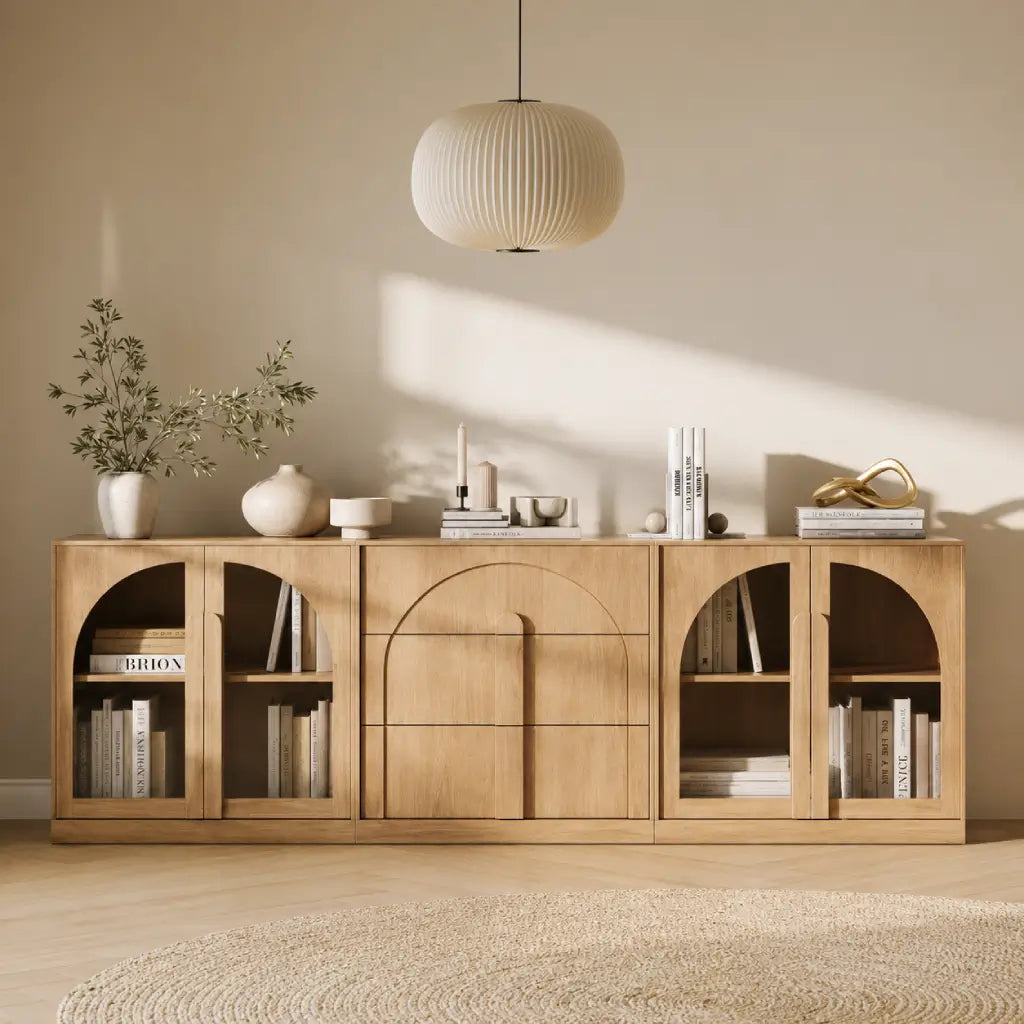
A 3-piece modular sideboard often gets planned like one long cabinet, but it works better when you treat it as three separate storage zones. Plates, chargers, barware, games, pet supplies, and display pieces all compete for space, and the wrong mix can make the whole wall harder to use.
Before filling shelves, give one cabinet daily-access items, one cabinet display or quick-access pieces, and one cabinet reserve storage. Then check whether the room, door style, clearance, and weight limits support that plan before you buy.
Make Sure a 3-Piece Sideboard Fits
A 3-piece modular sideboard makes sense when you want one coordinated storage run instead of one oversized cabinet. It fits dining rooms, living rooms, hallways, wide walls, and open-plan spaces where three cabinets can look intentional instead of scattered.
A 3-piece modular sideboard does a different job than a single buffet cabinet, console cabinet, or general storage cabinet. It is the better fit when you need a long, low storage run across a medium-to-wide wall. Belleze's modular sideboards page lets you compare single cabinets, 2-piece, 3-piece, and 4-piece layouts in one place.
Do not choose three pieces just because the wall is empty. A single buffet may work better for oversized platters or appliances. A console cabinet may work better in a narrow walkway. A 2-piece layout may work better if the full run crowds chairs, door swings, or foot traffic.
Give Each Cabinet a Clear Job
Sort the contents by access frequency before you assign shelves. Daily items need the easiest cabinet, display pieces need the neatest front, and reserve items should stay away from walkways, door swings, and the cabinet you open most.
Pull out the items you expect the sideboard to hold and sort them into daily, occasional, and rarely used groups. That pile test usually tells you more than a generic list of sideboard storage ideas.
Start With This Cabinet Map
Treat the roles below as a starting point, not a fixed left-to-right rule. Put the daily-access cabinet wherever your room traffic makes it easiest to reach.
| Cabinet Role | Store Here | Best Front | Avoid |
| Daily access | Everyday dishes, remotes, chargers, napkins, barware | Glass, mixed, or drawers | Deep overflow that blocks quick access |
| Display or quick access | Glassware, ceramics, books, baskets, serving pieces | Glass or mixed doors | Loose clutter, paperwork, cables, toy piles |
| Reserve storage | Platters, linens, games, pet supplies, seasonal dishes | Wood door | Items used several times a day |
Drawers should usually count as daily-access storage. They are better for small loose items that disappear on shelves, including remotes, chargers, napkin rings, flatware, paperwork, game pieces, keys, and small tools.
Leave some room in every cabinet. A cabinet that is about four-fifths full is easier to reset than one packed to the back, especially in homes with children, pets, guests, or busy weeknight routines.
Match the Doors to Your Storage
Door style decides how tidy the inside needs to look. The same stack of serving bowls can look calm behind wood doors, acceptable in a mixed cabinet, and messy behind clear glass if the shelf is crowded.
Let the door style rule out the wrong storage. Do not buy a glass-heavy layout because the product photo looks clean unless your own dishes, books, baskets, and barware can stay that clean after real use.
Wood Doors Hide Everyday Clutter
Wood-door cabinets are best when the sideboard needs to reduce visual clutter. They suit toys, files, board games, pet supplies, chargers, table linens, seasonal decor, mismatched serving pieces, and backup household items.
All-wood doors are easier to live with when most stored categories are useful but not worth displaying. Belleze's 3-piece modular sideboards show current door styles, finishes, and available layouts in one place.

Mixed Doors Work for Most Homes
A mixed wood-and-glass layout is the most forgiving choice for many homes. Most homes have one category worth showing and several categories better hidden. The glass cabinet can hold barware, ceramics, everyday dishes, books, or matching baskets.
The wood cabinets should handle the less polished work: files, toys, games, pet gear, chargers, cleaning cloths, overflow dishes, and linens. One cabinet can stay neat enough to see through glass; the others can hide the items that never look tidy for long.
Glass Doors Need Neater Storage
Glass doors work best when the items are already display-ready. Use them for glassware, ceramics, curated books, collectibles, barware, matching baskets, or decor that will not need daily restyling.

All-glass layouts leave less room for messy storage. Before choosing a glass-door 3-piece layout, be honest about whether paperwork, cables, toy piles, and spare household items will end up visible.
| Front Type | Best Use | Good Storage Categories | Risk to Check |
| Wood doors | Hidden storage | Linens, toys, files, games, chargers, seasonal items | Can look bulky on a very small wall |
| Mixed doors | One display zone plus hidden storage | Barware, dishes, baskets, linens, overflow storage | The glass cabinet still needs editing |
| Glass doors | Display-ready storage | Glassware, ceramics, books, collectibles, matching baskets | Every loose item becomes visible |
| Drawers | Small-item access | Flatware, remotes, chargers, napkins, documents, keys | Poor fit for bulky serving pieces |
Plan Storage by Room
Start with the same three cabinet roles, then adjust them to the room. A dining room sideboard usually needs serving access. A living room cabinet needs quick cleanup. An entryway cabinet needs separation between clean storage and messy arrival items.
Dining Room or Breakfast Area
In a dining room, the easiest cabinet should hold everyday place-setting items: plates, bowls, napkins, placemats, candles, serving utensils, or the glasses you reach for most. Rarely used platters and holiday pieces belong in a side cabinet.
Mixed cabinets work well in dining rooms because dishes or barware can stay visible while extra linens and hosting overflow stay hidden. Adjustable shelves may help with plate stacks, bottles, baskets, or serving pieces, but check the listed shelf clearance and weight capacity before buying.
A cabinet for bottles, mugs, or a coffee tray can turn into a small bar or coffee zone after the main storage roles are set. Belleze's guide to a sideboard as a home bar or coffee station covers that setup in more detail.
Living Room or Media Wall
In a living room, the easiest cabinet should be the quick cleanup spot. Remotes, chargers, controllers, game accessories, throws, and everyday clutter need a place that is faster than leaving them on the coffee table.
Wood or mixed layouts usually beat all-glass in family living spaces because the contents rarely match. Books may look good behind glass. Extra cables, toy bins, pet items, and controller docks usually do not.
Electronics need a separate check. Do not put heat-generating equipment inside a closed cabinet unless the product page and your setup allow for ventilation, cable routing, weight capacity, and safe access. Belleze's guide to using a sideboard for media use goes deeper on TV-related planning.

Entryway, Hallway, or Open-Plan Room
In an entryway or hallway, the three cabinets should separate arrival clutter, household overflow, and clean display or dining storage. That matters because shoes, damp umbrellas, pet gear, and mail should not sit beside glassware or serving pieces.
Use the cabinet closest to the door for dry, contained arrival items such as keys, bags, leashes, gloves, or mail trays. Put damp umbrellas, shoe-care products, and pet supplies farthest from dishes or display storage, with a neutral cabinet acting as a buffer.
In a smaller apartment or open-plan room, three cabinets may be more width than the wall can comfortably hold. After measuring, compare two-piece modular sideboards if the doors, walkways, or chair pull-out space feel tight.
Measure the Full Sideboard Run
Measure the wall before you assign storage. Check the full width, baseboards, floor vents, outlets, nearby door swings, drawer pull-out space, cabinet door clearance, dining chair pull-back, and the walking path in front of the sideboard.
Measure at the floor and at the height where the cabinet top will sit. Uneven walls or sloped floors can make three separate cabinets harder to line up.
Use product specs as a planning check, not a guess. One Belleze Jagger-series listing describes manufactured wood with metal hardware, and some glass-door versions include tempered glass. Jagger examples with 32.5-inch cabinets create about 97.5 inches of cabinet width across three pieces before gaps, wall unevenness, or leveling adjustments.
Do not treat those numbers as universal across every modular cabinet system. One published Jagger-series example lists a 70 lb top capacity and 20 lb shelf capacity, but heavy appliances, printers, large book stacks, stoneware stacks, and bottled storage should be checked against the exact product listing and assembly manual.
Plan for Safety and Daily Wear
Wall anchoring matters for freestanding storage furniture, especially in homes with children or pets. Use the anti-tip hardware or wall-anchoring instructions supplied with the product when the manual calls for it, and do not assume a low cabinet cannot tip under pulled drawers, climbing, uneven floors, or heavy front-loaded storage.
Level the cabinets before judging door gaps. Modular pieces can look misaligned when the floor slopes, when one cabinet sits partly on a rug, or when adjustable feet are not set evenly. Leave enough side clearance so doors and drawers open without scraping baseboards, trim, or nearby furniture.
Use trays under bottles, felt pads under rough baskets, and dry cloth cleaning unless the product care instructions say otherwise. Keep wet fabrics, open liquids, harsh cleaners, and damp umbrellas away from cabinet interiors and finished surfaces.
Choose the Right 3-Piece Setup
Choose the layout by the problem you are trying to solve, not by the cleanest product photo. Hidden clutter points to wood doors, one category worth showing points to a mixed layout, and fully visible storage only works when the contents can stay neat.
Scale is the last check. If the wall feels tight after measuring the full run, compare 2-piece modular sideboards; if the wall still looks empty, compare 4-piece modular sideboards before browsing 3-piece modular sideboards.
With wall measurements, a storage plan, and door style in mind, you can read the product page against what the room actually needs.


Practical Questions Before You Buy
Should a 3-piece sideboard be anchored?
Use wall anchoring or anti-tip hardware when the product manual calls for it, especially around children or pets. A low cabinet can still become unstable if drawers are pulled, shelves are front-loaded, or someone climbs on it.
Can I store small appliances inside?
Only store small appliances if the exact shelf and top weight limits support them. Do not operate heat- or steam-producing appliances inside a closed cabinet. Check cord routing, ventilation, depth, and door clearance before storage.
Do glass doors work in entryways?
Glass doors can work in an entryway only for neat, dry storage. Choose wood doors for shoes, pet gear, umbrellas, mail piles, or anything damp, dusty, or mismatched.
What should I inspect after delivery?
Inspect boxes, panels, glass, hardware, product labels, and shipping packaging after delivery. Damage, functional defects, or missing hardware should be reported within 7 days of delivery, with clear photos for the claim.
What if the color or fit feels wrong?
As of publication, Belleze allows eligible return requests within 100 days of delivery. Change-of-mind returns may require return shipping, and original packaging rules can affect fees. Check the current policy before ordering.


Leave a comment
This site is protected by hCaptcha and the hCaptcha Privacy Policy and Terms of Service apply.