


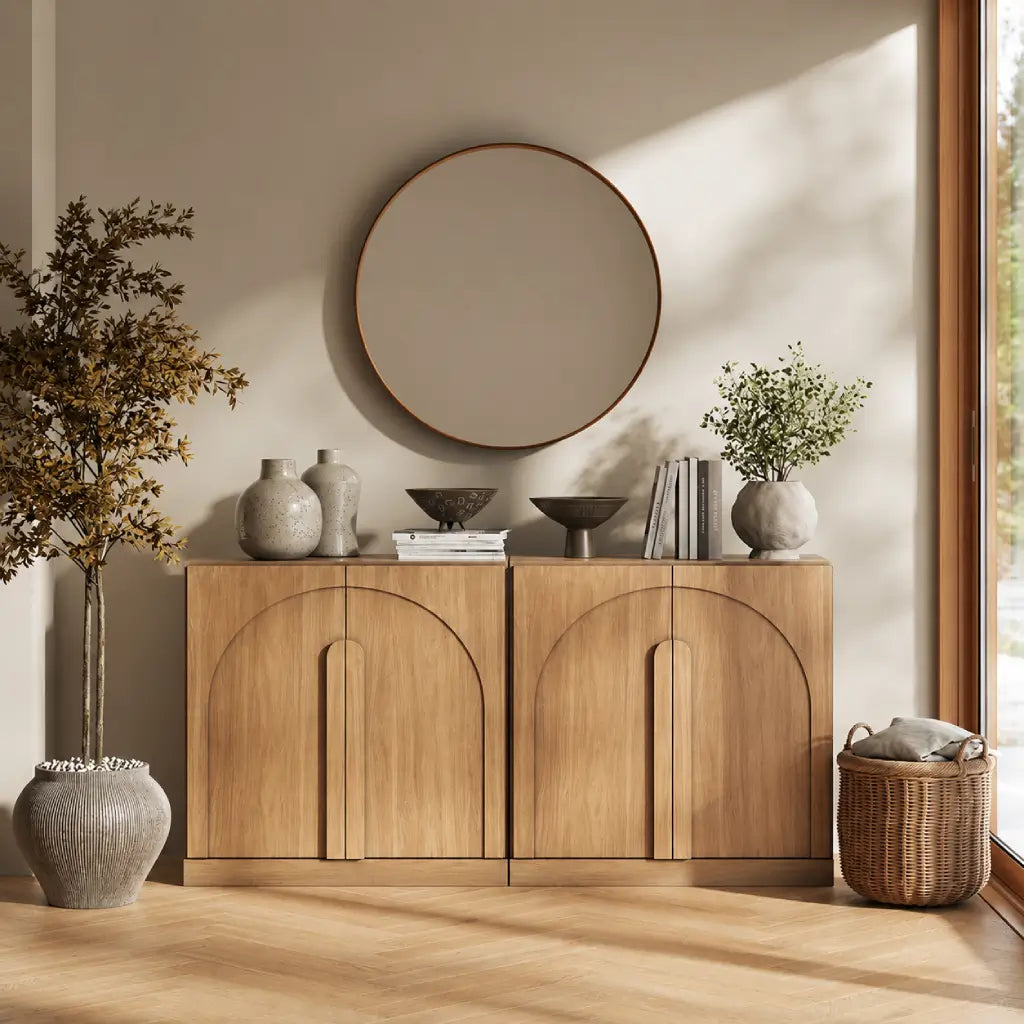
A 2-piece modular sideboard can feel like the safer first order when you are measuring a blank wall. Two cabinets cost less upfront and take less space. The risk is stopping short of what the room needs for dinnerware, linens, barware, mail, or seasonal overflow.
Start with two only if the setup works before you ever add a third cabinet. A 2-piece run usually fits compact dining areas, entryways, hallways, or living rooms with about 65 inches of wall. Three pieces are better for wide walls, larger storage lists, or buyers avoiding a later finish-match gamble.
What Job Should the Sideboard Do?
Before comparing two cabinets with three, decide what the cabinet has to hold. In a dining room, that may mean dinnerware, glassware, linens, barware, or serving pieces. In an entryway, it may mean shoes, bags, keys, and chargers. In a living room, use bulky items like game boxes, baskets, or media gear as the storage test.
A modular cabinet system is useful when one cabinet style needs to continue along a wide wall or repeat in more than one room. Belleze's modular sideboards collection is the better broad comparison point when you are still deciding between a compact run, a wide-wall setup, and a later add-on.
Two Cabinets or Three?
Start with your wall and storage list. Belleze lists each Jagger cabinet at 32.5 inches wide, so two cabinets create an approximately 65-inch run and three create an approximately 97.5-inch run before gaps or wall conditions.
| Setup | Approx. run | Best fit |
| 2-piece modular sideboard | About 65 inches | Compact dining rooms, entryways, hallways, sofa walls, and lighter storage such as linens, baskets, games, books, or small dinnerware. |
| 3-piece modular sideboard | About 97.5 inches | Wide dining or living walls, open living/dining rooms, and larger storage lists with dinnerware, glassware, linens, barware, or serving pieces. |
Do not measure width alone. Check height and depth on the current product page before measuring wall space, walkways, nearby outlets, floor vents, and chair pull-back space.
A wall under about 8 feet often favors two cabinets because the room still feels open. A wall over about 9 feet may need three cabinets if the sideboard has to hold the room visually from the main entry point.
Measure for the Setup You May Need Later
Even if you plan to buy in stages, measure for the possible 3-piece layout first. Mark the approximate 65-inch and 97.5-inch runs with painter's tape.
- Leave space for cabinet doors to open without hitting chairs, trim, planters, or adjacent furniture.
- Check baseboards because they can keep the cabinet from sitting close to the wall.
- Confirm walking paths in hallways, entryways, and open dining areas.
- Plan outlets and cable routing separately if the cabinet will sit below a TV or hold media equipment.
Floor leveling matters with modular furniture. Separate cabinets can reveal uneven floors through uneven door gaps or slightly different top lines, so check the floor before assuming a third unit will line up later.

When Two Cabinets Are Enough
Start with two when the sideboard already has a clear job. A 2-piece setup works for an entryway drop zone, apartment dining area, breakfast nook, small sofa wall, or compact dining room where three cabinets would crowd the room.
Two cabinets are usually enough for baskets, books, chargers, pet items, table linens, games, small dinnerware, or overflow items. Do not choose two only because it costs less upfront; two starts to fall short when the same run must hold full dinnerware sets, serving bowls, glassware, bar tools, and linens together.
Renters and buyers who may move soon get another benefit from starting with two. Two cabinets are easier to split across rooms later, while a 3-piece wall run assumes the next home has a similar wall.
After those checks, compare your measurements with the Jagger Double-Arc Wood Doors Modular Sideboards (Set of 2).
When Three Cabinets Are the Better Buy
Buy three upfront when two will feel short: a dedicated dining room, a wide open wall, a buffet surface for hosting, or a storage list with dinnerware, linens, glassware, barware, and serving pieces.
Buying all three at once also lowers matching risk. You are less dependent on later stock, finish continuity, page changes, and separate delivery timing.
Do not buy three just to fill a wall. The wider run still has to leave room for chair pull-back, hallway traffic, cabinet doors, floor vents, and baseboards.
A wider sideboard can support media equipment only if the current specs allow it. Do not place a TV directly on top unless the product page explicitly rates the top surface for that load; confirm depth, ventilation, cord path, stability, and cable access first.
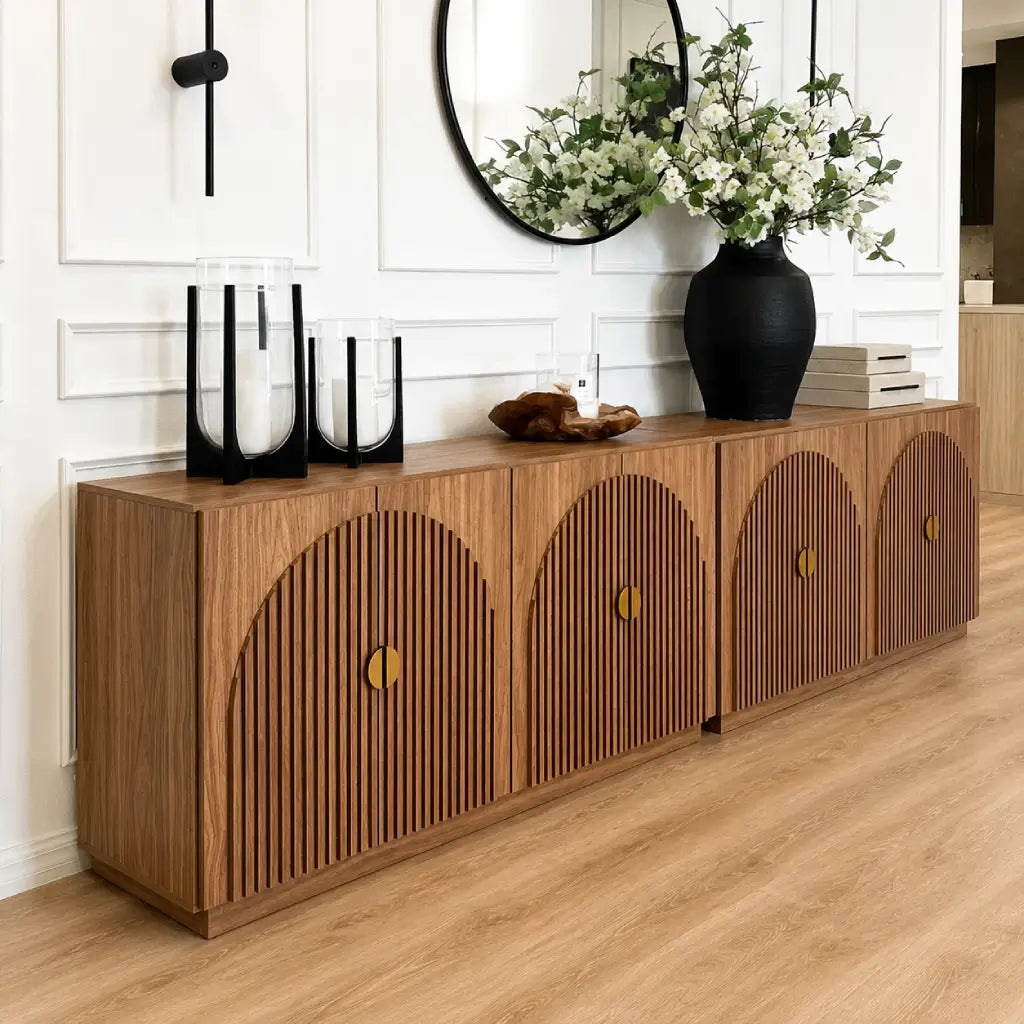
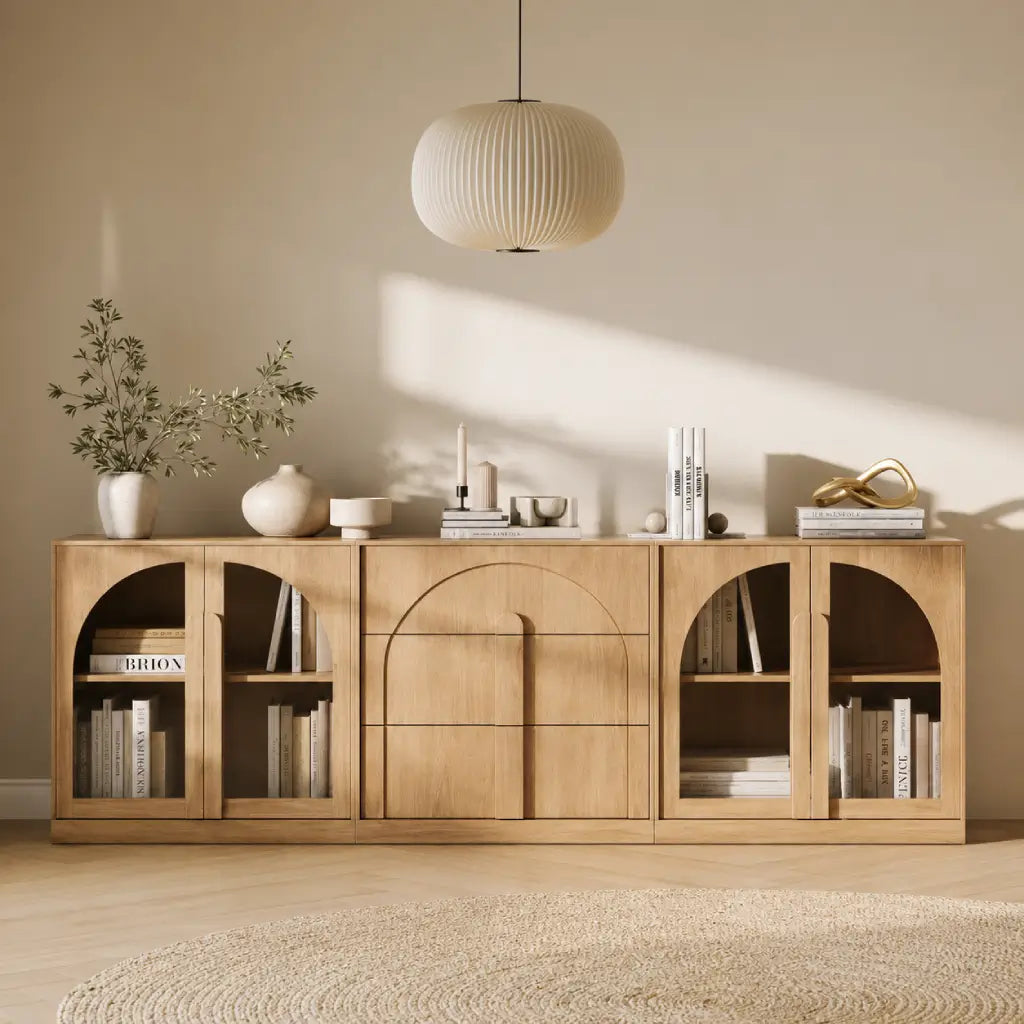
Once the room and storage list already point to three, compare the full-wall plan with the Jagger Modular Wood Arc-Door Sideboards (3-Piece).
What Can Go Wrong When You Add Later
Adding one cabinet later works only when the matching cabinet is still available and still close enough to your original setup. Save the product name, URL, finish, order confirmation, screenshots, and dimensions on purchase day.
Finish matching is the biggest visual risk. MDF and other engineered-wood furniture surfaces can read differently under warm bulbs, daylight, and phone screens. Production timing can also affect finish, so do not expect a future perfect match.
Already own the 2-piece setup? Compare the current Jagger Double-Arc Wood Door Modular Sideboard listing against your original order before buying the third cabinet.
What Buying in Stages Really Changes
Buying in stages can lower the first order, but not the final setup by itself. Compare the 2-piece price plus a future single cabinet with the current 3-piece set price, then factor in delivery timing and stock availability.
Separate orders can mean separate return windows, support timelines, warranty handling, and delivery days. Check Belleze's current policies before using an old order for a new decision. If finish mismatch is a concern, order only while you can still return the third piece.
A second purchase also means a second round of parts checks, cabinet alignment, leveling, and packaging.
Before You Load the Cabinets
Adjustable shelves matter because dinnerware, linens, baskets, and books do not all need the same shelf height. This guide does not provide a universal shelf or top weight limit. Check the current spec sheet or assembly manual before loading dinnerware, appliances, or media equipment, then keep heavier items low.
Use the anti-tip hardware or anchoring method specified in the current product manual, especially around children, pets, uneven floors, or heavy storage. A sideboard can still tip if weight shifts forward.
Do not forget the doors. Test door swing against chair backs, traffic paths, coffee tables, rugs, and media cords before you commit to placement.

Which Starting Point Fits Your Room?
| Your situation | Best first move |
| Apartment dining corner, hallway, or entryway drop zone | Start with two cabinets. |
| Dedicated dining room with dinnerware and serving pieces | Buy three upfront. |
| Wall over 9 feet wide in an open living/dining space | Measure for three before buying two. |
| Rental home or likely move within a year | Start with two and save all order details. |
| Existing Jagger owner needing one more cabinet | Compare the current single cabinet with the original order. |
Mistakes That Make Adding Later Hard
Measuring only for today's setup
Do not tape off only the first 65 inches. Mark the possible 97.5-inch run too, so a later add-on does not block a walkway, crowd a dining chair, or force a full room reset.
Assuming the product page stayed the same
A later product page may not match the one you bought from. Keep screenshots and order details so the third-cabinet decision is based on proof, not memory.
Treating the sideboard like garage storage
A sideboard is not a garage shelving unit. Keep heavier items low, avoid overloading adjustable shelves, and check the current capacity before storing appliances, stacks of plates, or media equipment.
Skipping the wall anchor
Do not skip the anchoring method in the manual because the cabinet feels stable when empty. Weight distribution changes after storage is added, especially around children, pets, and high-traffic rooms.
Keep the Cabinets Looking Like One Piece
A matching cabinet run can still look off if one section is overloaded or cleaned harshly. Wipe spills quickly, avoid harsh cleaners unless care instructions allow them, and use trays under drinkware, plants, or bar setups.
Door alignment can shift after moving, loading, or floor changes. Recheck leveling and hinges after assembly, after filling the cabinet, and after moving it to another room.
For an open-plan room, repeat one or two finishes already in the space: black hardware, warm wood tones, woven baskets, or a lamp finish.
Start With Two Only If It Works Now
Start with two only if the 65-inch setup looks complete, stores what you own today, and leaves the room easier to use. Buy three upfront if the wall, storage load, or matching risk already points that way.
Add one later only after comparing the current single-cabinet listing with your original order details. That is the difference between a planned expansion and a delayed mismatch.
Measurements that point to two are a good reason to browse 2-piece modular sideboard systems. A wider wall and larger storage list should lead you to compare 3-piece modular sideboards before ordering.
FAQ
Can I add a third Jagger cabinet later?
Yes, if the matching single Jagger cabinet is available in the same finish, cabinet type, and current dimensions. Compare the current listing with your original order before buying.
Will a new cabinet match the old one?
It may match closely, but a perfect match is not guaranteed. Finish appearance can vary by lighting, display settings, production timing, and product-page changes.
How much clearance should a sideboard have?
Leave enough room for doors to open, chairs to pull back, and people to pass without turning sideways. Check depth, baseboards, vents, rugs, and outlets before choosing the final cabinet run.
Should a sideboard be anchored to the wall?
Use the anti-tip hardware or anchoring method specified in the current manual, especially around children, pets, uneven floors, or heavy storage. Anchoring reduces tip risk but does not replace careful loading.
Can I use a modular sideboard as a media cabinet?
A sideboard can hold media equipment like receivers and gaming consoles if it meets the weight capacity. Do not place a TV directly on top unless the product page explicitly rates the top surface for that load. Always check the current spec sheet.

Leave a comment
This site is protected by hCaptcha and the hCaptcha Privacy Policy and Terms of Service apply.