


A sideboard can look perfect online and still feel wrong once real life moves in. Glass doors make every shelf part of the room. Solid doors hide the things nobody wants to style. Drawers keep small items from disappearing behind deeper cabinet shelves.
Match the sideboard front to what will live inside it: how often you reach for those items and whether the contents should be visible. Sort that out before comparing finishes, because the prettiest front can still be the wrong one for your storage.
Start With What You’ll Store
Walk through the room and list the actual items first. Do not write “storage” or “decor.” Write dinner plates, remotes, leashes, mail, coffee filters, board games, chargers, or serving platters. Then sort them by what the cabinet needs to do.
- Display pile: pieces you would be happy to leave visible, such as matching dishes, barware, ceramics, or styled books.
- Hide pile: mixed or messy storage, including paperwork, toys, cables, baskets, backup dishes, and overflow household items.
- Grab-often pile: small items used several times a week, such as remotes, chargers, keys, mail, napkins, coasters, or flatware.
- Mixed pile: real-life storage that crosses all three groups. This is where a mixed or modular sideboard starts to make more sense than one fixed front.
Match the Front to the Mess
Once the items are sorted, the front choice gets easier.
- Glass doors: pick them only for shelves you are willing to keep neat. Dinnerware, glassware, ceramics, and books look good behind glass; crowded overflow does not.
- Solid doors: pick them for the messiest category. Toys, paperwork, cables, baskets, and extra dishes can be imperfect inside without making the room look busy.
- Drawers: pick them for the small things people use and lose. Remotes, chargers, keys, mail, linens, and flatware are easier to grab from a drawer than from the back of a shelf.
Still split between two front types? Start with solid doors for the messiest storage, then add glass or drawers only where they solve a specific problem.
A modular setup helps when one front type is not enough. With modular sideboard systems, you can combine glass-door, solid-door, and drawer pieces in one row instead of forcing every item behind the same front.
Choose by the Room’s Job
- Dining room: Glass belongs on the pieces you actually like seeing, such as barware or a clean stack of dishes. Solid doors are better for seasonal platters, overflow serveware, and anything that comes out only a few times a year.
- Living room or media zone: Solid doors do most of the work here. They hide games, cords, consoles, and extra tech. Drawers are worth adding if remotes and chargers always end up on the coffee table.
- Entryway or hallway: Drawers work well for keys, mail, sunglasses, and leashes. Solid doors are better for shoes, bags, and the clutter people see as soon as they walk in.
- Home office, bar, or coffee station: Drawers help with small supplies and tools. Glass only helps if the mugs, bottles, or books are part of the look and not just extra storage.
- Small or open-plan rooms: One glass unit can keep a cabinet row from feeling too heavy. Too much glass can also make the room look busier, so mix it with solid doors or drawers when the storage is not display-ready.

A sideboard that sits under a TV needs more than the right look. Check the product page for top weight capacity, TV size fit, cable access, outlet placement, and ventilation needs. A dedicated TV stand is the better choice when those details are not clearly supported.
Use Glass Doors for Display
Glass-door sideboards work best when the contents deserve attention. Matching dinnerware, barware, ceramics, art books, and a few decor pieces can make the cabinet feel lighter and more finished.
Glass doors stop helping when the inside starts looking like overflow storage. If the shelves will hold toys, tangled cords, mismatched containers, or anything you do not want to arrange, choose solid doors or drawers instead.
A glass-door example is the Jagger Arched Glass Door Modular Sideboard. It can serve as the display piece in a mixed layout after you check current availability, dimensions, tempered glass details, and anchoring guidance.
Use Solid Doors to Hide Clutter
Solid doors are the most forgiving choice because the inside does not have to look styled. Paperwork, toy bins, board games, spare dishes, serving pieces, and baskets can all stay out of sight.
They are also a good first choice if you are buying one sideboard and do not know how your storage needs may change. The tradeoff is visual weight. In a small or dark room, an all-solid cabinet row can feel heavier than a layout with one glass or drawer unit mixed in.
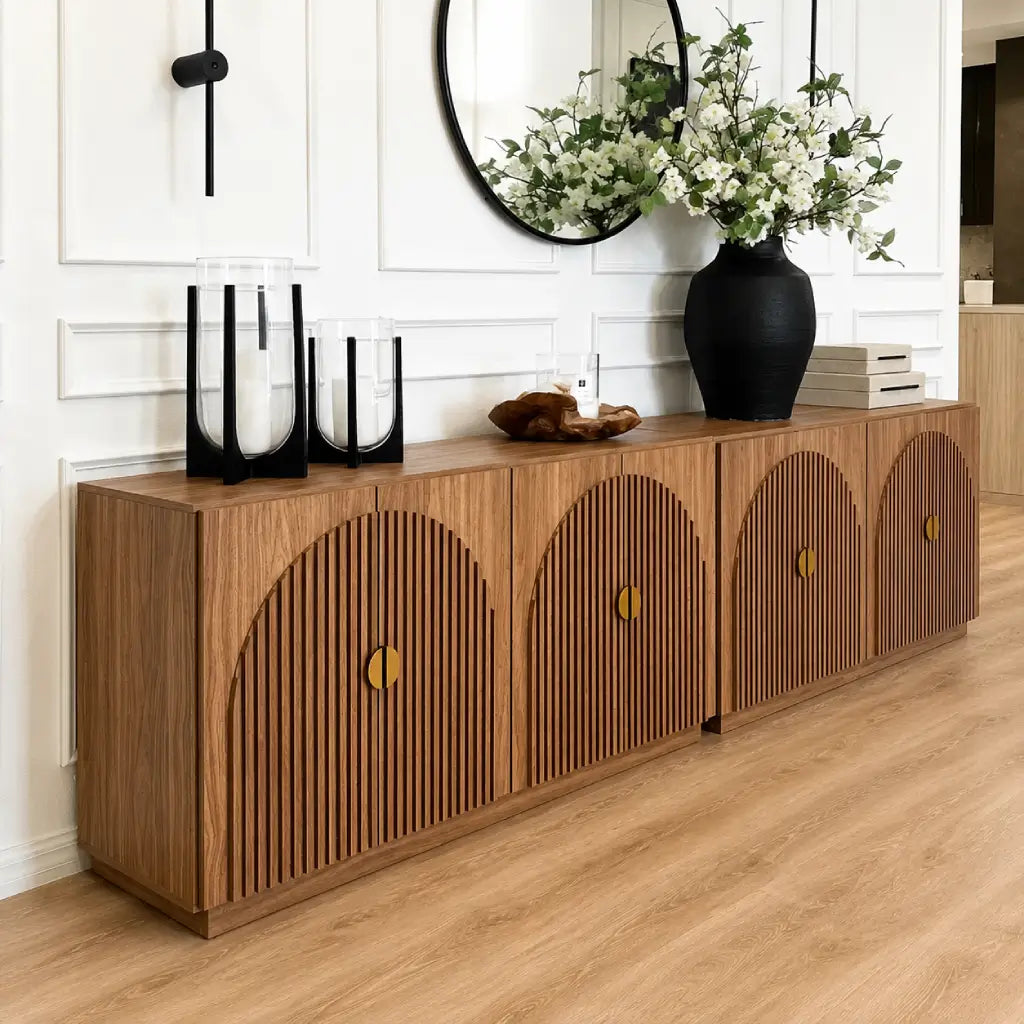
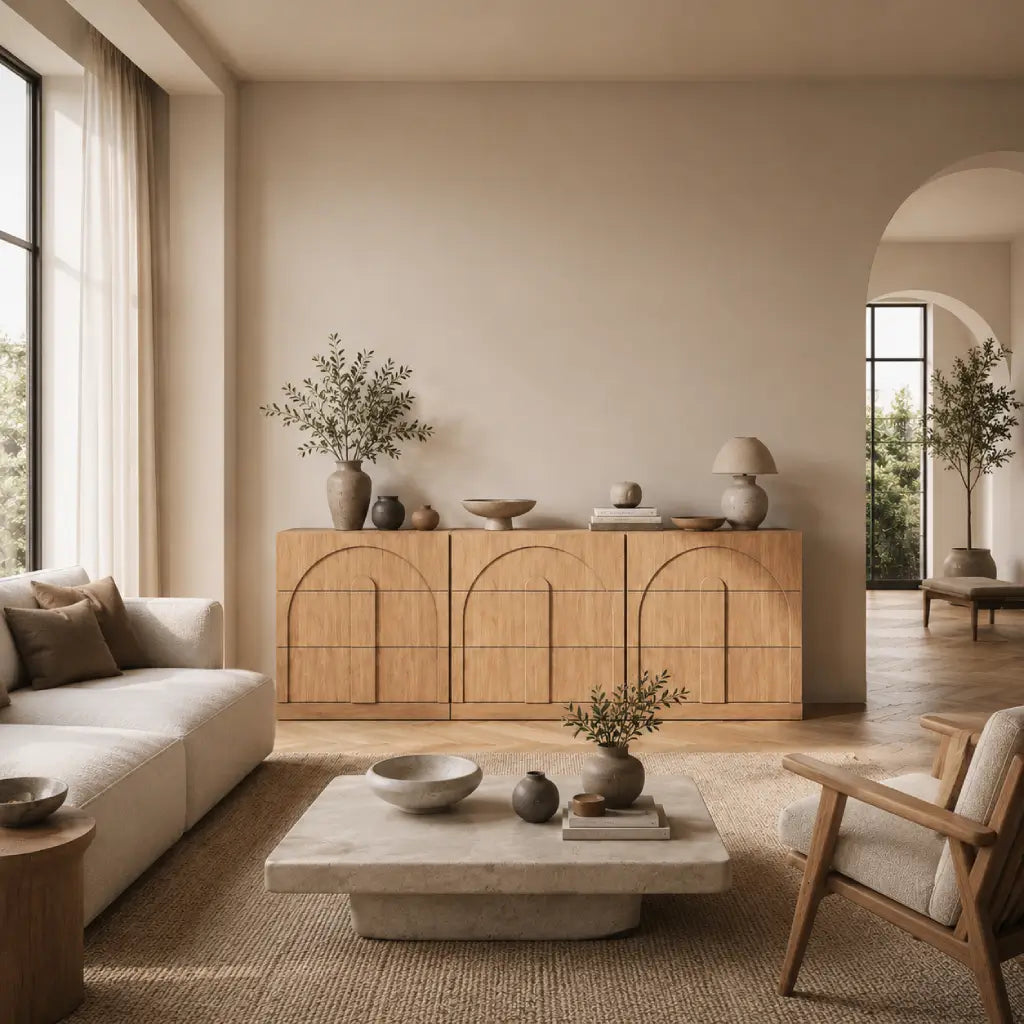
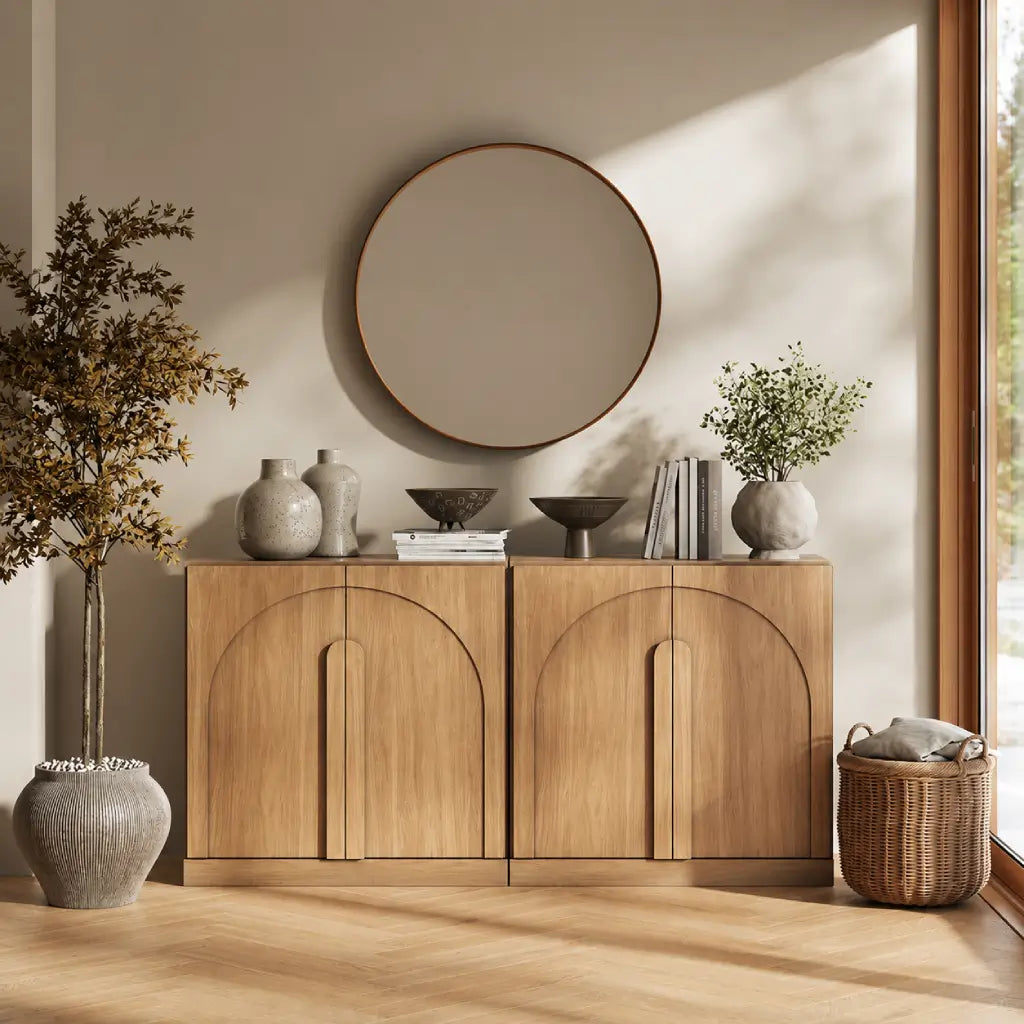
The closed-storage match in this modular group is the 33" Arched Fluted Doors Modular Sideboard. Check current stock, finish, assembled dimensions, shelf capacity, and adjustable shelf positions before using it in a modular plan.
Use Drawers for Small Daily Items
Drawers solve the problem deep cabinet shelves create. Small things slide to the back, get buried under larger items, or disappear when several people use the same storage spot.
Use drawers for items that are small, flat, easy to lose, and used several times a week. Remotes, chargers, flatware, linens, coasters, bar tools, stationery, and keys all fit that pattern. Tall bottles, appliances, serving platters, and media consoles belong behind doors or on shelves.
The drawer-heavy option is the Bijou 3-Drawer Modular Storage Cabinet, which gives the row a place for small items. Check current availability, dimensions, drawer weight limits, finish options, and assembly details before planning a matching row.
Fixed Cabinet or Modular Mix?
A fixed mixed-front cabinet works when one ready-made piece already has the right doors, drawers, width, and finish for your room. It is the simpler purchase if the layout solves the problem today.
A modular sideboard works better when your storage mix is uneven, the wall is wider than a standard cabinet, or you want to expand later. Before mixing pieces into one row, confirm the same series, height, depth, finish, leg style, and hardware across the units you choose.
How Many Pieces Fit Your Wall?
Choose the front mix first, then check whether the layout width fits the wall. These planning ranges are based on Belleze modular pieces that are roughly 31.5 to 32.7 inches wide.
| Pieces | Planning width | Best use |
| 1 | About 32 to 33 in | One main storage job, such as display, hidden storage, or drawers |
| 2 | About 64 to 66 in | 2-piece modular sideboards for a compact dining room, entryway, apartment wall, or small living area |
| 3 | About 96 to 99 in | 3-piece modular sideboards for a balanced row with display, hidden storage, and daily-access drawers |
| 4 | About 128 to 132 in | 4-piece modular sideboards for a long wall where you want a built-in-style storage look |
These are planning ranges only. Always check the exact product dimensions before ordering, especially depth, door swing, outlet placement, baseboards, vents, and walkway clearance. If you are still measuring, the sideboard dimensions guide can help you check wall width and room clearance.

Check What Is Hard to Fix Later
A sideboard can have the right front and still be annoying after delivery. Check the details that are hard to change once the box is open.
- Fit: assembled width, depth, height, door swing, drawer clearance, walkway space, baseboards, vents, and nearby outlets.
- Storage limits: shelf capacity, drawer capacity, top weight capacity, adjustable shelf positions, and whether electronics have cable access and ventilation.
- Build and safety: material, finish, glass type, included anchoring hardware, and wall-mount instructions.
- Order details: assembly requirements, current stock, finish availability, shipping, return window, warranty, and replacement-part support.
Keep heavier items low on any freestanding cabinet. Homes with children or pets should follow the manufacturer's anchoring guidance. Belleze product pages currently note manufactured wood or MDF-based construction for these modular pieces, so do not assume solid hardwood unless the exact product page says so.
FAQ
Are glass-door sideboards good for small rooms?
Yes, if the shelves stay neat. Glass doors can make a cabinet feel lighter than solid fronts, but clutter behind glass makes a small room look busier. For most small rooms, one glass unit mixed with solid doors or drawers is safer than an all-glass layout.
Are drawers better than cabinet doors on a sideboard?
Drawers are better for small items you use often, such as remotes, chargers, flatware, linens, keys, mail, and office supplies. Cabinet doors are better for taller, bulkier, or less-used items such as baskets, dishes, bottles, books, appliances, and overflow storage.
Can glass, solid, and drawer units mix in one row?
Yes, when the units come from a coordinated series. Keep the same height, depth, finish, leg style, and hardware. Even small mismatches can show when several cabinets sit side by side.
Can a sideboard work as a TV stand?
Sometimes, but only if the top weight capacity, width, depth, ventilation, cable access, and stability fit your TV and electronics. If the product page does not clearly support media use, choose a dedicated TV stand instead.
Do sideboards need wall anchoring?
Follow the manufacturer's anchoring guidance for the specific cabinet. Anchoring matters more when children or pets are in the home, when heavy items sit on top, or when the unit is tall, narrow, or freestanding.
Measure First, Then Compare Layouts
Start with wall width, depth, walkway clearance, and nearby outlets or vents. Once the front type is clear, compare 2-, 3-, and 4-piece options or browse modular sideboards. Check dimensions, weight limits, finish options, assembly details, and current availability before ordering.

Leave a comment
This site is protected by hCaptcha and the hCaptcha Privacy Policy and Terms of Service apply.