


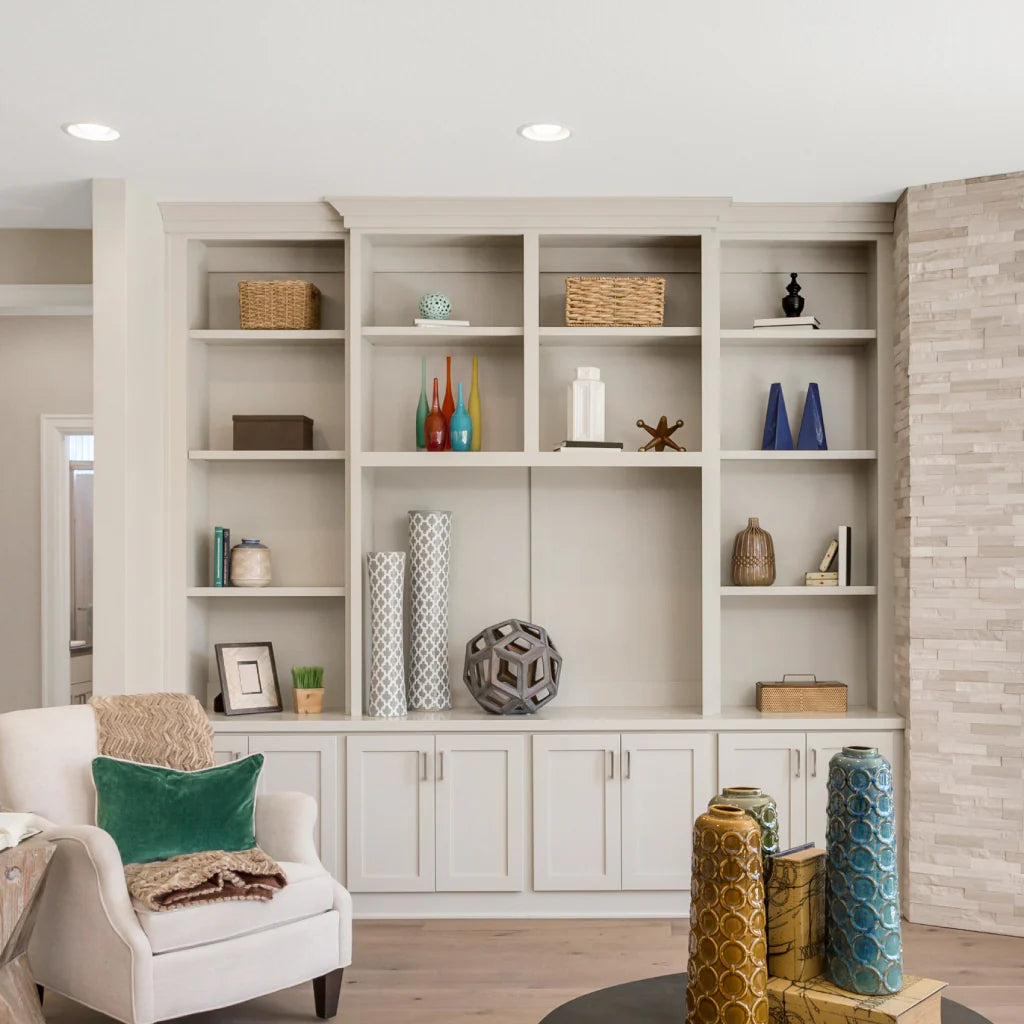
Built-in cabinets for living rooms look like the perfect solution. Floor-to-ceiling storage, clean lines, everything tucked away. But are they actually worth it once you factor in cost, flexibility, and how your needs change over time?
Before you call a carpenter, it helps to understand the trade-offs people only discover after installation. This guide breaks down who truly benefits from built-ins, where they backfire, and what alternatives can give you the same polished look with far less risk.
Why Built-In Cabinets Are So Common in Living Rooms?
Walk into any home design magazine spread, and you will see built-in cabinets everywhere. There is a reason for that. Unlike freestanding furniture that simply sits in a room, built-ins become part of the room itself. They correct awkward walls, fill dead space, and make average rooms feel intentionally designed. That kind of architectural integration is hard to replicate with standalone pieces.
Clean, Unified Look
Floor-to-ceiling cabinetry removes the dust gaps and shadowy spaces you see above regular bookcases. Everything sits flush against the wall, creating one continuous surface that makes the room feel bigger and less cluttered. Your eye moves smoothly across the wall instead of stopping at mismatched heights and finishes.
Professional installers scribe each unit to the wall, trimming edges to match uneven drywall or slightly sloped flooring. That gap-free finish is something off-the-shelf furniture almost never achieves. It is this level of precision that gives built-ins their polished, intentional appearance.
Added Storage and Character
In cities where square footage is expensive, built-ins capture the top 12 to 24 inches of a room that standard furniture ignores. That vertical space adds meaningful storage volume without making the room feel smaller or expanding the home's footprint.
They also let you follow what designers call the 80/20 rule of storage. About 80% stays behind closed doors, hiding toys, cables, and paperwork. The remaining 20% is open shelving for the things you actually want to display. That balance keeps rooms calm without feeling bare.
Architectural Appeal
Some living rooms lack a natural center of attention. There is no fireplace, no interesting window, nothing for your eye to land on. A built-in wall solves that by creating a focal point, framing a TV or window and giving your furniture layout a clear anchor.
Built-ins also handle structural eyesores well. A bulky column or exposed radiator that ruins every furniture arrangement can be wrapped in custom millwork. What was a flaw becomes a functional part of the room.
What People Notice After Living With Built-Ins for a While?
The first few months feel great. Everything has a place, the room looks finished. But permanence has a way of revealing itself slowly. The storage that felt perfect at move-in starts to show its limits as life changes around it.
Limited Room Flexibility
Once the cabinetry is installed, the room layout is locked. You cannot swap the living area with the dining space or shift the sofa to the opposite wall without tearing something out. That kind of rearrangement, which takes an afternoon with freestanding furniture, becomes a renovation project with built-ins.
If your household changes and you suddenly need more open floor space for a play area or a home gym setup, fixed joinery makes that nearly impossible. The furniture cannot move because it is the wall.

Changing Needs Over Time
Open shelves look beautiful in photos. In real life, they require constant attention. Homeowners often grow tired of dusting, restyling, and keeping displays looking intentional. Over time, those curated shelves quietly become catch-alls for random items.
Specialized features create similar problems. A built-in wine rack sounds ideal until you lose interest in collecting. A desk nook works until you switch to working at the dining table. With freestanding furniture, you could sell it or move it to another room. With built-ins, the dead zone stays.
The Permanence Problem
Design trends shift in roughly 10 to 15 year cycles. Dark wood paneling that looked timeless in 2012 can feel dated by 2026. A built-in with period-specific details ages faster than a simple, neutral piece of furniture you could replace in an afternoon.
There is also the exit cost. When you sell a home or simply want a change, removing built-ins is not free. It costs money to demolish the unit, repair the drywall behind it, and patch the flooring underneath. Unlike a bookcase you take to your next home, unwanted built-ins are a liability, not an asset.
Problems Built-In Cabinets Can Cause Over Time
Beyond the lifestyle drawbacks, built-ins create some practical headaches that get worse with age. What started as a perfect custom fit can quietly turn into a custom trap.
Poor Resale Return
High quality built-ins might help your home sell faster by making it look polished. But faster does not mean more profitable. Rarely do they return what you spent. In many cases, they make no difference to the final sale price at all.
If the style is polarizing, the effect can be negative. A buyer who does not share your taste sees a massive entertainment wall and mentally subtracts the cost of removing it from their offer. Your investment becomes their renovation budget.
Hard to Update or Repair
Changing the color of a built-in is not like painting a dresser. Factory-sprayed finishes are hard to match on site. A full color change means extensive masking, sanding, priming, and ventilation. It is a multi-day job where swapping a freestanding piece would take minutes.
Hardware problems add up too. When a hinge breaks or a shelf sags years after installation, finding an exact replacement can be difficult. Modular furniture typically uses standardized parts. Custom work often does not.
Wasted Custom Space
Many older built-ins were designed for deep, boxy TVs. Those 24 to 30 inch deep cavities look strange with today's thin flat screens. The TV sits at the front edge of a dark tunnel, and the space behind it goes to waste.
Fixed vertical dividers create another issue. A niche built for a 50 inch screen cannot hold a 65 or 85 inch model. That leaves you choosing between a screen that feels too small for the room or tearing out the unit entirely.
What Homeowners Really Want From Built-In Storage
Before deciding on built-ins, it helps to ask what you are actually after. Most of the time, the goal is not permanent millwork for its own sake. It is a specific look and a specific level of organization.

A Unified Wall-to-Wall Look
What most people picture is a cohesive feature wall where everything looks like it belongs together. Not a random collection of bookcases and media consoles, but one unified surface that feels intentional and architectural.
There is also a status element. Floor-to-ceiling storage signals that a home is well thought out and complete. It reads as high-end and bespoke, even when the materials are modest.
More Organized Storage
The real frustration behind most built-in projects is clutter. Cables tangled behind the TV, toys scattered across the floor, paperwork piling on every surface. What people need is enough closed storage, with drawers and doors, to keep daily mess out of sight.
They also want capacity. Standard low-profile furniture does not use vertical space well. The goal is fitting more into the room without adding more floor-level pieces.
A High-End, Custom Feel
In older homes, new storage should look like it has always been there. That means matching the existing trim profiles, molding styles, and wood tones so the addition feels original rather than bolted on.
For tech-focused rooms, the desire is a clean, wireless appearance. All cables, routers, and streaming boxes hidden behind panels instead of visible on an open shelf.
A Clean, Balanced Layout
Symmetry creates calm. Two matching units flanking a fireplace or TV naturally balance the room in a way that mismatched furniture rarely achieves. People want that visual order without spending hours tweaking furniture placement.
Built-ins also anchor a room's purpose. A clear media zone or reading nook tells you exactly how the space is meant to be used, removing the "floating furniture" feeling.
Getting a Wall-to-Wall Look Without Built-In Cabinets
Here is the good news. Nearly everything people love about built-ins can be achieved without permanent construction. The key is using modular systems designed to look integrated while staying flexible.

Using Modular Pieces as One System
High-end modular systems use connecting bridges and filler panels to form a continuous wall of storage. Lined up properly, they mimic the seamless look of custom joinery. But they can be taken apart and reconfigured if your needs change.
For a coordinated storage wall, the Jagger 170" 7-Piece Fluted Modular Fireplace TV Wall Unit combines drawer cabinets with upper shelves around a wall-mounted TV. Its separate modules create a built-in-style arrangement, with a central electric fireplace adding a focal point.
Combining Cabinets and Shelves
Separating the base storage from the upper display creates a lighter feel. A credenza paired with a wall-mounted shelf avoids the heavy, enclosed look that deep upper cabinets can create. The room still feels open while you get the storage you need.
For media-focused rooms with less need for tall storage, the Westmont 3-Piece Modular Fluted Fireplace TV Stand pairs adjustable-shelf cabinets with a central electric fireplace. The low arrangement leaves room for separate shelves above, while the flame effect can run without heat.


Filling Nooks With Furniture
Alcoves and odd nooks do not always need custom work. Placing a standard-width cabinet into the space and using simple trim strips to cover the side gaps gets you close to a built-in look at a fraction of the cost. Most guests will never know the difference.
If your storage need is mostly horizontal, like a serving area or a low media console, modular sideboards fit the role well. They sit cleanly against the wall and provide practical storage without permanent installation.


Creating a Built-In Look With Freestanding Units
The "faux built-in" approach is popular for a reason. Anchor a sturdy bookcase to the wall, then add baseboards, crown molding, and simple lighting. These details give freestanding furniture the architectural weight of custom millwork without the permanence.
The financial upside matters too. If you relocate within a few years, these units can be dismantled and moved to your next home. You avoid the sunk cost that comes with leaving real built-ins behind.
Situations Where Built-In Cabinets Still Make Sense
Built-ins are not always the wrong choice. In certain situations, the permanence is justified and the benefits genuinely outweigh the risks.
Unique Spaces Furniture Can't Fit
Rooms with sloped ceilings, non-standard angles, or oddly shaped alcoves need custom work. No off-the-shelf piece will scribe to an attic roofline or wrap around a structural column. In these cases, built-ins are the only option that uses the space well.
Extremely tight footprints fall into the same category. When you need to capture every usable inch, such as building storage around radiators or under stairs, custom millwork is the only practical solution.
Planning to Stay Long Term
If you plan to stay in your home for seven to ten years or more, the math changes. The daily enjoyment and utility spread across that many years make the upfront cost easier to justify. Resale return matters less when you are the one using it every day.
Stable-use rooms also lower the risk. A home library or mudroom has consistent storage needs that rarely shift. Unlike a media room where technology changes constantly, a wall of bookshelves stays relevant for decades.
Need for Full Custom Integration
Serious home theater setups sometimes require internal ventilation channels, hidden subwoofer compartments, and complex cable management behind sealed panels. That level of integration only works with custom construction.
The same applies to material matching. If you need storage that coordinates exactly with your home's existing trim, using the same exotic wood species or high-gloss lacquer finish, custom work is the only reliable path.
When the Look Matters Most
In period homes like Craftsman bungalows or Victorians, built-ins are part of the home's identity. Removing or replacing them with modern furniture would diminish both the character and the value. Preserving or adding period-appropriate cabinetry makes sense here.
For some homeowners, the emotional satisfaction of a perfectly tailored room outweighs every practical concern. That is a valid choice. Not every decision needs to optimize for resale or flexibility.

A More Flexible Way to Plan Living Room Storage
Built-in cabinets deliver unmatched architectural integration. But their value is fragile. A shift in technology, a change in taste, or a surprise move can erase the return quickly.
For most homeowners, high-quality modular furniture that looks permanent offers the strongest balance of style, function, and financial flexibility. If you are staying less than seven years, prioritize systems you can take with you and avoid the exit cost of tearing out something you no longer need.
Related Reading: Wall-to-Wall Storage Ideas That Actually Make Small Homes Feel Bigger


Leave a comment
This site is protected by hCaptcha and the hCaptcha Privacy Policy and Terms of Service apply.