


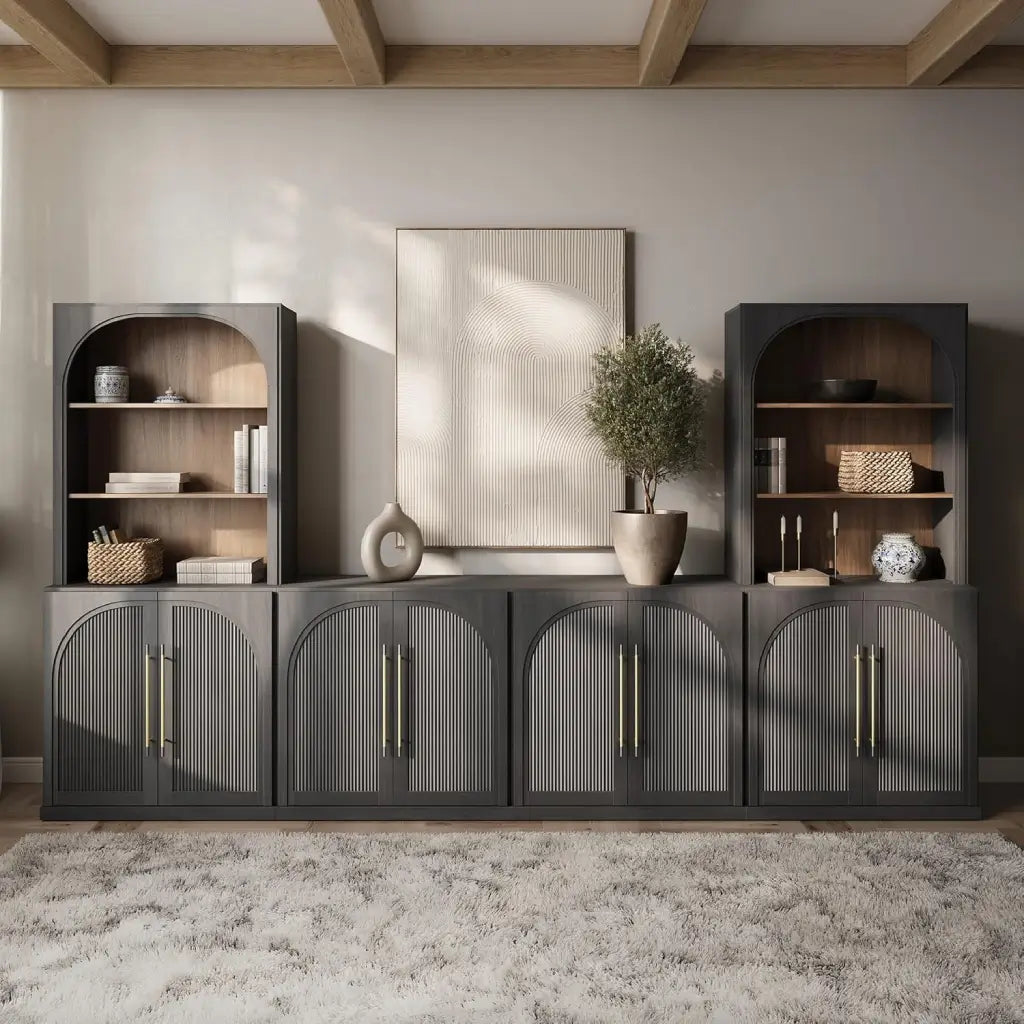
In small homes and apartments, the problem isn’t oversized furniture. You don’t run out of space, you run out of places to hide things. Storage ends up scattered everywhere: a dresser here, a shelf there, baskets on the floor, cabinets along different walls. This is why many small spaces feel crowded even when they aren’t. Your eyes have too many places to look.
Wall-to-wall storage is one of the most effective storage ideas for small homes. Instead of filling the floor with small pieces, you use a shallow strip of wall depth, about 15 to 20 inches, to hide everything behind one continuous, calm surface. When clutter disappears from sight, the room immediately feels more open.
Why Too Many Small Storage Pieces Make a Room Feel Smaller
When you have a shelf in one corner and a cabinet across the room, your eye keeps jumping between them. This constant back-and-forth makes the space feel unsettled, even when everything is technically tidy.
More standalone pieces also create physical problems. Every separate unit adds another set of corners to walk around. More furniture legs break up the floor into small sections. Your room ends up feeling uneven instead of open.
Too many pieces break up your walking path
Every piece of furniture you add creates another object to move around. You walk past the sofa, angle around the bookshelf, then squeeze by the side table. This stop-and-go movement makes the room feel tighter than it really is.
Instead of moving straight through the space, you find yourself zig-zagging. That constant adjustment reminds you how crowded the room feels.

Visual clutter can shrink a room
When you mix baskets, metal shelves, and wooden cabinets, your eyes keep stopping at each one. Different shapes, materials, and heights pull your attention in too many directions at once.
Here’s what matters: a room with ten small storage pieces scattered around often feels more cramped than a room with one large, unified unit. Fewer visual breaks make the space easier to take in.
Many small cabinets ≠ one cohesive system
Small units create spaces you can’t really use:
- That dusty 12-inch gap between a cabinet and the wall
- The empty space above a low bookshelf that collects dust
- Awkward corners where nothing fits properly
You end up with less usable storage because none of the pieces use the full height or width of the wall.
When Wall-to-Wall Storage Starts to Make Sense
This approach isn’t for every home. It replaces the habit of adding small fixes with a more intentional solution. But there’s a point where scattered storage clearly stops working.
If you keep adding bins, carts, or narrow shelves and the mess keeps returning, it may be time to rethink how the wall is being used.
You’re maxed out on storage capacity
You’ve already used every closet. The under-bed bins are full. Corners are taken. Yet everyday items like shoes, mail, and charging cords still end up on chairs or the floor.
At this point, the issue isn’t organization. It’s that small furniture simply can’t hold enough of what daily life brings into the room.
Your rooms serve multiple purposes
This is common in studio apartments or open rooms where one space must be:
- An office during the day
- A dining room at mealtimes
- A living room in the evening
Without one place to contain everything, items slowly spread. Papers move toward the sofa. Toys reach the dining table. A storage wall gives everything a consistent home.
You’ve already crammed in furniture and it’s not enough
You tried buying one more rolling cart or slim shelf. It only added another thing to walk around without solving the overflow. The room feels full, yet you still don’t have a proper place for larger items like the vacuum, printer, or extra linens.
When adding more pieces makes the space feel worse instead of better, that’s the sign the scattered approach has reached its limit.
Why Wall-to-Wall Storage Feels So Much Calmer
When you walk into a room with scattered storage, your eyes jump from one thing to the next. The TV stand, then the bookshelf, then the basket in the corner. You notice each piece without meaning to. With a storage wall, you stop counting furniture. You just see one clean surface running across the room.
Behind that surface, everything has a place. The router and its tangle of cables go in one cabinet. Books, blankets, and board games go in another. Mail that used to pile on the counter now has a drawer. Kids' toys disappear behind a door instead of spreading across the floor.

One system replaces several pieces
Think about what a typical living room holds: a TV stand, a bookshelf, maybe a console or sideboard, plus a few baskets or bins. That's four or five separate items, each with its own footprint, its own style, its own set of legs cutting into the floor.
A storage wall does all those jobs in one place. The TV stand, the bookshelf, the random baskets. All gone. You remove the scattered pieces and the floor opens up. The sofa area finally has breathing room.
Closing the doors changes the whole room
Open shelving shows everything. A storage wall lets you hide the mess when you need to.
Company coming in ten minutes? Close the cabinet doors. Cables, chargers, half-finished projects, the vacuum you haven't put away. All of it disappears. The room looks pulled together even when life behind the doors is chaotic.
Everything goes to the same place
You stop wandering the room looking for where things belong. Remote controls, headphones, notebooks, spare batteries. They all go to the same wall.
This also means cleanup is faster. Instead of distributing items to five different spots, you walk everything to one zone. The sorting happens inside the cabinets, not across the room.
Why Modular Storage Works Better Than Built-Ins in Small Homes
If you rent, you already know the problem with built-ins. You can't take them with you. A $5,000 custom unit stays behind when you move, and that money is gone.
Even if you own, built-ins lock you into one layout. Ceiling heights change between apartments. A home office might need to become a nursery. Once carpentry is in, you're stuck with what you chose on day one.

What modular stacking actually looks like
Picture two cabinets, each about 30 inches tall, stacked on top of each other. Together they reach nearly to the ceiling. That single stack can replace a dresser, a bookshelf, and a console table, all in the footprint of one piece.
You're using wall space that normally goes empty. Most rooms have two feet of unused height near the ceiling. Stackable units turn that dead zone into real storage.
You can start small and add later
You don't have to buy the whole system at once. Start with two or three base units. Live with them for a few months. If you need more drawer space, add a drawer module. If you want display shelves, swap in an open unit.
This also makes moving easier. The pieces fit through standard doorways and narrow stairwells. No need for special delivery or disassembly.
Mixing open and closed storage
Some things you want to see: books, plants, a few favorite objects. Other things you want hidden: cables, paperwork, random clutter.
Modular systems let you combine both. Use open shelves where you want texture and personality. Use solid doors where you need to hide the mess. This is exactly what modular cabinet systems are built for. They give you the flexibility to mix storage types while keeping a unified look across the wall.
Check out: Belleze Modular Cabinets
How Wall-to-Wall Storage Works in Different Rooms
A living room storage wall hides the TV cables and gaming consoles. A bedroom wall tucks away clothes so the space stays restful. A dining area needs something lower, where you can set plates and serving dishes without blocking the view across the table.
Most modular units run about 15 to 16 inches deep. That's enough to hold books, dishes, and folded clothes without blocking walkways or making the room feel tight.
Living Room: One Wall That Does It All
Living rooms collect technology. The TV, the gaming console, the router, the streaming box, the tangle of cables behind it all. Add books, remotes, and chargers, and you have what most people call the "media mess."
A storage wall solves this by building around the TV. Center the screen and surround it with tall cabinets. Instead of a black rectangle demanding attention, you see a full wall with the TV sitting quietly in the middle.

This setup merges your TV stand, your hidden storage, and your display shelves into one unit. No more separate bookcase. No more console table with a mess of cords showing. Everything lives in one place, and the rest of the room stays clear.
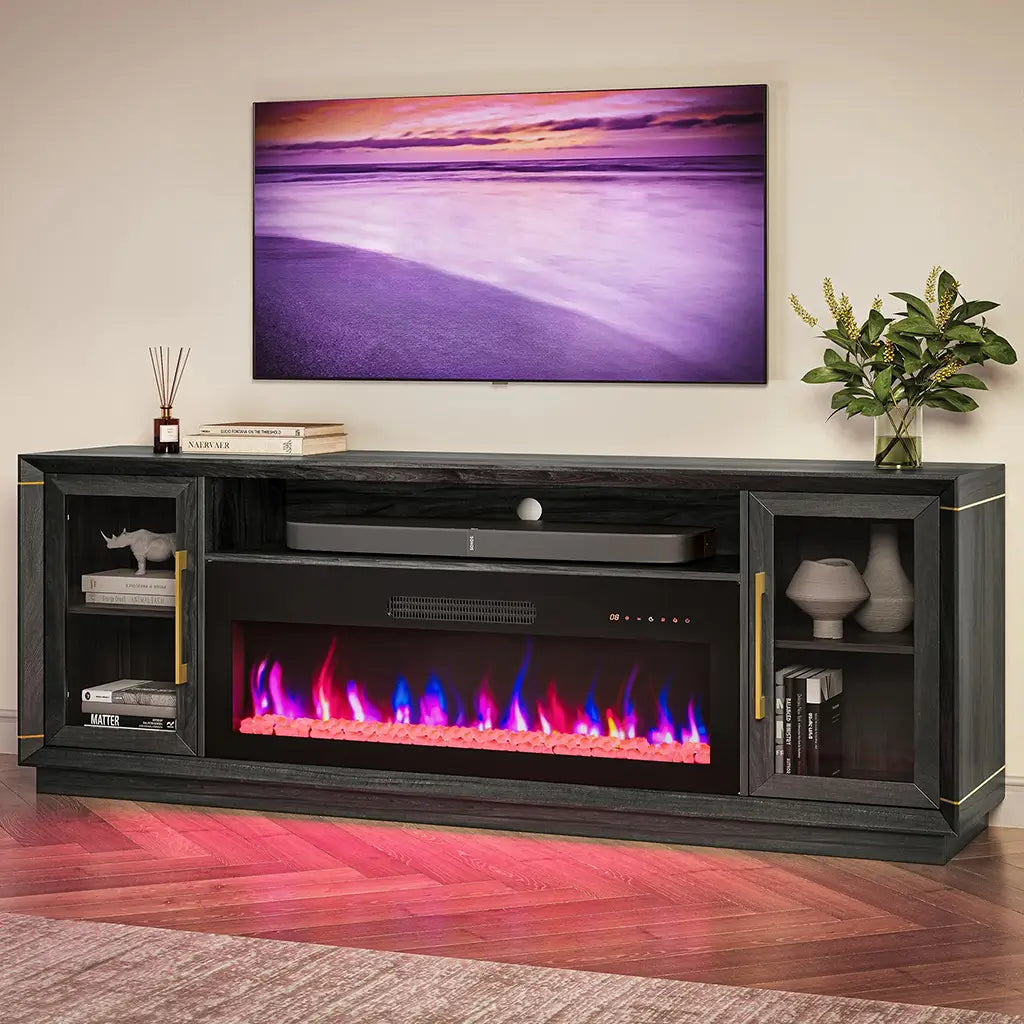
For a long, uninterrupted wall, the Jagger 170" 7-Piece Wood Door Modular Fireplace TV Wall Unit groups closed cabinets and upper shelving around a wall-mounted TV in a 169.8-inch-wide arrangement. The wood doors hide everyday clutter, while the shelves bring books and display pieces to the same wall. Its built-in fireplace adds warmth on cooler evenings.
Dining Area: Keeping Storage Low and Out of the Way
Dining rooms feel cramped fast, especially when chairs are pulled out. Tall cabinets make this worse. They loom over the table and make the space feel heavy. The solution is to go horizontal instead of vertical. A long sideboard gives you a surface for setting out plates, serving trays, and wine glasses when guests come over. The rest of the time, it holds table linens, placemats, and the dishes you don't use every day.
Keeping storage at waist height works especially well under windows or along a wall opposite the table. You get plenty of room for heavy stacks of plates and bowls, but the upper part of the room stays open. The result feels airy instead of boxed in.
A setup like Belleze modular sideboards fits this approach. For dining areas, this low horizontal approach works best when the cabinet run matches the wall instead of crowding the table. A 3-piece modular sideboard can suit many medium dining room walls, while a 4-piece modular sideboard is a better fit for long walls, wide living rooms, or open dining spaces where you want a more complete storage-wall look.

Bedroom: One Storage Wall Instead of Multiple Dressers
In a small bedroom, furniture adds up quickly. A dresser, a chest of drawers, maybe a nightstand on each side. Each piece eats into your floor space and creates more edges to navigate around.
A storage wall asks for a trade. Give up about 20 inches of depth along one wall, and you can eliminate the dresser, the chest, and possibly the nightstands too. Those three or four pieces disappear from the room entirely.
Going floor to ceiling is what makes this work. You use the full height of the wall, which frees up corners and floor area. Clothes stay hidden behind doors. The bed area stays calm. The room starts to feel more like a hotel and less like a storage unit.

Is Wall-to-Wall Right for Your Home?
If a few baskets and an extra shelf have kept your home organized, you probably don't need this. Scattered storage works fine when the volume of stuff is manageable.
But if you've tried adding bins, shelves, and carts and the clutter keeps winning, that's a different situation. A single, unified wall is the only change that solves the root problem instead of managing it season after season.
Related Reading:


Leave a comment
This site is protected by hCaptcha and the hCaptcha Privacy Policy and Terms of Service apply.