


Most people think a built-in entertainment center requires carpentry. In reality, it’s a layout illusion created by how furniture fills a wall.
The good news? You can get that same look with modular furniture. Ready-made pieces let you build out your space without the renovation price tag or the long-term commitment.
This guide shows how to use layout and furniture placement to create a built-in look that can evolve with your space.
Why Built-Ins Look So Premium
Your brain reads "luxury" through cues like stability, order, and permanence. Built-in setups hit all three because they reduce visual noise. Everything sits in place with intention.
Here is the key insight: you do not need custom carpentry to pull this off. Precise alignment and design continuity matter more than custom carpentry. Execution is what separates a polished look from a cluttered one.
Continuous lines
Uninterrupted horizontal lines guide your eye smoothly across the room. This creates a calm, flowing effect. Compare that to separate furniture pieces scattered along a wall. They create a choppy, disjointed look that feels less intentional.
Continuous surfaces also imply a custom fit. When a unit stretches across your wall without breaks, it looks like it was designed specifically for that space.
There is a bonus for smaller rooms. Long, unbroken lines make narrow walls feel wider and more open.
Floor-to-ceiling presence
When furniture extends up to the ceiling or crown molding, it stops looking like something you bought. It starts looking like part of the architecture.
Drawing the eye upward also increases how tall your ceiling feels. This adds a sense of scale and grandeur, even in average-sized rooms.
From a practical standpoint, you gain storage in space that usually goes unused. The top shelves work well for seasonal items or display pieces you do not need to reach often.
No gaps between furniture
Shadows and air gaps between units give away their modular nature. Eliminating those gaps creates the illusion of a single, solid piece of joinery.
Push your units flush against each other. This removes the "temporary" feeling that standalone furniture can have. It signals permanence.
A solid wall of furniture also anchors the room visually. Scattered pieces cannot compete with that kind of presence.
A unified finish
Every component needs to share the same color, material, and style. Otherwise, the eye picks up on the differences, and the illusion falls apart.
One pro tip: paint the wall behind the unit to match the furniture. This "color drenching" technique blurs the edges and strengthens the built-in effect.
Finally, use matching hardware across all pieces. Consistent knobs, pulls, and trim tie different modules together so they read as one system.
Built In Entertainment Center Ideas You Can Recreate With Modular Cabinet
Custom built-in designs can look overwhelming, but most follow a few standard layouts. Once you recognize the patterns, you can recreate them with modular pieces.
The trick is matching your storage needs to the room's layout. Think about what you want to hide versus what you want to display. Then consider where the natural focal point falls on your wall.
Low Cabinets + Tall Bookcases on Each End
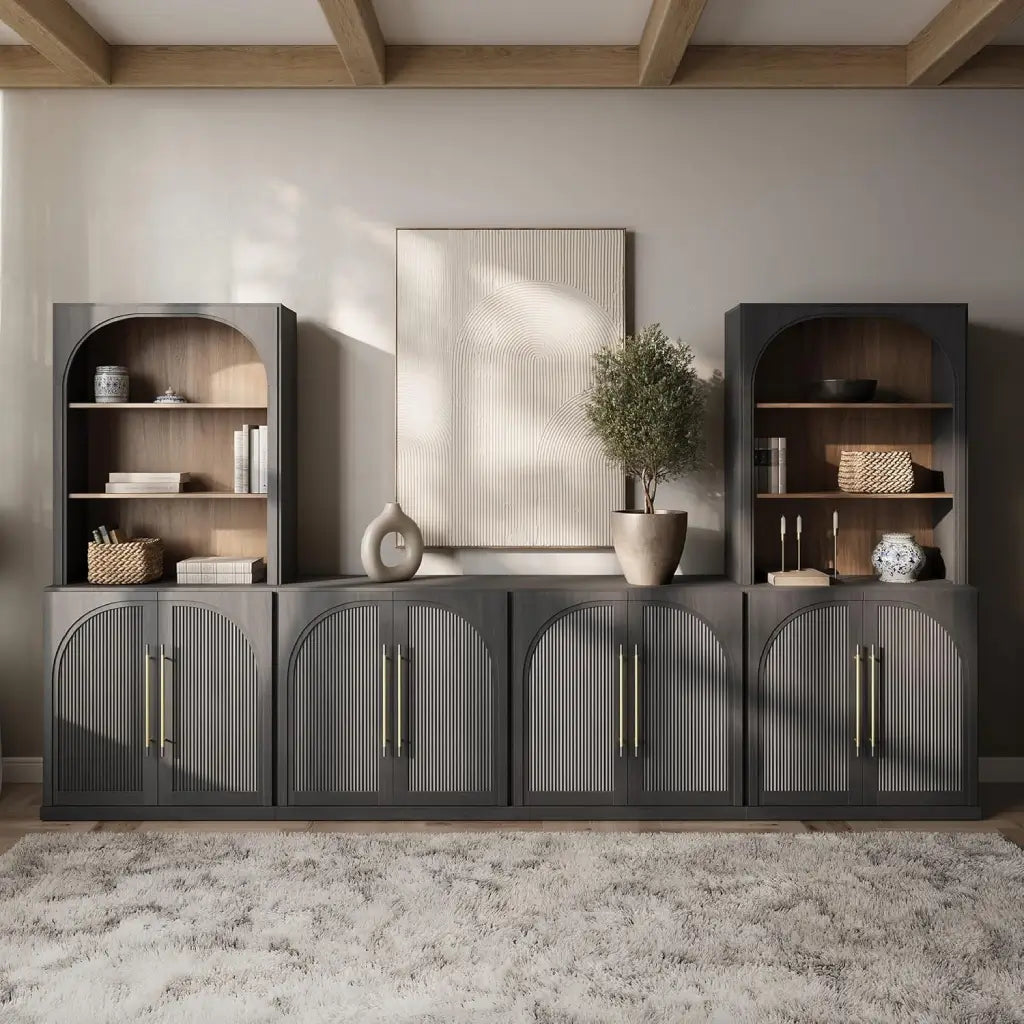
Placing tall vertical towers on either side of a low console creates a framing effect around your TV. This setup mimics the classic look of fireplace built-ins without any construction work.
The contrast between the low center and high sides does two things. It grounds the TV as the focal point. And it gives you vertical storage for books, decor, or equipment you want within reach.
If you want to skip the guesswork, look for furniture with architectural details already built in. The Belleze Arched Modular Entertainment Wall Unit (3-Piece) delivers that custom millwork look straight out of the box.

Wall-to-Wall Base Cabinets with Stacked Storage
Lining up multiple base units across a wall makes the space feel wider. That long, unbroken "horizon line" reads as modern and intentional.
The key is pushing identical units flush together so they appear as one piece. The Belleze 65" Arched Fluted Door Modern TV Stands (Set of 2) is designed for exactly this purpose. Place the two units side by side to create a 130-inch continuous console that rivals high-end linear joinery.

To add height, stack hutches or shelving on top. This mimics the familiar "counter plus upper cabinet" structure you see in traditional cabinetry.
Symmetrical Storage Surrounding the TV
Mirror-image storage on each side of a centered TV creates instant visual order. This layout signals intentional design, not random furniture placement.
Symmetry also guides the eye. It naturally draws attention to the screen while balancing storage on both sides.
This approach works best when you have enough furniture to fill the wall. A comprehensive system like the Jagger 6-Piece Modular TV Stand with Double Arc Wood Door provides the floor-to-ceiling presence needed to anchor the room.

Mixed Open and Closed Storage Wall
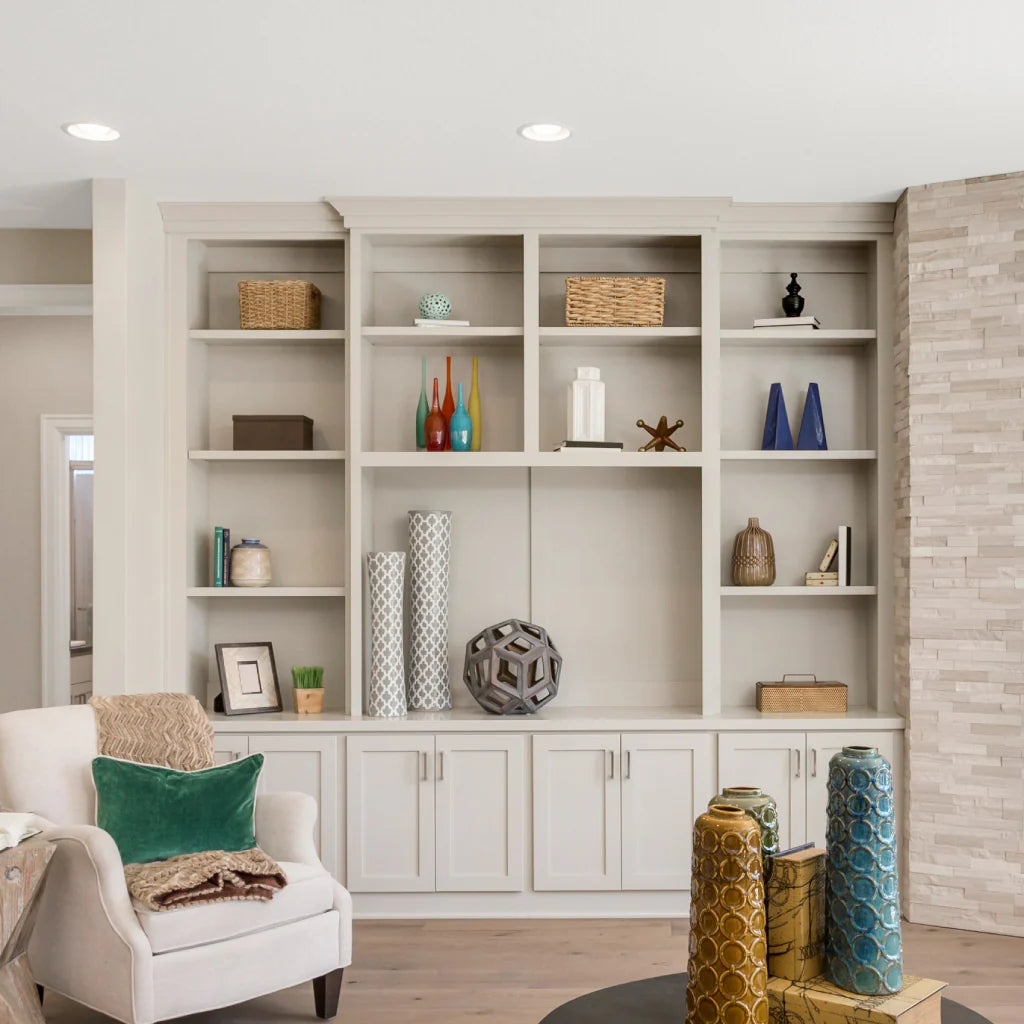
A solid wall of cabinets can feel heavy. Mixing closed doors with open shelving breaks up that visual weight and keeps the setup from looking imposing.
Use closed compartments to hide electronics, cords, and clutter. Reserve open shelves for books, art, and a few carefully chosen objects. Leave some negative space so the display can breathe.
This combination creates what designers call the "library wall" look. It feels sophisticated and curated, like a custom study.
The Jagger 6-Piece Modular TV Stand with 4 Glass Door Cabinets offers that balance of display and concealment in one system. Glass doors let you show off items while keeping dust out, and the varied compartments give you flexibility.

Why Modular Works Better Than Real Built-Ins
Many people want the polished look of a built-in but cannot or will not alter their space. Renters face this challenge constantly. So do homeowners who are unsure how long they will stay in their current place. Custom built-ins are sunk costs. Once installed, they belong to the building. You cannot take them with you, and you rarely recoup that investment when selling.
Modular furniture flips that equation. It is an asset you own outright. When you move, your entertainment center comes along. When your taste changes, you can reconfigure or sell individual pieces.
| Built-In (Permanent) | Modular Cabinet (Flexible) |
| Fixed to the structure | Freestanding and movable |
| Requires renovation work | No construction required |
| Layout cannot be changed | Layout can be reconfigured |
| Long installation process | Ready to use after assembly |
| Stays with the property | Moves with the owner |
If you want flexibility without sacrificing a built-in look, modular cabinets let you build a setup that adapts as your space and needs evolve.
How to Plan Your Wall Like a Built-In
The gap between a DIY project and a professional result comes down to planning. Measure twice, plan thoroughly, and your modular setup will look intentional rather than thrown together.
Think of this like a small renovation. Before you buy anything, map out your wall with its obstructions and dimensions.
Measure Your Wall
Do not just measure total wall width. Measure usable space instead. Account for baseboards, floor vents, electrical outlets, and window trim that might block a flush fit.
Leave a small buffer at each end. Hoping for a millimeter-perfect fit rarely works out. A couple of inches on each side gives you room for adjustments or filler strips later.
Measure ceiling height too. This tells you whether standard tall bookcases will fit or if you need to stack shorter units to reach upward.
Decide TV position first
Your TV placement anchors the entire layout. Start there before deciding on anything else. Center the screen at a comfortable viewing height, typically at eye level when seated. This is your non-negotiable reference point.
Apply what some designers call the "Rule of Upgrade." Leave 4 to 6 inches of clearance around your current TV. This gives you room to swap in a larger screen down the road without rebuilding your setup. Also check that your base console places the TV at the right ergonomic height. Screens mounted too high cause neck strain over time.
Choose 15–16" depth
A depth of 15 to 16 inches hits the sweet spot for entertainment furniture. It is deep enough to hold AV receivers and gaming consoles but shallow enough to preserve floor space.
Make sure every unit you select shares the same depth. Mismatched depths create a jagged front profile that breaks the built-in illusion. Shallower furniture also keeps traffic flowing. Deeper kitchen-style cabinetry can make a living room feel cramped and hard to navigate.
Stack upward to the ceiling
Floor-to-ceiling presence separates a built-in look from ordinary shelving. Choose the tallest bookcases available, or stack hutches on base units to gain height.
If a gap remains between the furniture top and ceiling, fill it visually. Baskets, plants, or gallery lighting can bridge that space and complete the vertical line. Taller setups draw the eye upward. This makes the furniture read as an architectural feature rather than something temporary.
Keep one finish across the wall
Buy all components from the same product line whenever possible. This guarantees that wood tones and paint finishes match exactly. If you end up with mismatched pieces, you can still unify them. Paint everything a single color or add consistent trim molding to tie units together.
Do not overlook small details. Door handles, knobs, and furniture legs should match across the entire wall. These elements reinforce the illusion that you are looking at one cohesive system.

Common Mistakes that Ruin the Built-In Effect
Small errors can push your project into what designers call the "uncanny valley." Everything looks almost right, but something feels off. That near-miss quality reads as cheap rather than custom.
The difference between a polished result and a DIY disappointment often comes down to alignment and spacing. These details are subtle, but your eye picks up on them immediately.
Leaving Gaps Between Units
Visible spaces between cabinets break the continuous line you are trying to create. Even a half-inch gap reveals that these are separate pieces pushed together, not one solid structure.
Uneven floors make this worse. If your floor slopes, units will tilt and separate at the top or bottom. Use shims underneath to level each piece so they touch perfectly from top to bottom.
For a permanent fix, connect units from behind. Clamps or mending plates can physically lock cabinets together. This keeps them aligned and prevents shifting over time.
Random height combinations
Mixing too many different heights creates a jagged, chaotic profile. Your wall ends up looking like a city skyline instead of a cohesive piece of furniture.
Stick to two distinct height tiers. A low console in the center with tall towers on each side works. So does a uniform row of base cabinets with matching hutches on top. Pick one approach and commit. When units are meant to be the same height, check that their tops align exactly. Even a small difference looks sloppy and undermines the whole setup.
Too many small pieces
Lining up many narrow units creates visual noise. The eye has to process each break and seam, which increases cognitive load and makes the wall feel cluttered.
Choose wider pieces when possible. A single wide sideboard or double-width bookcase carries the visual weight that built-ins have. Several small cubes lined up cannot replicate that sense of permanence.
Also think about what goes on shelves. Too many small open compartments invite decorative clutter. Reserve open shelving for a few curated items, not everything you own.
Wrong proportions
Tiny furniture on a large wall looks lost and unintentional. Oversized pieces in a small room feel oppressive and cramped. Match the scale of your furniture to the scale of your space.
Balance closed storage with open shelving too. A wall of solid doors feels heavy. Too much open shelving looks busy. Aim for a mix that feels deliberate.
Finally, give your TV room to breathe. Units pushed too close to the screen make it look boxed in. Leave enough clearance so the layout feels planned, not squeezed.
Achieving a Built-In Look Without Construction
A built-in is defined by its visual outcome, not by how it was constructed. Unity, order, and scale are what make it look custom.
Modular cabinets let you achieve that same effect without renovation. They are flexible assets that move with you and adapt as your needs change. For renters and homeowners alike, this is a practical path to a high-end look.
Start by measuring your wall and choosing a layout. With the right plan, you can transform your living room without hiring a contractor.
Related Reading:

Leave a comment
This site is protected by hCaptcha and the hCaptcha Privacy Policy and Terms of Service apply.