


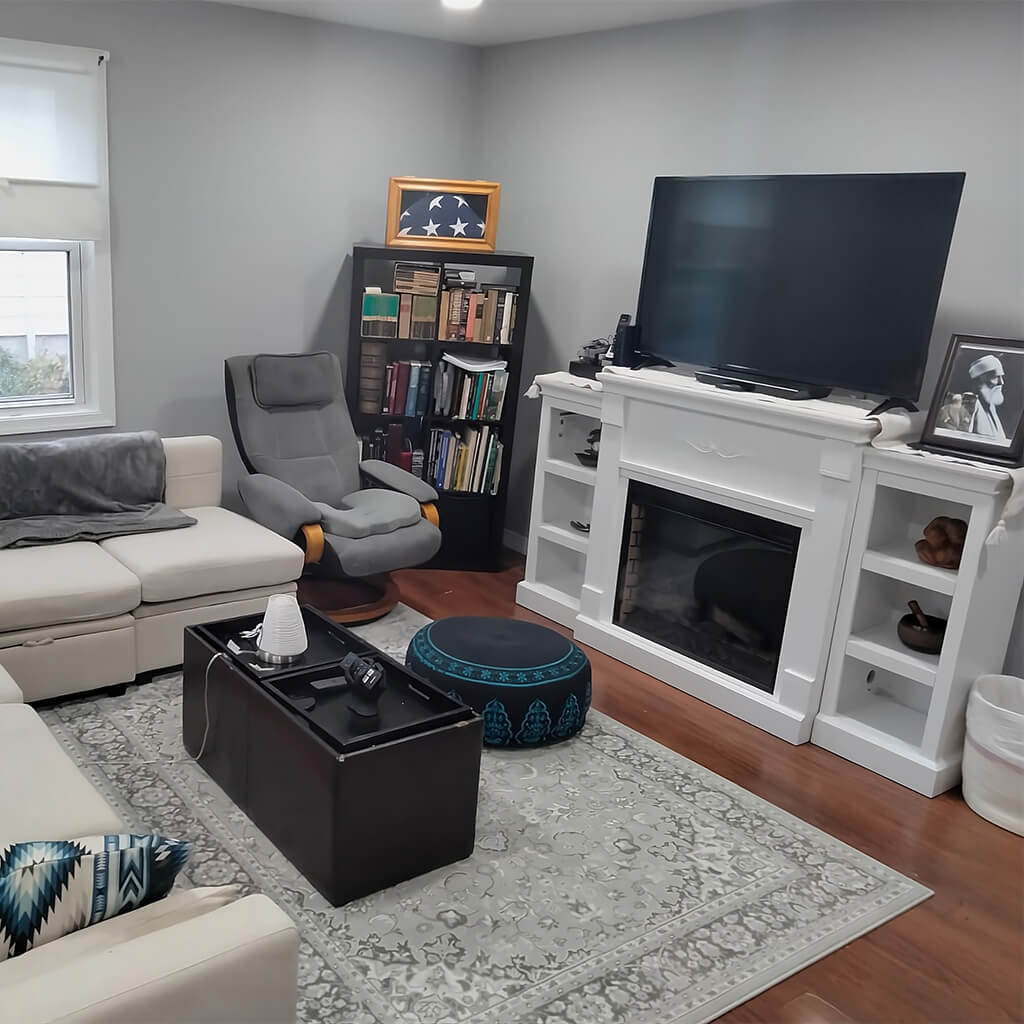
Small flats and houses can feel like a constant battle for space. You rearrange, declutter, and still the room feels tight. Most people blame the square footage. But the real issue is often the layout, not the room itself.
A TV stand might be the right size for your space. Placed in the wrong spot, though, it can quietly make the whole room feel smaller. Here are five common layout mistakes that could be shrinking your room.
Mistake 1: Pushing the TV Stand Flush Against the Wall

This is the default move for almost everyone. You shove the TV stand flat against the wall to save space. But here's the thing. Tracing the room's perimeter with furniture actually highlights the limits of the room. You end up making the walls more obvious, not less.
Why we do it
There's a natural instinct to clear the centre. We think pushing everything to the edges creates a big open space in the middle—even if we never actually use it. Keeping walkways wide also feels safer, so nobody trips. And it seems like the only way to fit a media console without it taking over the room.
Why it makes the room look smaller
- The "waiting room" vibe: You end up with a dead, empty zone in the middle. It feels cold rather than cosy.
- Flatness: The room lacks depth. It looks like a box outlined with heavy objects.
- Your eye goes to the wrong places: It draws attention straight to the corners and baseboards—the exact boundaries you want people to ignore.
How to fix it
- The two-inch gap: Pull the stand just 2–3 inches off the wall. That tiny shadow creates depth and makes the furniture feel like it's floating rather than stuck.
- Angle it: Try angling a chair or the stand slightly. Breaking the rigid, straight lines makes the room feel looser and more relaxed.
- Anchor with a rug: Place a rug so the sofa and TV stand feel connected. Keep the front legs of your sofa on the rug. This creates a living zone rather than a furniture perimeter.
Mistake 2: Crowding the TV Stand with Too Much Stuff

We often treat the TV wall as a storage locker. Baskets, ottomans, and side tables pile up right next to the console. The result? A heavy block of furniture that dominates the room.
Why we do it
Storage panic is usually the main driver. You have no closet, so blankets and extras need to go somewhere. Convenience plays a role too—snacks, remotes, and controllers should be within arm's reach. And when you buy a big TV, it feels like you need big furniture beside it to balance things out.
Why it makes the room look smaller
- The "solid wall" effect: When furniture creates a wall of stuff from floor to eye level, you can't see the floorboards. Seeing the floor is what tells your brain a room is big.
- No breathing room: Visually, it looks heavy and cluttered. Your eye gets stuck on the pile instead of moving through the room.
- The warehouse look: It starts to feel like a storage unit, not a living room.
How to fix it
- Create distance: Move the laundry basket or side table at least 2 feet away. Let the TV stand sit by itself.
- Legs matter: Choose a stand with legs. Seeing the floor run underneath the furniture is a simple trick for making small rooms look bigger.
- The "wider is better" rule: Make sure your stand is wider than your TV—about 25% wider works well. A TV hanging over the edges looks top-heavy and unbalanced.
Need help finding the right size? Check our TV stand size guide to find a console that fits your screen without overwhelming your wall.
Mistake 3: Putting the Sofa Too Close to the TV

In narrow rooms, we often jam the sofa and TV stand together. This creates a tight "corridor" effect—sometimes called the "knee-knocker" layout. You sit down and the screen feels like it's right in your face. Not exactly relaxing.
Why we do it
We want the cinema experience. A huge TV, a deep sofa, maybe even surround sound. But the room is only 10 feet wide. So we squeeze a coffee table in between, which forces the sofa even closer to the screen. Sometimes the room shape just leaves us no choice. We assume we need to sit close to catch the details anyway.
Why it makes the room look smaller
- The "traffic jam" effect: If you have to turn sideways or shimmy past the coffee table, your brain immediately registers the room as tiny.
- Stressful proximity: Sitting too close to a large screen feels cramped. It's hard to relax when the TV is looming over you.
- Blocked floor space: The tight setup cuts off the visual flow of the room. Your eye can't travel freely.
How to fix it
- Check the walkway first: You need about 3 feet (36 inches) to walk comfortably between furniture. If you don't have it, something needs to move.
- Angle the sofa: If straight-on is too tight, angling the sofa into a corner can buy you an extra foot of visual distance.
- Swap the table: Ditch the bulky coffee table for small nesting tables or C-tables that tuck away when you need the path.
- Wall mount the TV: If you can't move the sofa back, mounting the TV or switching to a slimmer console frees up floor space.
Mistake 4: Ignoring the Walls (Everything is on the Floor)

A low TV stand, a low sofa, a low coffee table. All the furniture sits at knee height, and the top half of the room is completely empty. This happens a lot in rental apartments. Drilling holes feels risky when you're not sure you'll get your deposit back.
Why we do it
Most of it comes down to fear. You don't want to damage the paint. You worry that hanging shelves will look messy or cluttered. And modern furniture tends to be low-profile anyway, so you just go with the flow.
Why it makes the room look smaller
- The "squat" effect: It draws your eye down to the floor—where all the clutter lives—and ignores the ceiling height completely.
- Bottom-heavy feel: The room looks unbalanced when everything crowds the lower third.
- Wasted space: You're leaving 50% of your room's visual and storage potential untouched.
How to fix it
- Hang curtains high: Mount curtain rods at the ceiling, not the window frame. This simple trick draws the eye up and makes ceilings feel taller immediately.
- Add vertical lines: Place a tall, thin bookshelf or a floor lamp next to the TV stand. Height lifts the room.
- Try a gallery wall: You don't need heavy shelves. Even a few art prints above the TV break up the blank wall and add visual height—no drilling required if you use adhesive hooks.
Mistake 5: Blocking the Window

Sometimes, the only wall that works for the TV is right in front of the window. This setup can turn a sunny room into a dark cave fast.
Why we do it
The cable outlet is on the wrong wall. Or it's the only wall long enough for the stand. Some people even think putting the TV back-to-the-window reduces glare—even if it kills the natural light.
Why it makes the room look smaller
- Cutting off the view: Windows connect you to the outside world. Blocking them limits the "borrowed" space your eye sees beyond the glass.
- The "cave" feeling: Less natural light means darker corners. Dark corners shrink rooms.
- Eye strain: The contrast between a bright window behind you and a dark screen in front is hard on your eyes.
How to fix it
- Go transparent: If you must block a window, use an open-back TV stand or one with glass elements. This lets some light pass through.
- Add mirrors: Put a mirror on the adjacent wall to bounce the light you do have around the room.
- Use bias lighting: LED strips behind the TV soften the contrast between the screen and the window light.
Want to keep your view clear? Browse our low-profile TV stand collection for options that sit below the windowsill.
Final Thoughts
A small room is a reality. A cramped room is a choice.
The fixes don't require knocking down walls or replacing all your furniture. Pulling a TV stand two inches from the wall creates depth. Moving a laundry basket to another spot opens up floor space. These small shifts can change how the entire room feels.
Try one adjustment today. You may find there's more room than you thought.
Related Reading:


Leave a comment
This site is protected by hCaptcha and the hCaptcha Privacy Policy and Terms of Service apply.