


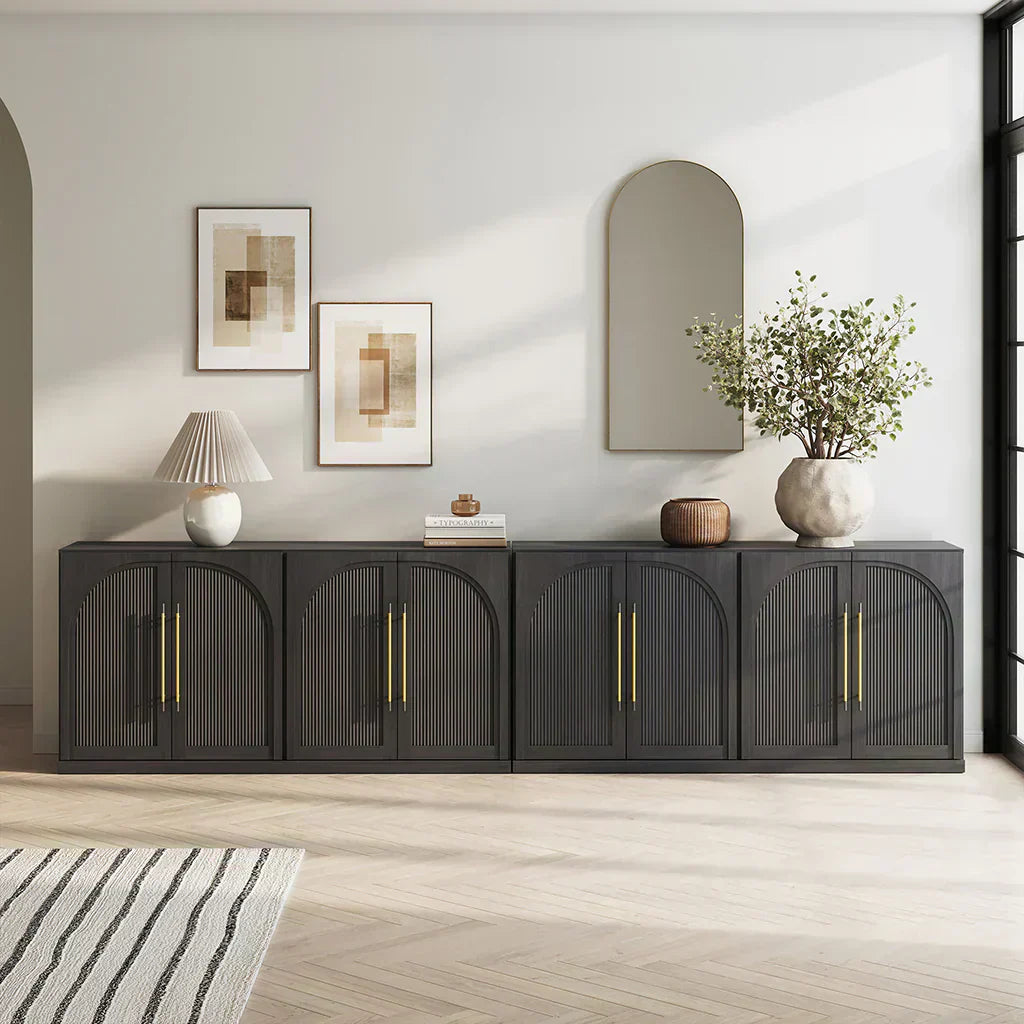
A sideboard serves a purpose that goes beyond filling wall space. It functions as infrastructure in your home, managing everyday clutter and keeping traffic flowing smoothly through the room.
Because a sideboard takes up significant floor space, choosing the wrong one can create real problems. A piece that's too large makes your room feel cramped. The wrong depth blocks doorways and pathways. Storage that doesn't match your needs leaves items without a proper home.
This guide breaks down the key things to consider before buying a sideboard, so you can choose one that fits your space and how you actually use it.
Start by Choosing the Right Sideboard Path
Before comparing colors or door styles, decide what job the sideboard needs to do in your room. A compact entryway, a standard dining wall, a wide living room, and a long open wall usually need different sideboard layouts.
If flexibility matters, start with modular sideboards. They let you choose a smaller 2-piece setup, a balanced 3-piece setup, or a wider 4-piece layout instead of forcing one fixed cabinet to work in every room.
- Choose by piece count: Use a 2-piece modular sideboard for smaller walls, a 3-piece modular sideboard for many dining and living rooms, and a 4-piece modular sideboard for wide walls or open rooms.
- Choose by room: Compare dining room modular sideboards, living room modular sideboards, or entryway modular sideboards based on what you need to store and how people move through the space.
- Choose by wall width: If the wall still looks empty with a standard cabinet, compare sideboards for long walls before settling for a smaller piece.
Do You Need a Sideboard?
A sideboard can transform how your room functions, but only if you have a clear purpose for it. Maybe you need somewhere to stash daily clutter out of sight. Or perhaps you want a landing spot for keys and mail near the door. Identifying the problem you're solving helps you choose the right piece.
Because a sideboard adds bulk to a room, it's worth walking through the space first. You want to confirm it won't create tight spots or block natural pathways.
Consider Suitability for Your Space
Room size plays a big role in this decision. If your space is under 500 square feet, exploring sideboard ideas for small spaces can help you find options that won't overwhelm the room.
Visual weight matters too. Sideboards that sit flush to the floor can make compact rooms feel smaller. Pieces with visible legs have the opposite effect—seeing the floor underneath creates an optical illusion of more space.

Small Space Considerations
For smaller rooms, look for units with tall legs. This design detail tricks the eye into perceiving more floor area. Going vertical is another smart approach. Comparing a sideboard vs hutch helps you decide if stacking storage upward suits your layout better than spreading it wide.
Think About Potential Obstruction
Check your walls for vents, outlets, and light switches before measuring. A solid cabinet can easily cover these up. Foot traffic deserves attention as well. The piece shouldn't block the path from the door to seating, and baseboard heaters need clearance to function safely.
Explore Alternatives
A sideboard isn't always the answer:
- Console tables: Comparing a console table vs sideboard makes sense for narrow hallways. If your depth is under 12 inches, a console may be your only option.
- Tilting shoe cabinets: These work well in ultra-narrow halls (7-10 inches deep) for storing mail, chargers, and small items.
- Wall-mounted shelves: These handle display needs without using any floor space.
How Will You Use the Sideboard?
Defining the job helps narrow your choices. Is this piece primarily for hiding mess, or for displaying art? Exploring creative ways to use a sideboard beyond the dining room might reveal possibilities like a hobby station or home office storage.
Inventory Your Items
Measure what you plan to store:
- Vinyl records: Require 13 inches of height and depth, plus a weight capacity of about 35 pounds per foot.
- Wine and spirits: Horizontal bottles need roughly 14 inches of internal depth; tall bottles need adjustable shelves.
- Board games: Standard 13×13-inch boxes need adequate cabinet space.
- Dining platters: Large ovals (16-20 inches) won't fit in shallow cabinets.
Storage-Heavy vs. Surface-Only
Storage-focused pieces need doors and deep shelves for bulky items. Surface-focused pieces benefit from durable finishes—learning how to use a sideboard as a home bar or coffee station helps you understand what materials handle spills best.
Single-Purpose vs. Multi-Purpose
Single-purpose sideboards, like liquor cabinets or linen chests, benefit from specialized organization inside. Multi-purpose pieces might hold dinnerware and electronics. Factory-installed cable management holes save you from drilling later.
Choose by Room: Dining Room, Living Room, or Entryway
The best sideboard layout changes by room. Dining rooms need serving space and dinnerware storage. Living rooms need low storage for everyday clutter. Entryways need compact depth and a clear walking path.
- Dining room: Look for a surface height around 30-36 inches, enough depth for dinnerware or serving pieces, and enough clearance for chairs to pull back. If the sideboard will hold plates, linens, glassware, barware, or coffee supplies, compare dining room modular sideboards.
- Living room: Use a sideboard for books, games, toys, blankets, remotes, records, decor, and daily clutter. If you want low storage instead of a full media wall, compare living room modular sideboards.
- Entryway: Depth matters more than size. Choose a single cabinet or 2-piece layout only if it leaves enough room for the door swing, shoes, bags, mail, and daily traffic. For hallway-friendly options, compare entryway modular sideboards.
Choosing the Right Type
Terms like sideboard, buffet, and credenza often overlap, and retailers use them inconsistently. Rather than getting caught up in labels, focus on shape, dimensions, and leg style. (If you want a clearer breakdown of how these terms differ, see our sideboard vs buffet vs credenza guide.) These elements determine whether the piece actually works in your home.
How a sideboard is constructed also affects daily usability. Some designs let you grab items quickly; others require more effort to reach what's inside.

By Form: Low vs. Tall vs. Modular
The overall shape influences both function and visual impact.
- Low (credenza style): These sit closer to the ground and work well as TV stands or serving surfaces. They keep sightlines open, which helps in open-plan homes where you want unobstructed views across the space.
- Tall (highboy or hutch style): These maximize vertical storage by stacking shelves upward. They suit rooms with high ceilings, but can dominate smaller spaces visually.
- Modular: These systems grow with you. You can add sections over time, replace damaged parts, or split them up when you move.
If a modular layout fits your space better than one fixed cabinet, use total width as the next filter. A 2-piece modular sideboard is usually best for entryways, apartments, small dining rooms, and compact walls. A 3-piece modular sideboard often works as the most balanced choice for standard dining rooms and living rooms. A 4-piece modular sideboard makes more sense for wide living rooms, open dining spaces, or long walls that need a stronger storage run.
Do not choose by piece count alone. Some 2-piece layouts are compact, while others use wider modules and can work on larger walls. Always compare total width, depth, door clearance, and what each cabinet needs to store.
By Structure: Doors, Drawers, or Open Shelves
The front design determines how you access your belongings and what upkeep is required.
- Hinged doors: These maximize internal volume but need 18-24 inches of swing clearance in front. They're not ideal for tight dining areas where chairs sit close by.
- Sliding doors: These need zero swing clearance, making them perfect behind dining chairs. The trade-off is accessing only half the interior at once.
- Glass-front doors: These display collectibles while keeping dust out. The interior stays visible, so you'll need to keep things tidy inside.
- Drawers: These organize small items like cutlery, napkins, and paperwork effectively. Look for full-extension drawers so you can reach items at the back. Keep in mind that drawers reduce usable width compared to open cabinets.
- Open shelves: These create an airy appearance but demand regular dusting. They're less suitable if hiding clutter is your priority.
If you are choosing a modular sideboard, door style should follow what you plan to store. Wood doors are best for hiding everyday clutter, extra dishes, shoes, toys, games, and mixed household items.
Glass doors work better for books, ceramics, barware, dinnerware, or decor you want to display. Drawers are useful for smaller items such as remotes, chargers, napkins, flatware, keys, mail, and game accessories. Many modular sideboards let you combine these storage styles in one room instead of choosing only one cabinet type.
By Volume: Deep vs. Slim
Internal depth determines what you can realistically store.
- Deep (16-20+ inches): Large platters, AV receivers, and vinyl records require this range. Always verify internal depth rather than external measurements, since the cabinet frame reduces usable space.
- Slim (12-15 inches): These preserve walkway space but have limitations. Many prove too shallow for standard 11-inch dinner plates or horizontal wine bottles.
By Material
Material affects durability, weight, and long-term performance.
- Solid wood: This offers durability and repairability, though it's heavy and reacts to humidity. Quality construction includes slotted screw holes allowing for natural expansion.
- Veneer over plywood: Stable and often superior to solid wood for large flat panels, this option balances cost and quality effectively.
- MDF or particleboard: Affordable and common, but prone to sagging under heavy loads like vinyl collections. Chips prove difficult to repair cleanly.
Rules for Dimensions and Placement
A beautiful sideboard that blocks doorways or crowds walkways remains a failure in practical terms. Understanding how to choose the right size sideboard for your dining room helps you nail proportions before committing to a purchase.
Furniture benefits from breathing room, too. Pieces jammed tight against walls or into corners make spaces feel cramped rather than curated.
Provide Adequate Clearance
Movement around the sideboard matters as much as the piece itself. Maintain at least 36 inches between the sideboard and other furniture for comfortable passage. In dining rooms, account for the chair pull-back zone as well. Guests need roughly 30-32 inches behind their seats to stand and push back without bumping into the cabinet.

Mind the Height
Surface height affects how comfortable the piece is to use daily. For dining rooms, aim for 30-36 inches. Anything taller makes serving awkward since you're reaching up instead of across.
If your available wall sits beneath a window, consider whether you can put a sideboard in front of a window without blocking light or creating visual awkwardness. Sometimes this placement works beautifully; other times it falls flat.
Choose by Wall Width and Piece Count
When choosing a modular sideboard, think in total width rather than single-cabinet width. The same cabinet module can feel compact as a 2-piece setup, balanced as a 3-piece setup, or wall-defining as a 4-piece setup.
- Around 60-70 inches: Best for smaller dining rooms, apartment walls, entryways, and compact living spaces. Start with 2-piece modular sideboards.
- Around 90-100 inches: Best for many standard dining rooms, living rooms, and medium-long walls. Compare 3-piece modular sideboards.
- Around 120-130 inches: Best for large rooms, open spaces, and walls that need a stronger visual anchor. Compare 4-piece modular sideboards or broader sideboards for long walls.
Length and Placement on the Wall
Proportion and positioning establish visual harmony.
- Scale: A sideboard should measure roughly two-thirds of the length of the table or sofa nearby. This ratio creates balance rather than appearing undersized or overwhelming.
- Centering: Allow about 6 inches of wall space on either side so the piece doesn't look squeezed in.
- The sofa divider strategy: In open-plan rooms, a long sideboard behind a floating sofa can define separate zones effectively. Ensure the back features a finished surface rather than raw cardboard or exposed backing.

Avoid Obstructions
Minor oversights can create significant problems after delivery day.
- Baseboards: These create gaps between furniture and walls. The sideboard won't sit flush unless the legs are inset or the back panel includes a cutout.
- Wall fixtures: Verify the height won't block thermostats or light switches before purchasing.
- Floor vents: Flush-to-floor units placed over vents disrupt airflow. Units with tall legs allow air circulation underneath.
- Door swing: Watch for nearby doors that might open into the cabinet's side. This detail is easy to overlook during planning.
Pre-Purchase Checklist
A sideboard represents a significant investment, and small oversights can lead to frustrating problems after delivery. Taking a moment before clicking "buy" helps you avoid logistical headaches. This checklist ensures the piece fits your home, your belongings, and your lifestyle.

Have You Measured Your Space and the Delivery Path?
Painter's tape can help you visualize the actual footprint on your floor. Mark the outline and walk around it to see how much space remains for movement.
Delivery access deserves equal attention. Measure tight corners, stairwells, and doorways along the route. Large boxes need diagonal clearance to turn corners, so calculate that as well. Many returns happen simply because the piece couldn't make it through the front door.
Did You Account for Door and Drawer Clearance?
Cabinet doors need room to swing open fully. Test whether the opened doors would collide with dining chairs or nearby furniture. Drawers require their own clearance, too. Verify they can extend completely without striking a hallway wall or bumping into a coffee table. Blocked drawers become daily frustrations.
Is the Storage Design Right for Your Needs?
Measure your tallest vase and widest platter, then compare those numbers to internal cabinet dimensions. External measurements don't reveal the whole picture since cabinet frames reduce usable interior space.
Shelf configurations matter as well. Adjustable shelves using System 32 (a standardized hole pattern) provide flexibility for oddly shaped items like tall liquor bottles or oversized serving bowls.
Match the sideboard to the items you reach for most often. For dinnerware, linens, glassware, and serving pieces, a dining room setup keeps hosting items close to the table. For games, books, toys, blankets, remotes, and decor, a living room setup can create low storage without turning the wall into a media center. For keys, shoes, bags, mail, pet items, and daily drop-zone clutter, an entryway setup is usually the better fit.
Does It Suit Your Future Plans?
If you rent or relocate frequently, heavy single-piece units can become burdens. Look for lighter materials, modular designs, or pieces with built-in wheels. Neutral styles offer added flexibility. A sideboard that works in your dining room today can transition to a living room or hallway later without looking misplaced.
Have You Considered Assembly and Delivery Logistics?
Be realistic about your DIY skills. Flat-pack sideboards often involve complex assembly with dozens of components. Weight affects positioning, too. Solid wood units are extremely heavy and typically require two people to move them into place safely.
FAQ
Can a Sideboard Replace a TV Stand?
Yes, though you'll need to address technical requirements. Electronics generate heat and need ventilation. Our guide on can you use a sideboard as a TV stand explains whether your unit needs ventilation holes or cable management cutouts.
Is a Sideboard Too Bulky for an Apartment?
Not if you choose wisely. Avoid blocky pieces that sit flush to the floor; designs with visible legs show floor space underneath and make rooms feel larger. Shallow models (12-14 inches deep) and glass doors also reduce visual weight compared to solid wood options.
Should I choose a 2-piece, 3-piece, or 4-piece modular sideboard?
Choose a 2-piece layout for smaller rooms, apartments, entryways, and compact walls. Choose 3 pieces for many standard dining rooms and living rooms. Choose 4 pieces when the wall is wide, the room is open, or one cabinet would look too small. If the wall is especially wide, compare sideboards for long walls before deciding.
What room is best for a modular sideboard?
A modular sideboard can work in several rooms if the depth, width, and storage style match the space. Dining rooms need serving and dinnerware storage, living rooms need low storage for clutter, and entryways need compact storage that protects walking space. Compare room-specific options if you already know where the sideboard will go.
Do I Need to Anchor a Sideboard?
Absolutely. Even stable-feeling units can shift when heavy doors or loaded drawers are opened, moving the center of gravity forward. Anchoring to the wall prevents dangerous tipping, especially important in homes with children or pets.
Putting It All Together
Choosing a sideboard works best when you approach it methodically. Measure your space carefully, be honest about what you need to store, and respect the clearance zones that keep your room comfortable to move through. The best sideboard solves a clutter problem without creating a traffic problem.
If you want one broad starting point, browse the full sideboard collection. If you want a flexible setup, start with modular sideboards, then narrow by size: 2-piece for compact spaces, 3-piece for many standard rooms, and 4-piece or long-wall sideboards for wider walls.
If your decision starts with the room, use dining room, living room, and entryway needs as the final filter instead of choosing by style alone.


Leave a comment
This site is protected by hCaptcha and the hCaptcha Privacy Policy and Terms of Service apply.