


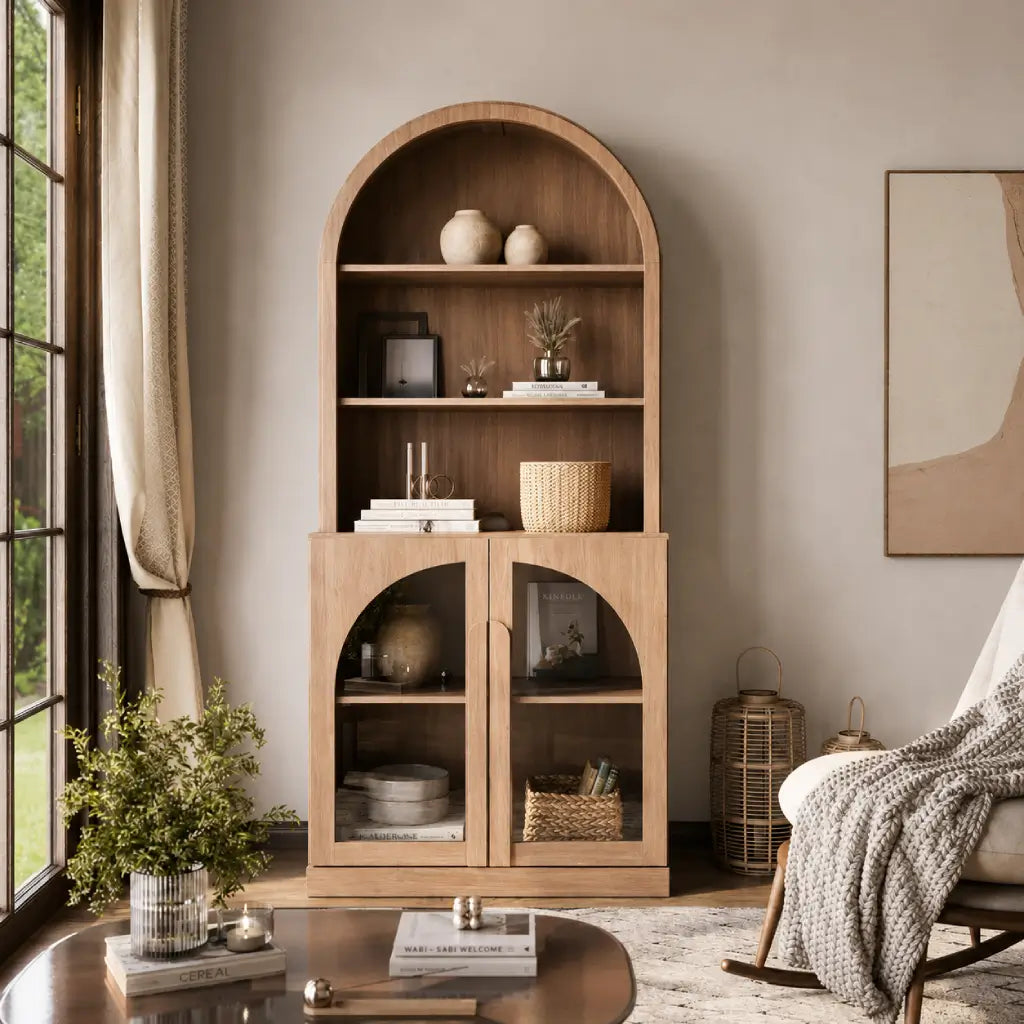
Decorating a bookcase well comes down to scale, color repetition, breathing room, and at least one personal object. It gets frustrating when the shelves are full but still feel wrong, or when they look styled but not lived in.
Before adding decor, look at what feels off: scale, spacing, color, or clutter. This guide focuses on visual shelf styling, not full book organization, furniture placement, dimensions, or installation. The point is not to make the shelves perfect. It is to make the room feel intentional again.
Why Your Bookcase Looks Off
Most bookcases improve fastest with one edit and one anchor: remove the smallest distractions, then add a larger piece where the shelf feels weak. Naming the problem makes the fix much easier.
- Too empty: add one large vase, basket, framed print, or plant.
- Too busy: edit small items into fewer groups.
- Too flat: add tall objects, leaning art, or textured pieces.
- Too random: repeat 2 to 3 colors, finishes, or materials.
- Too staged: add personal books, photos, travel finds, or meaningful objects.
- Too top-heavy: move visually heavier items to lower shelves.
A truly messy shelf may need how to organize a bookcase first, because styling cannot hide loose papers, cords, toys, and random storage for long.
The Basic Rules That Make Shelves Look Good
A styled bookcase usually looks better when each shelf has one larger anchor, one repeated color or material, and enough open space around the main grouping.
As a rough guide, leave 20 to 30 percent of each shelf visually open and limit any single grouping to three to five pieces. Personal pieces keep the bookcase from looking like a showroom.
The rule of three is a useful shortcut. A small grouping might combine books, art, and a plant. A larger case might repeat wood, black metal, and greenery across several shelves.
Cube or grid-style shelves need the same rules at a smaller scale. Treat each cube like a vignette, but repeat color or material across the whole unit.
Four Shelf Setups That Usually Work
- Book-heavy shelf: vertical books, one horizontal stack, and one framed print.
- No-books shelf: a tall vase, low bowl, and textured box.
- Living room shelf: family photos, one plant, and larger art.
- Office shelf: books, bookends, storage, and one personal object.
How to Decorate a Bookcase, Step by Step
Decorating a bookcase works best when the largest decisions happen first. Set the structure, then add detail.
Step 1: Clear the Shelves
You do not have to empty every shelf, but simplify enough to see shelf height, spacing, awkward gaps, and the objects you already own. If objects disappear into the back panel, consider paint or subtle wallpaper inside the case.
Step 2: Pick Colors or Materials
Choose a loose palette before placing objects. Warm wood, black metal, neutral ceramics, glass, greenery, rattan, and brass are easy to repeat without making the shelf look matched.
Step 3: Place Anchor Pieces First
Start with the pieces that read from across the room: framed art, vases, baskets, plants, or storage boxes. Stagger them instead of centering every large item.
Step 4: Add Books Vertically and Horizontally
Books should create rhythm, not one long wall of spines. Mix upright rows with horizontal stacks, then use a few stacks as low platforms for a bowl, flameless candle, or small object.
Step 5: Layer Art, Photos, and Plants
Layering creates depth on shelves that otherwise look flat. Lean framed art or photos against the back, then place a smaller object, plant, or low bowl in front.
Step 6: Edit From Across the Room
From normal viewing distance, remove whatever breaks the silhouette or pulls attention to one area. Move heavy objects lower when the whole case feels top-heavy.
30-Minute Bookcase Reset
For a quick reset, clear two shelves, place one anchor on each, mix vertical books with one horizontal stack, layer one framed piece, then remove one extra item before moving on.
How to Style Bookshelves With Lots of Books
A book-heavy shelf should let books become the main design material. You do not need to hide the collection; you need to break up long rows so the shelves feel cared for.
Pull books closer to the front edge for a cleaner line. Add a horizontal stack, bookend, framed print, or small accent every shelf or two. Group by color or height only when it helps visually.
Office supplies, cords, toys, and loose papers are a storage problem, not a styling problem. If the shelf also holds supplies or toys, closed storage may need to do part of the work.
What Not to Buy Before Styling
Skip the matching mini-decor set. One vase, basket, framed print, or storage box will do more for the shelf than a handful of tiny fillers.
What to Put on a Bookcase Besides Books
Besides books, use pieces with different jobs: height, storage, texture, softness, or personal meaning. A bookcase without many books needs fewer but larger objects because there are no spines creating natural structure.
- Tall anchors: framed art, tall vases, planters.
- Mid-height pieces: bowls, storage boxes, framed photos.
- Low pieces: trays, small boxes, flameless or unlit candles.
- Texture: baskets, rattan, pottery.
- Personal pieces: photos, travel finds, heirlooms.
The mix matters more than the category: combine height, storage, texture, and one personal note. Delicate ceramics, glassware, or collectibles may fit display cabinets when you want a more protected display and less frequent dusting.
Bookcase Styling for Living Rooms and Offices
The same shelf styling rules work in bedrooms, dining rooms, and entryways, but the balance changes by room. Living rooms can feel warmer and more personal. Offices usually need cleaner lines and fewer distractions.
Bookcase Ideas for the Living Room
A living room bookcase can act like a focal point, so use larger art, plants, family photos, bowls, and personal objects that match the room's scale. Shelves around a TV wall need extra restraint near the screen, and modular entertainment centers help combine display with media storage.

Bookcase Ideas for a Home Office
An office bookcase looks better with structure and fewer tiny accents. Use books, bookends, neutral colors, boxes, and one plant or personal piece. Office bookshelves with closed compartments can keep work materials out of sight without styling around them.
Styling Cube, Built-In, and Tall Bookcases
Cube bookcases look best when each cube has one main job: books, baskets, or display. Built-ins can handle more repetition because the shelves read as part of the room. Tall narrow bookcases need stronger vertical anchors so the top does not feel disconnected.

Modern Ways to Style a Bookcase
Modern shelves work best with fewer, larger shapes: one framed print, one sculptural piece, one book stack, and one plant per visual zone.
Matte ceramics, black metal, glass, warm wood, rattan, abstract art, and simple planters all fit this approach. If the shelf feels unfinished, scale is usually the issue.
Use contrast sparingly. A black metal frame can repeat with black bookends, while warm wood or rattan keeps the shelf from feeling cold. Glass works best when paired with a stronger material nearby, because clear objects can disappear from across the room.
The Storage Style That Solves the Mess
- Open bookcase: items you use often or change seasonally.
- Display cabinet: delicate collectibles that need a more protected display.
- Modular cabinets: mixed book-and-decor storage with hidden clutter.
- Office bookshelves: work materials plus video-call polish.
Common Reasons a Bookcase Looks Cluttered
A cluttered bookcase usually has too many small items, too little breathing room, or no clear hierarchy.
Too many tiny objects
A dozen small pieces read as clutter, even when each one is attractive. Group them on a tray or replace several with one larger piece.
Filling every inch
A packed shelf gives the eye nowhere to rest. Leave open space around key groupings, then remove pieces that do not add shape, color, texture, storage, or meaning.
Everything is the same height
Same-height objects make a bookcase look flat. Mix tall, medium, and low pieces so the shelf has movement from normal viewing distance.
Making Every Shelf Perfectly Symmetrical
Mirrored shelves can feel stiff. Balance weight by placing a large object on one side and several lighter pieces across from it.
Using Only Pieces That Feel Staged
Shelves with no real books, photos, or meaningful objects can feel generic. Add books you read, family photos, travel pieces, or objects with a story.
Putting heavy-looking objects too high
Bulky, dark, or oversized pieces near the top can feel unstable. For visual balance, move heavier-looking objects lower; for actual stability, follow the bookcase's weight limits and anti-tip instructions.
FAQ
How do I decorate a bookcase on a budget without buying new decor?
Shop the house first: move in art, trays, bowls, photos, or plants that are safe for your household, then group small pieces instead of spreading them out.
How do I make a bookcase look expensive?
Use fewer, larger pieces and repeat finishes. Matching baskets, aligned spines, framed art, and one strong vase usually look more polished than scattered mini decor.
How do I decorate the top of a tall bookcase?
Treat the top as one simple ledge. Use one larger plant, framed piece, basket, or sculptural object that repeats a material from the shelves below.
Should I use wallpaper or paint on the back of a bookcase?
Paint or wallpaper helps when objects disappear into the background. Choose a subtle color or pattern that supports the room palette.
How do you decorate deep bookcase shelves?
Deep shelves look better layered. Lean art in back, place books or a box in the middle, and add one smaller object near the front.
How do I decorate a bookcase for Christmas?
Keep seasonal bookcase decor light. Add greenery, a small garland, ornaments in a bowl, battery or indoor-rated string lights, or one framed holiday print.
Where should I put a bookcase in a room?
A bookcase should support the room without blocking walkways, doors, windows, or outlets. Read where to put a bookcase for the full placement guide.
Make Your Bookcase Feel Personal, Not Perfect
A better bookcase usually starts with subtraction. Fix the biggest visual problem first, then add only what improves scale, texture, storage, or meaning.
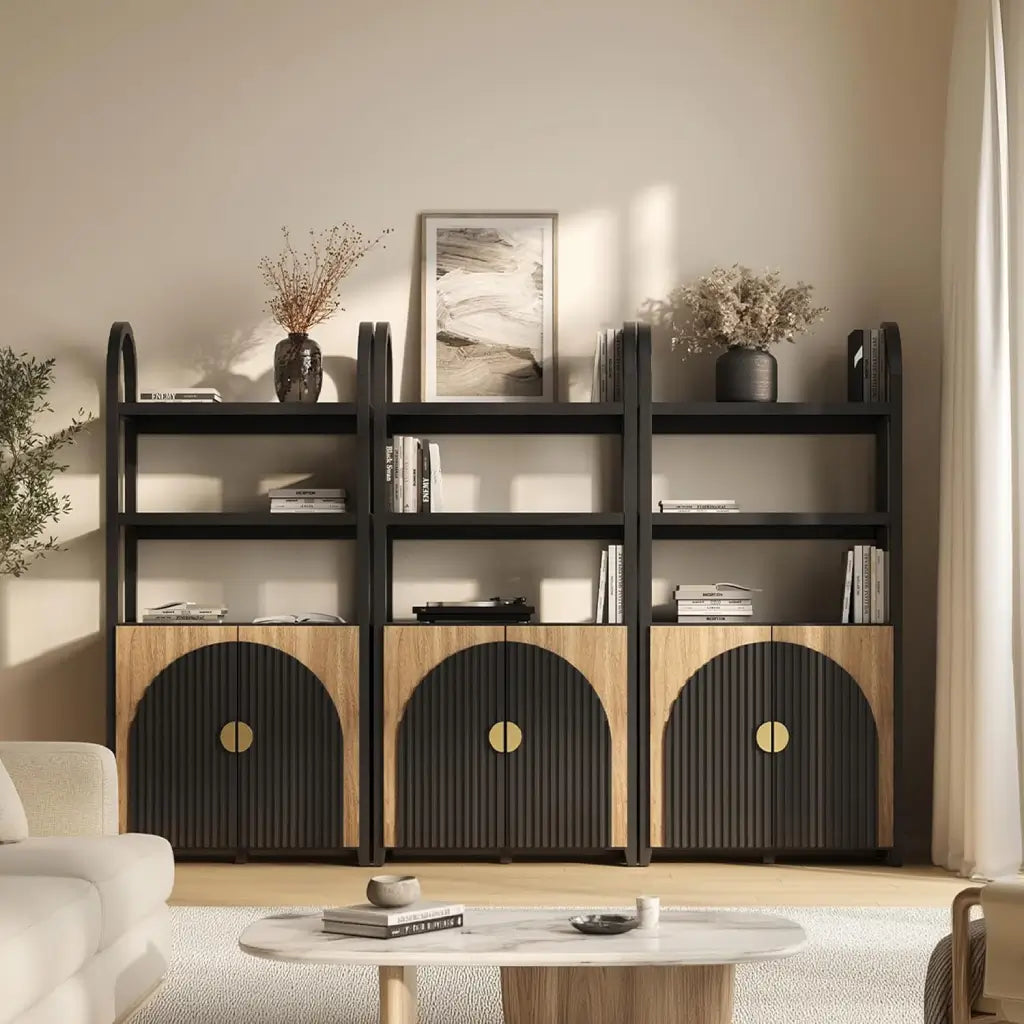
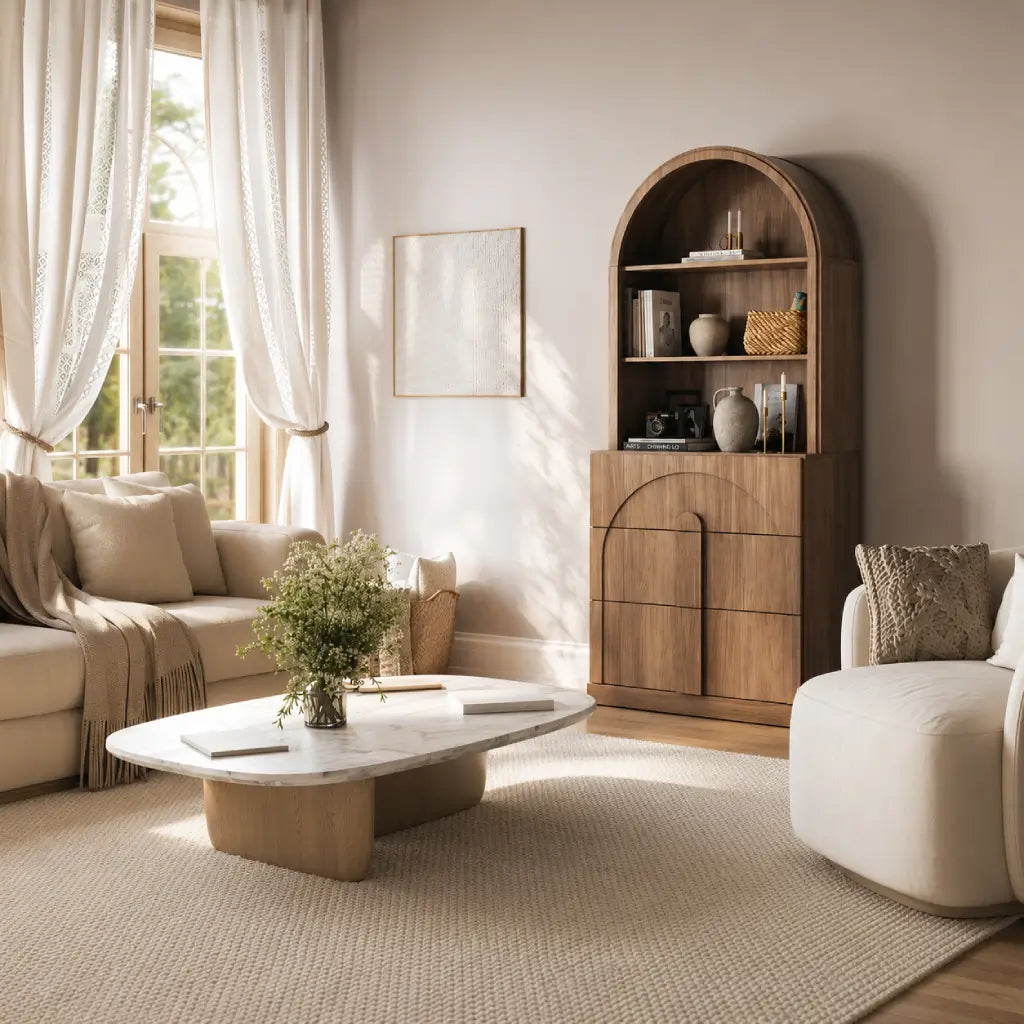
For height, use a vase, framed art, or a plant that is safe for your household. For texture, bring in baskets, rattan, wood, or ceramics. If the shelf has to hold both decor and everyday items, choose storage that gives you open display space plus hidden room for clutter, such as the Jagger 72" Tall Bookcase Cabinet.

Leave a comment
This site is protected by hCaptcha and the hCaptcha Privacy Policy and Terms of Service apply.