


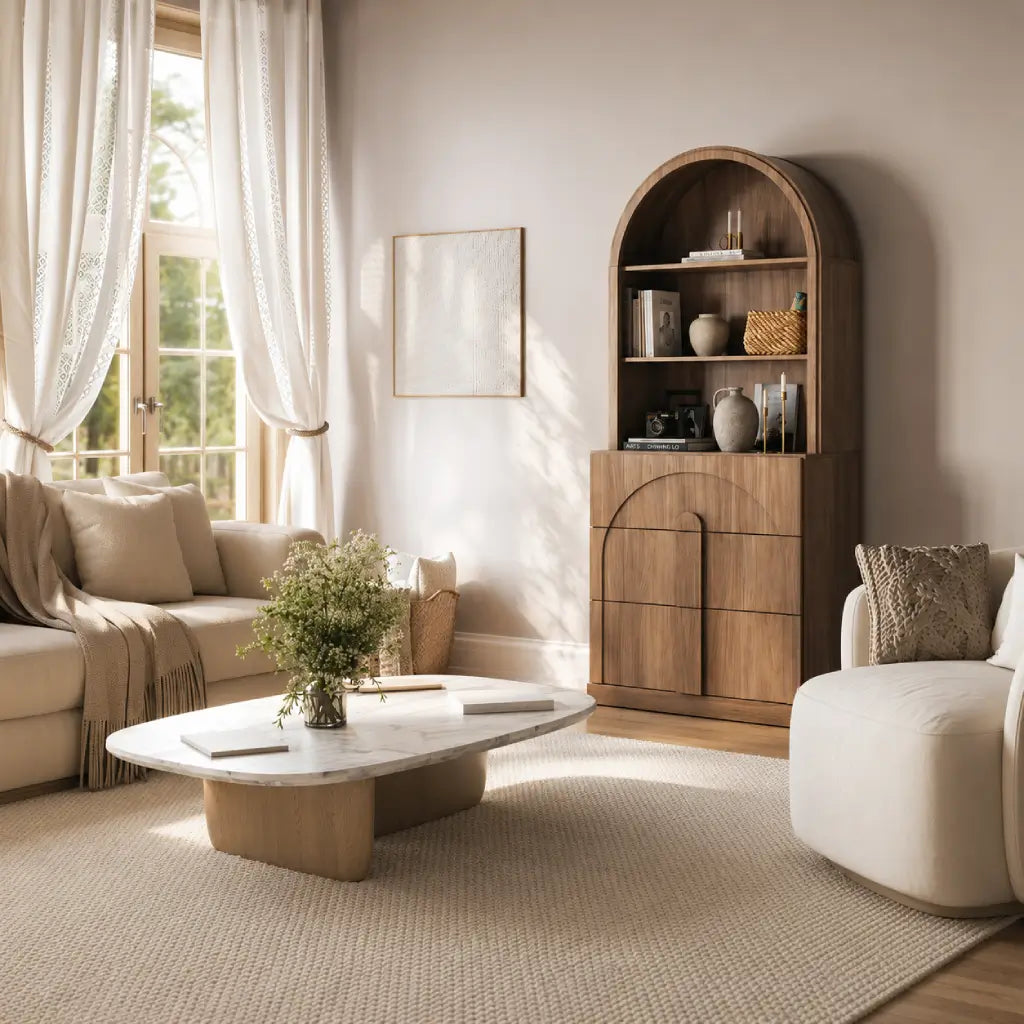
Figuring out how to store books without a bookcase usually starts with a real room problem. You may be renting, short on wall space, between moves, dealing with overflow, or avoiding one more bulky piece of furniture.
To store books without a bookcase, use wall ledges for display books, closed cabinets for clutter, rolling carts for daily reads, under-bed bins for overflow, and acid-free boxes for long-term storage.
Most small homes need one visible zone, one hidden piece, and one protected long-term box.
| Situation | Best Option | Skip If | Care Note |
| Small apartment clutter | Ottoman, sideboard, or cabinet | You need to see every title at once | Use doors or labels so books stay findable. |
| Rental with no drilling | Rolling cart or reading basket | It holds the whole collection | Rotate books so the setup stays manageable. |
| Bedroom overflow | Under-bed bins or closet bins | The spot is damp or hard to reach | Use shallow labeled containers. |
| Kids' book storage | Low baskets or fabric bins | Books need long-term protection | Keep heavy books low and reachable. |
| Display favorites | Wall ledges or table stacks | You cannot anchor hardware | Keep books away from direct sun. |
| Long-term storage | Acid-free boxes in a closet | You need weekly access | Avoid garages, attics, and damp basements. |
Best Book Storage Ideas by Room
- Bedroom: under-bed bins, nightstand stacks, storage benches.
- Living room: ottomans, sideboards, coffee table stacks.
- Home office: carts, closed cabinets, desk-side bins.
- Kids' room: low baskets, fabric bins, floor-level crates.
- Dorm or rental: rolling carts, baskets, low-impact ledges.
Sort Your Books Before You Store Them
Sorting is the fastest way to stop book storage from turning into random piles. You do not need a full catalog system. You need four groups: daily reads, display books, overflow books, and long-term books.
Once grouped, choose storage based on access, visibility, and protection needs. Daily reads should stay easy to grab. Display books can stay visible. Overflow and keepsakes can move into closed or labeled storage.
A fuller sorting system is covered in Belleze's guide to how to organize a bookcase, especially if you are moving into full shelving later.
Store Books on Display Without a Bookcase
Display storage works best for a small edited group of books, not a full home library. Choose titles that look good, get used often, or belong in the room, then move overflow into drawers, bins, or closed furniture.
Creative book storage still needs limits. A charming surface becomes cluttered fast when every new paperback lands there. Treat display space as the front row, not the entire system.
Use Wall Ledges or Floating Shelves
Wall ledges and floating shelves are good alternatives to a freestanding bookcase because they use small wall zones instead of floor space. Useful spots include above a desk, sofa, doorway, hallway, bed, or reading chair.
Mounted storage is best for a few visible books, not boxes of heavy hardcovers. Books are heavy, so hardware must be anchored properly and kept within its load limit. Renters who cannot patch walls are usually better off with a rolling cart, baskets, or a leaning display.
Use Tables, Mantels, and Window Ledges
Coffee tables, console tables, side tables, mantels, and wide window ledges can hold a tight rotating stack. These spots work best for attractive hardcovers, children's favorites, or the few books you are actively reading.
Console tables and low sideboards work especially well when you want display space on top and hidden storage below. Sunny windowsills are the exception to treat carefully, since direct light can fade covers and pages.
Make Decorative Book Stacks That Stay Stable
An intentional stack has a base, a limit, and a reason to be there. Put larger and heavier books on the bottom, keep stacks low, and avoid traffic paths where a hip, bag, child, or pet can knock them over.
Use bookends or a heavier object beside a stack if it starts to lean, and cap loose stacks at a few books on narrow surfaces.
Floor stacks are best as short-term overflow or deliberate display, not the main system for a large collection. Homes with kids, pets, narrow walkways, or frequent guests should move heavier books into bins or closed furniture.

Hide Books in Closed Storage
Closed storage is the best book storage solution when the room already has visual clutter. In apartments, bedrooms, living rooms, and multipurpose rooms, books often share space with games, office supplies, blankets, media items, and decor.
A storage ottoman, sideboard, or modular cabinet usually looks cleaner than several open baskets. Look for doors, adjustable shelves, and enough interior height for the books you actually own.
Use Baskets, Crates, and Lidded Bins
Open baskets work for easy access, while lidded bins create a cleaner look and reduce dust. Crates are renter-friendly and easy to move, but large crates get heavy quickly once hardcovers and textbooks go inside.
Kids' books are usually better in low baskets, fabric bins, or floor-level crates than in high storage. A quick phone photo of each bin's contents can help when books are packed spine-down.
Try Ottomans, Benches, and Hidden Storage Tables
Dual-purpose furniture hides books while still working as seating, a footrest, or a coffee table. It fits living rooms, small apartments, bedrooms, guest rooms, and foot-of-bed storage where a shelf would feel bulky.
Storage ottomans and benches are better for casual paperbacks, magazines, and children's books than for rare books or titles you search often. Belleze's small living room storage ideas can help when books are only part of the clutter.
Use Sideboards or Cabinets to Hide Books
Closed cabinets or sideboards work best when books need to blend into a living room, dining room, or office instead of becoming another visible pile. Adjustable shelves help separate paperbacks, oversized books, games, and office supplies.
Choose sideboards for small spaces when storage should stay low and discreet, or modular cabinets when the storage area may grow or change purpose later.
Keep Everyday Books Close to Where You Read
The goal is to keep active books nearby, not turn every reading spot into another overflow zone. Books near a bed, sofa, desk, reading chair, dorm room, or home office should stay small and rotate often.
Use Rolling Carts or Reading Baskets
Rolling carts work like movable mini-libraries for bedrooms, dorms, home offices, and reading corners. Keep heavier books on the lower tier and reserve the top for current reads, bookmarks, a notebook, or a small lamp.
A cart is best when books move between rooms. A basket is better when books stay beside one seat. Use them for active books only.
Use Under-Bed Storage for Overflow Books
Under-bed bins or rolling drawers work for books you want nearby but not visible. Bedrooms, guest rooms, kids' rooms, dorms, and small apartments can use this hidden space without adding another piece of furniture.
Choose shallow lidded bins or zip covers when dust is a concern. Keep less-used books farther back and current overflow near the front. Valuable books should only go under a clean, dry, climate-stable bed area.
Use Nightstand or Desk Stacks
Nightstand and desk stacks should hold active reads only. A tray, small basket, or bookend can make the stack look intentional, but the real rule is volume: one or two books are access, while ten books are storage drift.
Store Books Long Term Without Damage
Long-term storage is about preservation, especially for sentimental, older, reference, or collectible books.
Preservation guidance generally favors cool, relatively dry storage, minimal direct light, regular cleaning, and avoiding poorly insulated basements, attics, or garages for valuable books. Before boxing books, dust them and make sure they are fully dry.
Choose the Right Container
Everyday paperbacks can use plastic, fabric, or lidded bins in clean, dry rooms. Valuable or sentimental books are better in acid-free, preservation-quality boxes. Oversized books need flat support, and heavy textbooks should go in smaller containers that stay liftable.
A sealed plastic bin can protect books from dust and minor spills, but it can also trap moisture if books or the room are damp. A dry closed cabinet can beat a plastic bin when access still matters.
Pick a Climate-Safe Location
Interior closets, bedrooms, and home offices are safer than garages, attics, damp basements, bathrooms, or sunny windows. Heat, moisture, and direct sunlight can all damage books over time.
Pack and Stack Books Carefully
Pack books so covers and bindings are supported, not crushed. Many ordinary books can stand upright in a container when they fit comfortably, while large or oversized books usually do better lying flat with full support underneath.
Leave enough room to remove a book without forcing the cover. Label each container, then check stored books periodically for moisture, mold, pests, warping, or musty smells.
Avoid These Book Storage Mistakes
- Leaving books in damp garages or basements.
- Stacking heavy books in tall unstable piles.
- Hiding daily reads in hard-to-reach bins.
- Putting valuable books in hot, sunny, or humid spaces.
- Using large boxes that become too heavy to move.
When Storing Books Without a Bookcase Stops Working
No-bookcase storage stops working when books are no longer easy to find, safe to stack, or simple to protect. That can happen after a temporary move, a new hobby, a child's growing collection, or an already-full bookcase.
Use closed cabinets when the issue is visual clutter, sideboards when storage should stay low and discreet, and tall bookcases when browsing and access matter more than hiding the books.
A no-bookcase system works best as a small-space strategy, not as a permanent fix for a growing library.

Signs You Need Better Book Storage
Upgrade when books spread across too many rooms, stacks block walkways, bins become hard to search, valuable books sit unprotected, or the collection keeps growing. These signs mean the reader needs a system, not another temporary pile.
Choose What to Use Next
The collection has outgrown workarounds when books are hard to browse or bins are hard to search. Check bookcase dimensions before moving from makeshift storage to a permanent unit.
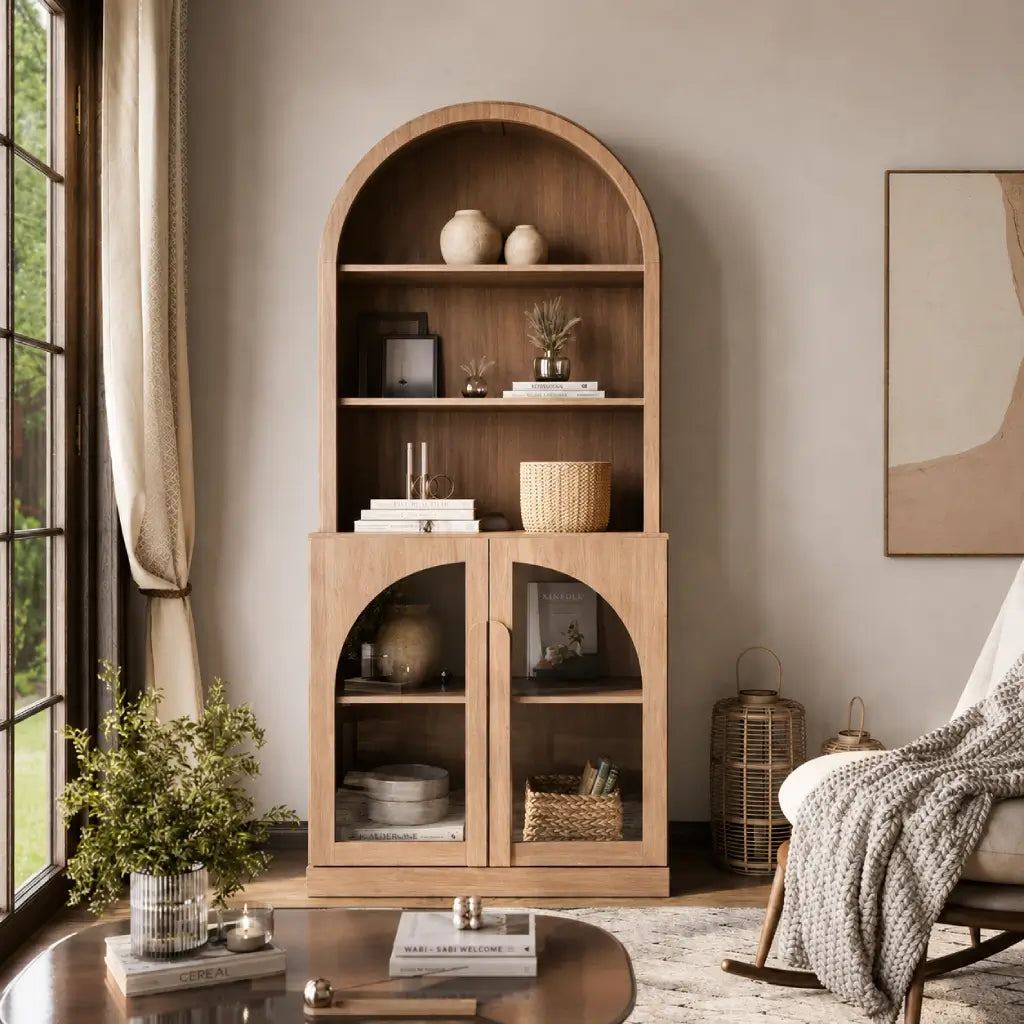
Books hidden in bins but hard to search usually need a taller system. The Jagger 72" Tall Bookcase Cabinet works when you want favorite books visible on upper shelves and less-used books or office supplies tucked behind closed doors.
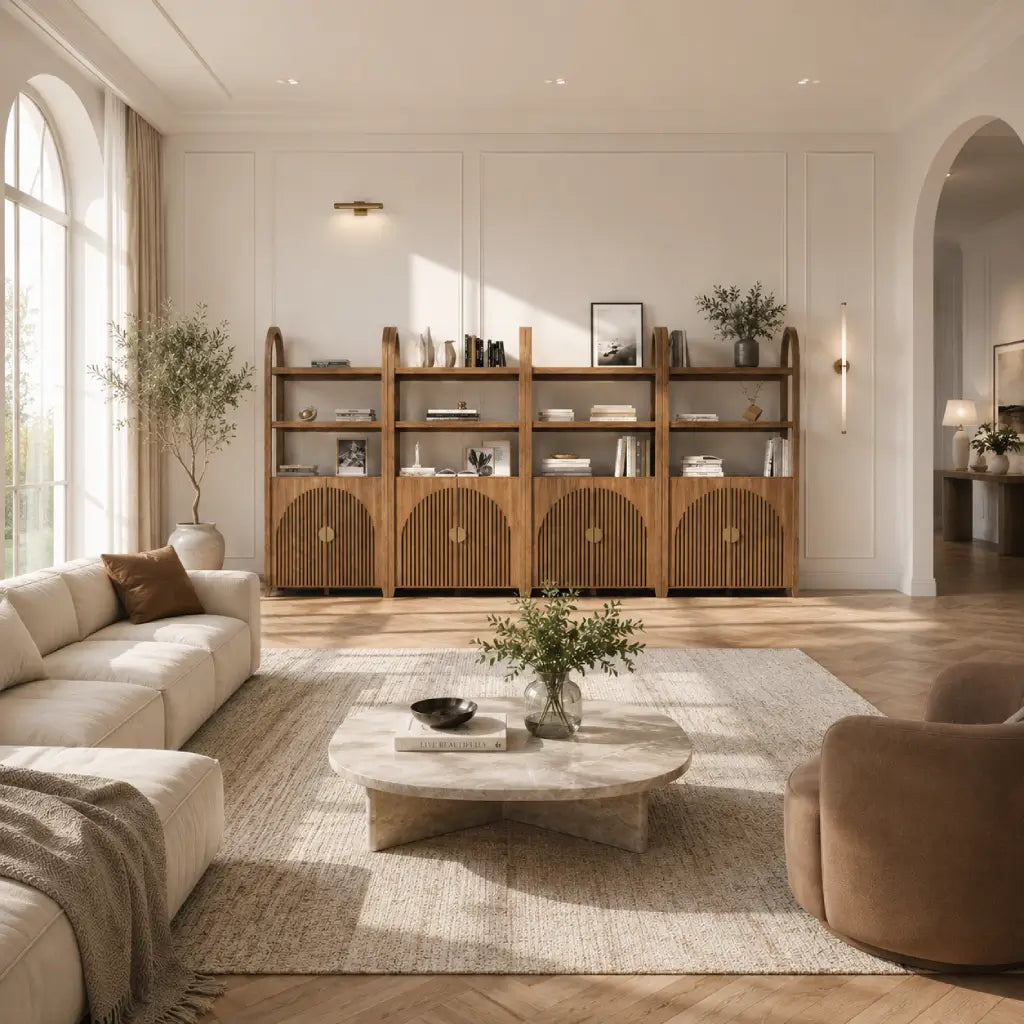
Smaller rooms may do better with one narrow mixed-storage piece. The 72" Tall Arched Fluted Door 3 Tier Modular Bookcase keeps display books open, hides overflow below, and can be expanded later if the collection keeps growing.


FAQ
Can you store books in plastic containers?
Yes, plastic containers can store clean, dry everyday books in climate-stable rooms. Use acid-free, preservation-quality boxes for valuable or sentimental books, especially in damp or high-humidity spaces. Avoid sealing books that feel musty.
Where should you not store books?
Avoid garages, attics, damp basements, bathrooms, and sunny windowsills for valuable or long-term books. These spots expose books to moisture, heat, sunlight, pests, leaks, or temperature swings. Interior closets are usually safer.
How do you organize books without a bookshelf?
Organize books without a bookshelf by sorting them by use first: daily reads, display books, overflow books, and long-term storage books. Then match each group to carts, ledges, closed furniture, under-bed bins, or acid-free boxes.
When should you stop storing books without a bookcase?
Stop relying on no-bookcase storage when books become hard to find, stacks keep tipping, bins are overfilled, or valuable books are unprotected. Closed storage, modular cabinets, or a dedicated bookcase usually works better at that point.

Leave a comment
This site is protected by hCaptcha and the hCaptcha Privacy Policy and Terms of Service apply.