


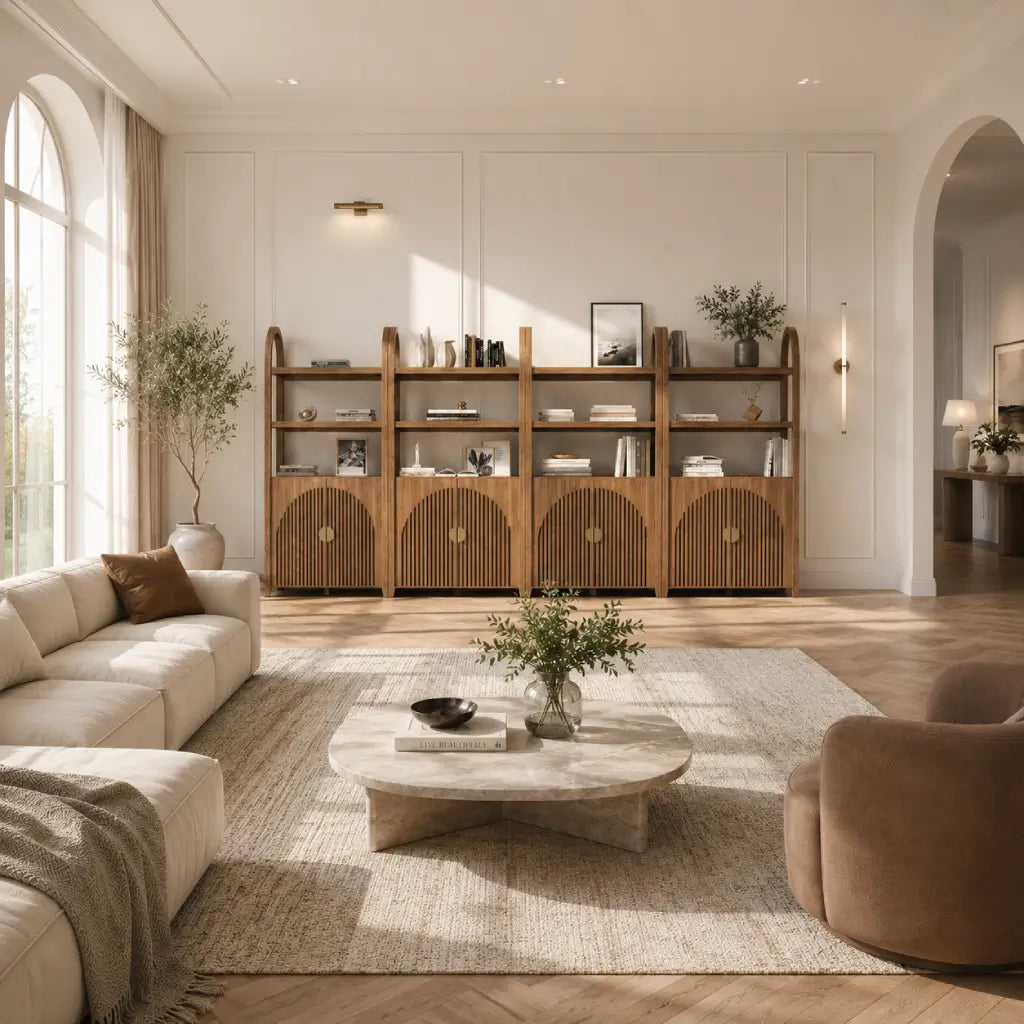
Choosing between a tall and wide bookcase usually comes down to floor space, wall width, access, storage type, and safety. Tall bookcases save floor width; wide or low bookcases improve reach, sightlines, and long-wall balance.
If your wall is narrow, a tall bookcase almost always has the advantage. If you have a long low wall, a window to work around, or a room that already feels top-heavy, wide or low usually fits better. Match the bookcase to the constraint you cannot change.
Tall or Wide Bookcase? The Quick Verdict
The fastest way to choose is to name your biggest constraint: space, access, storage type, or anchoring. That usually decides the shape before finish or style matters.
- Choose a tall bookcase if your biggest problem is getting more storage without using much floor width.
- Choose a wide or low bookcase if your priority is visual balance, easy access, or storage below a window or along a long wall.
- Modular storage or a sideboard may be better when neither shape fits cleanly.
- Consider lower storage if you cannot anchor tall freestanding furniture safely.
| Factor | Tall bookcase | Wide or low bookcase |
| Best for | Small footprint | Balance and reach |
| Room fit | Narrow walls | Long or low walls |
| Storage style | Many shelf rows for books | Books mixed with display or bins |
| Watch out for | Anchor plan and reach | Traffic and shelf support |
Many tall bookcases fall roughly in the 60 to 84 inch range, though compact tall models can be shorter. Many low or wide pieces stay closer to console or sideboard height, depending on the design. Need exact height, width, depth, or shelf-spacing ranges? Use our guide to bookcase dimensions before you measure.
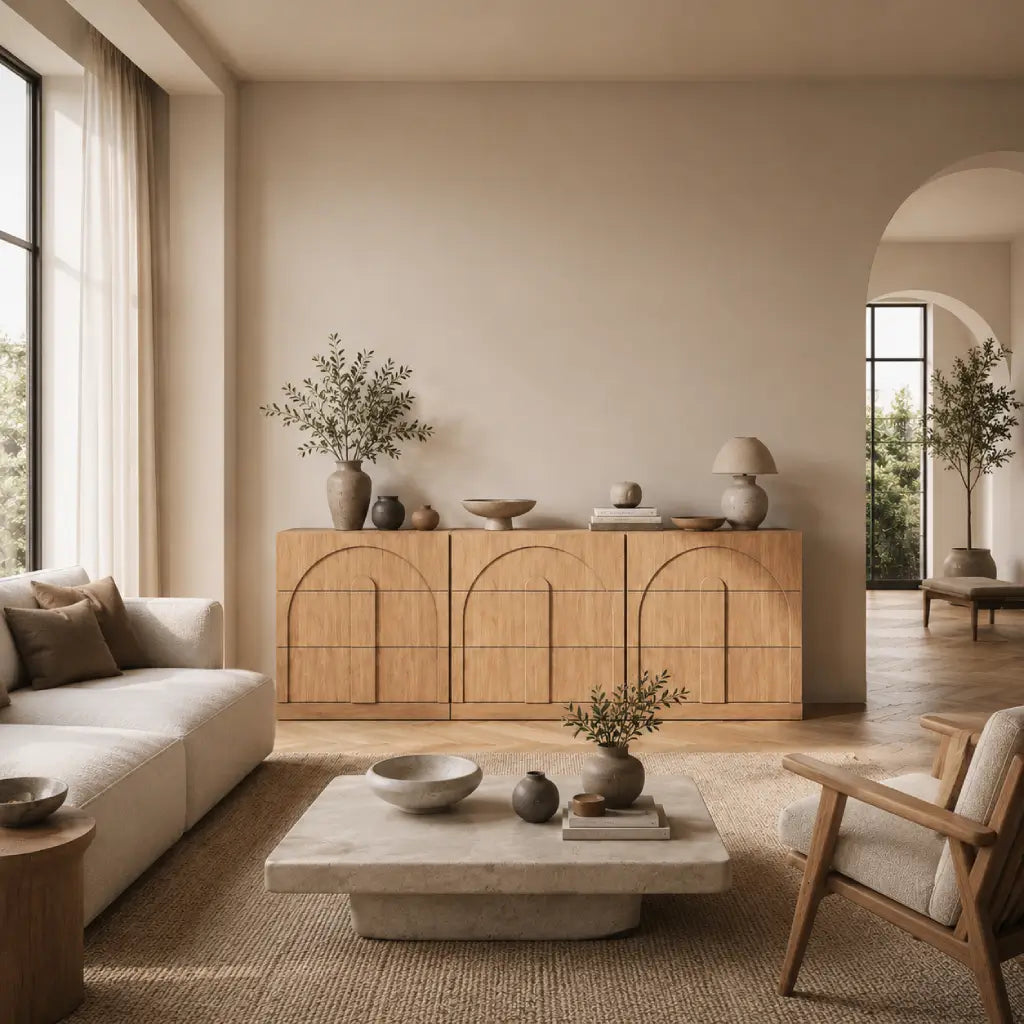
Use modular storage for changing needs, or a sideboard when low hidden storage matters more than open shelves.
Choose a Tall Bookcase When Floor Space Is Tight
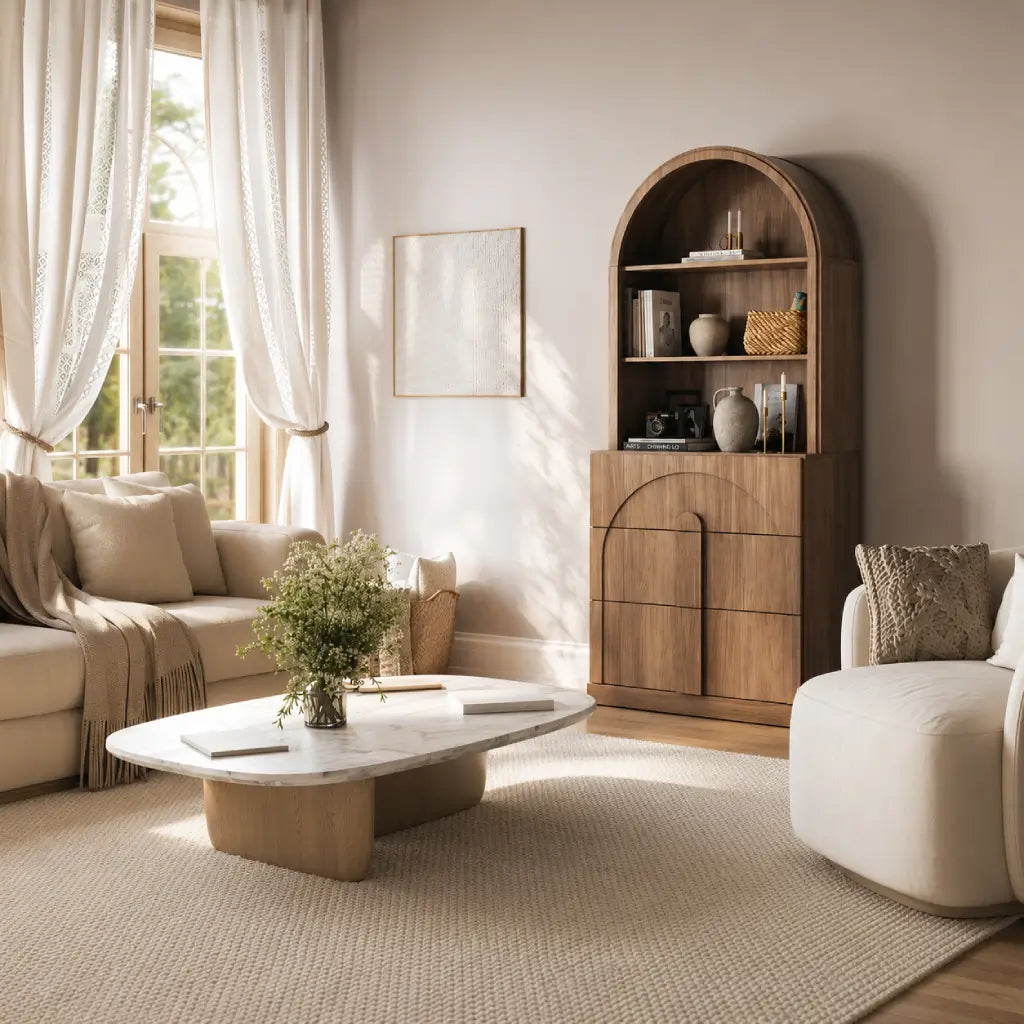
A tall bookcase is best when you need more storage without using much floor width. It works especially well in apartments, rentals, small bedrooms, home offices, and tight corners where a wide piece would squeeze the walkway.
- Use tall storage when the only open wall is narrow, such as beside a desk, sofa, doorway, or closet.
- Renters should treat tall storage as a space-saving choice with a safety condition: freestanding tall furniture still needs a safe anti-tip plan.
- Heavy items belong on lower shelves; upper shelves are better for lighter decor, files, or less-used books.
- Skip this if you cannot place it securely, reach upper shelves comfortably, or keep the piece from feeling visually heavy.
Vertical lines can make a room feel taller when the piece is scaled well and not overloaded, but the bookcase still has to feel safe and reachable in daily use.

Choose Wide or Low for Windows and Reach
A wide or low bookcase is best when the room needs balance, easy access, or under-window storage. Its lower profile keeps sightlines open and can stop a low ceiling from feeling crowded.
If tall furniture makes the room feel top-heavy, a wide or low bookcase usually creates a calmer, more grounded look. It often pairs better with sofas, media consoles, and low windows because it follows the horizontal lines already in the room.
- Use wide and low bookcases below windows, beside sofas, along long living-room walls, or near TV areas where a tall tower would interrupt the sightline.
- More placement-specific ideas are covered in where to put a bookcase.
- Choose an open wide bookcase for books and display; choose a sideboard when the low, wide shape should hide clutter behind doors.
- Skip this if it blocks traffic, overwhelms a short wall, or needs long shelves that will carry heavy books without support.

Use Your Room Shape to Make the Decision
Room shape often decides the better bookcase before exact measurements do. Start with the wall you actually have, not the shape you hoped would fit.
A narrow wall favors height because it protects floor width and walkways. A long wall, low ceiling, or window usually favors a wide or low piece because it follows the room's horizontal lines.
- Long blank wall: choose wide or modular storage so the furniture does not look stranded.
- Kids' room or rental: lean lower unless you can safely secure a tall piece.
- Heavy storage: use lower shelves, shorter spans, or modular sections.
Storage Type: Books, Decor, Bins, and Weight
Storage type matters because books, decor, bins, and games need different shelf support and access. A shape that works for paperbacks can be wrong for board games or office files.
- Lots of paperbacks or hardcovers: choose a tall bookcase.
- Books mixed with decor: choose a wide or low bookcase.
- Games, bins, or files: choose a sideboard or modular cabinet.
- Heavy books or binders: use lower, shorter shelves.
Tall bookcases are efficient for dense paperback and hardcover collections because they add more shelf rows per square foot. Wide or low bookcases suit mixed books and decor because more items stay visible and reachable.
Sideboards or modular cabinets may be better for games, bins, records, office files, or anything you want to hide. Heavy art books, binders, and oversized books usually belong on lower shelves, shorter spans, or sections with center support.
Bookcase Safety and Shelf Sag: What to Check Before You Buy
Stability depends on height, width, weight distribution, flooring, construction, and anchoring. Tall freestanding bookcases are more tip-prone and are usually safest when anchored, especially in homes with children; carpeted rooms or homes with pets may also call for extra caution.
- A no-drill household should be cautious with tall freestanding storage.
- A wide or low bookcase, lower modular setup, or heavier low storage piece may reduce tip concerns, though every piece still needs to be placed and loaded correctly.
- Shelf sag is the main risk for wide bookcases, especially when long unsupported shelves carry heavy books.
Very heavy books are usually better on shorter shelf spans. As a general rule of thumb, many 3/4-inch shelves show sag risk past roughly 30 to 36 inches without center support, but always check the manufacturer's load rating for your specific piece. Two narrower units or modular sections may work better than one extra-wide unsupported bookcase.
So, Which Bookcase Should You Choose?
Once you know which shape fits your room, use that decision to narrow the product list instead of starting over. A narrow wall or small office points toward Tall Bookshelves & Bookcases, including the Jagger 72" Tall Bookcase Cabinet, which keeps the footprint around 32 inches wide while adding vertical display and enclosed lower storage.
A long living-room wall, dining wall, or low hidden-storage setup points in a different direction. The Bijou Mid-Century Modular Sideboard Cabinet Set (3-Piece) is a better starting point when you want a wide, low run with drawers and enclosed storage. Exact sizes still come first, so use the bookcase dimensions guide before shopping.


FAQ
Is a Tall or Wide Bookcase Better for a Small Room?
A tall, narrow bookcase usually works best for a small room because it saves floor width, while a low wide piece only works if it stays out of traffic.
Is a Wide or Low Bookcase Better Under a Window?
A wide or low bookcase is usually better under a window because it keeps the window line open. Check height, depth, and traffic flow before using it as storage.
Are Wide Bookcases More Stable Than Tall Bookcases?
Wide and low bookcases usually have a lower center of gravity, so they are often harder to tip than tall narrow pieces. Stability still depends on loading, flooring, construction, and anchoring.
Should I Buy One Wide Bookcase or Two Narrow Bookcases?
Two narrower units often offer more flexibility and reduce shelf-span stress. One wide unit can look cleaner when it has proper center support, strong shelves, and the right wall space.
What If I Cannot Anchor a Tall Bookcase to the Wall?
Renters or no-drill households should be cautious with tall freestanding pieces and check the product's anti-tip options. Lower bookcases, sideboard-style storage, or modular setups may be better when anchoring is not possible.

Leave a comment
This site is protected by hCaptcha and the hCaptcha Privacy Policy and Terms of Service apply.