


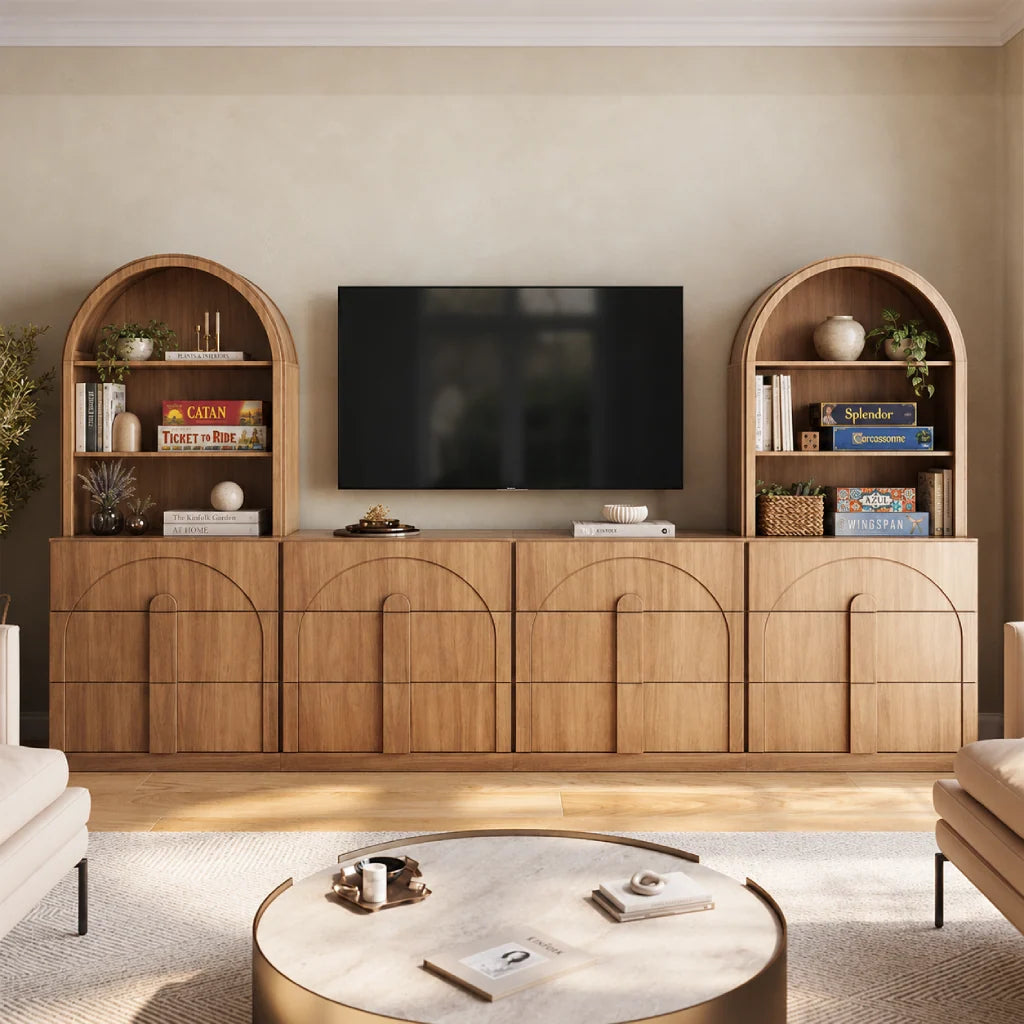
Storing board games in a living room usually means choosing between convenience and clutter. Stacking boxes on coffee tables makes the room feel messy, but tucking them away in a hallway closet means they rarely get played. For a small living room, start with furniture you already have: a storage ottoman, a lift-top coffee table, or an open credenza shelf. If you are shopping for new furniture, pick your style based on how much you want to see.
An open bookcase puts your favorite titles front and center, a solid-door sideboard hides bright packaging completely, and a tall bookcase with lower doors gives you open display space up top with hidden storage below. Whichever style fits your room, what actually fits inside depends on usable interior shelf clearance rather than the exterior measurements on the product tag.
Start With Furniture You Already Own
Before shopping for new furniture, check what is already in your living room. A storage ottoman, a lift-top coffee table, or an unused credenza shelf can easily hold four or five standard game boxes without claiming extra floor space. These pieces keep your collection right next to the couch for impromptu game nights.
The catch with dual-purpose furniture is access. A lift-top coffee table or storage ottoman hides boxes well, but if getting to a game means moving drinks, remotes, and decorative trays every time, it quickly becomes a hassle to open. Those covered spots work best for lightweight party games you only bring out on weekends. Keep heavy, go-to games on an open or easily accessible cabinet shelf, and tuck small card decks into bins so they do not disappear into the back of deep compartments.

Show Off Your Favorites on an Open Bookcase
An open bookcase lets guests browse your collection and makes putting games away painless at the end of the night. The challenge is keeping the shelves from looking like an overcrowded stockroom. Arrange boxes so every visible title can be pulled straight off the shelf without moving adjacent games. Stacking a second row behind the first row never works: you lose track of what is back there, and grabbing a game turns into an annoying chore of clearing the front line.
Cube organizers work well to divide games into neat groups and keep upright rows from leaning, but each cubby has fixed walls. A standard 13-inch cube comfortably holds typical 12-inch square boxes, but long strategy games and oversized boxes simply will not fit. For bigger titles, an open bookcase shelf without vertical dividers gives you the continuous horizontal space to support the full box without an edge hanging off. While adjustable pins let you change height between shelves, they cannot make a shallow shelf deeper.
Hide Cluttered Boxes in a Solid-Door Sideboard
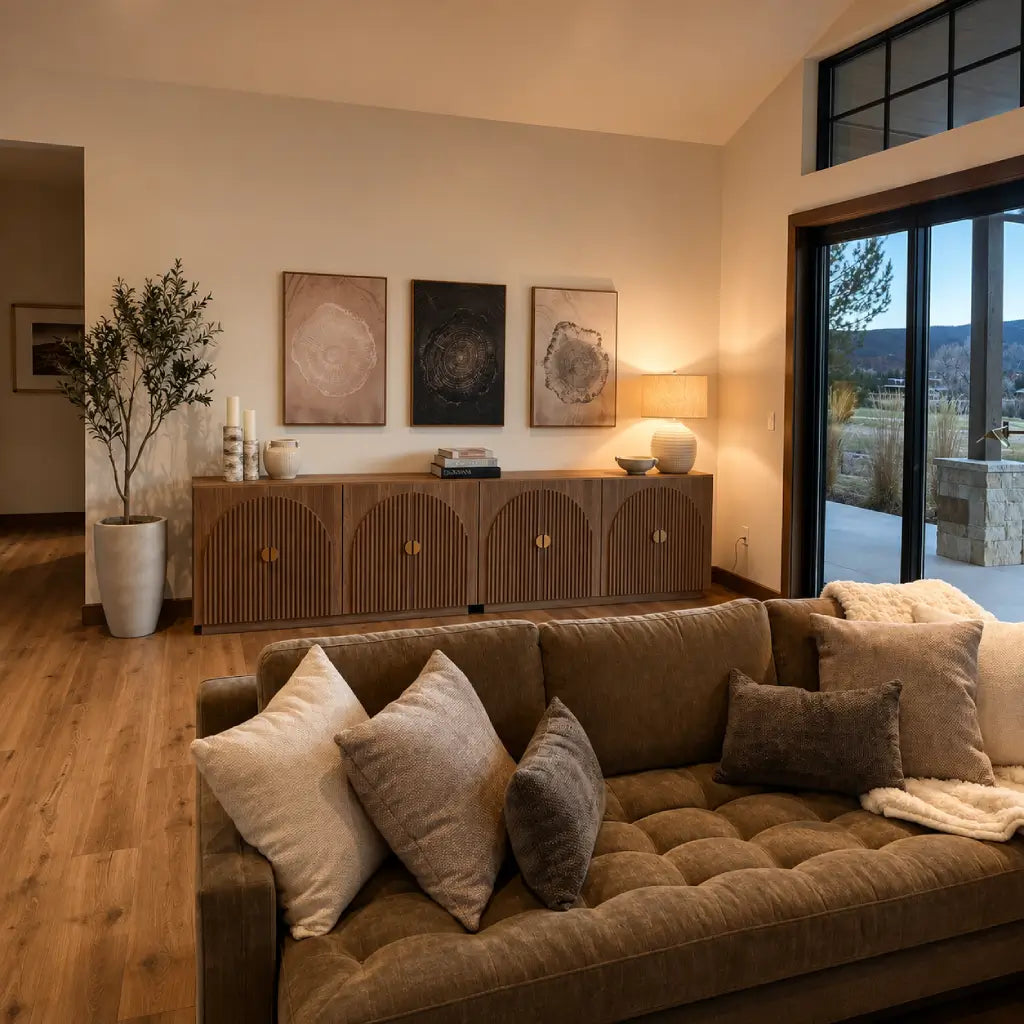
If your living room opens directly into a dining area or serves as your main entertaining space, solid cabinet doors are the cleanest way to store games. Glass-front cabinets keep off dust, but they leave bright cartoon illustrations, mismatched neon spines, and worn box corners in plain sight. A solid sideboard or buffet cabinet hides the visual chaos completely, keeping an entire collection in the room while maintaining a calm, furniture-first look. Keep your most played titles on the most accessible interior shelf for quick reach.
A low sideboard also keeps wall space open for artwork, mirrors, or windows. Look for adjustable interior shelves and check the shelf weight rating, since thick cardboard boards, miniature figures, and wooden tokens add up fast. For example, the 35-inch fluted modular sideboard with doors lists exterior measurements of 35 inches wide, 16.3 inches deep, and 31.5 inches high, with a 20-pound weight limit per shelf. That 16.3-inch outer depth leaves plenty of room for standard 12-inch square boxes, while the 20-pound rating comfortably supports multiple stacked titles. When checking cabinet doors, remember that interior face frames and hinges reduce the clear opening width by roughly an inch compared to the outside width, so verify the actual opening before buying wide boxes.
Mix Open Shelves and Closed Cabinet Doors
A bookcase with cabinet doors at the bottom gives you the best of both worlds. You can display your best-looking games alongside books and plants on the open upper shelves, and stash beat-up boxes, loud party games, and loose token trays behind closed doors below. Each game gets a spot based on how good it looks and how often you play it.
This layout uses vertical wall space instead of spreading out across the floor. For instance, the Delphi 71-inch tall fluted bookcase shares the same listed 35-inch width and 16.3-inch depth as the low sideboard, but reaches 71.1 inches high. It gives you three fixed upper open shelves for display and an adjustable shelf behind lower cabinet doors for closed storage. It takes up the exact same floor space as a low sideboard, but takes advantage of wall height to store twice as many games. Because a tall unit holds heavy weight higher up, anchor it to wall studs before loading your collection.
Store Games Like Books or Stack Them Flat
Storing games vertically like books makes pulling a title out as simple as grabbing a novel off a shelf. You slide one box out without disturbing its neighbors or lifting a heavy stack. This works well whenever the game's contents are contained: cards in deck boxes, tokens in zip bags, or pieces held in snug custom inserts. But if a game has loose tokens, unbagged tiles, or heavy boards, storing it on edge dumps everything into the bottom corner. Over time, shifting components warp plastic inserts and push lids open.
For games with delicate folded boards, thin plastic trays, or loose pieces, flat stacks work much better. Just keep the stacks short so games remain easy to retrieve. Piling up five or six heavy boxes turns game night into an annoying chore and crushes the corners of the bottom box. Put your heaviest boxes at the bottom, avoid setting heavy games on flimsy lids, and split the stack if a lid begins to bow or corners start to compress.

Organize Small Card Games and Bulky Expansions
Small tuck-box card games, dice tins, and pocket titles easily get shoved behind large square boxes on deep shelves and forgotten. Store compact games together in fabric bins, clear acrylic caddies, or photo storage cases on a dedicated shelf. For tokens and loose markers, small lidded plastic containers make setting up games much faster. If cabinet space is tight, rotate seasonal party games and rarely played titles to a hallway closet to keep your main shelves clean.
If you want to ditch bulky retail boxes to save space, test-pack a single game before reorganizing your entire collection. A labeled zippered pouch or clear plastic bin can hold a board, cards, and pieces in a fraction of the original box volume. Check that the folded board and rulebook fit without bending, and ensure sleeved cards do not get creased. Keep small wooden pieces and dice in separate zip bags inside the main pouch so components stay sorted.
Consolidating expansion packs into the base game box is another common space-saver, but test-pack the pieces before tossing the expansion box. Sleeved cards, extra boards, and thick cardboard tokens often add more volume than the original box can swallow, leaving the lid propped open. Hang onto the expansion box if the game has custom molded inserts, or if you plan to trade or resell the title later.
Measure Your Biggest Boxes Before You Buy
Before ordering a new cabinet or bookcase, grab your biggest, bulkiest game box and measure it in the orientation you actually plan to store it. Product listings only show exterior dimensions, which tell you if the piece fits your wall, not whether your games fit inside. Always check the usable interior depth so the entire base of your largest box rests on the shelf without hanging over the edge.
Next, check the entry opening and finger room. On cabinets with doors, face frames and hinges narrow the opening, so measure the clear gap with the doors fully open to make sure wide boxes slide in flat. Once inside, you also need room to retrieve them. Leave at least an inch of clearance above and beside each box so you can slip your fingers in and lift it out cleanly without scuffing the cardboard lid.
Once you know your games fit the shelves, measure the room itself. A cabinet needs enough clearance for doors to swing fully open without hitting coffee tables, rugs, or walking paths. For a practical walkthrough on checking wall space, baseboard gaps, and living room traffic flow, review this measuring checklist for modular sideboards.
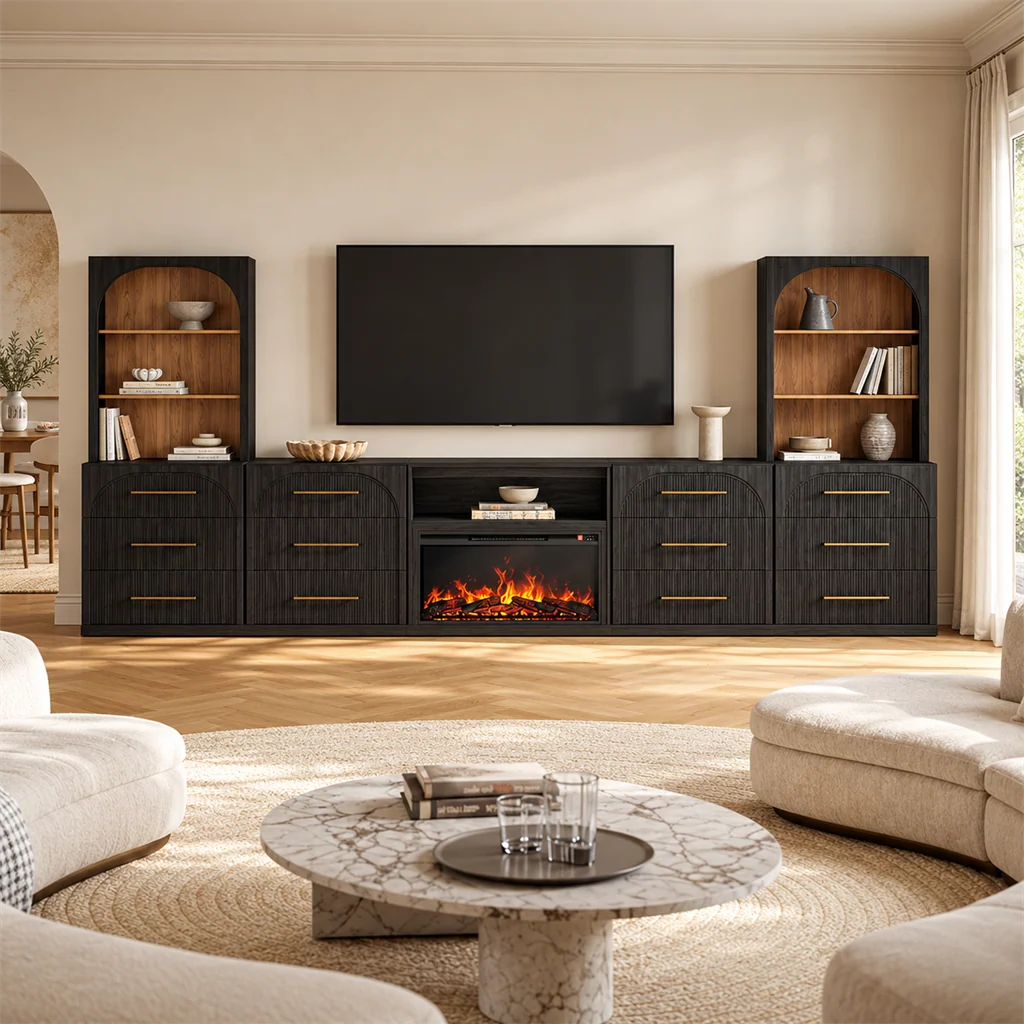
For households that want to keep living room walls open while keeping games completely out of sight, explore the options available in living room modular sideboards. Comparing cabinet widths lets you plan for oversized strategy boxes, drawer options keep small decks and dice sorted, and solid doors give you a clean living room where games are always ready to play.

Leave a comment
This site is protected by hCaptcha and the hCaptcha Privacy Policy and Terms of Service apply.