


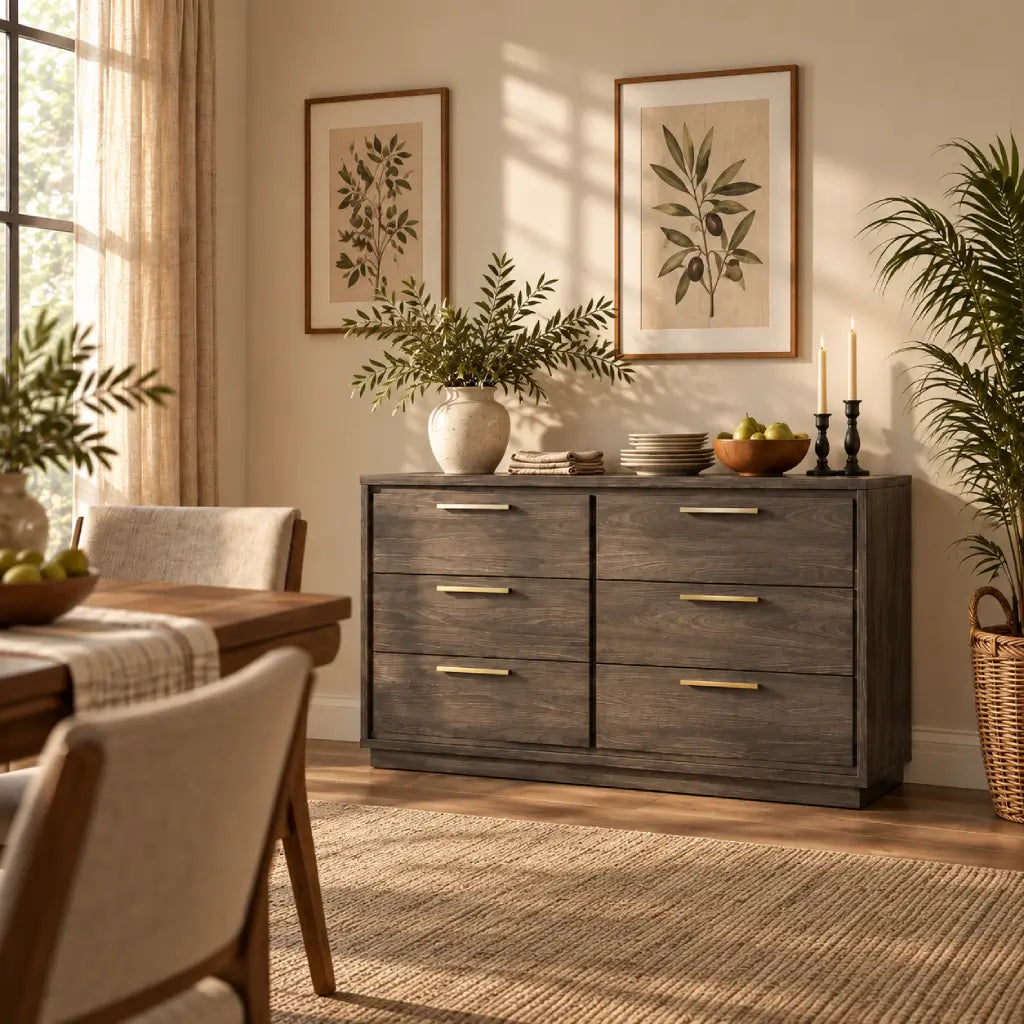
Yes, you can use a dresser as a dining sideboard or buffet, provided you have enough floor space to pull drawers open without trapping seated guests. Dressers run deeper than dedicated sideboards and replace cabinet doors with clothing drawers, which changes how they function next to a dining table.
Before dragging a heavy chest across the house, check drawer clearance behind pulled-out chairs, make sure your serving dishes fit inside, and protect the top surface from heat and spills. With the right clearances, a dresser works well. Without them, the piece turns into a permanent bottleneck.
When Does a Dresser Work as a Sideboard?
A dresser does not have to be an all-or-nothing choice. Whether an existing piece makes sense beside your dining table comes down to your floor plan and what you need to store:
- Keep it as-is if the drawers pull open without clipping dining chairs, your storage is mostly flat table linens and flatware, and the cabinet sits stable against the wall.
- Make a minor adjustment if the dimensions fit the room, but the piece needs surface protection or feels out of place. Removing an attached mirror, swapping knobs, or laying down a table runner under warm dishes often solves the problem.
- Choose a dedicated sideboard if open drawers block your main walking path, bulky platters will not clear the drawer boxes, or the frame feels unsteady when loaded drawers extend.
If open drawers block foot traffic or pinch your servingware, forcing the piece into the room creates frustration at every meal. Measure your clearance with the dining chairs pulled out before deciding to keep an older chest.

Will Drawers Bump Into Your Dining Chairs?
A dresser can fit against an empty wall and still choke your dining room once drawers and chairs are in use. Measure the cabinet depth, then open a drawer and measure to the front hardware. That combined distance is the real floor space the piece claims every time you reach for flatware or napkins.
Mark the floor with blue painter tape before moving the piece into place. Outline the cabinet footprint against the baseboard, then tape out the full drawer extension in front. Pull your dining chairs back as if guests are seated. You need room to walk behind occupied chairs without turning sideways or clipping an open drawer against a chair leg.
If opening a drawer forces someone to scoot their chair forward, the dresser is too deep for that wall. Dining buffets are built shallower specifically to avoid that issue. Anyone working with tight space can read how to choose the right size sideboard for your dining room to check wall setbacks and walking clearances.
Will Your Plates and Platters Fit?
Storage layout is often where the dresser-versus-sideboard compromise shows up. Dressers provide stacked drawers, while purpose-built sideboards give you wide shelves behind cabinet doors. A chest with six wide drawers looks roomy, but drawer count tells you nothing about whether rigid dinnerware will clear the opening.
Drawers work well for flat dining goods. Tablecloths, cloth napkins, placemats, boxed flatware, and taper candles stay organized and dust-free inside shallow wooden boxes. Dropping in a silverware divider keeps serving tools from sliding backward every time you open a drawer.
Tall and rigid pieces are where drawers fall short. Beverage carafes, soup tureens, stand mixers, and wide turkey platters rarely clear the top lip of a bedroom drawer. If you need storage for bulky entertaining pieces, reading our guide to glass door, solid door, or drawer sideboard styles will show you which items belong behind cabinet doors instead.

Can the Surface Handle Heavy Serving and Spills?
Bedroom dressers hold clothing and table lamps, not dinner parties. Using one as a buffet means setting down hot casserole dishes, damp drink pitchers, and sauce bowls. Factory finishes on bedroom furniture are rarely built for food service, so lay down protective trivets and fabric runners before setting out food.
Weight distribution affects stability as soon as drawers are loaded. Storing stacks of ceramic plates in top drawers pulls the center of gravity forward every time someone reaches inside. Pack heavy dinnerware and serving pieces into the lowest drawers to keep the chest grounded, and check the manufacturer manual for drawer weight limits.
Because pulling out several loaded drawers alters cabinet balance, anchor the frame to a wall stud before filling it with dishware. The Consumer Product Safety Commission (CPSC) notes tip-over risks for chest furniture, making wall anchoring a sensible precaution. Follow the manufacturer mounting instructions rather than relying on adhesive strips or light drywall anchors.
Small Tweaks That Make It Feel at Home
Address appearance only after the dresser passes your clearance and storage checks. A coat of paint will not fix a drawer that hits a dining chair. Once you know the dimensions fit, a few reversible changes will keep the piece from looking like a bedroom chest that wandered into the dining room.
The fastest way to de-bedroom a dresser is removing any attached vanity mirror. Hang a piece of framed artwork or an independent wall mirror slightly above the cabinet instead. Swapping delicate bedroom knobs for clean cabinet pulls and laying down a linen runner also breaks up the wood surface and protects the top from dishware scuffs.
Keep these updates simple and leave the structure intact. Cutting cord pass-throughs or trimming drawer boxes weakens the cabinet joinery and leaves permanent damage. Belleze shares dedicated dining room styling guides for pairing lighting, tabletop centerpieces, and artwork with your storage pieces without altering the furniture.
Should You Keep the Dresser or Buy a Sideboard?
Keep your dresser if it clears your chairs, stores your linens, and stays stable against the wall. Reusing furniture you already own is practical and adds character to the room. If drawers pinch your serving platters or the cabinet depth blocks walkways, choosing a purpose-built dining unit prevents daily frustration.
For a dining wall that accommodates one wide cabinet, the Belleze New Port 54" 6-Drawer Dresser provides a functional dresser-as-sideboard layout. It measures 54 inches wide, 15.7 inches deep, and 31.1 inches high, pairing three shallow upper drawers for flatware with three deep lower drawers for table linens.


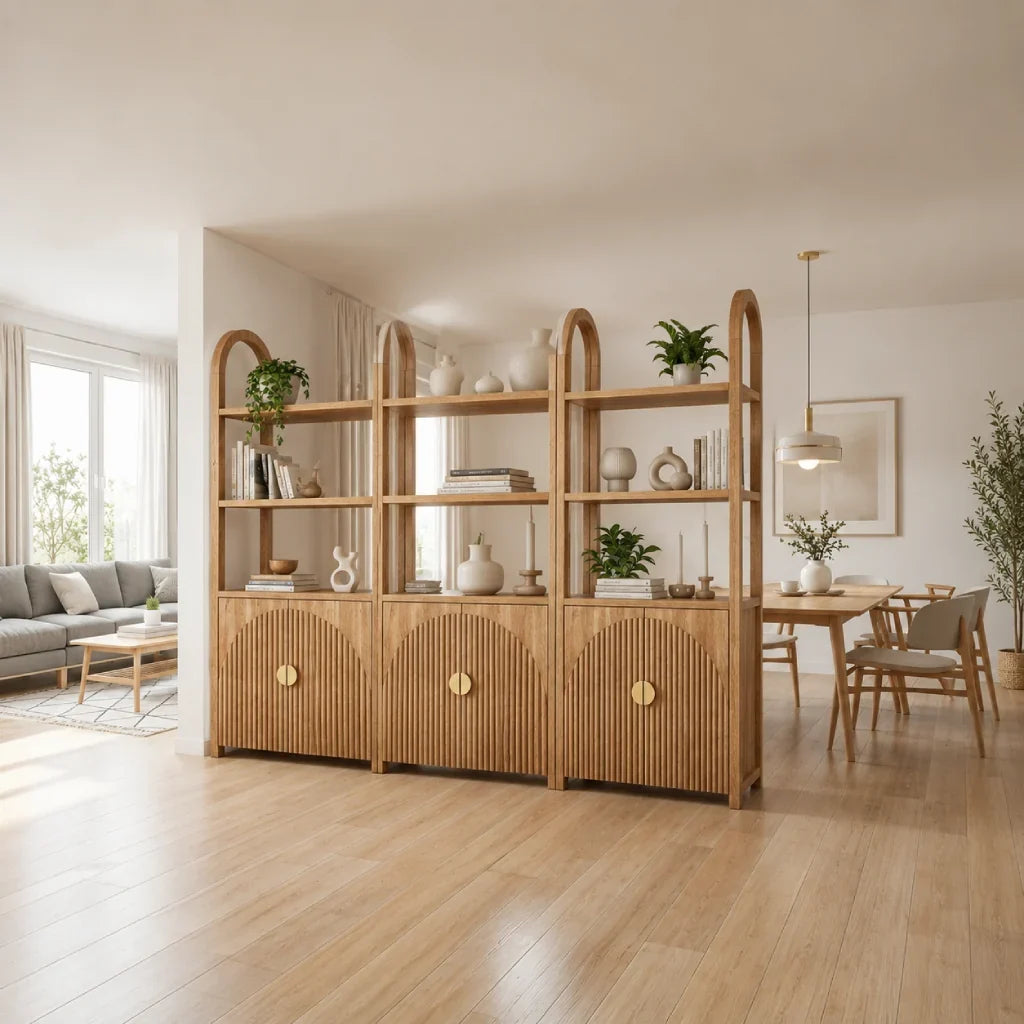
If your floor plan needs separate pieces to fit around windows or trim, the Bijou 3-drawer storage cabinets set of 2 uses two modular units, each measuring 31.5 inches wide, 16.3 inches deep, and 31.5 inches high. Purpose-built pieces from the dining room modular sideboards collection give you dining-specific depths and flexible placement without crowding your dining table.

Leave a comment
This site is protected by hCaptcha and the hCaptcha Privacy Policy and Terms of Service apply.