


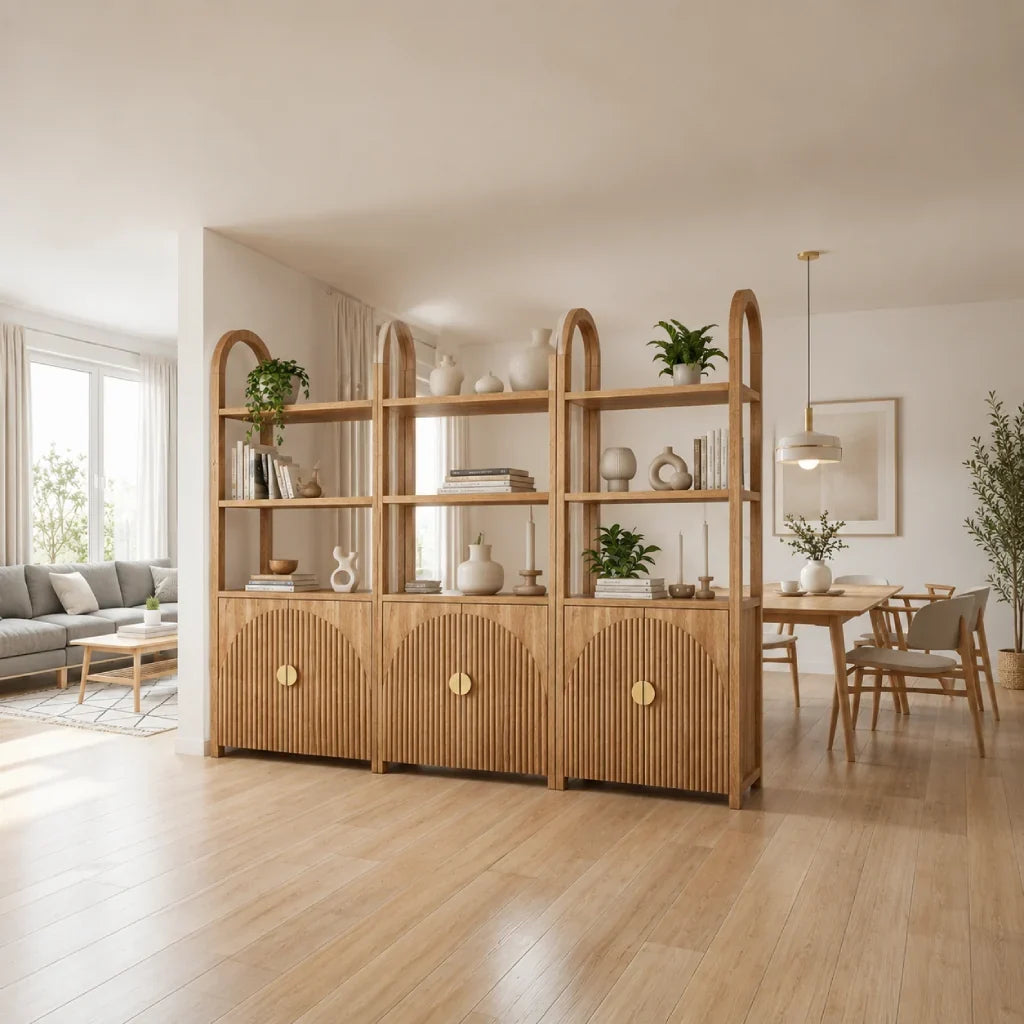
Yes. A bookcase can work as a room divider when you want to separate activities, interrupt a sightline, and add storage. It is best for a studio, sleeping nook, work area, or open living-dining room that needs a visual boundary, not the privacy or sound control of a wall.
Before choosing a shelf, decide how much of the neighboring zone you want to hide. Then test its full footprint, the walking route, door swings, daylight, and the view from both sides. Finally, confirm that the exact model can be installed in the position you have planned.
A Bookcase Works Best as a Visual Divider
A divider does not need to reach the ceiling to make an open room easier to use. A bookcase can mark where a sleeping nook ends, give a desk a clear edge, or separate living and dining areas while both zones remain connected.
Best Rooms for This Setup
This setup works when seeing less of the neighboring area gives you enough separation. Studios, sleeping nooks, desk areas, entry transitions, and open living-dining rooms often need that softer break. The shelf defines the zone without closing off the floor plan.
In a one-room home, the divider also changes where the rest of your storage can go. Belleze's guide to small studio apartment storage ideas for one-room living can help you plan the whole room before assigning too many jobs to one bookcase.
Skip It When You Need Real Privacy
A bookcase can block part of the view, but sound and movement still pass around it. Open shelves reveal more of the next zone, while taller or partly closed shelves reveal less. Neither creates a separate bedroom or the privacy of a full partition.
If you need full visual coverage or sound control, choose a divider designed for that job. Buying a larger bookcase will take up more floor space without solving the main problem.

Choose How Much of the Room to Screen
The right shelf is the least enclosed option that gives you enough separation. More height and more closed storage increase screening, but they also block more light and carry more visual weight. Decide which side of that tradeoff matters in your room.
Keep It Low to Preserve Light
Lower, open storage is a sensible starting point when daylight and long sightlines matter most. It can define the back of a sofa, shape the edge of an entry, or give a work area a boundary without making the rest of the room feel cut off.
Choose this approach when the shelf only needs to show where one area ends and another begins. You will still see much of the neighboring zone. If you want to hide most of what sits beyond the shelf, a low profile will feel too slight.
Go Taller for More Screening
A taller or partly closed bookcase blocks more of the view, so a sleeping nook or desk can feel less exposed. It also becomes a stronger visual presence and may darken the area behind it. Check that effect in the room before assuming more height is better.
Use this option when screening matters more than an open sightline. Placement is a separate decision: the product page and instructions still need to support the position you have planned.
Test the Footprint Before You Buy
Once you know the shelf shape you want, test it in the room before buying or moving furniture. Mark its full length and depth on the floor, then walk the route you use most.
Open nearby doors, look toward the windows, and stand in both zones to judge the view. Repeat that check from the places where you sit, work, and enter the room. Notice whether the shelf makes either zone feel boxed in.
Walk the Main Route
A bookcase takes its full depth out of the usable passage. The remaining space may look generous on a floor plan, yet the turn near a door or corner can still feel tight. No single clearance number suits every room, so measure the shelf and the route around it together. Walk it several times from both directions to catch an awkward turn.
Belleze's guide to bookcase dimensions explains how to work through those measurements. Compare the footprint you marked with the dimensions on the current product page before you buy.
Check Both Sides
Move a bookcase away from the wall and its back becomes part of the adjoining zone. A wall-facing piece may have a back you would rather not display. Check the product photos and details for every side that will remain visible.
Plan access as well as appearance. Decide which room should face the shelves and whether you need to reach items from one side or both. Open shelving may make two-sided access easier, but the photos and product details should confirm how the exact unit is meant to be used.
Know When a Tall Bookcase Won't Work
Rule out a tall bookcase if its footprint blocks traffic, the back looks unfinished, or the required placement cannot work in your room. A location that adds avoidable risk around children or pets is another reason to choose a different layout.
Check the Product's Placement Requirements
Treat the setup instructions as a final product-fit check. Read them for the exact model before you buy, then follow the specified placement and restraint method. Added shelf weight or another improvised fix cannot replace the required setup.
Belleze's guide on how to secure a bookcase to the wall safely explains wall restraint when a model calls for it. Use it with the instructions for the unit you are considering. Ask the seller or manufacturer if the required setup is unclear.
Choose Another Divider When Needed
Match the alternative to the problem. Curtains or screens provide more visual coverage. Rugs, lighting, plants, or low storage can mark a zone while keeping the room open. A purpose-built divider makes more sense when separation matters more than shelf space.
Renters should check the lease before choosing a unit that requires wall attachment. If the required setup is not permitted, use a lower storage piece, a screen or curtain, or a different layout.
Move the Boundary to the Wall
When a mid-room placement does not fit, wall-adjacent storage can still give the room a stronger boundary. You keep the tall unit out of the walking path while creating a defined library or storage area.
Build a Wall-Aligned Library
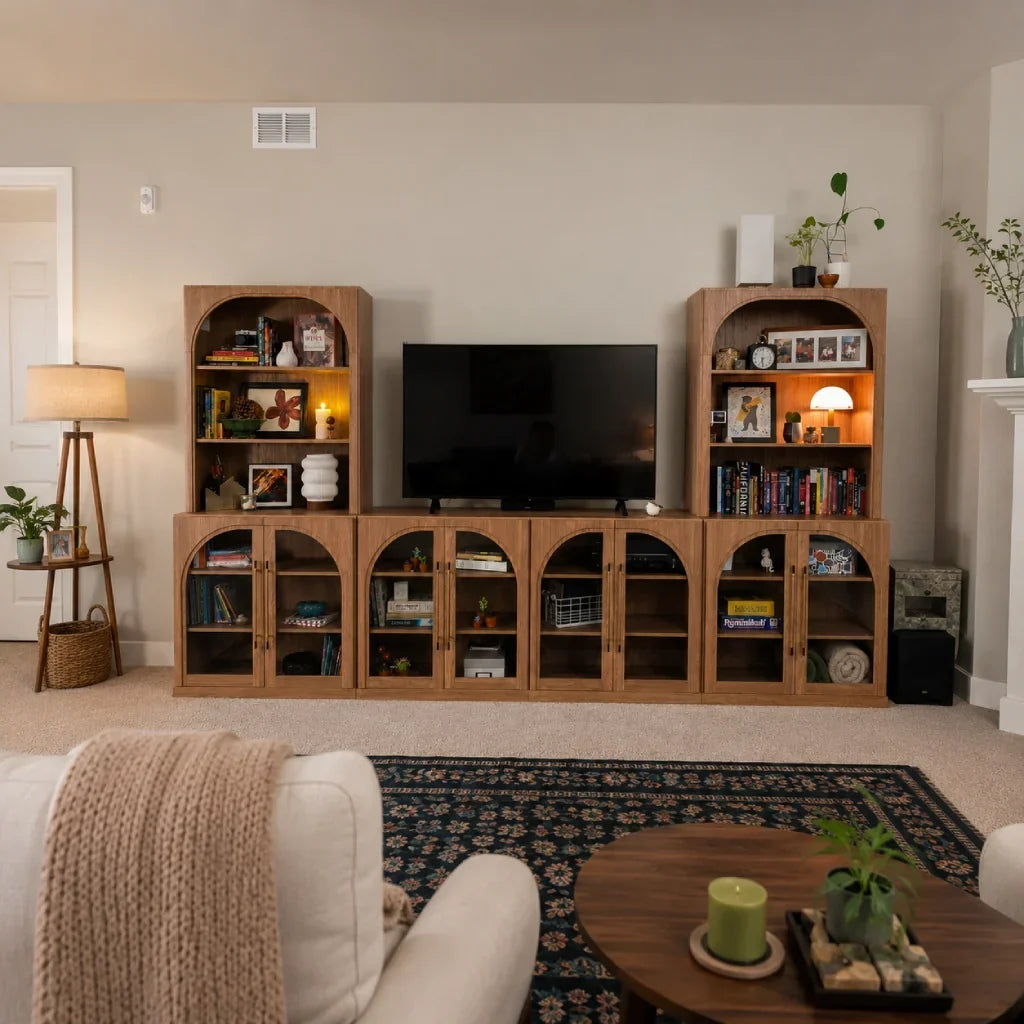
For a wall-aligned option, Belleze presents its 72" tall arched fluted door modular bookcases (set of 4) as side-by-side library storage. The product page does not identify the set as a freestanding room divider.
Compare the complete footprint with the wall space you have available. Check nearby doors and windows, then walk the route beside the proposed library. Use the product page and instructions to decide whether that specific arrangement fits your room.
Use Lower Storage for an Open Feel
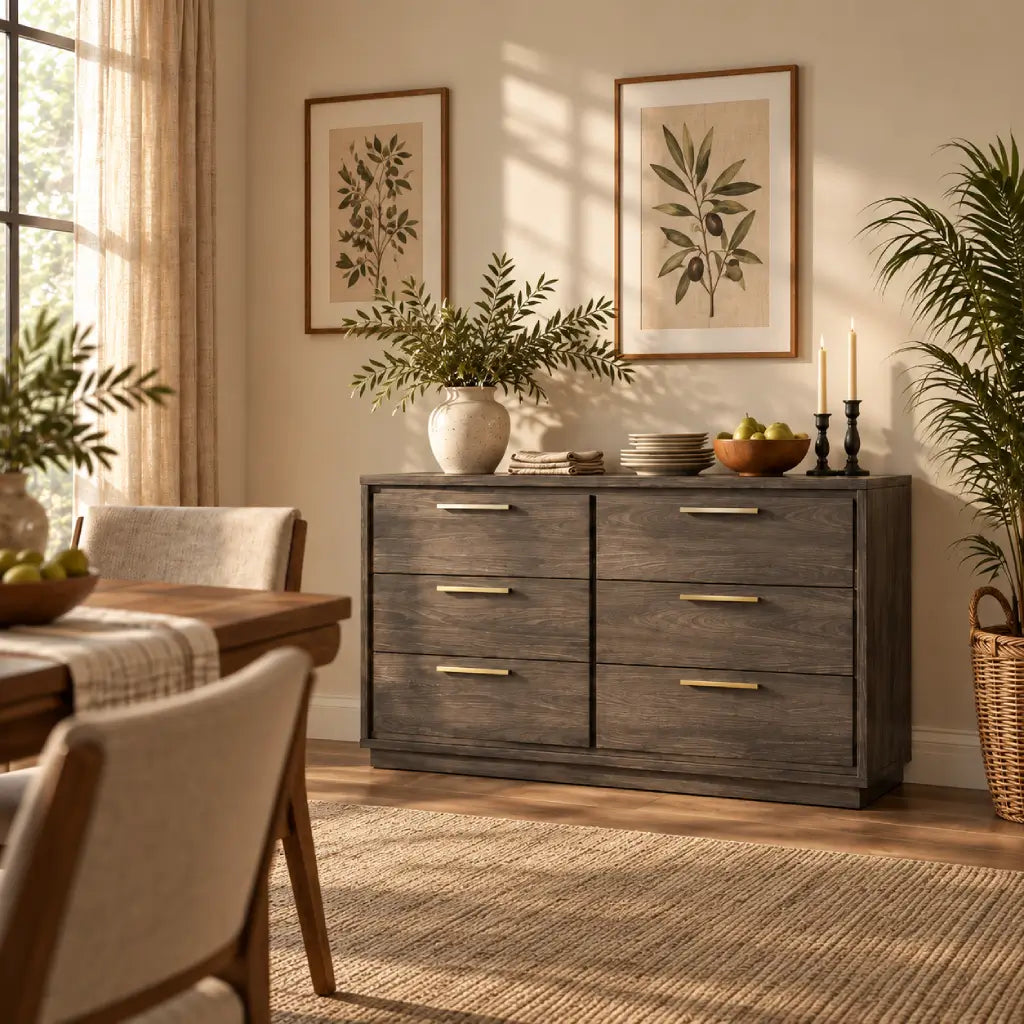
Lower storage is another option when light and open sightlines matter more than screening. It can define a path or give a zone a clear edge without introducing a tall partition. Once you have ruled out a taller divider, modular sideboards are one category you can compare.
Before buying, decide how much screening you need, mark the complete footprint, test the doors and walking route, and inspect both visible sides. Choose the lowest, most open configuration that still creates the boundary you want. Then verify the exact product's placement requirements before committing to the layout.

Leave a comment
This site is protected by hCaptcha and the hCaptcha Privacy Policy and Terms of Service apply.