


Laundry, mail, dishes, cables, and work supplies can all be visible at once in a studio. The best small studio apartment storage ideas start by dividing one room into zones, then giving entry clutter, clothes, work supplies, kitchen overflow, and everyday items fixed homes.
First decide what each part of the room needs to do. Deal with the corner that keeps bothering you, then decide whether its things need a piece that does double duty, a door or drawer, or a place up high.
Choose your first zone
Begin with the clutter you keep noticing. Shoes, bags, keys, and mail usually mean the entry needs attention. Laundry, bedding, and clothes usually mean the sleeping area does.
Cables, remotes, games, and small tables point to the TV wall. A laptop and paperwork left out after hours point to the work zone. Coffee gear, pantry extras, or small appliances drifting toward the bed or sofa point to kitchen overflow.
Just moved in? Set up the entry and sleeping zones before opening every box. In a shared studio, give each person a daily drop spot and organize TV-wall, kitchen, and vertical storage by category.
Why a studio needs a different plan
A one-bedroom can hide clutter behind a door. A studio puts entry, sleep, work, dining, and living clutter in one visual field. The job is to stop one zone from spilling into the next. A good-looking basket can still make the room feel busy when it holds cables, laundry, or paperwork.
Make each piece earn its space
Studio storage works best when one piece solves a visible problem and takes on a second role. A surface, seat, divider, or media base can earn floor space. Open storage is for edited display; closed storage is for categories that look messy across the room.
A suitable sideboard can serve as a TV base and clutter cabinet only when the manufacturer allows that use and its rated top load, top dimensions, and stability requirements fit the setup. A bookcase can soften a sleeping-to-living divide; an ottoman can hold blankets; and a drawer cabinet can put work supplies away.

Before adding anything, ask whether the piece hides a category you do not want to see, does a second job, leaves the main path clear, and replaces smaller furniture instead of joining it. Renters should also check whether it works without permanent installation. Downsizers can use the same test on furniture they already own.
Measure before you buy
Measure the wall and the route past it before you shop. A 36-inch clear route is a useful planning target for a busy path, and shallow cabinets around 16 to 18 inches deep are often easier to place in a narrow studio.
Check outlets, cord access, door and drawer swing, baseboards, radiators, windows, and vents. For tall furniture, confirm the assembled height and any tilt-up clearance in the product instructions.
Decide what stays visible
Open storage works when items are edited, attractive, and easy to keep neat. Closed storage works for mismatched, private, technical, seasonal, or visually noisy items. In a studio, every shelf is part of the room's view.

Leave edited books, plants, a few vases, selected decor, nice baskets, and intentional daily objects in view. Put cables, chargers, paperwork, clothing, spare bedding, cleaning supplies, kitchen overflow, pet items, electronics, laundry, and loose daily clutter behind doors or in drawers.
Check open shelves monthly. When one becomes a dump zone, move that category to closed storage instead of trying to restyle the pile.
Give the entry a real drop zone
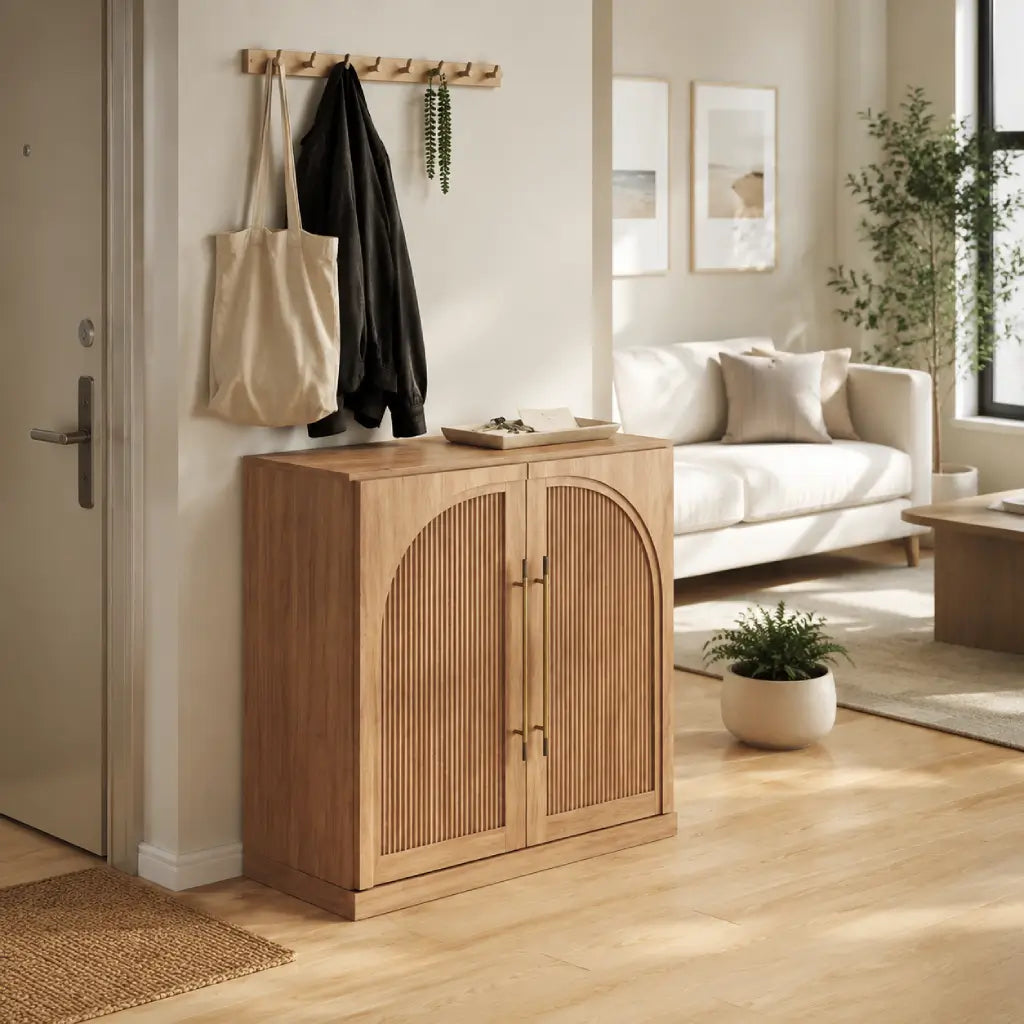
The entry zone keeps shoes, bags, keys, mail, leashes, umbrellas, and laundry items from spreading into the bed, sofa, and table. A tray and limited hooks handle light clutter. When the same pile is still visible at the end of the day, it needs compact closed storage.
Give each person a defined drop spot, even inside one cabinet, drawer, or tray system. Renters should choose freestanding storage first. When anchoring is required, check the lease's alteration or damage clause before committing.
Once entry piles outgrow a tray and hooks, consider sideboards for small spaces after measuring the wall and route past the door.
Hide clothes around the bed
The sleeping zone should hide soft, bulky items first: clothes, bedding, pillows, laundry, and off-season pieces. Under-bed bins or drawers hold seasonal clothing and extra bedding, but they are overflow storage, not the whole clothing system.
Closed bedside storage holds glasses, chargers, books, medication, hand cream, and nighttime items. Couples can separate personal items by person and bedding by category. Keep laundry, mail, and work papers off the bed.
Use the TV wall for mixed clutter
The TV wall is often the best place for the room's main closed cabinet because you see it from the bed, sofa, dining table, and work area. It can hold cables, paperwork, remotes, games, pet items, and other small things that otherwise spread across the room.
If a storage idea blocks the main walking path, adds visual noise, or stores only one tiny category, it probably does not deserve floor space in a studio.
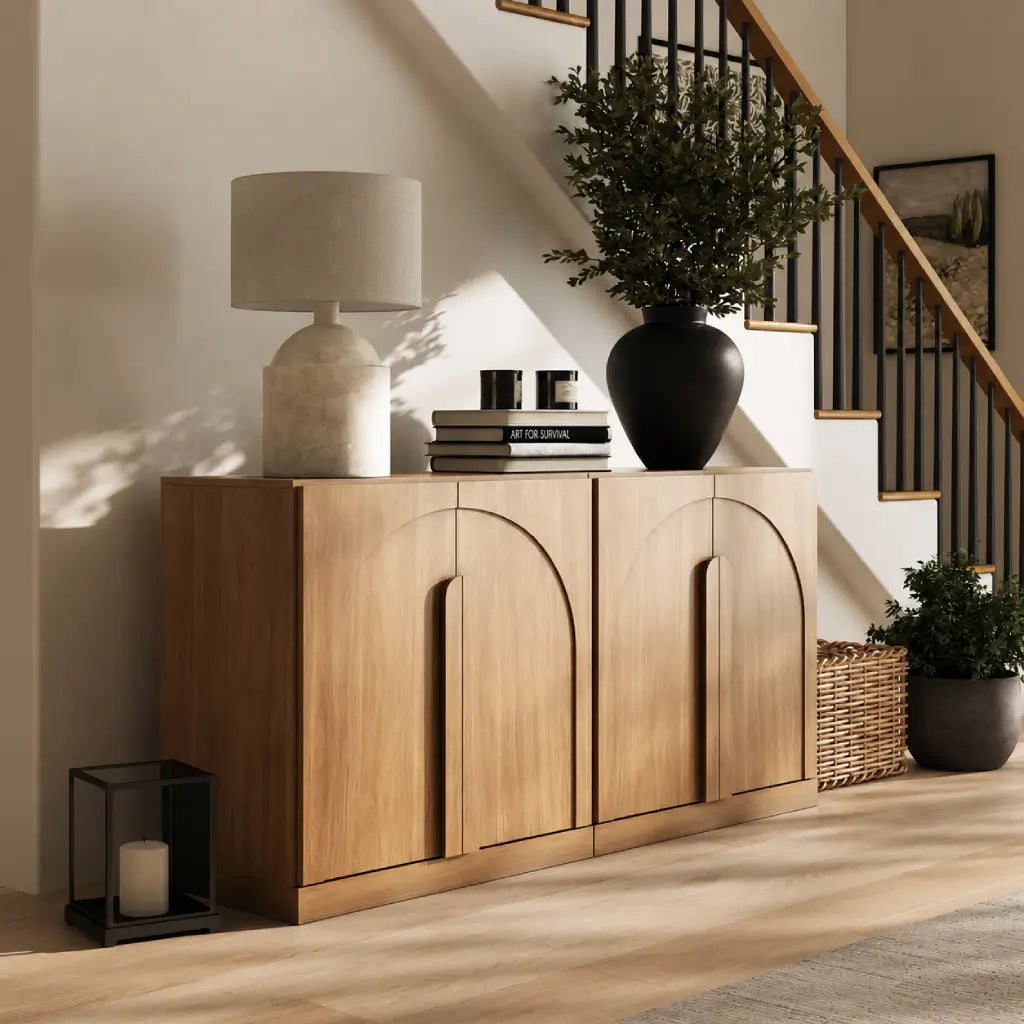
Use a sideboard or closed cabinet for mixed clutter. A TV stand is enough when the wall only needs to hold media equipment. Choose a tall bookcase when you have height but very little wall width. Keep baskets inside cabinets or on lower shelves once small items already have a home.
When the wall already has a stand, cart, basket, side table, and visible cables, consolidate. The Bijou Arched Wood Doors Modular Sideboard works as a TV base only if manufacturer instructions confirm the top load, top dimensions, and stability for your TV. Check outlet access and the walking path before buying.
Reset work and kitchen overflow
Make work disappear after hours
A studio work zone needs easy access during the day and a place to put work away after hours. A drawer, nearby cabinet, or lidded box gives the laptop, chargers, cables, paperwork, video-call items, and supplies somewhere to go.
Do not let the desk, dining table, and bed share one dumping role. A short reset only works when each category has a fixed home close to where you use it.
Keep kitchen overflow out of view
Sort kitchen overflow by use frequency. Keep daily items near the kitchen and weekly-use coffee gear, pantry extras, and appliances in a closed cabinet. Move rarely used serving pieces and nonhazardous backups high, under the bed, or out of sight. Keep cleaning supplies in a separate closed cabinet and recycling in a designated bin.
The dining area may need its own solution. See 8 Small Dining Room Storage Ideas to Maximize Your Space when dining is the problem; this plan keeps kitchen overflow out of the bed and sofa view.
Go vertical with restraint
Choose one tall piece instead of scattering hooks and shelves across every wall. A tall bookcase can store books, office supplies, decor, boxes, seasonal items, and occasional-use objects while softening the sleeping and living divide.
Keep heavier or messier items low. Put books, plants, and decor at eye level, and use closed boxes for clutter-prone categories. Follow any anti-tip or anchoring instructions, especially near beds, seating, pets, children, or narrow walkways.
Studios with limited width and usable height can compare the Bijou 71 Tall 3-Drawer Modern Bookcase after confirming ceiling clearance, placement, and any product instructions.
Storage fixes that backfire
- Buy baskets after you assign zones, not before. Open shelves should hold things you want to see, not papers, cables, clothing, or kitchen overflow.
- Protect the main route. A deep cabinet or oversized sectional can make the room feel smaller by taking the wall or path another storage piece needs.
- Keep the bed, dining table, and desk from becoming the same landing spot. Give laundry, work, meals, and chargers separate homes, and keep plastic bins under the bed or inside cabinets when they are not meant to be seen.
- Place a tall bookcase as a divider only when the route, loading, and anchoring instructions work. Finish one zone before starting the next so the project does not stall halfway through.
Plan the next storage piece
Pick the messiest zone, give daily clutter fixed homes, choose furniture that earns its floor space, and keep visually noisy categories behind doors or drawers. Downsizers should decide which existing large piece no longer earns its floor space.
Before choosing a collection or product, name the category you want that piece to hide. A cabinet that solves the wrong problem still takes up room without reducing the mess you see.
Measure the main and secondary walls before shopping. When the entry or TV wall causes the most clutter, start with compact closed storage. Studios needing flexible closed storage should compare modular sideboards, beginning with a single or 2-piece layout before wider options. Choose tall bookcases only when height is available but wall width is not.

Leave a comment
This site is protected by hCaptcha and the hCaptcha Privacy Policy and Terms of Service apply.