


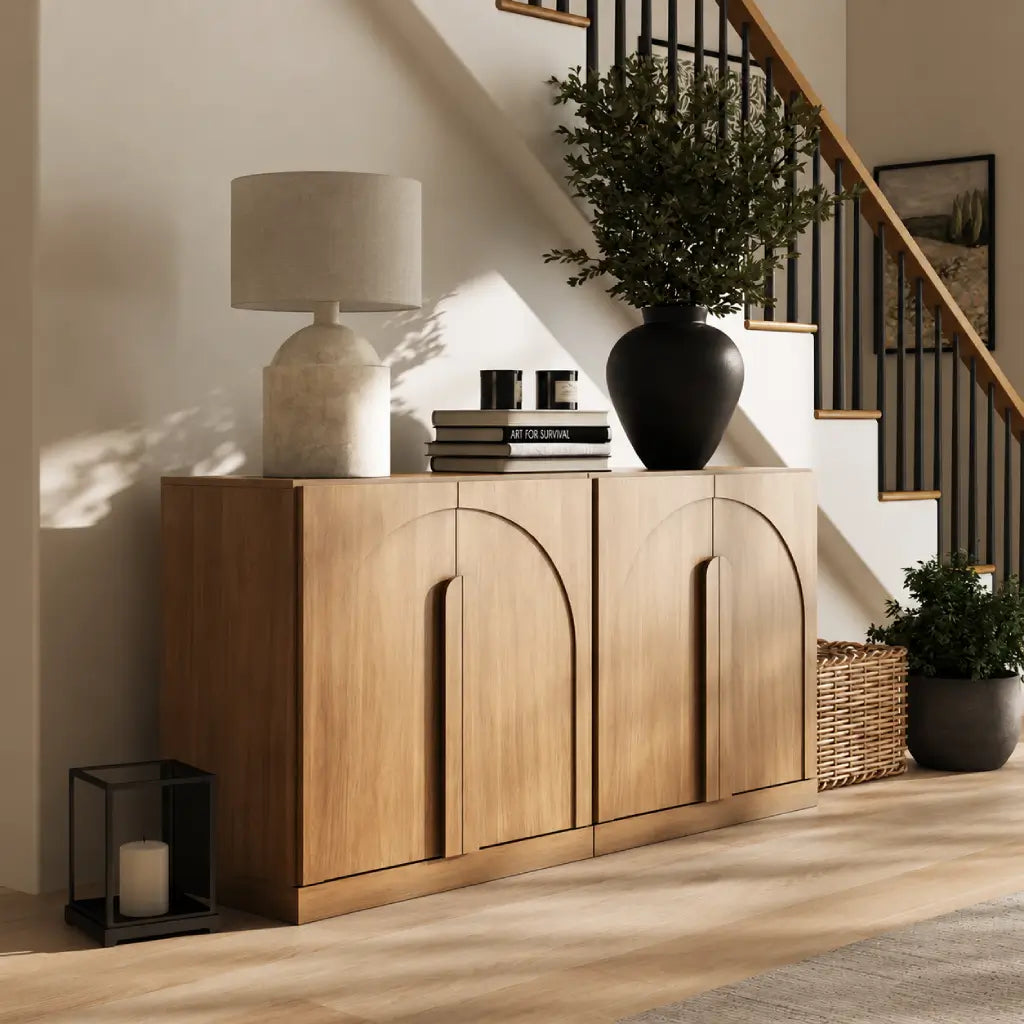
For small under-stair spaces, start with the lowest point, not the tall end of the wall. A nook can look like free storage, then become a bottleneck once a cabinet, doors, or drawers enter the picture. Choose a ready-made option that stays below the slope and leaves room to walk.
This guide focuses on ready-made, low-commitment storage for entry nooks, living-room stair walls, narrow halls, and closed cupboards. It does not cover construction or storage for powder rooms, laundry rooms, basements, or utility areas.
What to use when you skip built-ins
The best under-stair storage for small spaces is usually low, shallow, and freestanding: baskets for the lowest slope, hooks for vertical drop zones, and closed cabinets or small sideboards where the stair wall has enough height and walkway clearance.
Begin with the item that fits the hardest part of the space. Low baskets, covered baskets, labeled bins, and short cubbies belong where the ceiling drops fast. Use a closed cabinet or small sideboard only on the taller portion or a full-height wall beside the stairs. Save custom built-ins for homeowners who need a permanent solution.
Match the category to how quickly you need it. Keep shoes, bags, umbrellas, leashes, and backpacks within easy reach. Put board games, paperwork, extra blankets, seasonal decor, and a small household tool kit farther back or behind doors. Give each category a designated spot.
Measure where storage will sit
Measure the lowest usable height across the full footprint where the cabinet, shelf, basket, or cart will actually sit, not just the tallest part of the wall. A cabinet can clear the high end and still hit the stair slope at the other end.
- Highest point and lowest usable point under the stairs
- Usable floor-level width and front-to-back depth
- How the stair slope crosses the furniture footprint
- Door swing or drawer pull-out clearance
- Walking room after the storage is in place
- Outlets, vents, baseboards, trim, uneven flooring, and nearby door swings
Use this modular sideboard measuring checklist before comparing furniture. In a narrow passage, depth and open-door clearance matter more than the amount of storage on paper.
Match storage to the stair shape
Choose storage by the stair shape before deciding what goes inside it. Use the table as a first filter before choosing a cabinet, shelf, or basket system.
| Space type | Best storage path | Fit check |
| Lowest sloped area | Low or covered baskets, low bins, or cubbies | Stay below the slope. |
| Front-door nook or narrow hall | Hooks, shoe storage, or shallow drawers | Protect the walking route and opening clearance. |
| Living-room stair wall | Closed cabinet, small sideboard, or calm open shelves | Confirm the depth. |
| Closed cupboard | Clear bins, labels, and front/middle/deep zones | Keep daily items at the front for access. |
| Full-height wall beside stairs | Small sideboard, cabinet, or drop zone | Follow anti-tip instructions for tall cabinets. |
10 under-stair storage ideas
Low baskets for the shortest corner
Low baskets work best in the shortest sloped corner under stairs because they use floor space without fighting the low ceiling angle. Give each basket one job, such as shoes, pet supplies, kids' items, extra blankets, or seasonal decor. Matching finishes make the arrangement look deliberate when the nook is visible from the room.
A shallow cabinet for living-room clutter
A shallow cabinet works best under a visible staircase wall when the goal is to hide mixed clutter without making the room feel crowded. It can hold board games, paperwork, books, or small household tools. Confirm both the depth and the door clearance first, then compare sideboards for small spaces that suit the measured portion of the wall.
A small sideboard beside the stairs
A small sideboard belongs on the full-height wall beside the stairs, not under the lowest slope. It gives you concealed storage without the commitment of a custom built-in. Use one only if its height, depth, and door swing leave a comfortable walkway.

A drawer unit for daily items
A drawer unit works under stairs when daily items need to stay out of sight but the drawers can still open fully. Shoes, mail, umbrellas, dog leashes, keys, and kids' accessories are easier to find when each category has its own drawer. In a tight hallway, measure drawer extension from the front of the unit, not the wall behind it.
After you measure the full footprint and drawer clearance, compare the published dimensions of the Bijou 3-Drawer Storage Cabinet. Check the product page for the current configuration, then confirm that the listed footprint works in the measured space.
Hooks and baskets by the front door
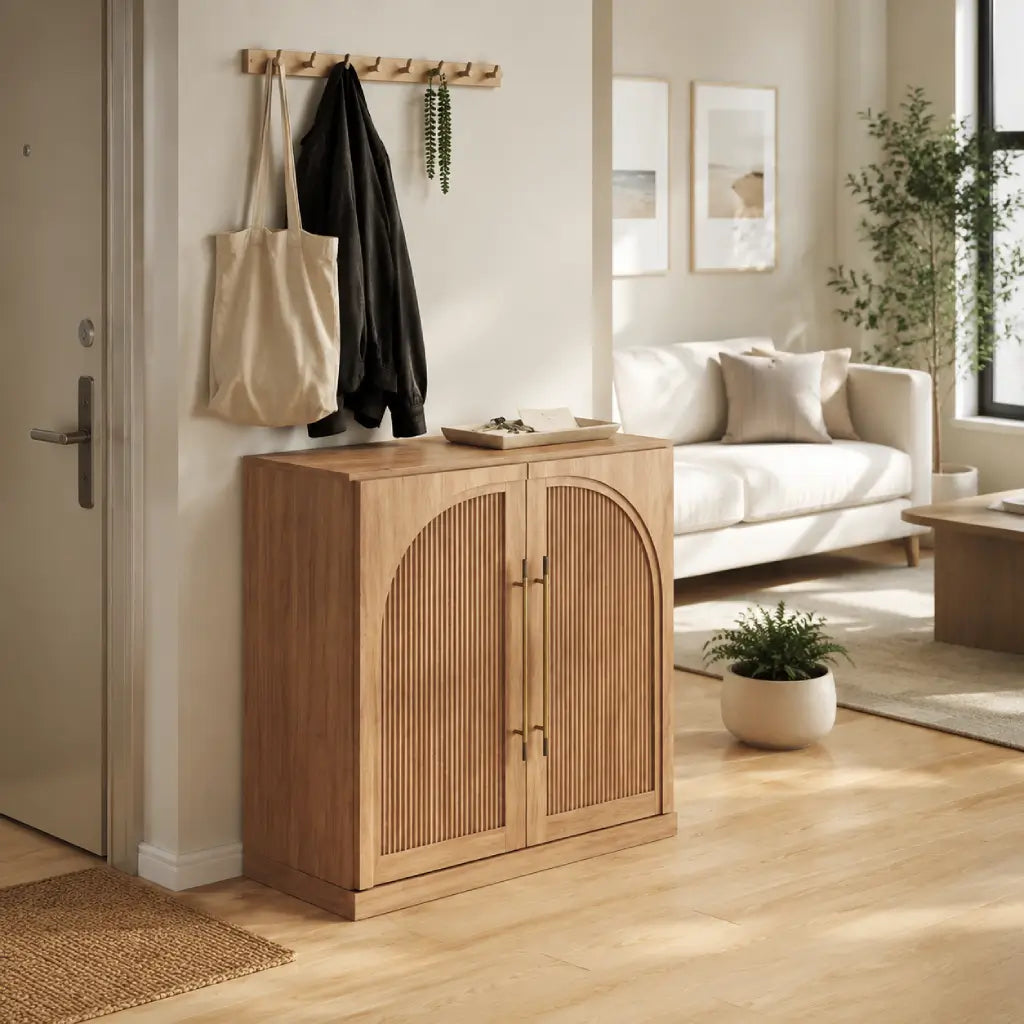
Hooks and baskets turn a front-door stair nook into a drop zone for bags, coats, umbrellas, and shoes without needing built-ins. A tray or small surface keeps keys and mail from migrating to the floor. A closed piece only makes sense when the nook has enough depth. Compare entryway modular sideboards against the dimensions you measured.
Open shelves for tidy display items
Open shelves work under stairs when items look neat on display, such as books, board games, or matching baskets. They are a poor choice for loose mail, mixed kids' gear, or small items that lack a home. Put those categories in drawers or behind doors nearby, then let the shelves carry the items you do not mind seeing.
Low cubbies for backpacks and pet gear
Low cubbies work well under stairs when backpacks, pet gear, and everyday accessories need a reachable home. Assign each cubby to a person or one routine, and use a small bin for items that would otherwise spill out. Use cubbies when everyone can put things away without opening a cabinet.
Clear bins inside a closed cupboard
Clear bins and labels are often the easiest fix for a closed under-stair cupboard because the problem is usually access, not a lack of furniture. Keep shoes, bags, and light household cleaning items near the front. Use the middle for regularly needed categories, and reserve the deepest zone for labeled seasonal items that you will not need every week.
A rolling cart for renters
A rolling cart gives renters under-stair storage without drilling or permanent changes. It suits craft supplies, paperwork, kids' items, everyday repair supplies, or small cleaning items. Renters can move it when a routine changes. Skip it where wheel handles or a parked cart would snag people in a tight passage.
A drop-zone cabinet in a narrow hall
A drop-zone cabinet works in a narrow hallway under stairs only when it is shallow enough to keep the walking path open. Closed doors or drawers contain shoes, bags, mail, umbrellas, and dog-walking items. Keep the top mostly clear so you still have a place for keys.

Budget alternatives to custom storage
For renters or tight budgets, solve access before buying furniture. Baskets handle the lowest corner, hooks keep bags and coats off the floor, and a rolling cart can move with a rental or changing routine. Use a drawer unit when small daily items need a fixed home.
Move to a shallow cabinet or small sideboard when baskets and hooks solve access but the visible area still looks busy. Consider custom drawers or built-ins only when an awkward shape still needs more storage after those lower-commitment options stop working.
When freestanding cabinets work better than built-ins
Choose a freestanding cabinet when you need closed storage but do not want to commit the room to a permanent layout. You can move it with a new arrangement and keep mixed items behind doors in a visible room.
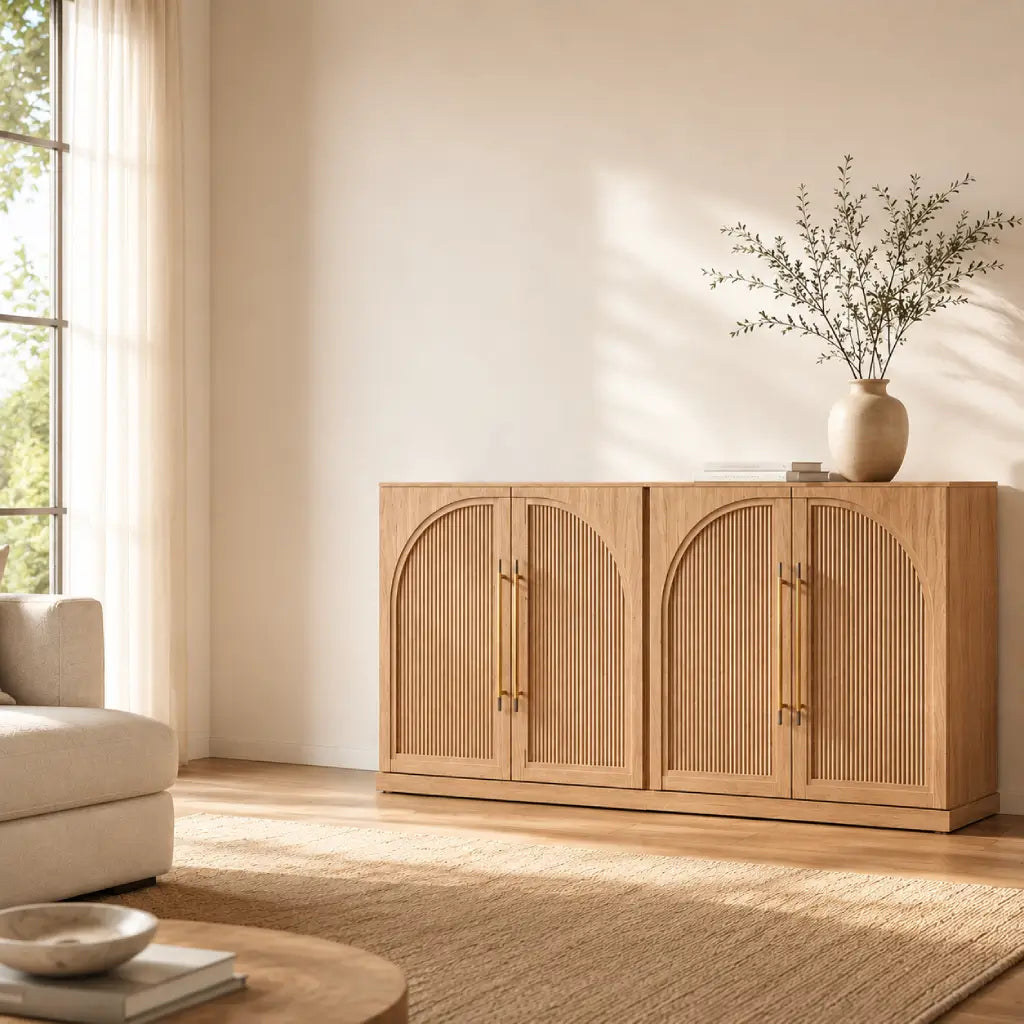
Look at modular cabinets after you have measured the wall and want coordinated freestanding storage. Use the published dimensions to check the measured footprint. Confirm the height, depth, opening clearance, trim, and walkway before choosing a cabinet.
Keep the space from looking messy
Give a visible under-stair nook one job, such as an entry drop zone or book and game storage. When an open nook holds daily bags alongside paperwork, pet gear, and seasonal items, it looks cluttered.
Use matching basket finishes, reserve open shelves for tidy display items, and choose closed storage for mixed clutter. Keep cabinet tops clear, and choose colors that relate to nearby walls, trim, stairs, or furniture. Leave some empty space. After measuring, choose a shallow sideboard or cabinet, then confirm its full footprint and opening clearance before ordering.

Leave a comment
This site is protected by hCaptcha and the hCaptcha Privacy Policy and Terms of Service apply.