


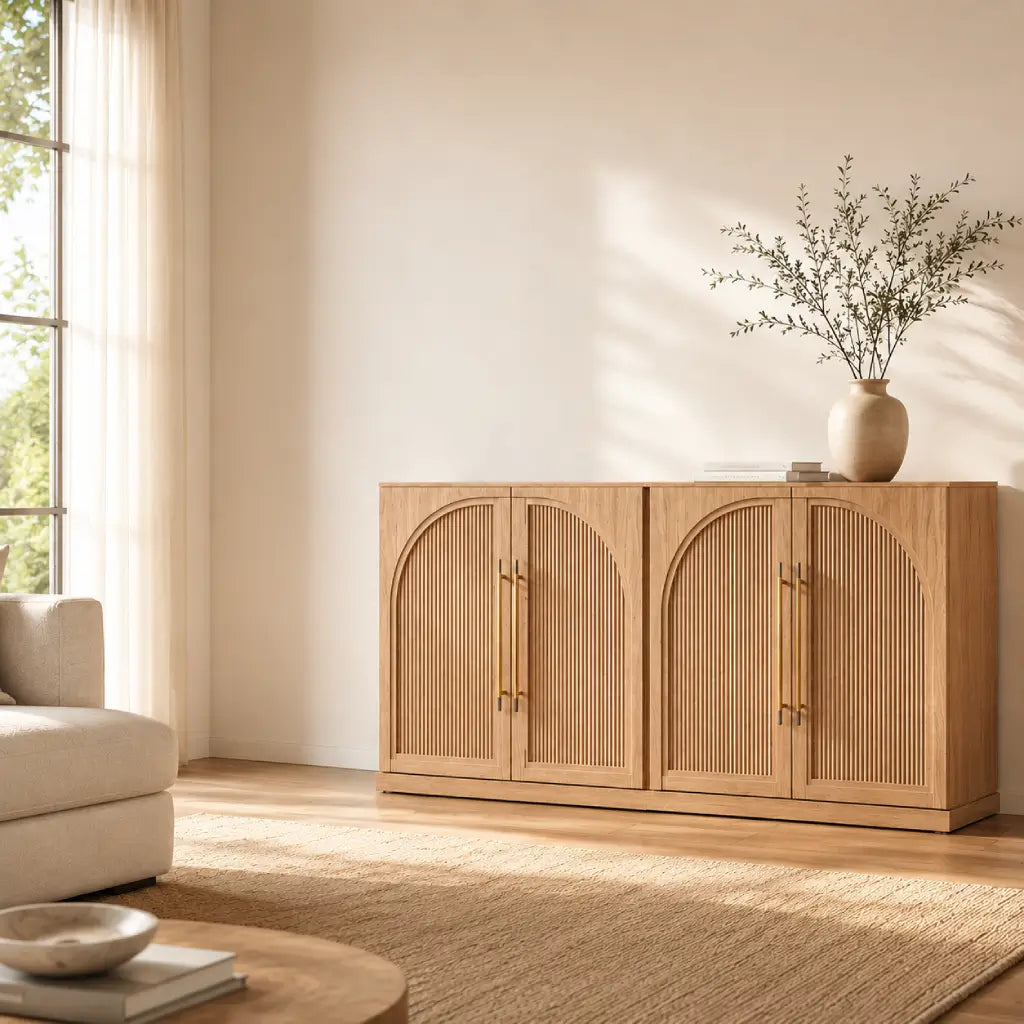
A living room feels busy when toys, blankets, remotes, chargers, papers, pet gear, and returns have no closed home. Hidden storage puts them behind closed doors, inside drawers, under lift-up surfaces, or in lidded containers, so the eye does not have to process them.
The best living-room hidden storage ideas are closed sideboards for mixed clutter, drawers for remotes and chargers, storage ottomans or benches for blankets, lift-top tables for lounge clutter, lidded baskets for throws, and shallow cabinets for tight rooms. Start with clutter type, then choose the format that adds the least visual noise.
What to Hide Where First
Match the storage format to the clutter before shopping for a look. Keep daily mess behind closed fronts, reserve one open area for books or objects you want to see, and repeat a finish, door shape, or hardware color so separate pieces still look intentional.
One closed storage piece holding five clutter categories usually reads calmer than five separate bins holding one category each. If you can count three or more separate baskets in the same sightline, they may be adding visual noise instead of reducing it.
| Clutter pattern | Choose | Check before buying |
| Mixed or irregular items | Low closed sideboard for a broad wall; closed storage cabinet when storage matters more than display | Shelf depth and interior divisions |
| Blankets and pillows | Storage ottoman, bench, or lidded basket | Lid clearance and room for the pile |
| Small items that need sorting | Shallow drawers with dividers | Usable interior drawer dimensions |
| Items used while seated | Lift-top coffee table or enclosed end table | Opening path and usable top surface |
Open baskets and shelves can organize clutter, but they are only semi-hidden unless the contents stay visually controlled.

Closed Storage for Mixed Clutter
Low closed sideboards and modular cabinets work best for mixed, colorful living-room clutter because solid doors prevent the eye from processing varied shapes and colors at once. Use this format for a shared zone of games, toys, books, pet items, returns, seasonal decor, and household overflow.
Low closed sideboards
A wide closed sideboard works when it anchors a wall without squeezing the seating area. Tape its footprint on the floor, then account for baseboards, door swing, vents, outlets, and the main route. Skip it if an open door narrows that route or the interior will not hold the largest item.
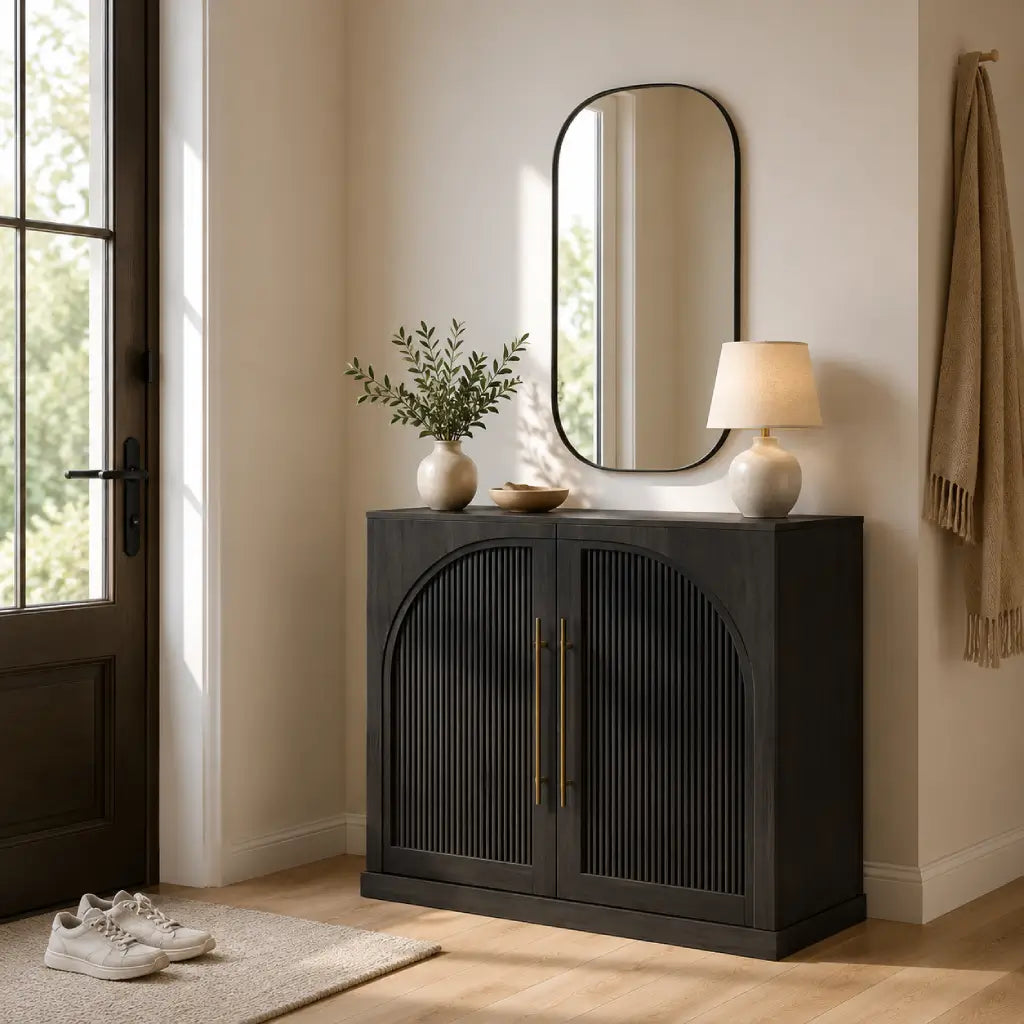
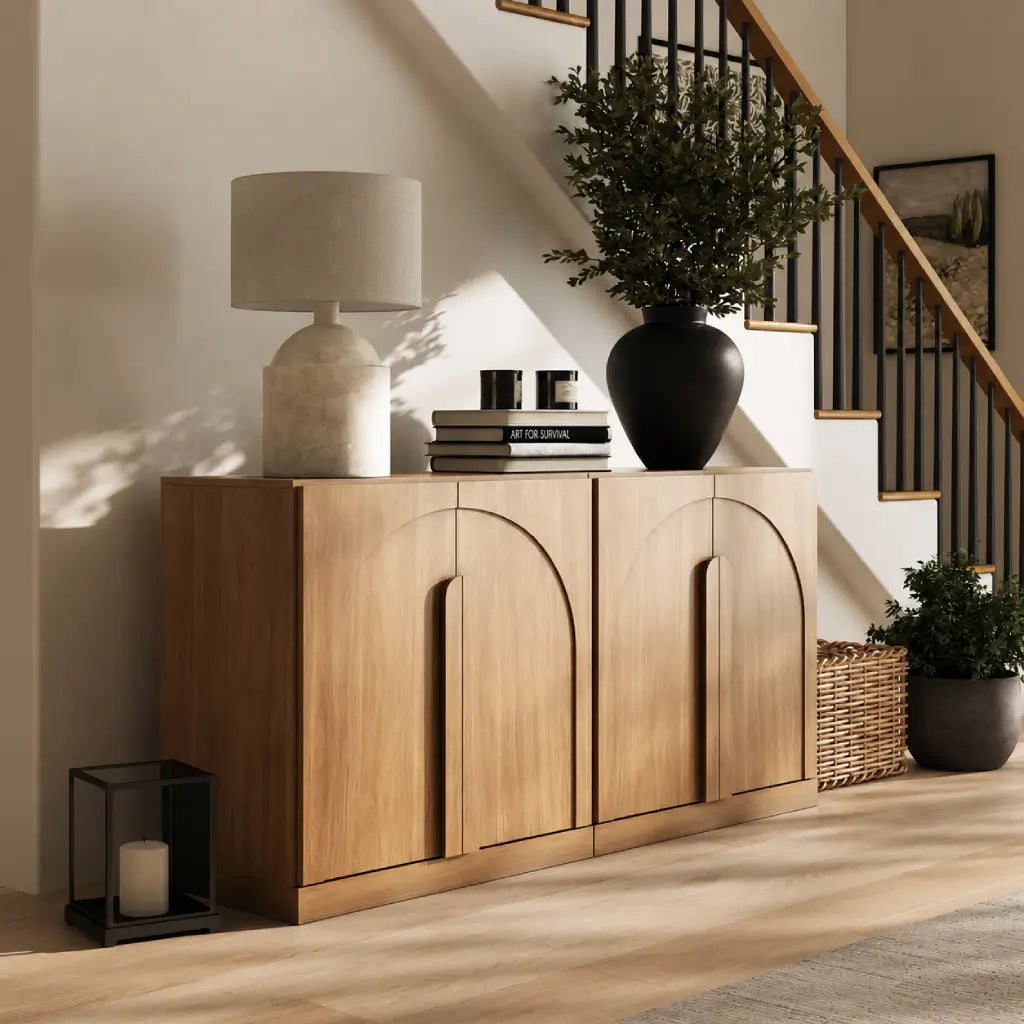
For a wider closed-door option, the Jagger 65-inch Double-Arc Wood Door Sideboard is one piece to compare for a broad wall. It has closed double-arc wood doors and adjustable shelving; confirm usable shelf dimensions and listed loading guidance against the largest items you plan to store.
Modular cabinet runs
Choose modular cabinet runs when the clutter mix or wall width may change. Check listed configurations before combining or stacking units; matching furniture is not proof every arrangement is supported. Follow listed anchoring and anti-tip instructions, especially in homes with children or pets.
Compare Living room modular sideboards when you need low, closed storage for a changing clutter mix. If the room is rented or the layout may change, compact freestanding storage can create a similar calm effect without permanent construction.
Hidden Storage Near the Sofa
Hidden storage near the seating area works best when the clutter appears during daily lounging: blankets, remotes, magazines, controllers, chargers, and small toys. Choose a piece that supports furniture already there instead of adding an obstacle around the sofa.
Storage ottomans and benches
Storage ottomans and benches work best for blankets, pillows, and quick cleanup. Choose a flat-topped ottoman when a tray will not block the lid. Test lid access from the normal seat so nearby furniture does not need to move.
Lift-top coffee tables and trunk tables
Choose a lift-top coffee table when small lounge items need to stay within reach. Check the lift path against knees, sofa edges, and nearby chairs. Trunk-style coffee tables can hold larger soft goods, but they add visual weight in a tight room and become awkward when decor has to come off before they open.
Small storage around the sofa
Enclosed end tables, storage sectionals, under-sofa lidded boxes, and behind-sofa consoles with drawers or closed compartments suit small or occasional items. Confirm under-sofa boxes can slide out without scraping. Choose one of these options when lounge-area clutter needs a lid or lift-up surface instead of a drawer or larger closed cabinet.
Drawers for Small Recurring Items

Drawer-led storage works best for remotes, chargers, batteries, controllers, papers, and other small recurring items because drawers keep them separated and easier to retrieve than deep shelves. A basket may clear the coffee table, but it does not make one cable or battery easier to find later.
Compact drawer cabinets
A compact drawer cabinet suits a seating area or short wall when it leaves the walkway clear and each drawer opens fully. Check usable interior width, depth, and height. Exterior dimensions alone do not show whether charging blocks, controllers, papers, and organizers will fit.
The Bijou 3-Drawer Storage Cabinet is a drawer-led option to compare for small recurring items near the sofa. Confirm the listed interior drawer dimensions before assuming papers, controllers, charging blocks, or organizers will fit.
Trays inside drawers
Use shallow trays, small bins, or dividers for remotes, charging cables, batteries, coasters, glasses, and manuals. Give each drawer one clear job. Without categories, hidden drawers become catch-all zones that look tidy only until someone needs a specific item.
Controllers and media accessories
Keep controllers, cords, and small gaming accessories near the seats where they are used. Check product documentation before expecting cable routing, device ventilation, signal access, or TV compatibility from a general storage cabinet.
Doors, Drawers, Baskets, or Open Display?
Drawers work best for small recurring items; closed doors handle mixed visible clutter most effectively. These formats solve different visual problems, so choose by concealment and access instead of appearance alone.
- Closed doors: Best for mixed shapes and colorful clutter. Allow for door clearance, and use internal bins when tiny items would get lost.
- Drawers: Best for small items you reach for repeatedly. They need full pull-out clearance and are less useful for bulky blankets or large toys.
- Lidded baskets and lift-up seats: Best for soft goods and fast pickup. Stacked contents are harder to sort, and the lid needs clear space above it.
- Open display: Best for selected books and decor. It is not hidden storage, so do not make it the main system for everyday mess.
Hidden Storage for Tight Rooms and Rentals
Compact freestanding storage works best for tight living rooms and rentals because it hides clutter without the permanence or bulk of built-in cabinetry. Choose the shallowest piece that fits the actual objects, then verify that doors or drawers can open without blocking the main path.
Do not add a cabinet for an empty wall. Choose another format, or no new furniture, when existing closed storage is enough, the interior will not fit, or the opening path takes over the walkway.
Shallow closed cabinets
Shallow closed cabinets reduce floor projection, but a shallow exterior does not guarantee useful storage. Measure wall width and height, the largest stored item, baseboard projection, cabinet depth, and the full door or drawer path. Compare Sideboards for small spaces after you know those measurements.
Freestanding modular storage
Freestanding modules are easier to move or reconfigure than built-in cabinetry. Confirm how units connect and whether each piece can stand alone before separating, combining, or stacking anything. Compare Modular cabinets when a future move or layout change matters.
Check floor level, then follow the product's assembly, loading, leveling, and anchoring instructions. Use any specified anti-tip hardware.
Lighter-profile furniture
Visible floor, raised bases, lighter finishes, and clean lines can make closed storage feel less bulky. Glass or open accents only help when the contents remain controlled. A glass-front cabinet full of bright packaging and loose cables may look busier than a solid-door piece of the same size.
Review the listed material and care instructions before choosing by color alone. These terms describe different parts of a furniture build: MDF and particle board are engineered-wood substrates, while veneer and laminate generally describe surface layers. Check the product page for construction, finish, care guidance, and color-variation notes.
Prevent a Hidden Junk Zone
Hidden storage stays useful when every drawer, cabinet, or basket has a category. Keep chargers in a drawer, games in one cabinet zone, and everyday blankets in a basket. If the living room also serves as a play or hobby space, group each activity's supplies in a removable bin inside the cabinet. Give guest items their own shelf instead of mixing them with returns or unfinished projects.
Leave some space in those bins for items that usually sit on the coffee table or sofa. Before guests arrive, return toys and hobby supplies to their bins and put remotes and chargers in their assigned drawer. Bring out the coasters and extra throws you need for the visit. Afterward, return guest items to their shelf and bring daily supplies back within reach, removing unrelated items as you reset.
FAQ
Are baskets hidden storage?
Open baskets are usually semi-hidden storage. They organize items but still show shape, color, and volume. Choose lidded baskets or place open baskets inside a closed cabinet when the goal is full visual concealment.
Should I choose drawers or closed doors for living-room clutter?
Choose drawers for small recurring items and closed doors for mixed visible clutter. Drawers keep chargers and remotes from disappearing on deep shelves. Doors hide larger, irregular groups such as games, toys, pet gear, returns, and seasonal decor.
What hidden storage works best in a small living room?
Start with compact, closed storage near the point where clutter appears. Shallow cabinets, drawer cabinets, storage ottomans, and lidded baskets usually make more sense than wide or deep furniture. Confirm that the interior fits the largest item and that the lid, drawer, or door leaves the walkway clear.
Choose the Least Visual Noise
Identify the clutter category that makes the room look busiest, then choose one storage format that fits both the items and the available opening clearance. Use low closed storage for mixed visible clutter, drawers for small recurring items, and ottomans or lift-top tables for soft goods and seating-area clutter.
Before ordering, compare exterior dimensions, usable interior dimensions, and the full opening path. Compare living room modular sideboards when mixed visible clutter is the main problem and you have room for a low, closed piece along a clear wall; choose a drawer-led option when small items are the main problem.

Leave a comment
This site is protected by hCaptcha and the hCaptcha Privacy Policy and Terms of Service apply.