


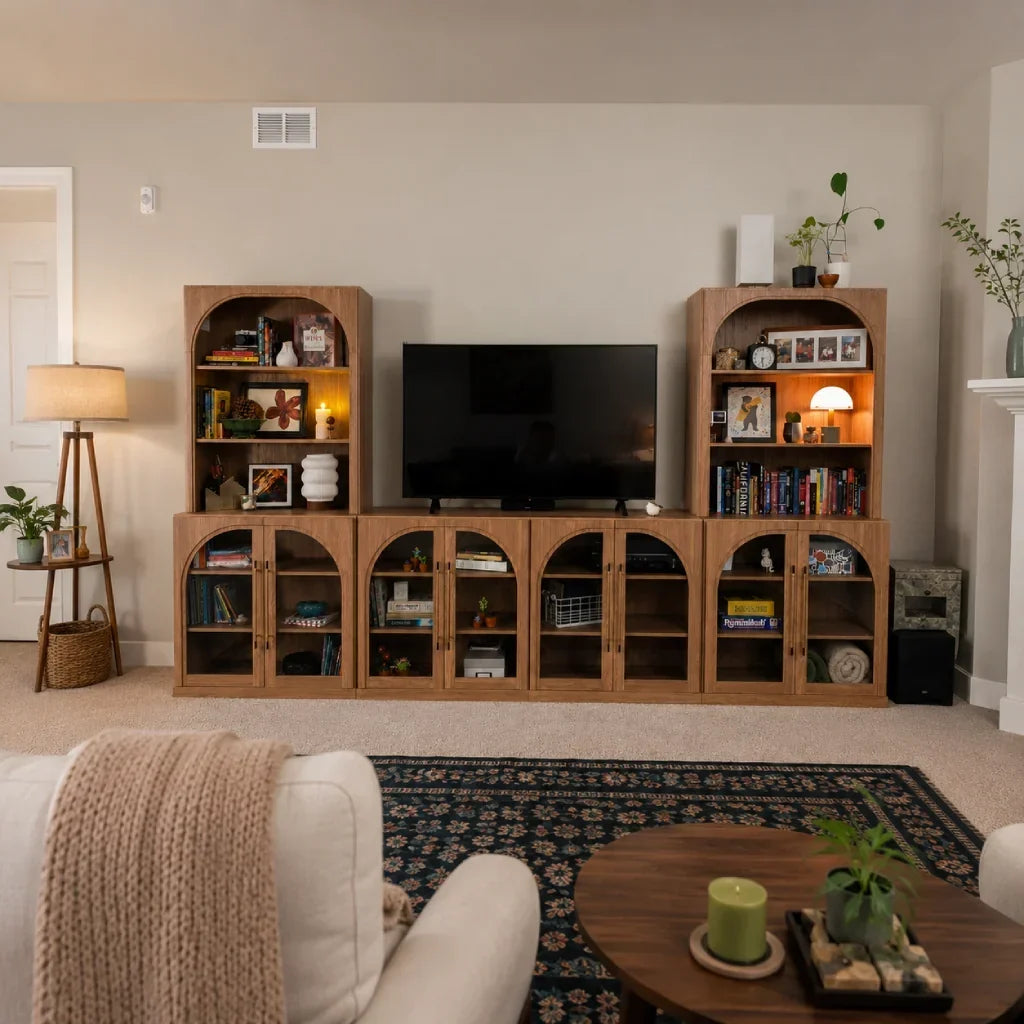
Bookshelf ideas for small rooms can look perfectly workable until the bookcase is actually in place. A unit may fit along the wall but still catch a door, tighten the path through the room, block a window, or put the shelves in an awkward spot.
Before opening product tabs, identify the floor and wall area that remains available while the room is in use. That usable zone should determine the bookshelf format. The checks below show how to measure it, rule out poor fits, and move into product comparison with a workable shortlist.
Start with the space you can actually spare
Choose the format from the part of the room that stays usable during an ordinary day. An open corner points to a corner bookcase, a clear narrow wall can support a tall format, limited height favors a lower unit, and a multipurpose storage spot may call for both open and concealed storage. Behind a door, check depth before choosing a tall unit: a narrow bookcase can still be too deep for the door to open fully.
The table turns that room zone into a shortlist. Pay close attention to the last column. A unit that fits the measured wall can still be wrong for the room if it blocks the usual route, makes the shelves hard to reach, interferes with light, or does not suit what you plan to store.
| Available room zone | Format to consider | Poor fit when |
| Unused, accessible corner | Corner bookcase | It blocks the route or shelf access |
| Narrow wall, including space behind a door | Tall bookcase on a clear wall; shallow shelving behind a door | The unit or stored books interfere with the door, a heat source, or the main route |
| Wall below a window or artwork | Lower bookcase | The available wall is too short for the books you need to store |
| Multipurpose storage spot | Mixed storage | You only need open book display |
Spend a minute with the room as you actually use it. Open nearby doors, walk the usual route, and look at the space around windows and radiators. The area left after that quick check is the real zone available to a bookcase, even if the bare wall looks larger.
With nearby furniture back in its normal place, measure the zone's width, height, and depth. Then stand where you would need to reach the shelves. If that position overlaps a chair, a doorway, or the main path through the room, the usable footprint is smaller than the wall measurement suggests. Keep the final measurements beside you while comparing product listings.
Count the books you need to store and note any other items that must share the unit. That inventory gives the room measurements a purpose: it tells you whether the available zone can solve the storage need before you spend time comparing styles.
Use an open corner
An empty corner can look like free storage space, but it only works when both adjoining walls are available and the corner sits clear of doorways and regular walking routes. A corner bookcase can occupy a spot that will not take a straight unit. Its footprint still reaches out into the room, so the open floor in front of it counts too.
Measure along both walls as well as outward from the corner, then mark that outline on the floor. Walk up to it from the front and from any open side you would use. If nearby furniture makes you lean or reach around it, the bookcase may fit between the walls without being comfortable to use.
A marked area that remains easy to approach is ready for a product comparison. Check it against the Eden corner bookshelf, using the dimensions and shelf information on the product page alongside the room measurements and the books on your list. A corner that feels too tight points you toward a clear narrow wall instead.
Go tall on a clear wall

A tall bookcase makes sense on a narrow wall when you need more room for books and the space above is clear. Look at the wall in person before treating it as open space. A nearby door, heat source, or busy walking route can make a promising strip of wall unusable.
Record the wall width, the available height, and how far the bookcase can extend into the room without crowding the passage. Compare each figure with the product listing. Extra shelving will not feel like a gain if you have to turn sideways whenever you walk past it.
Once the wall passes that test, compare tall bookshelves & bookcases. Before ordering, check the product's anchoring instructions against the wall requirements. Belleze's guide on how to secure a bookcase to the wall covers that installation decision in more detail.
Check the space behind a door
A behind-the-door bookshelf can use the wall space hidden by an open door. Measure the smallest gap between the wall and the nearest part of the door or handle as the door moves through its full opening range. This gap limits how far the shelving and its contents can project.
Compare that gap with the shelf's installed depth, including any mounting brackets, space needed to clear baseboards, and books that extend past the shelf edge. Mark the footprint on the floor and move the door through its full range before choosing a unit.
A shallow, front-facing book ledge may fit where a standard bookcase does not. Compare its usable depth and retaining rail with the books you plan to store. If the shelf or books would limit the door's opening or narrow the doorway, choose a clear wall or open corner instead.
Stay low when height is limited
Some rooms take the tall option off the table. A window, artwork, or low sightline may leave enough wall space for a bookcase while placing a firm limit on its height. In that setting, a lower format is the one worth measuring.
Start with the distance from the floor to the obstruction. Then measure the clear wall length after accounting for nearby doors and the walking route, along with the depth the room can spare. Because a lower unit spreads storage across the wall, make sure the available length works for the group of books you need to place.
The bookcase dimensions guide can help you compare those height, width, and depth limits with the storage information on a listing. Keep the book count nearby while you compare. If the shelves shown cannot hold that collection, the format is not a fit even when its outer dimensions work.

Hide storage when the room needs it
Once the footprint is settled, think about what should remain visible. Mixed storage is useful when the same small room needs to hold books, display pieces, and everyday items you would rather keep out of sight. If everything on your storage list belongs on an open shelf, a simpler open bookcase keeps the choice focused.
Separate the contents before you shop. Put books and display pieces in one group, and set aside anything that needs to go behind a door. The size of those groups lets you judge whether the balance between open and concealed storage on a product page matches the way you will use it.
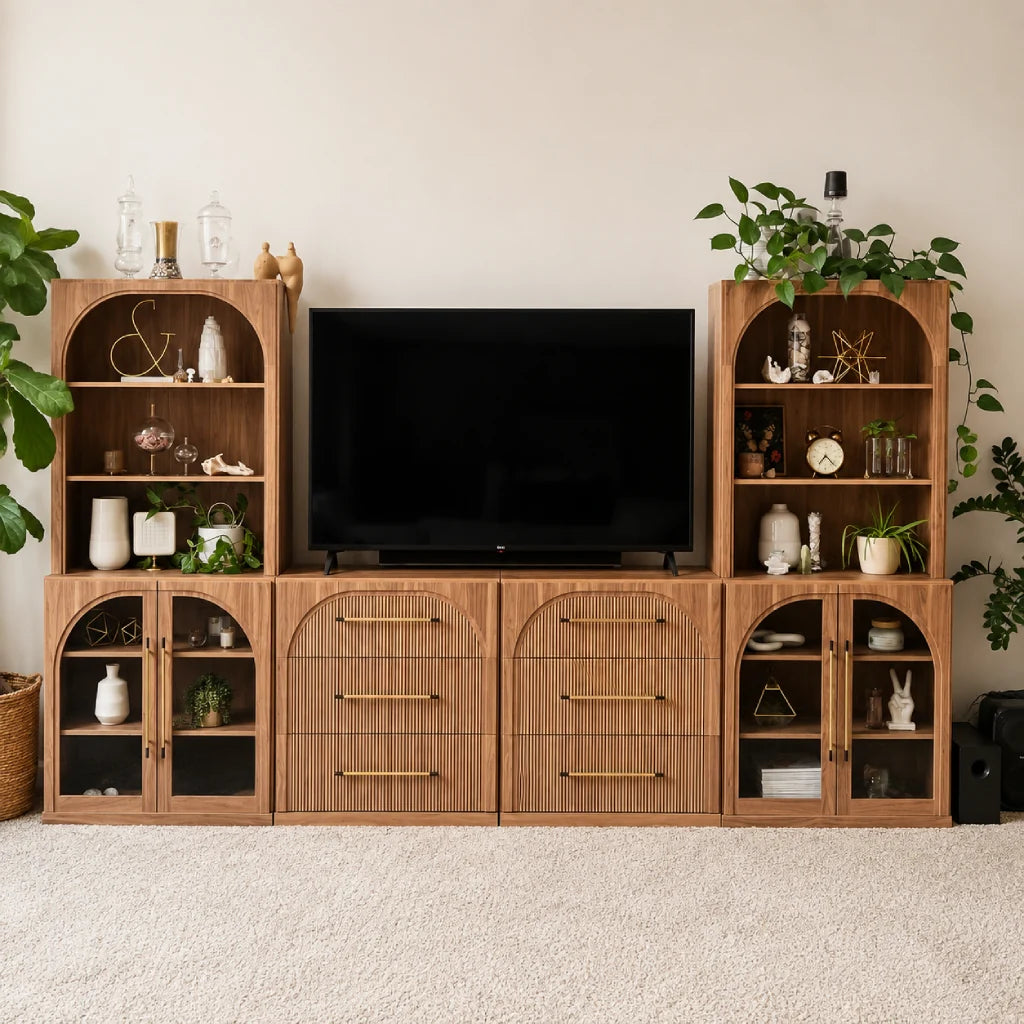
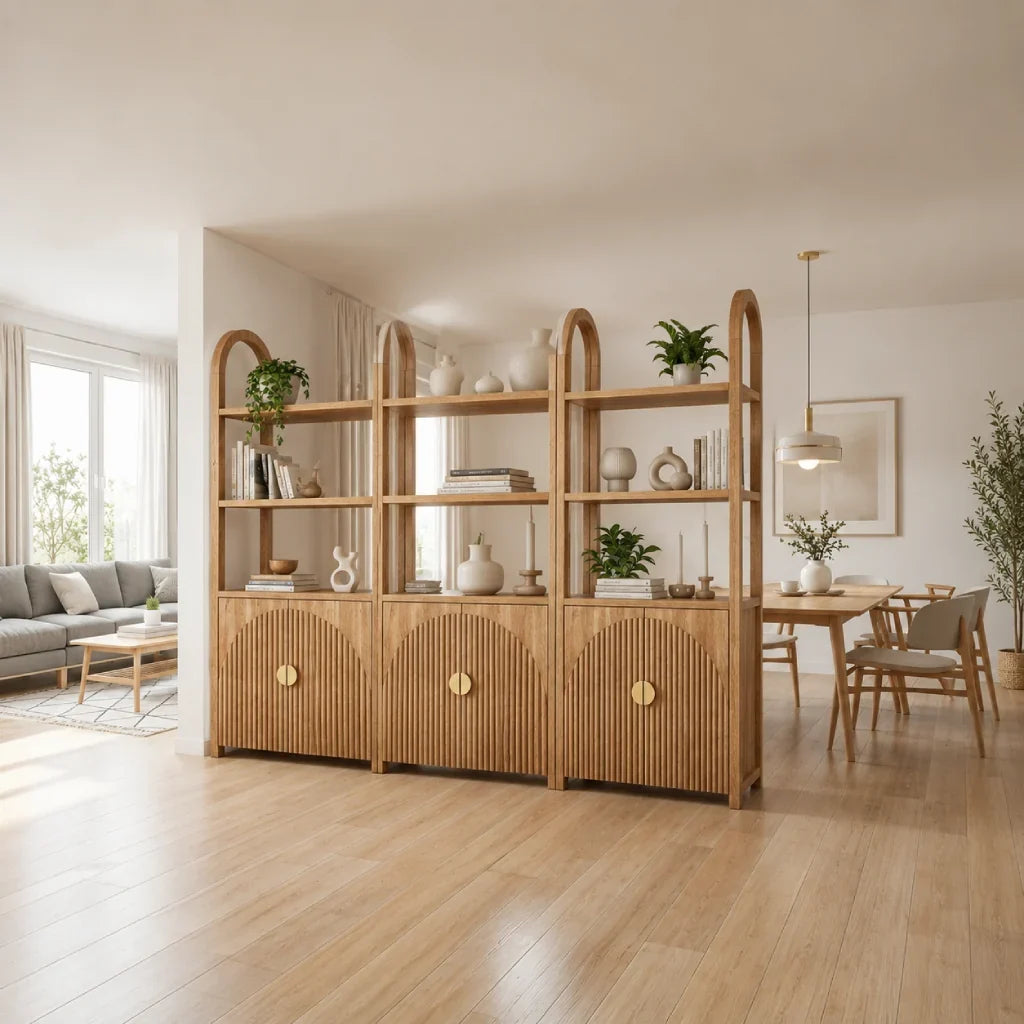
When both groups need a place, compare the 72-inch tall arched modular bookcase with fluted doors with your room measurements and storage needs. Use the modular cabinets collection to compare other mixed-storage options. Check each product page to confirm how its open and concealed areas are divided. That split can vary from one unit to another.
Skip formats that fight the room
A bookcase can match the recorded width, height, and depth and still make the room harder to live in. Pay particular attention to the walking route. The relevant depth includes the unit's footprint plus the space you need to pass it comfortably. A narrow aisle will affect the room every day.
Deep units are best left out of tight paths. An unusual shape deserves a closer look for a different reason: its appearance does not tell you whether your books will fit. Use the shelf and capacity information provided on the listing, then compare it with the books you plan to store.
Floating shelves can free the floor when no standing bookcase fits, but they move the fit question to the wall. Compare their usable shelf space with your book list and check the required mounting method. Leave a wall-mounted option off the shortlist when the product instructions or seller cannot confirm that it suits the wall.
Make the final fit check
One final room check should settle the shortlist. Reopen nearby doors, return movable furniture to its usual place, and walk past the marked footprint. The chosen bookcase should fit the available width, height, and depth while leaving enough room to approach the shelves and use the normal route.
Now match the product's shelf information to the books and other items on your list. Open storage, concealed storage, or a mix of the two should reflect what the room actually needs. A unit that leaves part of that list without a place has not solved the problem, even when its outer dimensions fit.
Use the product or collection path in the matching section above to compare the format you chose. The tall bookshelves collection is the next comparison point when a tall format wins the fit check. Confirm any dimensions, shelf details, assembly steps, or anchoring requirements that are missing from a listing before ordering.

Leave a comment
This site is protected by hCaptcha and the hCaptcha Privacy Policy and Terms of Service apply.