


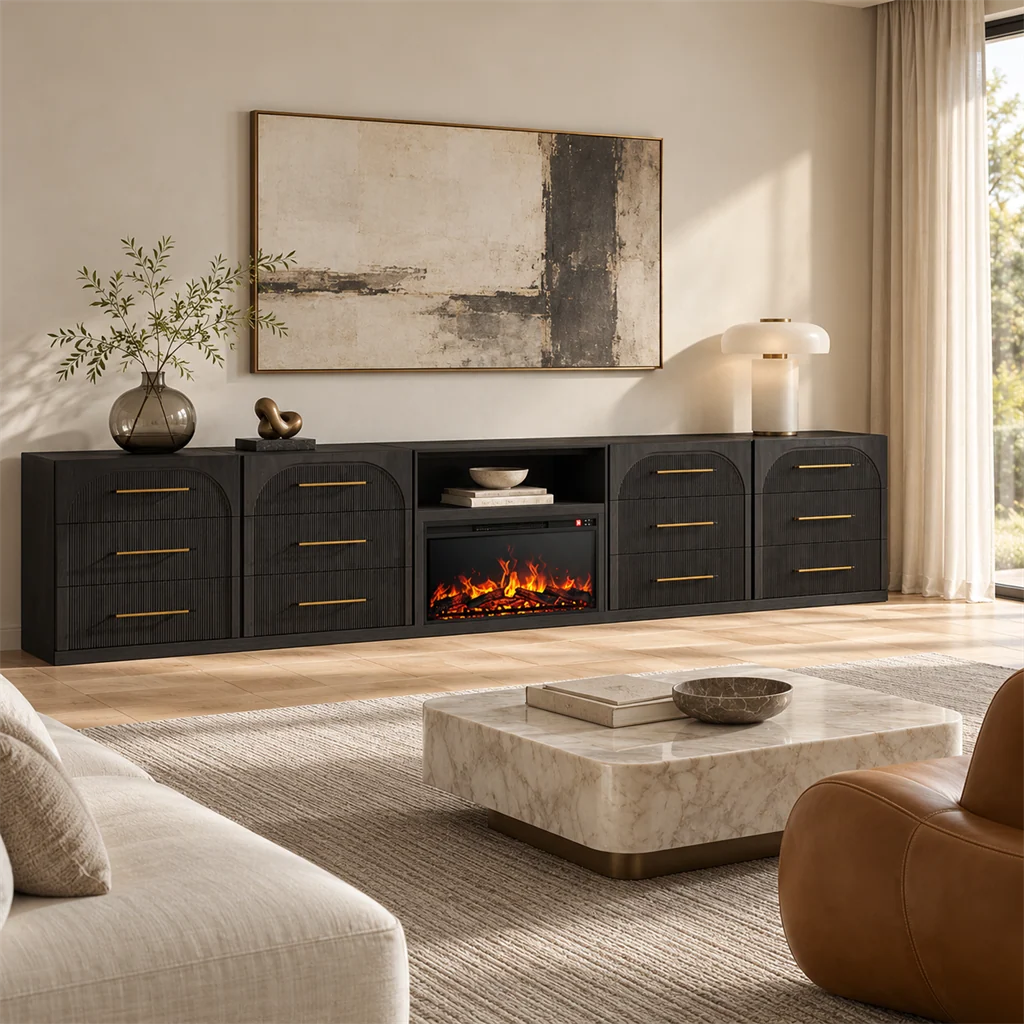
An electric fireplace does not always require a dedicated circuit, but running the heater on a shared living room line is the fastest way to trip a breaker. Most models connect to standard 120-volt household outlets, but their heating elements draw as much current as a heavy-duty space heater. When plugged into a circuit that already powers a television, sound system, or room lighting, the combined electrical load often pushes the breaker past its limit.
Whether you need a new line comes down to the wattage of the heater, what else shares that breaker, and where your outlets sit. Checking those details beforehand saves you from buying furniture that overloads your power or finding out the cord cannot reach the wall.
When an Electric Fireplace Needs Its Own Circuit
Start with the owner manual. Fireplace manuals distinguish between a required circuit and a recommended one. Many manufacturer manuals, for example, specify a 15-amp, 120-volt circuit and describe a dedicated line as preferred rather than mandatory, noting that a dedicated circuit becomes required if the breaker trips or a fuse blows regularly. Calling for a 15-amp circuit simply sets the minimum breaker rating; it does not automatically mean the fireplace must sit on its own isolated wire back to the panel.
When a manual calls for a dedicated circuit, the fireplace must be the only load on that breaker. Leaving the second socket of a wall duplex empty does not count. That outlet almost certainly shares wiring behind the drywall with other plugs, switches, or ceiling lights. The installation style also sets the rules: freestanding plug-in consoles can use existing grounded outlets, but built-in wall units and hardwired inserts often trigger local code requirements for a dedicated line. If your municipal codes or installation setup leave any doubt, check with an electrician before you begin.
Can You Use a Regular 120V Outlet?
A fireplace plug fits into any standard 120-volt wall outlet, but the outlet is only the opening. Behind the drywall, that outlet shares a single 15-amp or 20-amp breaker with several other plugs, overhead lights, and switches across the room or hallway. An unused outlet only works if the other devices on that circuit leave enough power for the heater.
The numbers show why shared circuits struggle. The BELLEZE 23-inch electric fireplace insert runs at 1,400 watts on 120 volts, pulling roughly 11.7 amps, while a typical 1,500-watt insert pulls about 12.5 amps. For continuous loads running three hours or longer, standard electrical guidelines cap breaker use at 80%: that allows 12 amps on a 15-amp breaker and 16 amps on a 20-amp breaker. A 12.5-amp heater already exceeds that continuous allowance on a 15-amp line, and an 11.7-amp model leaves less than half an amp of breathing room. Even if your electrical panel reads 15A or 20A, you cannot judge spare capacity without tallying the other devices sharing that wire.
Can an Electric Fireplace Share a TV Circuit?
Plugging a television and a fireplace into the same wall plate is common when setting up a media console, but sharing that circuit requires looking at the breaker's total load. Check the rating labels on your TV, streaming box, and sound equipment instead of assuming wattage. An entertainment setup can draw anywhere from 50 to several hundred watts. When you add an 11.7-amp heater to that draw, the combined load pushes a standard 15-amp circuit over its limit whenever you watch TV with the heat on.

Before connecting a fireplace to an existing media circuit, walk through these verification steps:
- Review the fireplace manual for required breaker ratings, voltage specs, and any dedicated-circuit rules.
- Locate the circuit breaker powering the outlet and identify every light, receptacle, and appliance running on that line.
- Consult a licensed electrician if you are unsure about total load, wire condition, or panel capacity, without removing panel covers or handling live wiring yourself.
Most electric fireplaces offer a flame-only setting that runs the display without the blower or heating coil. This mode draws very little electricity, which suits anyone wanting fireside ambiance without adding load to the circuit. Some models also include a distinct low-heat setting, such as 750 watts (roughly 6.25 amps). Lowering a thermostat temperature is not the same thing: a heater set to a low temperature still draws its full 1,400 or 1,500 watts whenever the coil kicks on. Regardless of daily habits, relying on flame-only or low-heat modes does not relax circuit sizing rules. Because anyone can turn the heat to maximum, the circuit must safely handle the appliance's full rated draw.
When Breakers Trip or Outlets Overheat
An overloaded circuit or a poor electrical connection gives off clear warning signs. If your breaker trips shortly after the heater turns on, lights dim when the blower kicks in, the wall receptacle buzzes, or the faceplate feels warm, treat it as an immediate issue. These symptoms can stem from an overloaded circuit, a worn outlet with loose internal contacts, loose terminal screws, or aging house wiring.
If an outlet, plug, or cord feels hot, smells like burning plastic, or shows scorch marks, stop using the fireplace immediately. Unplug the unit only if you can do so safely without touching hot plastic. If the plug feels too hot to touch, turn off the breaker at the service panel and call an electrician. Never switch to flame-only mode as a workaround for a hot outlet. Lowering the heat does not fix damaged wiring or loose terminals, and running any power through a compromised outlet creates a real fire hazard.

Will the Fireplace Cord Reach the Wall Outlet?
Cord reach dictates where your furniture can sit. Electric fireplaces must plug directly into a grounded wall receptacle. Manufacturer manuals, including the BELLEZE 23-inch insert instructions (pages 3 and 9), strictly prohibit extension cords, power strips, and surge protectors because extra connections cause resistance and heat buildup. The insert includes an integrated 6-foot cord, but that does not mean your wall outlet can sit 6 feet away in a straight line. You have to measure the route the cord actually takes: out the back of the firebox, through the console's rear opening, and around the cabinet base to the wall.
This physical constraint shapes your entire room arrangement. When planning a wide console like the Jagger 105-inch fireplace TV stand, verify the cord path to an accessible outlet before assembling the heavy sections. Make sure the furniture will not pinch or crush the cord against baseboard molding, and leave enough access to unplug the unit easily. If you are retrofitting an insert into furniture you already own, consult our guide on putting an electric fireplace in a TV stand to confirm cabinet clearances and ventilation requirements before you cut or modify casework.
What Should You Ask an Electrician Before Installation?
If you are unsure whether your circuit can handle the heater, call an electrician. To get an accurate quote in one visit, gather your fireplace manual with its wattage rating, a list of devices sharing that breaker, any warning signs you have noticed, and the intended location of the console. Ask whether the existing circuit supports the fireplace alongside your entertainment gear under continuous-load rules, or if local codes demand a dedicated line. If adding a new circuit in a finished room, ask whether routing the cable requires cutting drywall, whether surface conduit is an option, and whether the estimate covers permits and wall patching.
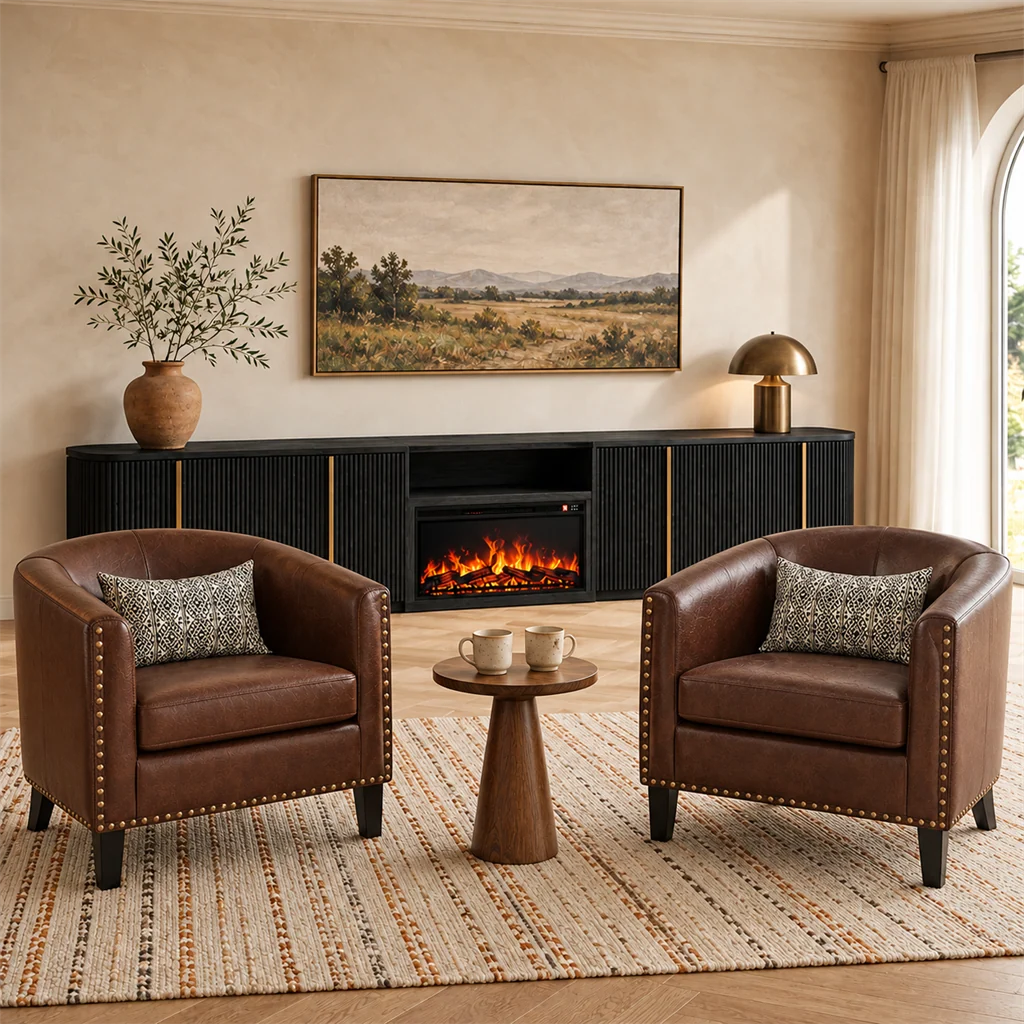
Once you know the circuit is safe or you have a dedicated line in place, you can move forward with your room design. For a coordinated media wall, exploring Belleze's modular entertainment centers lets you combine hearth warmth, media storage, and display space in a single layout. Before ordering, confirm the fireplace specifications and cord route against the exact outlet your electrician evaluated, and factor any electrical costs into your total furniture budget.


Leave a comment
This site is protected by hCaptcha and the hCaptcha Privacy Policy and Terms of Service apply.