


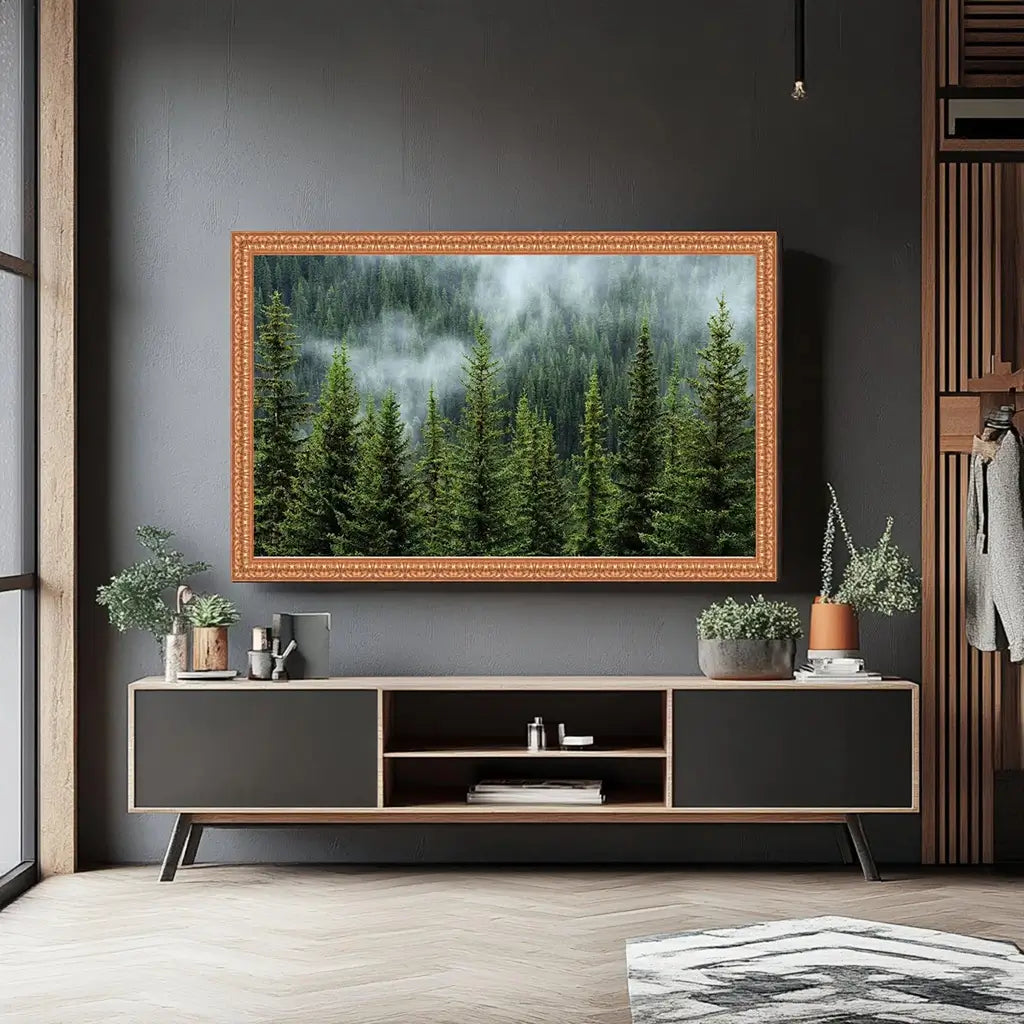
TVs are central to how we relax and unwind at home. But when the screen is off, that big black rectangle can feel out of place—especially in a room you've worked hard to decorate.
The good news? You don't have to live with it. This guide covers 12 ways to hide your TV in the living room or bedroom. Whether you prefer a quick DIY fix or a sleek built-in solution, there's an option here for every budget and skill level.
Hide Your TV in a Cabinet or Armoire

One of the simplest ways to deal with a dark, unused screen is to put it behind closed doors. Media cabinets, armoires, and credenzas let you tuck the TV away completely when you're not watching. The moment you close those doors, the room feels tidier and more put-together.
This approach works well if you already have furniture that could hold a TV, or if you're open to adding a new piece that also provides storage.
In setups like this, modular entertainment centers let you combine closed storage, media space, and panels in a layout that adapts to your room.
Furniture Types
- Media Cabinets & Credenzas: These sit low to the ground and are built to hold TVs along with streaming devices, game consoles, and cables. They keep everything organized in one spot.
- Armoires & Hutches: Taller options that make more of a visual statement. They can store a TV on one shelf while leaving room for books, baskets, or décor on others.
- Custom Joinery: Built-in cabinetry that blends right into your walls. It costs more but gives you a seamless, tailored look that feels like part of the architecture.
Door Styles & Materials
The doors you choose can shape the whole feel of the room. Slatted wood adds warmth. Woven cane brings texture. Mirrored doors reflect light and make small spaces feel bigger. Accordion-style panels with molding offer a traditional touch.
For a truly invisible look, go with handle-free, push-to-open doors. When finished in the same paint, plaster, or wallpaper as the surrounding wall, they disappear entirely. You can also paint an abstract design or landscape on the doors to turn the cabinet into a piece of art on its own.
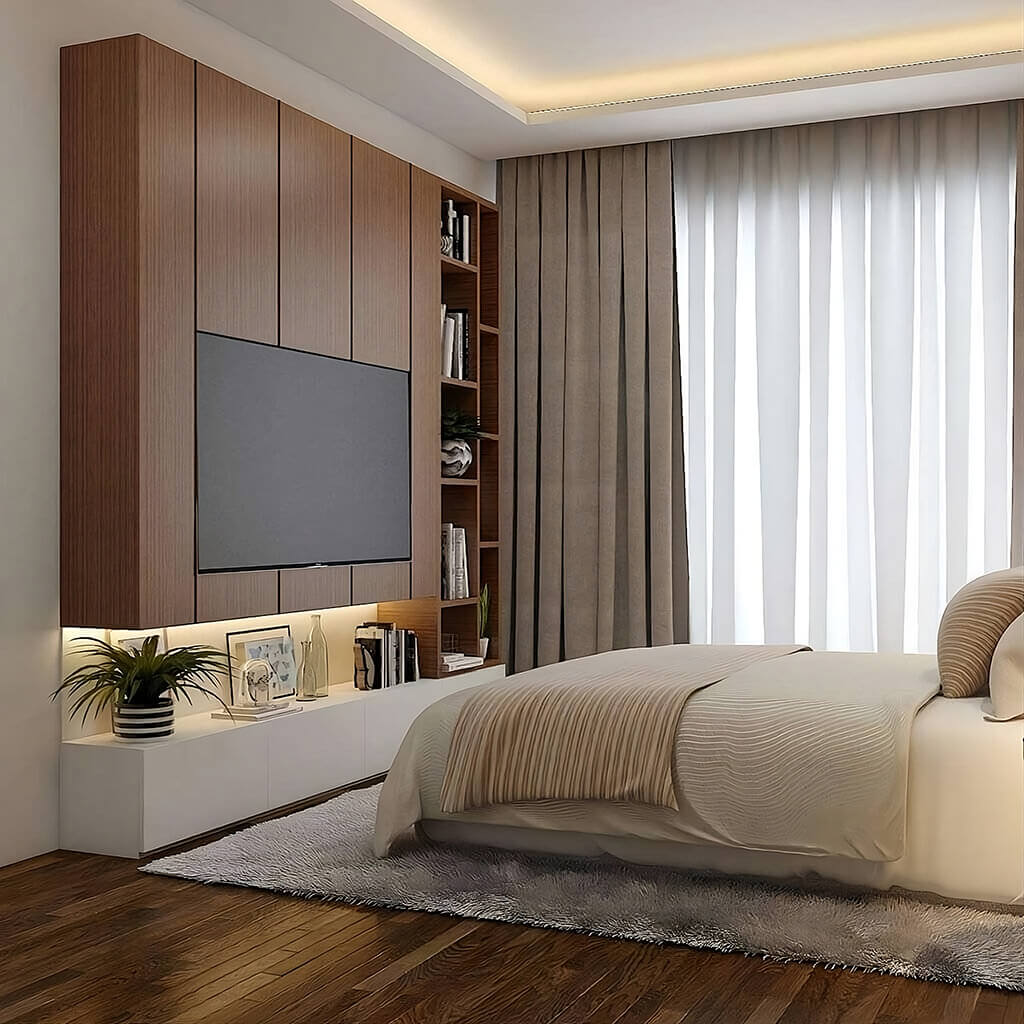
Mount It Inside a Closet or Wardrobe

If your bedroom or living room has a closet you're not fully using, it can double as a hidden TV nook. Just mount the screen inside and use the existing doors to cover it up when you're done watching. It's a practical fix that doesn't require buying new furniture.
This setup works especially well in multi-purpose rooms—like a guest bedroom that also serves as a home office. When the TV is out of sight, the space feels more flexible.
Implementation
Mount the TV on an articulating arm so you can angle the screen toward your bed or seating area. This gives you better viewing without locking the TV into one fixed position.
Make sure the closet has decent airflow to prevent the TV from overheating. You'll also want easy access to a power outlet and any cable connections. A small power strip mounted inside the closet can keep cords organized and out of view.
Use a TV Lift in Furniture

A motorized TV lift hides the screen inside a piece of furniture until you're ready to use it. Press a button, and the TV rises smoothly into view. Press it again, and the screen drops back down out of sight. It's a clean, almost theatrical solution—and it keeps your room looking uncluttered.
This option costs more than a simple cabinet, but it's worth considering if you want that "reveal" moment or if floor space is tight.
Common Applications
- Pop-up Cabinets: A standalone console placed at the foot of the bed or against a wall. The TV stays hidden inside until you activate the lift.
- Integrated Lifts: Built directly into bed footboards, kitchen islands, or custom seating like floating banquettes. These are more involved to install but deliver a surprising, seamless effect when the TV appears from what looks like ordinary furniture.
Install Sliding Panels or Doors

Sliding panels offer a way to cover a wall-mounted TV while adding visual interest to the room. The panels glide along a track, transforming your wall into a dynamic feature. They can match your existing décor or stand out as a design element on their own.
This approach works well if you want something more substantial than fabric but don't want to commit to built-in cabinetry. The panels add texture and dimension even when the TV isn't the focus.
Panel Ideas
- Barn Doors: A natural fit for rustic, farmhouse, or industrial spaces. The hardware becomes part of the look, and the weathered wood adds character to the wall.
- Custom Panels: Cover panels in wallpaper, fabric, or slatted wood so they blend into the surrounding wall. This creates a cohesive look where the TV disappears into the design.
- Art Panels: Use two sliding canvases that meet in the middle. Closed, they form a single piece of artwork. Open, they reveal the screen behind.
Hang Curtains or Fabric to Conceal the TV

Fabric is one of the most affordable and flexible ways to hide a TV. A simple curtain rod or ceiling-mounted track lets you hang a decorative textile directly in front of the screen. Pull it aside to watch, then draw it closed when you're done.
This solution works especially well for renters or anyone who wants an easy DIY project. It requires minimal hardware and causes little to no wall damage.
Fabric Choices
- Tapestry or Rug: A large, flat-weave rug or artistic tapestry doubles as wall art. It adds warmth and texture to the space while keeping the TV out of sight.
- Curtains: Choose a fabric that coordinates with your window treatments. This creates a pulled-together look and makes the TV cover feel intentional rather than improvised.
- DIY Painted Canvas: A painted drop cloth offers an inexpensive way to create large-scale custom artwork. You can match it to your room's color palette or go bold with an abstract design.
Camouflage with a Gallery Wall

Rather than hiding the TV completely, this approach helps it blend in. Surround the screen with an eclectic mix of framed art and photographs, and the black rectangle becomes just one element among many.
The eye naturally moves across the entire arrangement instead of landing on the TV alone. It's a clever trick that reduces the screen's visual weight without blocking it.
Tips for Success
- Arrange frames of various sizes and shapes around the TV to create a dynamic, salon-style display. The variety keeps the wall interesting and draws attention away from the screen.
- Choose frames that are black or have a similar thickness to the TV's bezel. This helps the screen integrate more naturally into the grouping.
- This method pairs especially well with a Frame TV, which displays artwork when not in use. The screen looks like part of the gallery rather than a separate device.
Paint or Panel the Wall Dark

Color theory can do a lot of the work for you. Mount your TV against a dark accent wall, and the black screen visually recedes into its surroundings. The contrast drops, and the TV becomes far less noticeable when it's off.
This strategy suits modern, moody, or dramatic interiors. It also gives you a chance to create a feature wall that anchors the room.
Wall Treatment Options
- Dark Paint: Deep shades like charcoal gray, navy blue, or matte black help the TV blend in. The darker the wall, the less the screen stands out.
- Wood Paneling: Dark-stained wood or a board-and-batten treatment adds texture along with color. The depth and grain draw attention away from the flat screen.
- Textured Finishes: Faux concrete, limewash, or Venetian plaster create visual interest that distracts from the TV. These finishes give the wall dimension and make the screen feel secondary.
Try a Two-Way Mirror or Mirror TV

A mirror TV blends technology with function. A semi-transparent mirror sits over the screen—when the TV is off, it looks and works like a regular mirror. Turn it on, and the image projects clearly through the glass.
This solution suits spaces where a visible TV feels out of place, like a formal living room, dining area, or bedroom. The screen stays hidden in plain sight without requiring doors, panels, or curtains.
Benefits
- The TV disappears completely when not in use, leaving behind a polished, decorative surface.
- Mirrors reflect light and can make smaller rooms feel more open and bright. You gain both a functional mirror and a hidden entertainment screen.
- Mirror TVs come in various frame styles, so you can match the look to your existing décor.
Hide the TV Behind Artwork

A single piece of art can serve as a direct cover for the television. The painting or print stays on display until you're ready to watch—then it moves aside to reveal the screen behind it.
This approach keeps your favorite artwork as the room's focal point. The TV only appears when you need it, and the wall looks intentional either way.
Mechanisms
- Hinged Art: Mount the artwork on hinges so it swings open like a cabinet door. This works well for lighter pieces and provides easy access to the screen.
- Sliding Track: Place the frame on a horizontal track and slide it to the side when you want to watch. The art stays visible nearby rather than swinging out into the room.
- DIY Cover: Attach a canvas print to a lightweight frame that lifts off manually. It's a simple, low-cost option if you don't want to install hardware.
Distract with Decor and Lighting

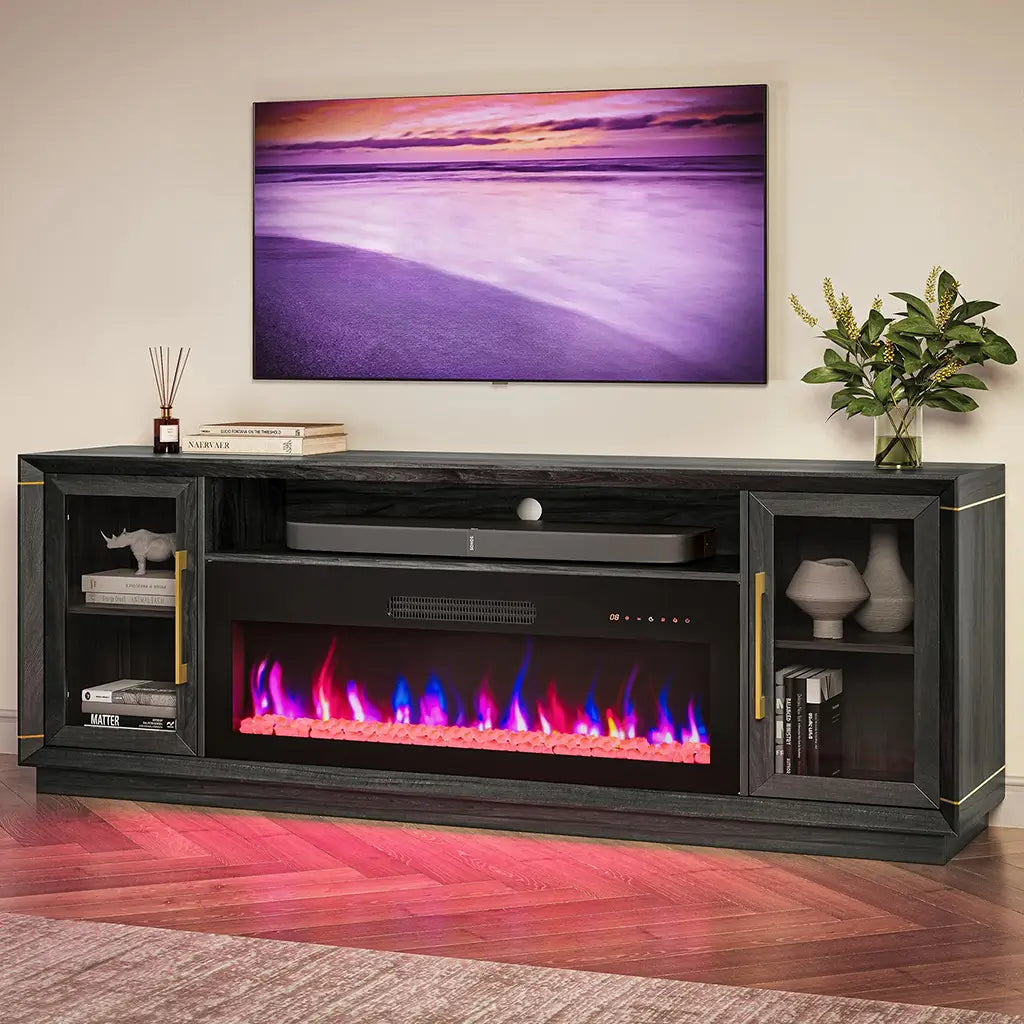
Sometimes the best approach is to shift attention rather than hide the TV entirely. By styling the area around the screen, you can turn it into one part of a larger composition instead of the main attraction—especially when another feature, like a fireplace TV stand, becomes the visual anchor of the room.
The eye naturally moves toward objects that stand out. Give it something else to land on, and the TV fades into the background.
Styling Strategies
- Create a Vignette: Arrange interesting objects on the media console—vases, sculptures, stacked books, or small plants. A layered display draws attention downward and away from the screen.
- Add Height: Place tall floor lamps or large potted plants on either side of the console. Vertical elements break up the horizontal focus and frame the TV more naturally.
- Symmetrical Arrangements: Balance the visual weight of the screen by placing equally scaled items on both sides. This creates a sense of order that makes the TV feel less dominant.
Opt for a Frame TV or Digital Art Screen

Some TVs are built specifically to solve the "black box" problem. Frame TVs and digital art screens display artwork, prints, or personal photos when you're not watching. The screen stays on in a low-power art mode with a realistic, non-glare finish that mimics a framed picture.
This option works well if you want the TV visible but not obvious. The screen becomes part of your décor rather than an interruption to it.
Key Features
- Customizable Bezels: Magnetic frames snap onto the TV and come in various colors and finishes. You can match the frame to your room's style, just like choosing a frame for a painting.
- Versatile Placement: A Frame TV can anchor a gallery wall or stand alone on an artistic easel or antique tripod. The tripod setup gives the room a studio-like feel and lets you move the TV without drilling new holes.
Use a Projector or Rollable Screen

For a true minimalist setup, skip the permanent screen entirely. A projector and screen system gives you a cinematic viewing experience when you want it—and disappears completely when you don't.
This approach suits rooms where wall space is limited or where you simply prefer a clean, uncluttered look. No black rectangle, no hardware on the wall.
Setup Options
- Projector: Mount it on the ceiling or tuck it onto a high shelf. Short-throw projectors can sit close to the wall and still produce a large image.
- Screen: Use a motorized screen that retracts into a slim housing, a manual pull-down version, or just project onto a smooth, light-colored wall.
- DIY Integration: A roll-up screen can be hidden inside a vintage hutch or cabinet. This gives you a creative, custom solution without major renovations.
Conclusion
Hiding a TV comes down to three main strategies: physically conceal it behind doors, panels, or lifts; camouflage it with gallery walls, dark paint, or styled décor; or replace the traditional screen with a Frame TV or projector setup.
The right choice depends on your style, budget, and living situation. Renters can start with fabric covers or gallery walls. Homeowners might consider built-ins or motorized lifts. Whatever direction you go, reducing the TV's visual presence can make your space feel calmer and more intentional.
Related Reading:
- 9 Stylish Furniture Alternatives for TV Stands
- TV Stand vs Wall Mount: Which is Better for You?
- 5 Easy Ways to Hide TV Cords (For Stand & Wall-Mounted TVs)
- What to Put under a Mounted TV?
- How to Decorate the Wall behind a TV Stand?
- TV Stand Layout Mistakes That Make Your Room Look Smaller
- 12 Clever Small Living Room Ideas with TV

Leave a comment
This site is protected by hCaptcha and the hCaptcha Privacy Policy and Terms of Service apply.