


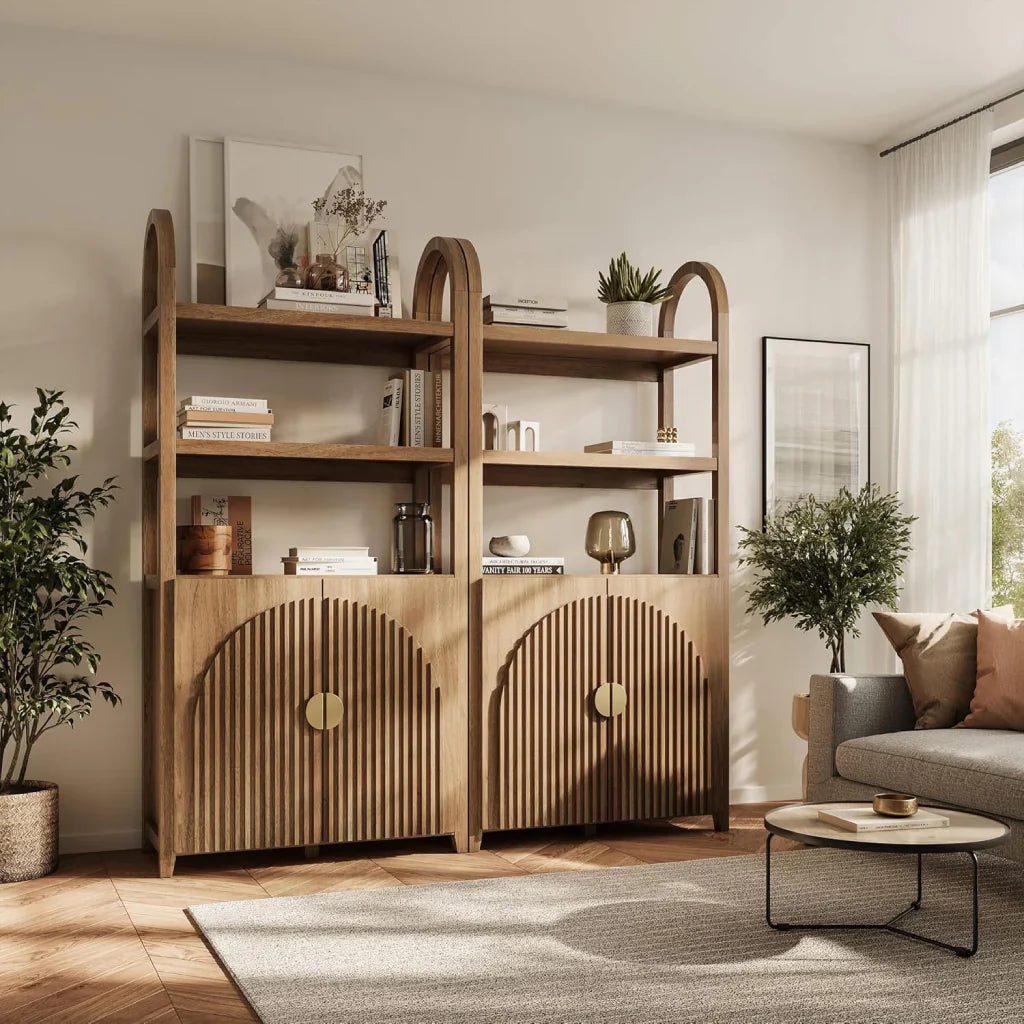
Most bookshelves reach a point where the original system stops working. Books end up on their sides because the upright row ran out of space. A charger lands on a shelf because it's the nearest flat surface. Before long, things that don't belong there take up a third of the available room.
Before putting anything back, it helps to decide what you actually want this bookcase to do. That one question changes almost every decision that follows — how you sort, what goes where, and how easy it stays to maintain.
Empty Your Bookcase and Sort Everything First
Pulling everything off the shelves seems like it makes more work. It doesn't. An empty bookcase reveals the actual dimensions of each shelf and makes it easier to clean surfaces you normally work around.
Wipe down each shelf while it's bare, and check for any damage like warped boards or chipped edges that are simpler to address now than later.
With everything on the floor, sort each item into three categories: keep, donate, or store elsewhere. Books you haven't opened in several years and decor pieces you no longer like belong in the donate pile. Seasonal or sentimental items you want to keep but rarely use can move to a closet or storage bin.
What remains on the floor is your working collection. It's typically smaller than expected once you're honest about what you read and reach for.
How to Sort Your Books: Pick the Right Bookcase Organization System
The best sorting method depends on how you retrieve books. If you regularly hunt for a specific title or author, alphabetical order saves time. If you browse by mood or genre, category-based sorting is more natural. For display-focused shelves in a living room, color or size sorting makes the whole shelf look noticeably cleaner.
Each approach solves a different problem:
| Sorting Method | Primary Benefit | Best Suited For | Key Drawback |
| Alphabetical | Fast retrieval of specific titles or authors | Large collections and home offices | Creates a jagged, uneven visual look |
| By Genre | Great for mood reading and browsing | Mixed libraries (romance, mystery, etc.) | Some books fit multiple categories |
| By Color | Creates a vibrant, artistic focal point | Visual people and decor-focused rooms | Difficult to locate a specific book by name |
| By Size | Maximizes space and looks streamlined | Minimalists and shelves with varied heights | Splits series and authors across shelves |
A hybrid approach works well for most collections. Group books into broad categories first (fiction vs. non-fiction, or room by room) and then apply a secondary rule within each group.
A home office shelf organized alphabetically within each genre and a living room shelf sorted by spine color are two common pairings that serve different daily needs.
How to Arrange Books on a Bookcase for Balance and Easy Reach
A fully packed bookcase looks heavy and is harder to maintain than one with a little breathing room. Leaving roughly a third of each shelf open lets the display feel lighter and gives you space for new additions without immediately needing to reorganize.
On display-focused shelves, aim for roughly 70 percent books and 30 percent objects. Too many decorative pieces make a shelf feel staged; too few make it look like a storage unit.
Place the heaviest items (encyclopedias, large art books, thick reference volumes) on the bottom shelves. It keeps the unit stable and makes the top shelves easier to work with.
Mix Vertical and Horizontal Stacks on Your Bookcase
Most bookshelves default to all-vertical rows, which can look stiff and a little boring. Mixing in a small horizontal stack every few sections breaks that up. It looks less rigid, and it doesn't take any design background to pull off.
Horizontal stacks also serve a practical purpose: they act as natural bookends for the upright books on either side. A stack of three to five books lying flat raises the surface level slightly, making it a stable platform for a small plant, a candle, or a decorative object.
Set Up Bookcase Height Zones for Daily Access
Eye level and waist level are the most effortless spots to reach, so those positions should hold the books you use most often. Cookbooks you use weekly, the novel you're currently reading, or reference books for a work project all belong in these zones.
Lower shelves work well for children's books in a family home, where kids can browse and return books independently. Upper shelves suit fragile decor, books you rarely reach for, or anything you access only occasionally.
If your bookcase has adjustable shelves, resizing individual tiers to match the actual height of your books and objects makes each zone more flexible, especially when different household members have different reach or different daily use habits.
Style Your Bookcase Shelves with Decor and Plants
Decor works best on a bookcase when it's grouped in odd numbers. Three objects at different heights tend to look better than two or four — two feels too even, four starts to look like clutter.
Something you picked up on a trip or a small framed photo almost always looks better than shelf decor you bought just to fill space. It makes the bookcase feel like it belongs to someone, rather than a display in a store.
Greenery softens the hard edges of a bookcase and adds color that shifts as plants grow. A few options that work well in shelf spaces: small succulents hold up in tight spots with indirect light and need very little maintenance; trailing varieties like pothos can drape over a shelf edge and add movement to an otherwise static display; a single stem in a small vase works for shelves that get very little natural light.
If you want to extend the greenery look beyond the bookcase itself, the guide to picking the perfect indoor plant stand covers placement options that work alongside a shelving setup.
What to Do When Your Bookcase Has Too Many Books
At some point, most collections outgrow their shelves, and the first response doesn't have to be buying more furniture. A decluttering session every few months, where you remove books you've finished and won't reread, creates space without adding anything new.
Local libraries, community centers, and preschools typically accept donations. Giving books away regularly keeps the collection from silently expanding back to where it was.
If reducing the count isn't an option, relocation helps. Books tied to specific seasons or occasions (holiday cookbooks, annual reference guides) don't need year-round shelf space. Moving them to a storage bin in a closet or loft clears room for the titles you reach for.
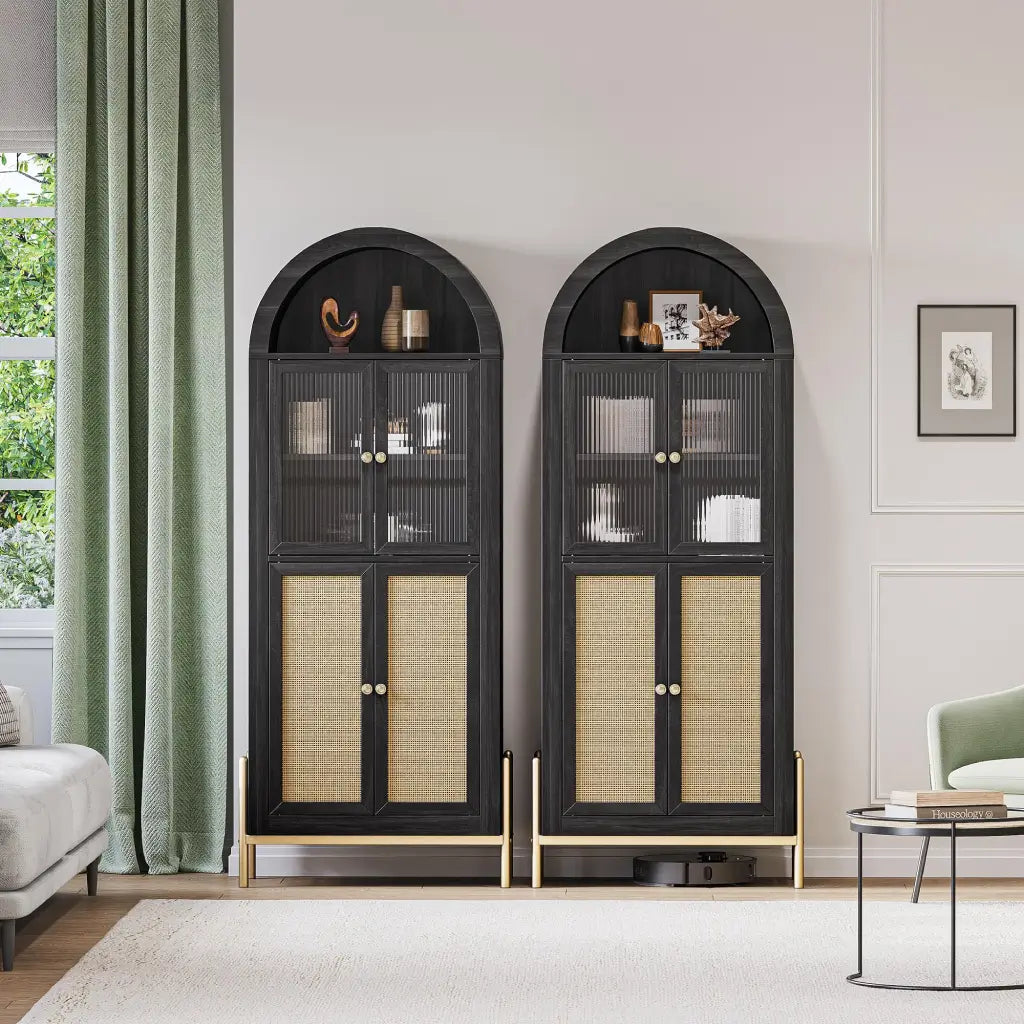
For collections that have genuinely outgrown one bookcase, modular cabinets offer a practical expansion path. Because individual units connect and stack, you can add capacity in the same visual style as your existing setup rather than bringing in a mismatched second bookcase.
When the Problem Is the Bookcase, Not the Organizing System
Sometimes a shelf stays cluttered no matter how carefully you sort it. A few signs that the unit itself is working against you:
- Shelves can't adjust to your books. Fixed shelves that are too short for taller books force awkward double rows or leave wasted space above smaller paperbacks. A bookcase with adjustable shelves solves this without changing your organizing method.
- Everything has to be visible. Open shelves work well for books you reach for regularly, but a unit with no closed storage forces decorative objects, charging cables, and everyday clutter to compete for the same space. An open-and-closed combination keeps the display intentional.
- You've run out of room to grow. If new books immediately push the shelf back into disarray, the issue isn't discipline (it's capacity). Modular cabinets let you add matching units as your collection grows rather than starting over with a larger piece.
- The shelf is too deep. Bookcases that are deeper than a single row of books requires push items toward the back where they're forgotten. Narrower shelving keeps everything visible without needing a retrieval system.

Keep Your Bookcase Organized Month After Month
Organization doesn't hold itself. Two maintenance habits keep most bookshelves from sliding back toward clutter:
- Monthly: Spend about ten minutes realigning spines, returning items to their zones, and removing anything that drifted onto the shelf (a remote, a charger, a random receipt).
- Seasonally: Rotate unread books from the back row to eye level, and move finished titles or books you've moved past to storage or the donation pile.
One practical trick: take a photo of your bookcase right after a full reorganization, when everything is exactly where you want it. When the shelf starts to drift a few months later, you have something to work from instead of trying to remember how it looked.
If your collection has permanently grown beyond one bookcase despite regular editing, wall-to-wall storage ideas covers approaches for expanding across an entire wall without making the room feel like overflow storage.

Common Questions About Organizing a Bookcase
Should I organize my bookshelf by color or by genre?
Color sorting works well for a bookcase in a living room or entryway where the shelf is mainly a display piece and you rarely need to find a specific book quickly.
Genre sorting makes more sense in a home office or bedroom where you reach for books by subject or author. If the shelf serves both purposes, genre can be the primary sort with books loosely arranged by spine color within each group.
How full should a bookcase be?
Leaving roughly a third of each shelf open keeps the display from feeling packed and makes it easier to maintain. A fully loaded shelf leaves no room for adjustments, and small additions quickly create visible disorder. The open space keeps decorative objects from looking crowded and makes individual items easier to spot.
How do I organize books if I don't have a bookshelf?
Floating shelves mounted at eye level work well for smaller collections and are a great option for renters who want to avoid large furniture, giving you the same height-zone flexibility as a freestanding unit. Storage cubes or modular open shelving are affordable alternatives that can scale as your collection grows.
Window seats with built-in shelving underneath, or multi-functional furniture like ottomans with interior storage, work particularly well in rooms where floor space is limited. The same sorting and zone logic applies to any of these as it would to a traditional bookcase.
How do I keep a bookcase from looking cluttered?
The most effective fix is removing items that have no assigned home. Keeping anything that doesn't belong (chargers, mail, loose household items) off the unit entirely is the fastest way to reset a shelf. Beyond that, group books in clusters of similar heights rather than running them edge to edge, and limit decorative objects to two or three per shelf. A consistent sorting method helps too: when every book has an obvious place, clutter tends not to build up between resets.
How do I organize a small bookcase or bookshelf?
Use vertical space more than horizontal. A taller, narrower bookcase takes up less floor area than a wide, low unit and still holds a comparable number of books. On each shelf, keep only the books you're actively reading or want on display and store the rest elsewhere. Floating shelves mounted above a desk or sofa are another option for adding book storage in a small room without claiming any floor space.
How do I make a bookcase kid-friendly?
Reserve the bottom one or two shelves for books and items children use regularly, so they can browse and return things without help. Sturdy board books, favorite chapter books, and small fabric baskets for toy storage all work well on those lower shelves.
Keep fragile decor, sentimental objects, and anything that tips easily on the upper shelves where small hands can't reach. This arrangement also makes it easier to keep the rest of the shelf tidy, since children naturally contain their activity to the zones set up for them.
Organize Your Bookcase and Enjoy It Every Day
The process works best in three moves: sort once to reset, a quick check monthly to keep it that way, and a seasonal edit to stay ahead of the clutter.
The method works best when the unit supports it. If your current bookcase has fixed shelves that don't fit your books, no closed storage for mixed-use items, or no room to grow as your collection expands, Belleze's bookshelves and bookcases offer adjustable and modular configurations across multiple sizes.



Leave a comment
This site is protected by hCaptcha and the hCaptcha Privacy Policy and Terms of Service apply.