


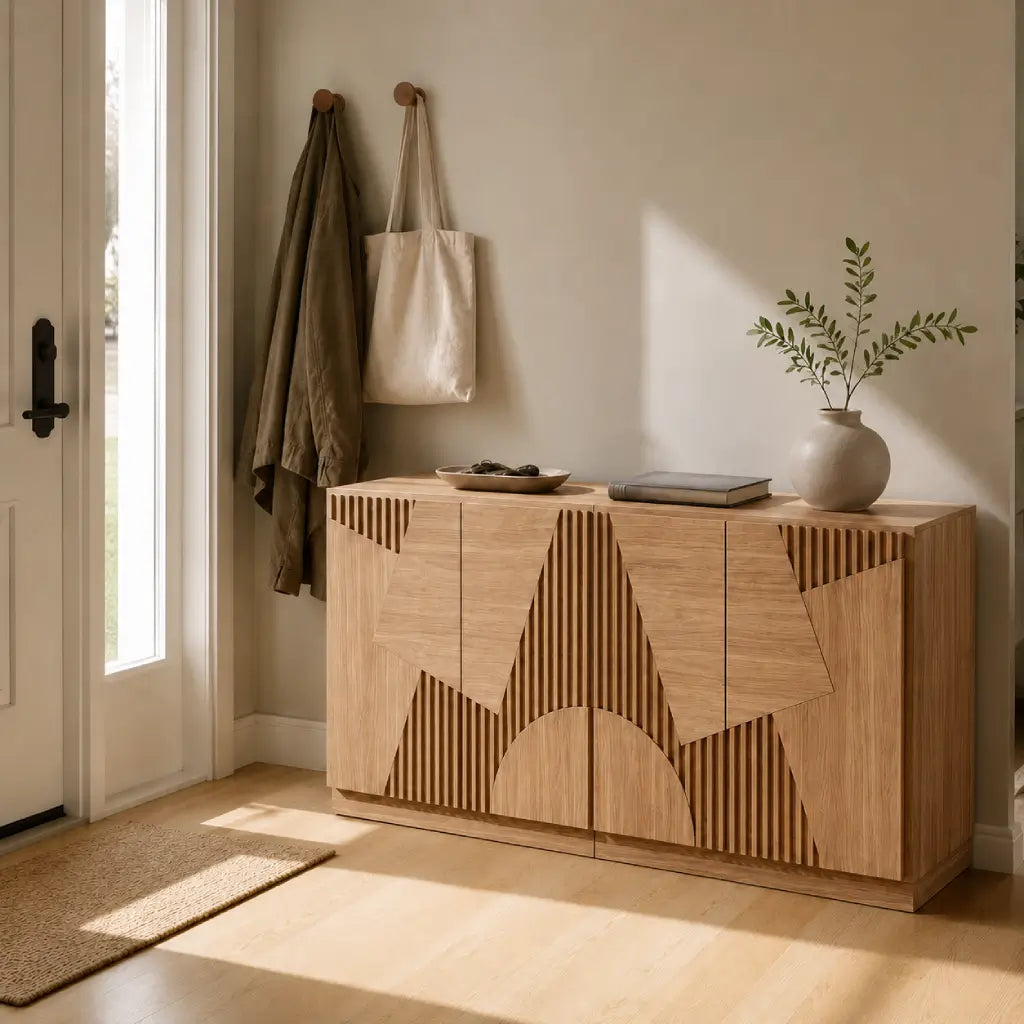
An entryway without a closet gets messy because the same few square feet have to catch coats, shoes, bags, mail, pet items, and returns. Start with a small drop zone: hang active coats, hide visible clutter, and move off-season items somewhere else.
Plan hanging storage first, then choose the smallest cabinet, console, or modular sideboard that can hold what remains. A cabinet can hide clutter, but it does not replace a coat closet for long coats or bulky parkas.
A simple no-closet entryway system
A closet normally hides coats, shoes, small daily items, and the mess that collects while someone changes shoes. Without one, split those jobs instead of asking one cabinet, bench, or console to handle all of them.
- Audit what lands by the door each day.
- Move occasional and off-season items elsewhere.
- Use hooks, pegs, a hall tree, or a wardrobe for active coats.
- Choose open, closed, or mixed storage based on what needs to stay visible.
- Measure the wall, walking path, door swing, drawer clearance, baseboards, and floor level.
- Choose one compact cabinet or two only after the footprint works.
- Give each shelf, drawer, hook, and top surface one job.
Start with what lands by the door
Entryway storage gets harder when you buy furniture before checking what piles up by the door. Watch what hits the floor, the nearest chair, the stairs, or any existing table for a few normal days.
Sort those items into three groups. Daily items include current shoes, an active coat, keys, mail, and regular bags. Occasional items include umbrellas, gloves, returns, and pet gear. Elsewhere items include off-season coats, extra shoes, and bags you rarely use.
Move anything you do not use at the door daily or weekly out of the entry. Many no-closet entries go wrong when they try to store the whole season in the smallest part of the home.
Find your entry type
- Narrow hallway: treat it as a traffic problem. Use shallow closed storage, one small tray, and only the hooks you need.
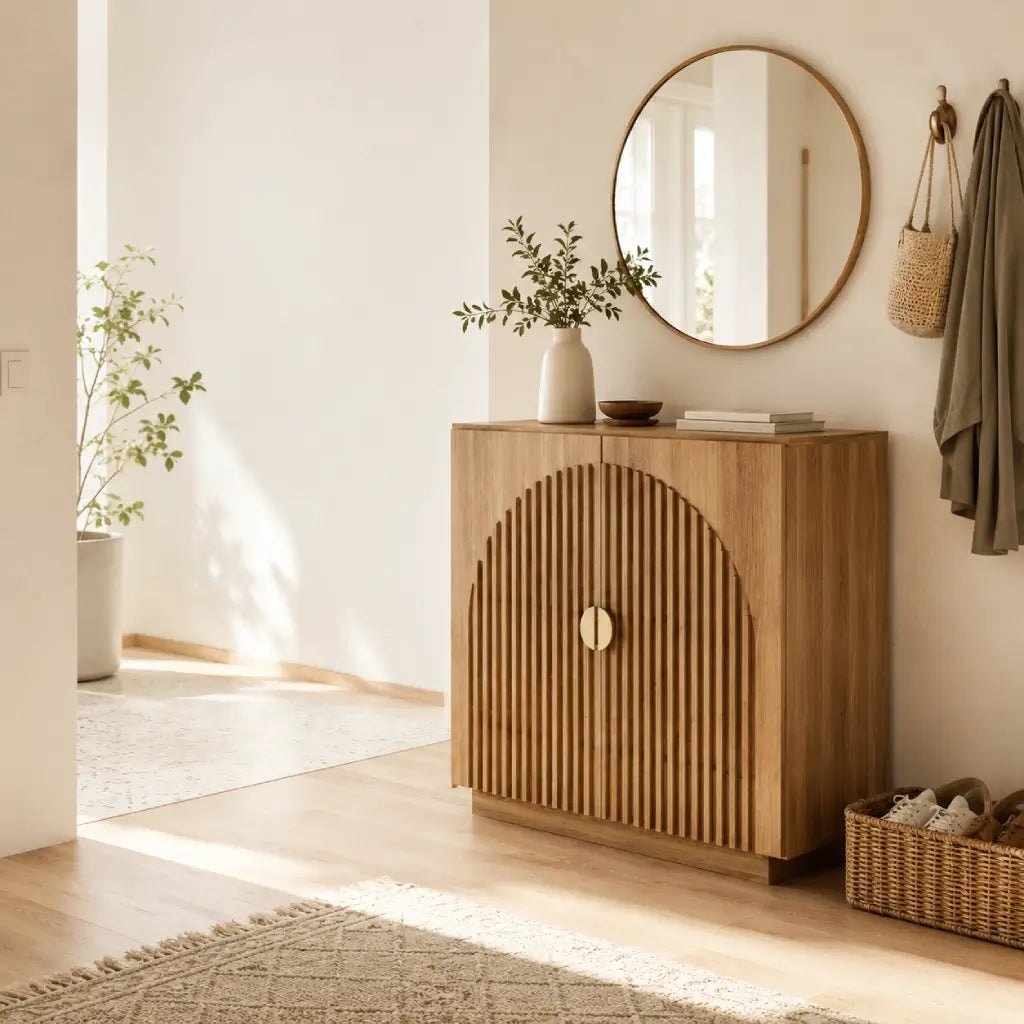
- Entry opens into the living room: treat it as a visibility problem. Start with one closed cabinet that looks like furniture, so shoes, mail, and pet items stay out of sight.
- Shared family entry: assign zones before buying more furniture, so one person's shoes, bags, or returns do not bury the next person's.
- Rental or no-drill entry: use movable storage plus over-door, adhesive, or renter-friendly hooks. Use adhesive hooks only for lightweight items unless the hook rating, wall surface, and installation method support the load.
- Coat-heavy entry: solve hanging first. A cabinet can hide shoes and bags, but it cannot hang long coats.
- No wall beside the door: move the drop zone to the nearest adjacent wall instead of squeezing furniture into the doorway.
Choose storage for the real problem
Start with the item that creates the mess. Hooks, a hall tree, or a wardrobe come first when coats are the problem. A shoe cabinet fits shoe-heavy entries. A bench helps only when seating will not block the walkway. A console works when the entry needs a landing surface more than hidden storage.

A closed cabinet or compact modular sideboard is better when visible clutter is the problem. It can hide shoes, bags, pet items, returns, and accessories while keeping the top surface controlled. A console table may look lighter, but it will not help much if the floor is full of shoes and bags. Belleze's console table vs sideboard guide can help when you are choosing between surface space and hidden storage.
An existing dresser, bookcase, or console can work if it fits and has hidden storage. Open bookcases can look cluttered in guest-facing entries. Use a TV stand or buffet cabinet only after checking that its depth, doors, drawers, and clearance suit the entry.
Plan coats before cabinets
Daily coats need a hanging solution before smaller clutter needs a cabinet. One or two daily coats can fit on a short hook row. Multiple coats or bulky parkas need a wardrobe, hall tree, or off-season storage somewhere else.
No wall space beside the door? Use a freestanding coat tree or move coat storage to the nearest practical wall.
When hooks need backup
Hooks work for active coats and bags. They stop working when shoes, mail, pet items, umbrellas, and returns land on the floor. Pair hooks with closed storage when the entry is visible or shared.
| Storage need | Best fit | Watch out for |
| Coats and bags | Hooks, peg rail, hall tree, or wardrobe | Hooks look messy when overloaded. |
| Shoes | Shoe cabinet or closed lower storage | It will not solve coats, mail, or bags. |
| Visible clutter | Closed cabinet or modular sideboard | It still needs a separate hanging solution. |
| Small-item drop zone | Console or cabinet top with one tray | A large surface can collect clutter. |
Measure before you buy
Entryway furniture causes problems when it blocks movement. Before ordering, mark the planned footprint with painter's tape. Then walk through while carrying a bag, backpack, or box.
Belleze's modular sideboard measuring checklist can help you check the space before committing to a piece. Verify the actual product dimensions on the listing before ordering.
- Walking path: tape the footprint and walk through with a bag or box. Choose smaller if the route feels pinched.
- Door swing: open nearby doors fully before buying. Keep the cabinet outside the swing path.
- Cabinet depth: tape the planned depth on the floor. Shallow storage is safer in tight entries.
- Drawer or door clearance: mark how far doors and drawers open. They need to work during daily use, even when someone is standing nearby.
- Vents, outlets, and baseboards: check wall fit and access before ordering.
- Floor level: check for rocking or gaps, and level the piece before loading it.
- Top surface: leave room for one tray only. A large empty top can become another clutter drop.
Red flags before you buy
Pause before buying if the front door hits the cabinet footprint, drawers cannot open during normal use, or the piece leaves no clear walking path. Check vents, outlets, baseboards, and uneven floors before you order. Outlet access matters if the cabinet will hold chargers, a lamp, or a smart-home device. Do not assume cable management unless the listing says so.
Choose one cabinet or two
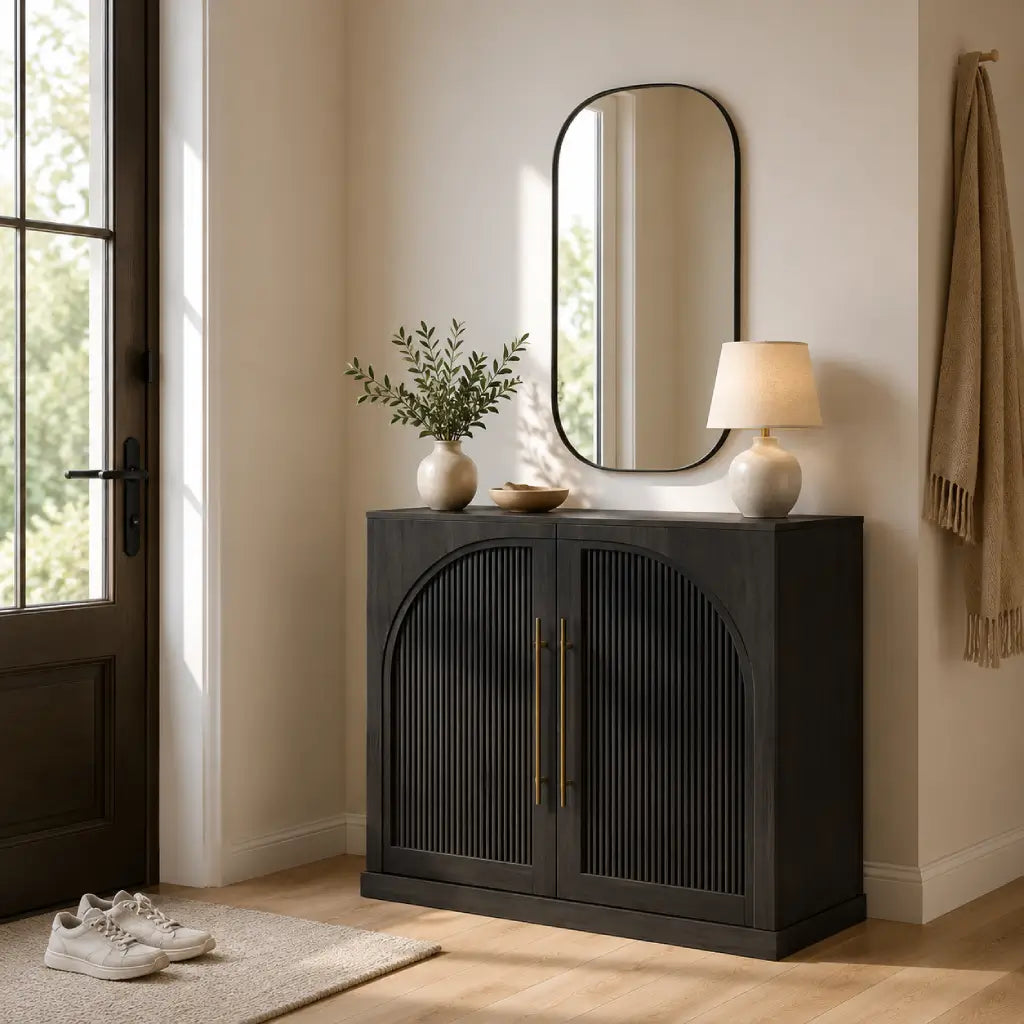
Choose one compact cabinet when the entry has one main clutter problem or the wall sits close to a door swing. Start with Belleze's entryway cabinets, then compare pieces whose depth, door swing, and walking clearance work in your space.
Consider two compact cabinets only when a wide wall can separate categories without crowding the route. A 2-piece modular sideboards setup works best when you need to separate shoes from bags, mail, pet items, or seasonal accessories.
Skip the second cabinet if it forces people to turn sideways, blocks a door swing, or makes an existing bench harder to use. No usable wall beside the door? Move the drop zone to the nearest adjacent wall instead of squeezing furniture into the doorway.


Assign a zone to each item
A cabinet stays useful when each shelf, drawer, and surface has a job. Without that limit, even a good cabinet turns into another place to drop things.
- Top surface: one tray or bowl for keys and mail.
- Drawers: sunglasses, chargers, dog bags, gloves, accessories, and loose mail.
- Adjustable shelves: baskets, hats, scarves, reusable bags, and accessories.
- Lower closed storage: shoes, handbags, umbrellas, returns, and pet supplies.
- Hooks: today's coat, active bag, or guest overflow only.
If you use a dresser with mostly drawers in an entryway, treat it as small-item storage only and verify its depth, finish, drawer clearance, listed weight capacity, and anchoring guidance. For shoes, baskets, bags, and seasonal accessories, a closed-door cabinet or modular sideboard is the cleaner fit for most entries.
Before ordering, check dimensions, listed weight capacity, shelf configuration, assembly details, delivery path, and current return policy. If the listing separates a core material such as engineered wood, MDF, or particle board from a surface finish such as veneer, laminate, or paint, use the core material and care notes to judge load and moisture limits. Use the finish to judge cleaning and visible wear.
Follow the product's assembly and anchoring instructions. Anchor cabinets and sideboards with drawers, doors, or shelves when the instructions require it or when tip-over is possible. Use hardware appropriate for the wall type, keep heavier items low, and be stricter in homes with children, pets, uneven floors, or tall, narrow furniture.

Run a five-minute reset
A quick reset keeps the setup from sliding back into a pile. Empty pockets, sort mail, put shoes back inside, return bags to their zone, clear the top surface, and move off-season items out of the entry.
No-closet entryway FAQs
Where do coats go without an entryway closet?
Keep daily coats on hooks, pegs, a hall tree, a wardrobe, or another hanging solution near the door. Store bulky and off-season coats elsewhere. Solve hanging storage before buying a sideboard or cabinet.
Can hooks organize an entryway by themselves?
Hooks can organize coats, bags, and guest overflow. Add closed storage if shoes, mail, pet items, umbrellas, or returns are landing on the floor.
Keep the entry small on purpose
A no-closet entryway stays clear when you limit what lives there. Keep daily items near the door, move seasonal storage elsewhere, and measure before you shop.
Tape the footprint first, confirm door and drawer clearances, then browse Belleze's entryway modular sideboards when hidden storage is the problem. Use your measurements to rule out pieces that are too deep, too wide, or too hard to open in daily use.

Leave a comment
This site is protected by hCaptcha and the hCaptcha Privacy Policy and Terms of Service apply.