


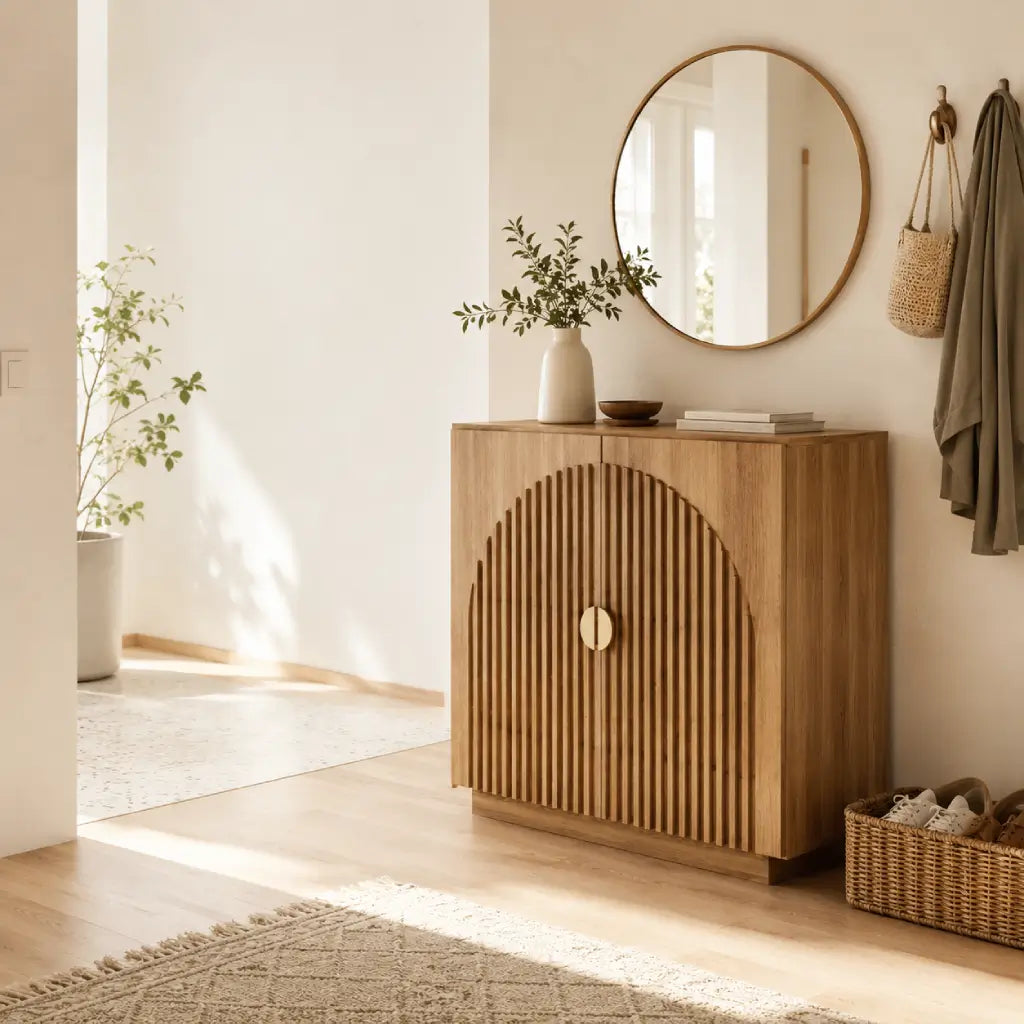
A small entryway has to catch daily clutter without making the doorway harder to use. Shoes, bags, keys, mail, coats, pet gear, packages, and seasonal items all need a place, but the door still has to open and people still need a clear path through.
Start with the shape of the entry and the mess that shows up there every day. Then choose the option that solves the problem with the least floor space.
Start with the entryway problem
Use the table as a shortcut before you shop. Find the problem that looks familiar, then start with the option that takes up the least space.
| Main entryway problem | Start here | Rethink when |
| The hallway is very narrow | Wall hooks, shallow shelf, slim shoe storage | Bags, packages, or pet gear still land on the floor |
| Shoes pile up by the door | Slim shoe cabinet, boot tray, or bench with baskets | Shoes mix with bags, mail, umbrellas, or returns |
| Keys and mail scatter | Tray, wall organizer, or shallow drawer | Small items keep disappearing into baskets or bins |
| There is no formal foyer | Rug, mirror, narrow cabinet, or slim sideboard | The entry looks like overflow in the living room |
| Daily clutter is mixed | Compact closed cabinet or modular sideboard | Bags, backpacks, pet gear, or returns still land on the floor |
6 storage setups that fit tight entryways
For a narrow hallway
Use hooks, a shallow shelf, and slim shoe storage close to the wall when the entry is mostly a pass-through. Skip a bench if people would have to turn sideways to pass it.
If there is no coat closet
Create one place to hang, one place for keys and mail, and one contained zone for shoes or bags. A tray, hooks, and a slim cabinet can beat a hall tree in a shallow entry.
If shoes are the main problem
Start with a boot tray, slim shoe cabinet, or bench with baskets when the pile is mostly shoes. Move to a closed cabinet when bags, mail, or pet gear join the pile.
For backpacks and pet gear
Assign each person a hook, basket, or shelf zone. Closed storage is better for shared items such as umbrellas, returns, dog supplies, and seasonal accessories.
If the door opens into a living room
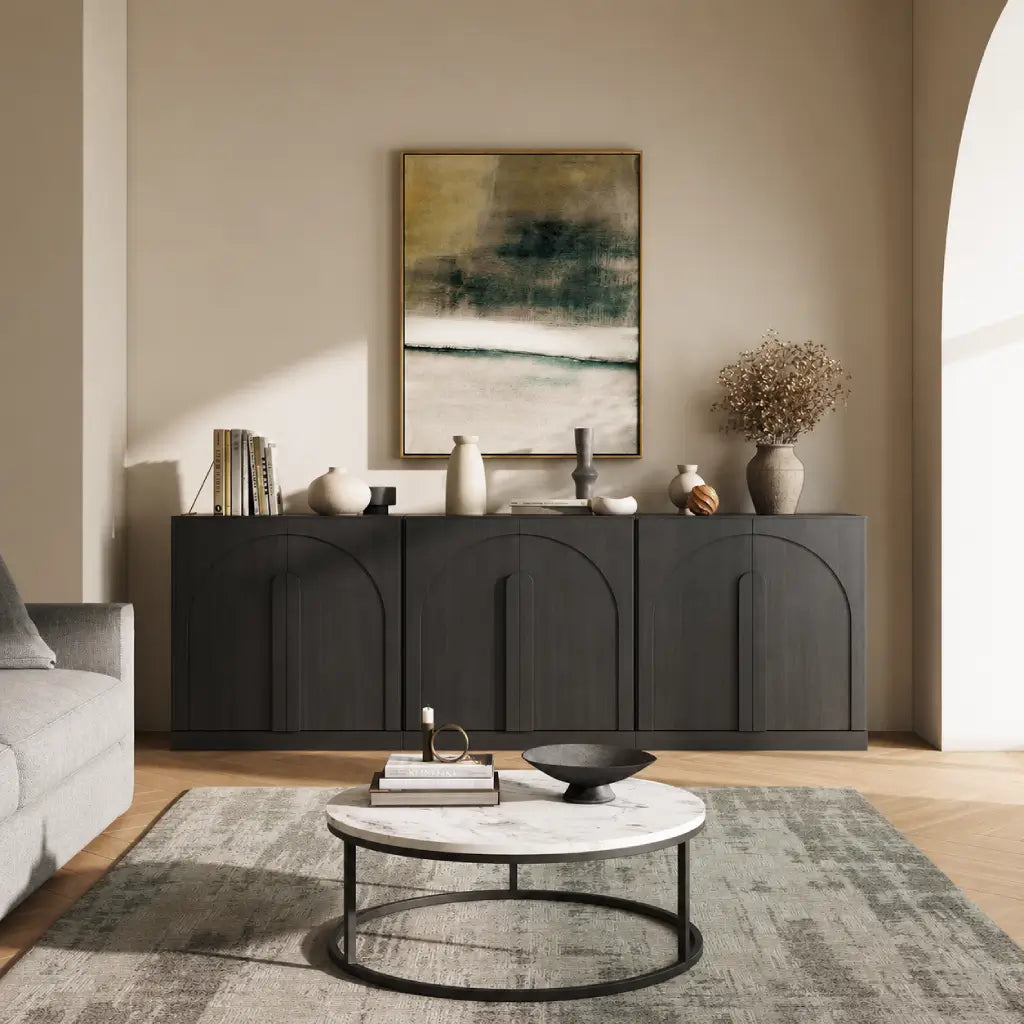
Use a rug, mirror, and one narrow cabinet or slim sideboard. The piece should mark the entry area without turning the living room into storage.
When one cabinet handles mixed clutter
Choose a compact closed cabinet or modular sideboard when the entry holds several categories at once. Doors hide larger clutter, while drawers keep small items from disappearing into baskets.
Check the entryway shape
Check the walking route before choosing furniture. A cabinet that looks compact online can still block the path if the depth, door swing, or drawer pull is ignored.
Look at the shape first: a narrow hallway, a small foyer pad, or a front door that opens into another room. Tape the footprint, open the door, carry a bag through, and test the daily route.
Baseboards, vents, outlets, trim, and wall registers can reduce usable wall space. Check those details before assuming a narrow cabinet or sideboard will fit.
Sort clutter before choosing furniture
Decide which items need to stay visible and which ones should be hidden. Keys and mail need shallow storage. Shoes and bags need contained storage. Keep umbrellas, packages, and seasonal gear from spreading into the walkway.
Several people using one entry need assigned zones. One shared basket turns into one shared pile.
Seasonal gear can stay near the entry, but not in the walkway. Boots, umbrellas, beach bags, gloves, and bulky winter items belong in a cabinet basket or nearby secondary storage.
When to use open or closed storage
Open hooks suit two or three daily grab-and-go items. Move to doors or drawers when shoes, bags, pet gear, returns, and accessories stay visible after you tidy. Choose glass when contents stay neat.
When wall storage is enough
Use wall storage when any floor piece would make the doorway harder to pass. Hooks, peg rails, shallow shelves, mirror shelves, over-door hooks, and slim wall-mounted shoe storage keep the entry usable.
Wall-only storage is enough for keys, light bags, sunglasses, outerwear, and one or two daily pairs of shoes. It is not enough when backpacks, packages, pet gear, and returns hit the floor.
If those items still hit the floor, you are dealing with mixed clutter on a narrow wall. A compact cabinet around the corner may solve more than another row of hooks.
When shoe storage should come first
Start with shoe storage when shoes are the main problem. A boot tray handles wet pairs, a bench with baskets supports quick changes, and a slim shoe cabinet hides daily pairs.
Try the pile test: if the pile is only shoes, start with shoe storage. Shoes plus bags need hooks above contained storage. Shoes plus bags, mail, pet gear, umbrellas, and returns point to closed storage.
A bigger open rack can put more shoes on display.
When a closed cabinet makes more sense
A small cabinet handles the entry better than open shelves when shoes, bags, mail, and pet items are all visible by evening. Mixed clutter needs a door, drawer, or contained basket.

Use solid doors for dry, contained items you do not want to see, such as everyday shoes, bags, umbrellas in a bin, pet supplies, and returns. Use drawers for keys, wallets, gloves, sunglasses, chargers, mail, and dog bags. Use glass doors for baskets, books, decor, or tidy daily items.
Belleze's drawers vs solid doors vs glass doors guide helps match cabinet fronts to clutter type.
If the front door opens into the living room
When the front door opens into the living room, the storage piece also has to make the entry feel intentional. A rug marks the entry zone, while a mirror, art, or hook rail anchors the wall.

A bench can help with shoes, but a compact cabinet or slim sideboard can fit a shared living space better. Measure first if the door swings near the cabinet or the path cuts between seating and storage.
Choose a modular sideboard here when you know what it will hold and the room's main traffic lane stays open.
Measure clearance before you buy
Good small-entryway furniture leaves room to walk and opens without fighting the door. The smallest piece is not better if its doors or drawers need more clearance than you have.
Measure wall width, furniture depth, door swing, drawer pull-out space, and walking path after placement. Aim for 24 to 30 inches clear after the door opens, and 20 to 24 inches in front of drawers or cabinet doors.
For wall-mounted hooks, shelves, or shoe storage, check product weight limits and use hardware recommended for your wall type. In kid- or pet-heavy entries, follow anti-tip and leveling instructions for freestanding cabinets.
Match the measurement to the clutter type. Shoe-only clutter can stay shallow. Mixed clutter needs enclosed depth, baskets, drawers, or adjustable shelves. Belleze's modular sideboard measuring checklist helps before sizing a modular sideboard.
When a modular sideboard is worth it
Consider a compact modular sideboard when hooks, shelves, benches, and shoe racks still leave daily clutter out in the open. It earns the space when it fits the wall, leaves the walkway clear, and hides mixed items better than open storage.
Skip the upgrade for a micro-entry, a two-hook household, a blocked door swing, or shoe-only clutter. Choose a modular sideboard when you need hidden mixed storage that still looks at home in a living room or hallway.
Match the door style to the clutter
Solid doors hide items you do not want to see. Drawers keep small loose items within reach. Glass doors work for baskets, books, decor, and tidy daily items.
Belleze examples after you measure
Use product examples after the space passes the basic checks: wall width, door swing, walking path, and storage need. In kid- or pet-heavy entries, anchor tall or drawer-heavy cabinets as instructed, avoid glass fronts where bags may hit them, and use trays or bins for wet shoes, damp umbrellas, or pet items.
- Solid-door path: The 33" Arched Fluted Doors Modular Sideboard fits dry, contained clutter you want hidden, such as everyday shoes, bags, umbrellas in a bin, pet supplies, and returns. Check current dimensions, shelf details, materials, care instructions, and weight limits.
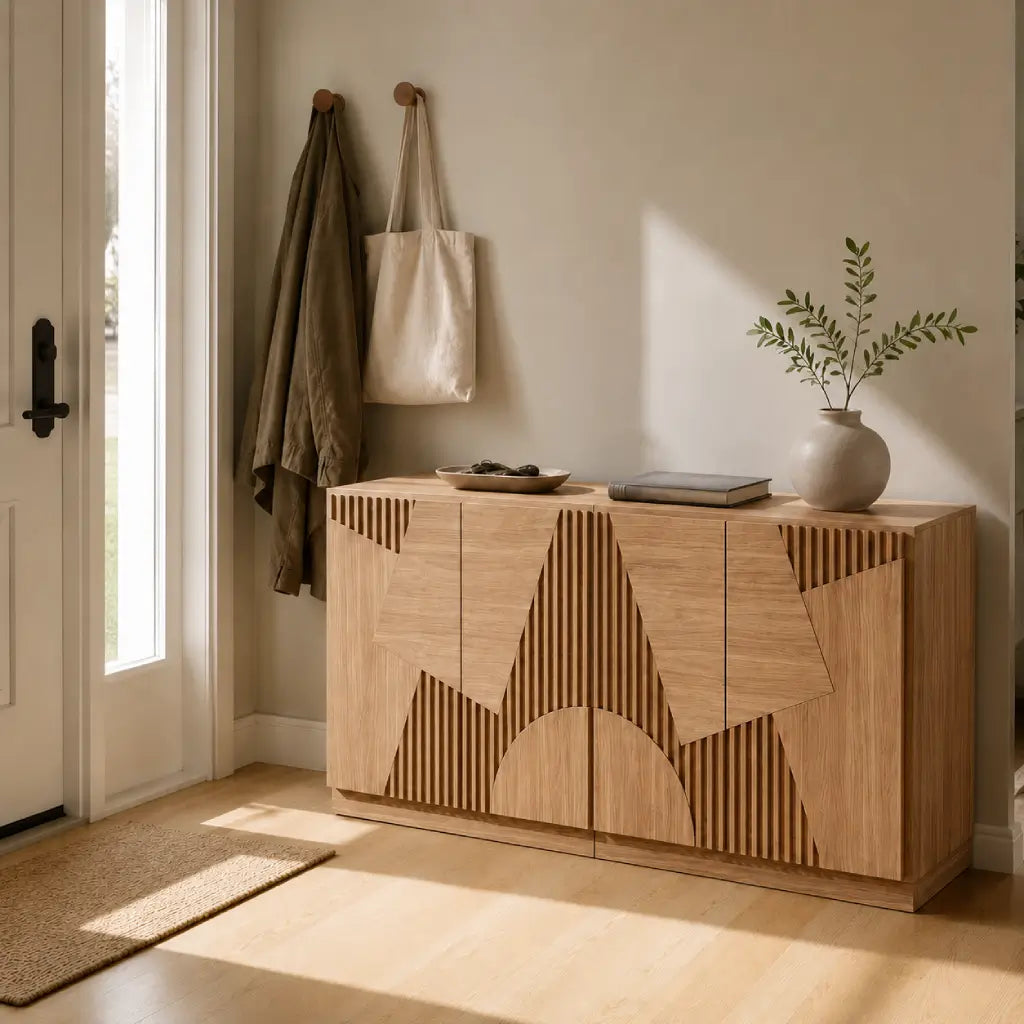
- Drawer path: The Jagger Fluted Modular Sideboard Cabinet with 3 Drawers fits small loose items better than shoe capacity. Keys, mail, wallets, gloves, chargers, sunglasses, and dog bags belong in drawers more than on open shelves. Put shoes there if the product page confirms the size works.
- Glass-door path: The Jagger Arched Glass Door Modular Sideboard works when you are willing to keep the visible contents neat. Choose it for baskets, books, decor, or daily items kept in baskets or arranged on shelves, not for messy shoe piles or items you want fully hidden.
Once the storage path is clear, compare Belleze entryway modular sideboards by cabinet front, drawer layout, and current product dimensions.


Small entryway questions before you buy
What is the best storage for a small entryway with no closet?
Use hooks for fast access, a tray or shelf for small daily items, and contained storage for shoes or bags. A cabinet helps more once shoes, bags, mail, or pet items stay out in the open.
How do you store shoes in a small entryway?
Use a boot tray for wet pairs, slim shoe storage for shoe-only clutter, and closed storage when shoes mix with bags, mail, umbrellas, pet items, or returns.
What entryway furniture works in a tight space?
Choose shallow furniture that leaves at least 24 inches of clear walking path and enough room for doors or drawers to open. Wall-mounted pieces suit tight paths; compact cabinets suit mixed clutter.
Can a sideboard work as entryway storage?
Yes, if the entry keeps at least 24 inches of clear path after the cabinet and door are open, and clutter includes more than shoes. For bags, mail, pet gear, or returns, a compact closed cabinet may work better than a bench or shoe rack.

Leave a comment
This site is protected by hCaptcha and the hCaptcha Privacy Policy and Terms of Service apply.