


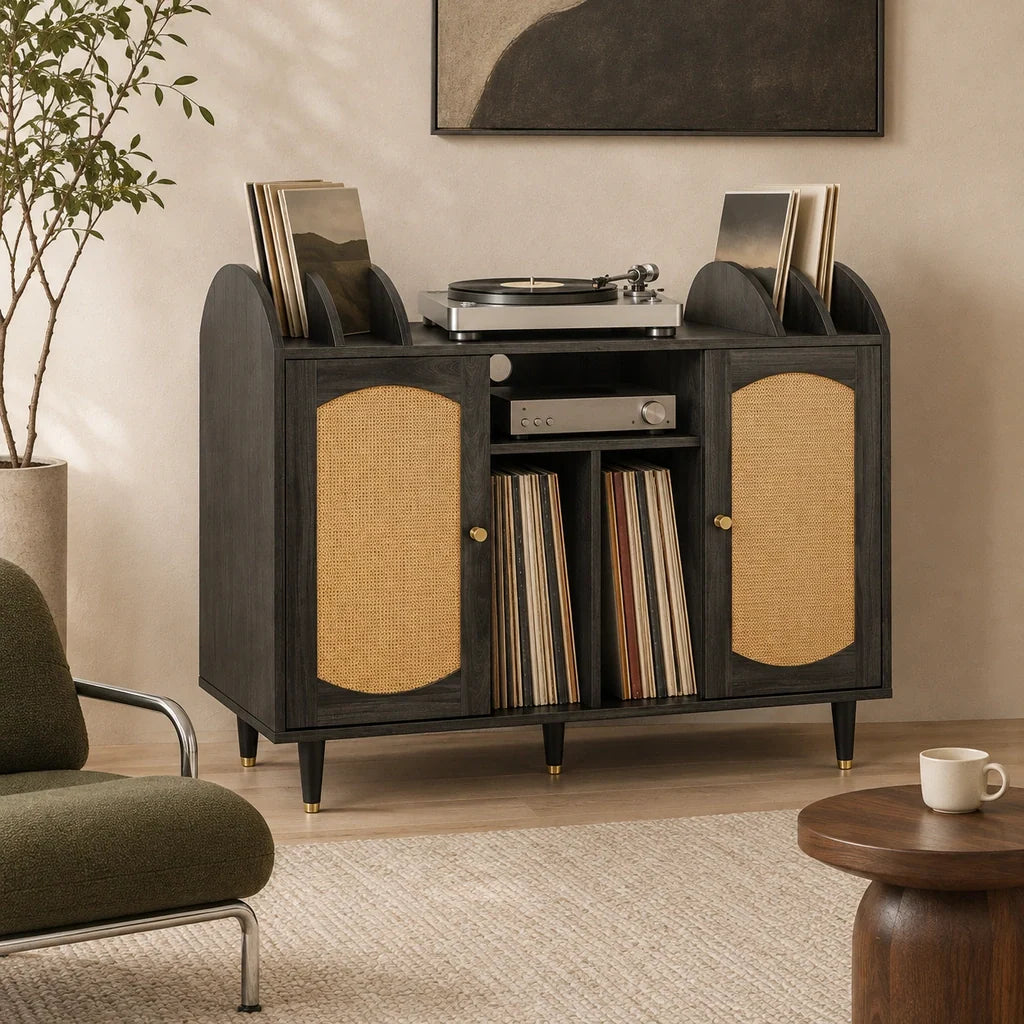
Good vinyl record storage ideas do two jobs at once: they keep your albums standing upright with solid support, and they make the records you play most easy to grab and put away. One piece of furniture does not have to handle everything in the room. Cube shelves work best for a space-saving main collection, a flip-through bin lets you thumb through favorite covers face-forward, a closed sideboard hides records in a shared living room, and a record player stand with storage fits a turntable and your regular rotation into a tight corner. You can line up main storage, everyday browsing, and a spot for displaying cover art along one wall or split them across the room.
Put the Main Collection on Cube Shelves
Once a collection outgrows a single crate, open cube shelving is the most space-efficient way to keep a large stack of records organized and easy to scan. Cube shelves hold records spine-out, standing upright with the narrow title edge facing you like books on a library shelf. Because every spine is in plain view, you can file albums alphabetically or by genre and slide one record out without lifting the ones next to it. Open cubes do leave multicolored spines and plastic outer sleeves visible in the room, and you need vertical dividers between sections so heavy records stay upright instead of slumping at a long angle across a wide shelf.
For affordable vinyl record storage in a small apartment or on a tight budget, compare IKEA Kallax-style cube organizers with sturdy bookshelves, cube units, or secondhand shelving you already have at home. Putting an existing shelf to work is often the cheapest way to store vinyl records, and if you have a larger collection, count the usable compartments and check the floor footprint rather than trusting a seller's claimed LP count. On open-backed cube shelves, set the unit close to the wall so jackets cannot push out the back, and check the shelf weight limit in the manual before packing cubes full of heavy vinyl.
Keep Weekly Favorites in a Flip-Through Bin
Reading narrow spine print is fast when you know the exact album you want, but many people prefer picking music by flipping through front cover art. A front-facing crate, tabletop record holder, or floor browser holds jackets facing forward near the turntable so you can thumb from cover to cover like you would in a record shop. For a starter collection, one tabletop holder or floor crate can hold every album you own without taking up wall space for a bookcase. In a larger setup, some collectors on Reddit's r/vinyl file most of their collection spine-out on shelves and keep a smaller flip-through bin beside the player for new pickups and weekly favorites, which stops played records from piling up beside the turntable.
Because albums lean slightly backward as you flip through them, a front-facing bin takes up more front-to-back depth per record than spine-out shelving and needs open space above the jackets. Leave enough vertical room above the bin to tip a cover forward and lift the record straight out without bumping a low shelf or wall overhang. You can also repurpose a rigid crate or sturdy storage box you already have at home as long as the bottom stays flat under weight, the sides support the full width of a jacket without pinching the corners, and the table or floor underneath can hold the filled box.
Hide Records Behind Doors in a Sideboard
When your listening setup shares a main living room, a sideboard or closed record storage cabinet is a clean, furniture-style alternative to open cube shelves. Rows of mismatched spines and crinkly outer sleeves can make a compact seating area look busy, and open lower shelves leave records within easy reach of pets or curious toddlers. Closing cabinet doors hides the collection in seconds and keeps household dust off the tops of the sleeves.

Hiding your records behind doors does add a step every time you put an album on, since you have to swing or slide a door open, lean down to read spines inside a dimmer cabinet, and keep floor space clear in front so the doors can open past rugs and coffee tables. Daily listeners often set a small tabletop holder on top of the sideboard for a few current favorites so they do not have to open the lower doors for every spin.
Before loading records into an existing cabinet, secondhand buffet, or new sideboard, take a tape measure to its usable internal clearance rather than trusting the outside cabinet dimensions. Usable internal clearance is the unobstructed space inside a compartment after subtracting door hinges, magnetic catches, face frames, center vertical stiles, and recessed back panels. A hinge plate sticking into the opening or a narrow door lip can catch the front edge of a jacket or keep the door from shutting even when the cabinet interior looks deep enough. Measure the clear height, depth, and width against your largest sleeved records, including thicker gatefold jackets that fold open like a book.
Pair Your Turntable and Records on One Stand
A combined record player stand with vinyl storage makes sense when you want your turntable and an everyday stash of records to share one compact footprint, such as an apartment corner or bedroom wall. Keeping the player and daily records in a single piece of furniture puts albums right below the platter and saves floor space compared with setting up a separate audio rack beside a bookcase. Separate furniture is still the better choice if your receiver or turntable base is wider than a compact stand, or if you want your turntable isolated on a surface that never gets bumped while someone flips through lower shelves. Before choosing a combined stand, check four practical details against your gear:
- Compare the usable top surface width and depth against your turntable's base and foot spacing.
- Check the vertical and rear clearance above the platter so the hinged dust cover can swing all the way open while you change records.
- Look at how power cords and audio cables exit the back so plugs do not get pinched against the wall.
- Match the lower compartments and their weight ratings to the records you plan to keep underneath.
If your setup fits a compact footprint, take a look at the 38-inch Rattan Door Record Player Stand, which pairs manufactured wood construction and woven PE rattan doors with a 50 lb weight rating for the top surface and 30 lb per shelf. Compare its listed top and compartment measurements on the product page with your turntable and sleeved album sizes before ordering.
Show Off a Few Favorite Album Covers
A small now-playing stand next to the turntable or a couple of shallow wall ledges lets you show off favorite album covers without turning your whole collection into wall art. Filling an entire wall with individual record mounts eats up wall space while holding fewer albums than a single shelf cube, and reaching high up a wall is inconvenient when you want to play the record. Setting the jacket currently spinning on a tabletop easel beside the player, or resting two or three covers on a wall ledge, puts the artwork at eye level while your main shelves hold the collection within easy reach.
Records left out on a stand or ledge are more exposed to room conditions than albums tucked inside a shelf or cabinet. Library of Congress preservation guidelines recommend keeping records out of direct or intense light and away from heat sources. Set display stands and wall ledges well clear of sunny windows, radiators, heating vents, fireplaces, and warm audio amplifiers, since heat and bright light can warp vinyl and fade printed jackets. Swapping out the covers you display every week is an easy way to refresh the room, though you should still skip any wall that gets hot or sunny during the day, even for a short rotation.

Add More Storage as Your Collection Grows
Whether you pick up a couple of records a month or bring home a box of family albums all at once, add storage in stages based on your floor space and how you listen. Buying a massive wall of shelves too early can crowd walking paths before you ever fill the compartments. Start by checking how tightly your current shelves are packed: albums should stand upright with gentle support from their neighbors so they do not lean, while leaving enough slack to slide one jacket out smoothly. To see how much new shelf space you need, measure the total width of your sleeved records standing upright, compare that number with the usable width of the new compartments, and leave extra slack so albums slide out easily.
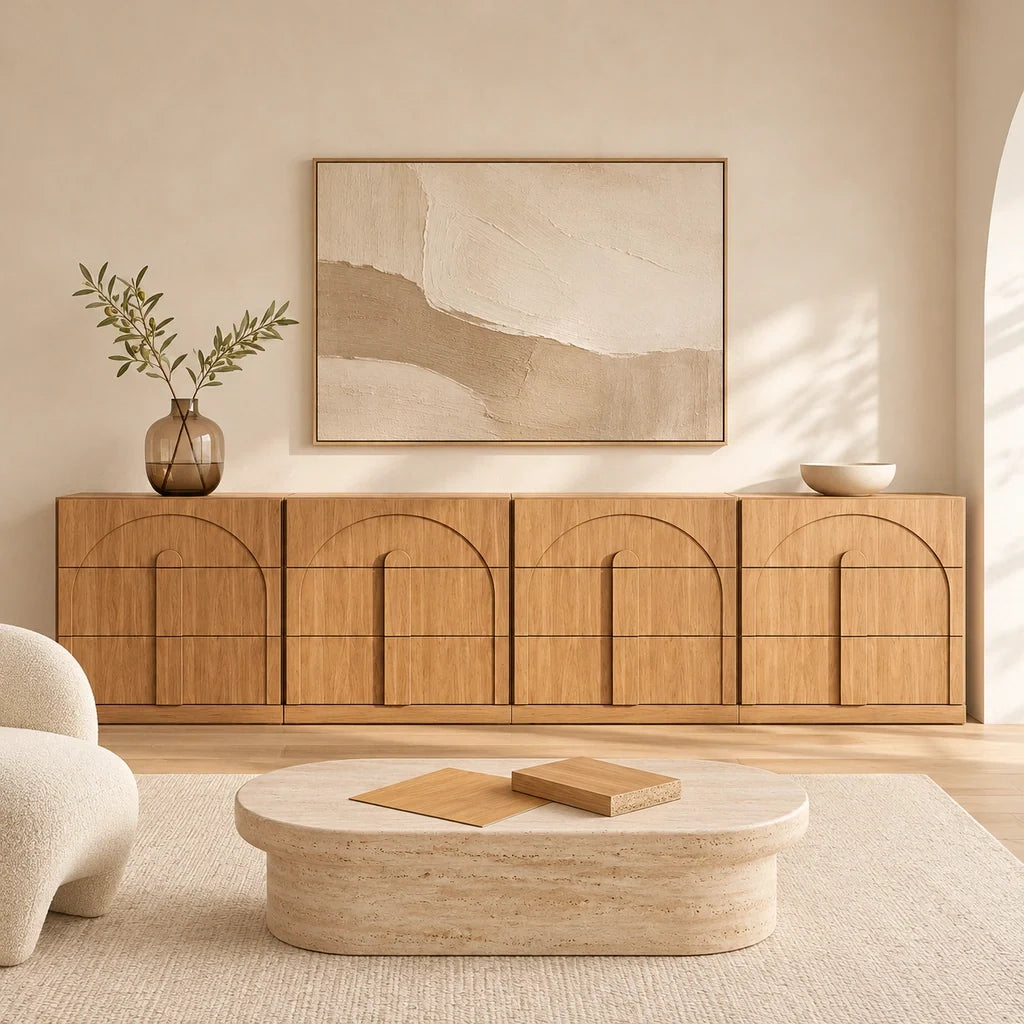
When a shelf starts getting tight in a small room, moving a handful of regular plays into a flip-through bin beside the turntable can free up breathing room right away. If a larger batch of records arrives and you want to keep a shared living room looking unified behind closed doors, browse our living room modular sideboards to compare cabinet styles that can sit side by side. Because compartment layouts vary across sideboard models, check each unit's interior clearance and shelf weight limits before ordering, and buy the pieces your current wall layout needs at the same time if you want matching finishes.
Measure Your Records, Gear, and Room First
Before you buy new storage or load up furniture you already own, run one quick check with a tape measure so nothing catches you off guard on setup day:
- Measure your largest standard 12-inch LPs inside their outer plastic sleeves, along with thicker gatefold jackets and box sets, and leave finger room above and in front of the spines to tilt records out cleanly.
- Measure 7-inch 45 RPM singles separately for dedicated small boxes or shallow divided compartments so partial rows stay upright instead of sliding around on deep LP shelves.
- Map out cabinet door swing, turntable lid clearance, and kneeling room in front of lower shelves so browsing never blocks a doorway or main walking path.
Once you know the records and furniture fit the space, check the weight limits separately from the physical dimensions. Library of Congress care guidelines call for storing records vertically on edge with firm upright support, while the furniture maker's spec sheet sets the maximum weight allowed on each surface. Even when a row of albums fits inside a compartment, a 30 lb shelf rating tells you the limit for that single board rather than how many LPs it holds, and you cannot add individual shelf limits together to guess what the whole cabinet carries. Read our guide on how much weight a bookshelf can hold to see how shelf, top, and total cabinet ratings differ, and follow your model's manual for level placement, assembly, and wall anchoring.

Leave a comment
This site is protected by hCaptcha and the hCaptcha Privacy Policy and Terms of Service apply.