


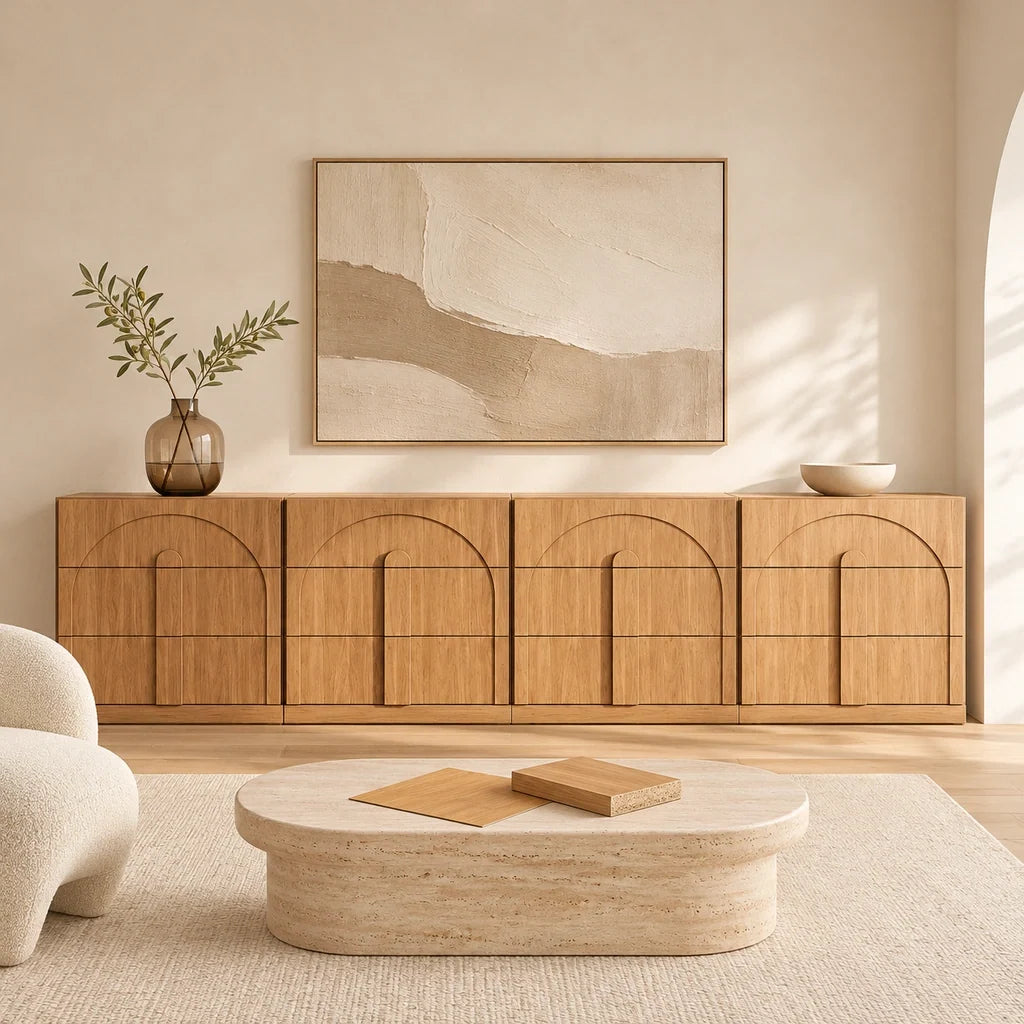
When comparing wood veneer vs. laminate furniture for a sideboard or media cabinet, go with wood veneer if you want real wood grain that can be touched up over time, and go with wood-look laminate if you want an easy-wipe, budget-friendly surface for a busy room. Still, both materials are thin outer skins glued over an engineered core board. How well a cabinet holds up has just as much to do with the clear coat over a veneer, the type of laminate used on the exterior, and how tightly the edges and core are put together.
How do wood veneer and laminate differ?
Veneer and laminate describe only the thin outer skin of a furniture panel, while the structural board underneath is a separate material. Wood veneer is a thin slice of real hardwood bonded to a core panel. Wood-look laminate is a synthetic surface made by pressing resin-treated printed paper onto a core to mimic wood grain without using real wood on the face. Both differ from solid-wood furniture, which uses thick milled lumber all the way through. When you read a cabinet spec sheet, it helps to picture the panel in three separate layers:
- The outer decorative face is what you see and touch: either a thin sheet of real wood veneer or a printed wood-grain paper.
- The protective wear layer shields that surface: veneer uses a sprayed clear coat or oil, while laminate uses cured melamine or phenolic resin pressed into the sheet.
- The core board underneath is the structural panel that holds the screws, hinges, and shelf weight.

Because the surface name only tells you what covers the outside of the cabinet, you still need to know what supports it underneath. To see how the main core boards compare for strength and moisture, read our guide to MDF vs. particle board vs. plywood.
Can you see the difference in your room?
Up close, wood veneer shows one-of-a-kind wood grain, while wood-look laminate shows a consistent printed repeat. Because veneer is sliced from logs, you see natural grain movement, open wood pores, and slight color shifts as daylight hits the cabinet. Modern wood-look laminates press printed decor paper with textured steel plates to mimic those pores and low-sheen wood finishes, so they look far more realistic than older glossy plastic laminates.
That visual difference stands out when you line up two sideboards side by side along a wide wall or mix a new cabinet with existing wood furniture. Veneer brings natural variation from door to door, and higher-end veneered pieces often use matched wood sheets so adjacent doors flow together. Printed laminate keeps the color and grain pattern uniform across neighboring cabinets, so two or three modular units line up cleanly along a media wall. If you put veneer and laminate furniture in the same room, compare their sheen and undertone first, as a flat printed grain next to deep natural wood pores is much easier to spot when two pieces sit side by side.
When shopping online, zoom in on product photos of the top panel, door fronts, and corners before checking the written specs. If you see the exact same knot or grain wave stamped across multiple doors, you are looking at printed laminate; if the grain shifts naturally across panels, it is often veneer, though matched veneer sheets and 3D studio renders make the written spec table the only sure way to confirm.

Which surface holds up better in daily use?
For busy sideboard and media cabinet tops, wood-look laminate is usually the easier everyday surface to live with, especially in homes with kids, pets, or frequent guests. Think about how a cabinet actually gets used: keys, serving dishes, trays, and cold drink glasses slide across the horizontal top every day, while the vertical doors below are touched mostly at the handles. Laminate's cured resin surface shrugs off everyday cup rings, fingerprints, and quick wipe-downs without special cleaners, whereas wood veneer suits buyers who want real wood on a statement piece and don't mind using coasters and placemats on the top.
Where the two materials differ most is how they take damage. Wood veneer is more sensitive to surface scratches, dents from dropped objects, and heat or water rings, though technical finishing guides note that a heavy-duty factory lacquer protects high-use tops far better than a light oil or decorative finish. Laminate resists surface scratches and stains well, but its weak spot is the edges and corners: a hard blow on a corner can chip or crack the resin face, and standing water that creeps into an unsealed seam or edge band can swell the core board underneath on either material.
Day-to-day cleaning is simple on both surfaces if you avoid a few common mistakes. Commercial furniture care guides from brands like HON recommend wiping spills right away in the direction of the grain, setting hot dishes or electronics on protective pads, and skipping abrasive scouring pads or wax- and silicone-based polishes that leave a cloudy buildup over time.
Can you repair or refinish the surface later?
If a surface does get scratched or worn over the years, a real-wood veneer face can often be touched up and sometimes lightly refinished, whereas a wood-look laminate surface cannot be sanded or re-stained like wood. Because veneer is real wood, minor surface scratches in the clear coat can be blended in, and a thicker veneer skin may allow a careful light refinishing if the panel is in good shape. Still, veneer is thin, so stripping or sanding too hard will cut right through the wood layer and expose the core board underneath.
Wood-look laminate cannot be stripped or re-stained because its grain pattern is printed paper cured in resin rather than porous wood. Wood stain will not soak into a resin face, and chemical strippers can melt or ruin the surface. You can see this hesitation in furniture-restoration forum posts where an owner stops before starting a project just to ask whether a cabinet is veneer or laminate, because treating a printed laminate face like raw wood ruins the piece. If laminate chips or scratches, your realistic fixes are filling small nicks with a color-matched touch-up marker or asking the seller if a replacement door or panel is available.
What to look for on the product page
Because you cannot change what a cabinet is made of after it arrives, it pays to check the exact surface and core on the product page before you order. Online listings often compress material specs into a single broad phrase, and even a "laminate" label rarely tells you how that surface was made. As the Composite Panel Association explains, high-pressure laminate (HPL) is pressed first as a thick, standalone multi-layer resin sheet and then glued to a core board for heavy-duty tops, while thermally fused laminate (TFL) fuses resin-treated decor paper directly onto the core under heat and pressure for a cost-effective cabinet finish. To see what a cabinet is actually made of, check four details on the page:
- Look for part-by-part surface wording that names what covers the top panel, sides, and doors separately, since some cabinets use a tougher surface on the top than on the doors.
- Check for a separate core description that names the structural board underneath, such as MDF, particle board, or plywood, apart from the outer skin.
- Read the finish and care notes to see whether a veneer has a sealed topcoat or what cleaning and heat limits apply to the exterior.
- Compare the spec table with the written product description, since one section often includes surface details the other leaves out.
Be careful not to confuse color names or broad construction categories with the outer surface. Words like oak, walnut, or espresso in a color selector usually describe the shade rather than real wood veneer. Broad spec labels also need a closer look across the page: on the listing for the Layers 33" Fluted Sideboard Cabinet, the Specs table lists the material broadly as "Manufactured Wood," while the written Description specifies a "smooth, easy-to-wipe laminate surface." Reading both sections together tells you the cabinet pairs a laminate exterior with an engineered wood core; if you also want to know whether that laminate is HPL or TFL or which panels use it, ask the seller before ordering.
When is wood veneer worth the extra money?
Once you know what each cabinet on your shortlist is actually made of, it is much easier to judge the price tag. Wood veneer furniture typically costs more than comparable wood-look laminate because you are paying for real sliced hardwood and multi-step finishing. Paying that extra markup makes sense when a cabinet sits in a focal spot, such as a dining room buffet or living room credenza, where you want natural wood grain and the product page explicitly confirms a real wood veneer surface. If a higher-priced cabinet only lists vague terms like "wood finish" or "engineered wood" without confirming real veneer, skip the markup; a well-built wood-look laminate cabinet on your shortlist will give you easier daily cleanup and better value for your money.
When you are ready to narrow down your choices, use our sideboard buying guide to check overall cabinet dimensions, shelf capacity, and walkway clearance. To compare individual cabinet designs side by side, browse our modular sideboards collection, narrow your options by width and door style, and check each product's Description and Specs to confirm the surface and core materials before you buy.

Leave a comment
This site is protected by hCaptcha and the hCaptcha Privacy Policy and Terms of Service apply.