


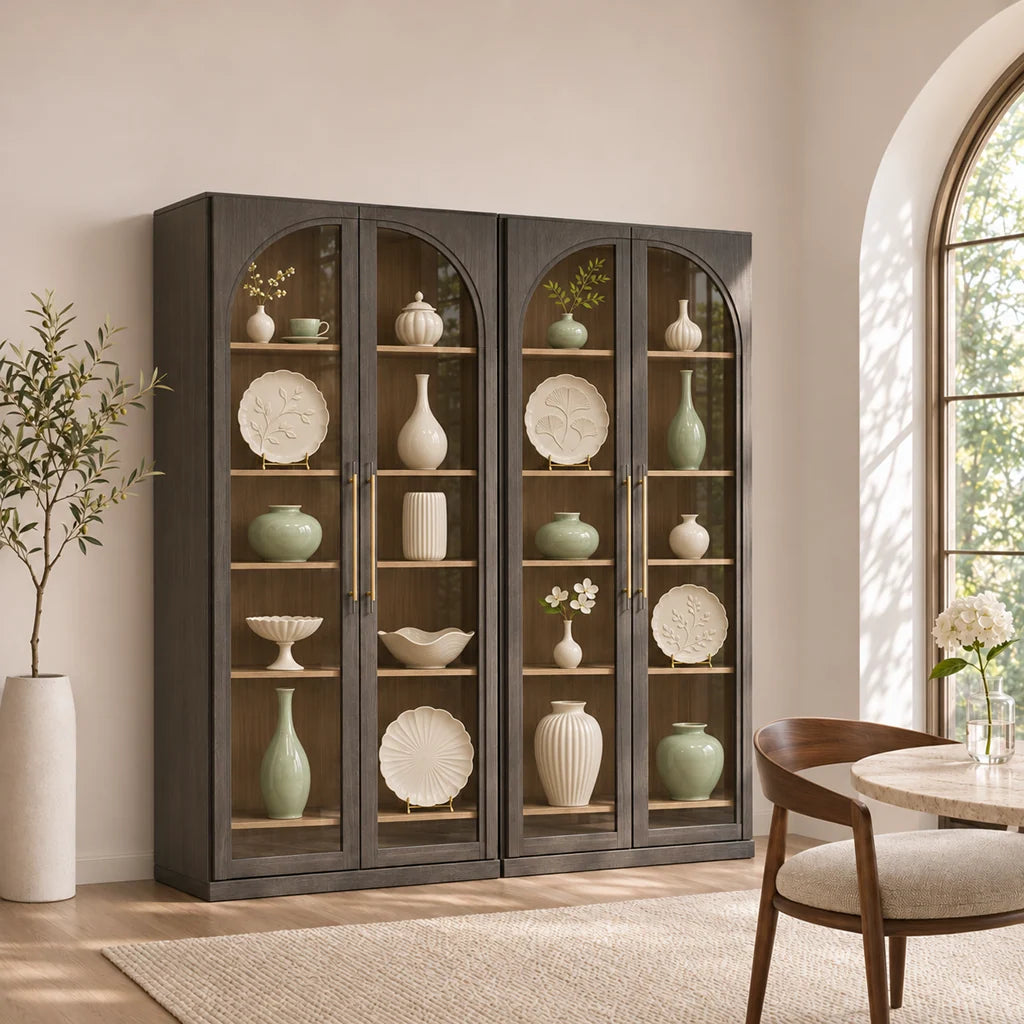
When you are figuring out how to display china in a cabinet, work from the back of the shelf to the front: stand your patterned plates upright against the back wall, set shorter cups, bowls, and serving pieces in front so they do not hide the artwork, keep everyday dishes within easy reach, and close the doors to check that the frame does not cut across your favorite designs. Instead of emptying the entire hutch at once, set up and test one shelf first so you can get the spacing right before arranging the rest of the cabinet.
Pick Your Best Pieces and Check the Shelves
A china cabinet quickly looks crowded when you pack it like a kitchen pantry. Spread your china out on a clear table and sort it into three groups: the pieces with the strongest patterns that deserve to be seen, the bowls or mugs you use every week, and extra duplicate place settings that can stay in closed storage. Once you box up the extra duplicates, your best platters, dinner plates, and teapots have the open background space they need to stand out, and routine dusting takes half the time.
Before you start loading, check the usable space inside the cabinet, make sure the shelf pins or brackets sit level and firm, and confirm the cabinet is anchored to the wall and rated for the weight of your china. Look over older heirloom pieces for hairline cracks or yellowed glue from past repairs, and carry each dish with two hands around the main body or base instead of lifting it by a delicate cup handle, teapot spout, or lid knob.
Stand Your Best Plates Upright in Back
Plates stacked flat on a shelf only show their thin side rims, so the clearest way to make patterns visible from across the room is to stand dinner plates, chargers, or platters upright along the back wall. Leave a little open wall space between upright plates so the rims do not touch. You can center one large platter between two dinner plates or line up an even row of plates behind each glass pane. To keep an upright plate from sliding forward if the cabinet gets bumped, match the support to your shelf surface:
- A plate groove cut near the back edge of a wood shelf catches the bottom rim so a leaning plate stays in place.
- A retaining rail mounted slightly above the shelf surface blocks the lower edge of upright dishes.
- A freestanding stand cradles both the bottom rim and the back of the plate, which is what you need on flat glass shelves or smooth wood shelves without a groove.
Test one plate inside its stand on the shelf before setting up the whole row. A plate's bare diameter and a cabinet's outside measurements will not tell you whether an upright display fits, because a stand lifts the top rim higher and takes up more front-to-back depth as the plate tilts back, while door frames and hinges narrow the interior space. Make sure all the feet on the stand sit flat on the shelf with room to spare behind the glass. If you are shopping for a tall cabinet for upright dinnerware, check the Jagger 67-inch Tall Glass Display Cabinet and compare its shelf clearances against your plates and stands.
Layer Cups, Bowls, and Teapots in Front
Once your upright back row is in place, arrange shorter pieces in front so they step down in height and leave the center and upper border of the back plates in plain view. Rest teacups inside the well of their saucers instead of stacking cups into wobbly towers, and set low bowls, gravy boats, teapots, and crystal glasses toward the front or outer sides where they frame the background plates. For a wedding or heirloom place-setting display, stand the dinner plate at the back, set the salad plate slightly forward and to one side on its own stand, and group a cup and saucer in front with a crystal glass beside it. One complete place setting per glass pane looks much cleaner than squeezing a full table service onto a single shelf.

Leave enough finger room around handles, spouts, and lids so you can lift a teapot or cup straight out without grazing the piece next to it or hitting the shelf above. Keep the bowls, mugs, or dessert plates you use every week near the front of a middle shelf at waist or chest height so you can grab them without moving decorative plates first. When you stack everyday bowls or small plates in the front row, stack only as many as nest steadily on their foot rings without hiding the back row, and never lean one dish against another to prop it up. Keep extra place settings in closed storage; if you are deciding where to put those backup dishes, our guide on choosing a glass door, solid door, or drawer sideboard breaks down which cabinet front works best for extra dinnerware.
Close the Doors and Check the View
A shelf that looks balanced with the doors wide open can get cut in half by wood frames or glass glare as soon as you shut the cabinet. Close the doors slowly the first time to be sure no platter rim, teapot spout, or stand foot rubs against the glass or latches. Step back to where you normally stand and sit in the dining room, check the view in both daylight and evening lighting, and turn on any built-in cabinet lights with the doors shut. If a center door stile, wood mullion, or shadow cuts across your main patterns, slide those pieces left or right so each group sits centered behind a clear glass pane.
Open the doors again and reach in for one of your everyday cups or bowls to confirm it lifts out cleanly. Once that first shelf looks right and is easy to reach into, use the same back-to-front setup on the other shelves without copying the exact same arrangement on every level:
- Put lighter, smaller pieces like extra teacups, creamers, and compotes on the top shelves so the upper cabinet feels open and you are not lifting heavy dishes overhead.
- Keep your favorite patterned plates, heirloom place settings, and best teapots on the eye-level shelves where the designs are easiest to see.
- Place heavier platters, soup tureens, and large serving bowls on the lower shelves to anchor the cabinet visually and keep heavy lifting near waist height.
Make Mixed or Incomplete Sets Look Connected
Family china and collected dinnerware rarely come in even numbers, and you do not need complete matching place settings to make a cabinet look pulled together. Tie different patterns together on the same shelf by repeating one detail they already share, such as a cobalt or floral accent color, a gold or platinum rim, or a similar coupe or scalloped edge. When two patterns clash in color or scale, give each set its own shelf or its own glass-pane column so the contrast looks deliberate.
Single pieces that carry family history, such as an heirloom tureen, a lone patterned platter, or a grandmother's teapot, make natural focal points even when the rest of the set is gone. You can stand one platter at the back with a low bowl and a teacup beside it, leaving open space around the group so it feels relaxed. That kind of balanced grouping works just as well as matching pairs, so there is no need to force symmetry or buy extra filler dishes. If you have inherited more than one set or like changing your display for the holidays, keep the same back-to-front layout and swap out a few focal pieces by season while keeping the rest stored away.

Work With a Narrow or Corner Cabinet
Narrow curio cabinets and corner cabinets fit neatly into smaller dining rooms or empty corners as long as the doors can swing open without blocking a walkway. Because these cabinets have shallower shelves and tighter doorways than a full hutch, skip the two-layer setup on shallow shelves and stick to a single row of upright plates or low serving pieces.
In a five-sided or curved-front corner cabinet, use the deep center of the shelf for an upright plate or teapot and place smaller cups or crystal glasses along the shallower side angles. Before you load a wide platter, check that both the dish and its stand pass cleanly through the hinged doorway and sit flat on the shelf. For a five-sided corner layout, look at the Lorona 5-Sided Lighted Corner Curio Cabinet and compare its listed interior dimensions with your largest plate stands.
Try this setup on a single shelf first with the china and stands you already have at home, and adjust the angles until the patterns show clearly with the doors shut. If your current shelves are too shallow for upright stands or you need more room for the rest of your set, browse our display cabinets to compare shelf clearances, corner footprints, door styles, and lighting.

Leave a comment
This site is protected by hCaptcha and the hCaptcha Privacy Policy and Terms of Service apply.