


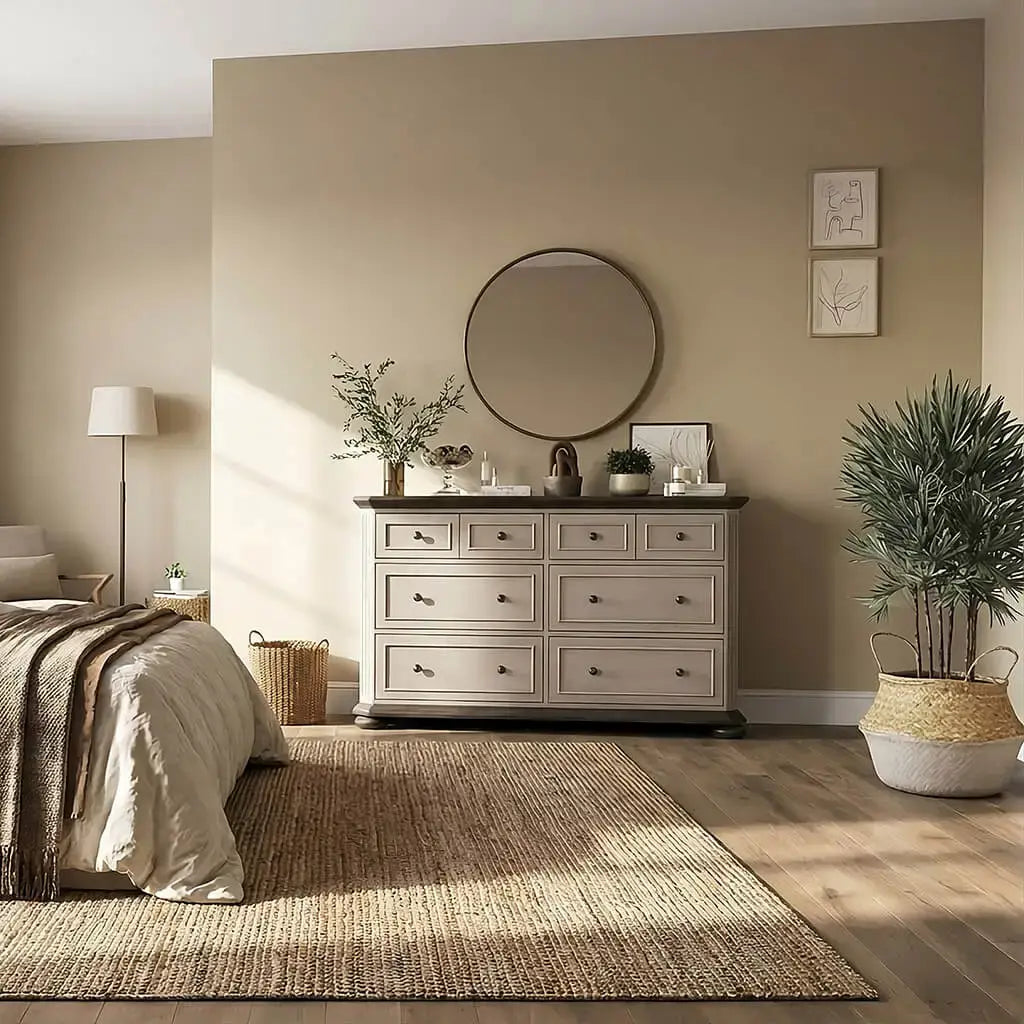
A small bedroom doesn't leave much room for error. Place your dresser in the wrong spot, and you'll bump into it every time you walk by.
The right location gives you easy access to your clothes while keeping pathways clear. You want a setup that feels open—not cramped. Finding that balance between storage, movement, and visual breathing room can make a tight space feel much more livable.
Factors to Consider Before Placing a Dresser
Your room has its own layout quirks—door swings, window positions, tight corners. Understanding these details helps you find a spot where the dresser fits naturally and works for daily use.
Room Dimensions
Measure your walkways first. A clearance of 24 to 36 inches gives you enough space to move around comfortably without brushing past furniture. Pull out the drawers and see how far they extend. If they bump into your bed frame, that spot won't work.
If you're unsure how much clearance drawers need when fully open, our guide on dresser dimensions breaks down proper spacing and how to measure a dresser correctly. Door swings and window placements also affect your options, so factor those in before committing to a location.
Dresser Type
The dresser's shape influences where it can go.
- Low, wide dressers tuck nicely under windows or along shorter walls.
- Tall, narrow units make better use of vertical space in tight corners.
- Shallow-depth models (around 16 inches) work well when floor space is limited.
- Multi-functional pieces: a dresser that doubles as a nightstand or TV stand, reduces the need for extra furniture.
Functionality
Consider what you'll store and how often you need access. Items you reach for daily should sit at a comfortable height—no awkward bending or stretching.
In a small bedroom, your dresser can pull double duty. Position it beside the bed as a nightstand, or use the top surface for a small TV. One piece serving two purposes opens up floor space.
Aesthetics
Scale plays a big role in how spacious your room feels. An oversized dresser can overwhelm a small space visually.
Aligning the dresser height with your windowsill or mattress creates a balanced look. Keeping sightlines clear, so you can see across the room easily, helps the space feel open rather than cramped.
Inside the Closet
Moving a dresser into the closet can free up valuable floor space in a small bedroom. It also consolidates your clothing storage, keeping everything in one place and reducing visual clutter in the main room.
A few practical considerations will help you make this work:
- Closet depth: The dresser needs to sit far enough back that drawers can extend fully without hitting the door frame.
- Doorframe clearance: Measure both the dresser and the opening to confirm it fits through.
- Vertical space: Positioning the dresser beneath the hanging rod makes use of otherwise wasted height.
Long garments like dresses or coats should be shifted to one side so they don't drape over the dresser. If your closet doors swing inward and block access, removing them—or replacing them with a curtain—can make daily use much easier.

Next to the Bed
A dresser beside the bed can serve double duty as a nightstand. This cuts down on furniture and frees up floor space for other needs.
What to check:
- Height: The top should sit level with or slightly above the mattress for easy reach.
- Depth: Avoid models that stick too far into your walking path. They can be easy to bump into at night.
If both sides of the bed have space, two smaller dressers can create a balanced, symmetrical look. Style the top with bedside essentials, but try not to let clutter pile up.
Tall chests tend to feel imposing right next to the bed. A lower profile blends more naturally into a small room.

Opposite the Bed
Placing your dresser on the wall facing the bed creates a natural focal point—a layout often seen in hotel rooms. It anchors the space and gives you a clear sightline from the bed.
This position also works well for mounting a mirror or TV above the dresser. You get both function and a clean, balanced look.
A few details to check:
- Clearance: Leave 2 to 3 feet between the dresser and the foot of the bed.
- Drawer reach: Pull out the drawers to make sure they don't bump into the bed frame.
- Dresser depth: In narrow rooms, a shallow dresser helps preserve floor space.
This setup fits best along a wide, unobstructed wall. If the space feels tight or the wall has awkward angles, another placement option may suit your room better.

Under the Window
The area beneath a window often sits empty. Placing a dresser there turns that unused space into functional storage while keeping the room filled with natural light and maintaining open sightlines.
A few details to check before committing to this spot:
- Sill height: Measure where your windowsill falls. The dresser should sit just below it for a clean, intentional look.
- Vents and radiators: Avoid blocking heating or cooling sources—proper airflow keeps the room comfortable.
- Window treatments: Make sure blinds or curtains can still open and close without catching on the dresser.
This placement is especially useful in rooms where longer walls are already occupied by the bed or closet. The dresser top also becomes a natural display area for plants, a lamp, or small items that benefit from sunlight.
Most dressers block light or feel awkward under a window, but a lower piece fits more naturally. The Belleze Jagger 3-Drawer Dresser stands at 31.9", making it an easy option for adding storage under a window without dimming the room.

In a Corner
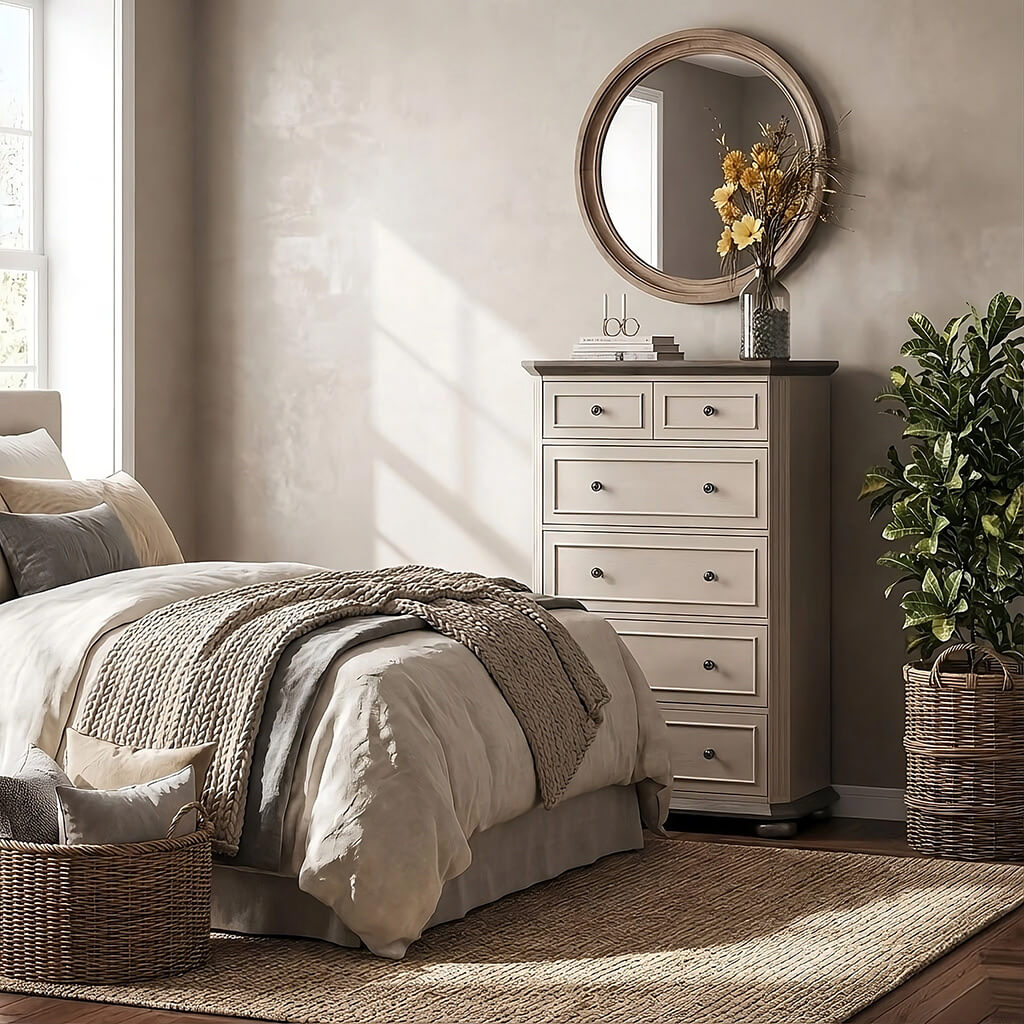
Corners can feel like wasted space, but they're often ideal for tall, narrow dressers. These vertical pieces take advantage of height instead of floor area, a smart trade-off in a small bedroom.
This setup works well in rooms where walls are interrupted by doors or windows. A few things to consider:
- Stability: Anchor tall furniture to the wall, especially in homes with children or pets.
- Drawer access: Reaching into drawers may feel slightly less convenient than with a centered wall placement.
- Shelving above: Adding corner shelves expands storage without using more floor space.
- Door clearance: Position the dresser far enough from the entry so it doesn't block the door swing or make the entrance feel cramped.
Corners need tall, narrow storage that doesn’t crowd the room. The Belleze Rustic 5-Drawer Chest uses a slim footprint to add real storage without taking up floor space.

Against a Wall
Placing a dresser flat against a wall is a reliable choice that suits most room layouts. It keeps the center of the room open, allowing you to move around freely.
Look for a wall that won't interrupt how you naturally walk through the space. Avoid blocking outlets, light switches, or the swing of the bedroom door.
A few ways to make this setup work even better:
- Add a mirror: Hanging one above the dresser increases visual depth and makes the room feel more spacious.
- Match the dresser to your space: Both low, wide models and tall, narrow ones work well along a wall—choose based on the height and width you have available.
- Keep balance in mind: Clustering too much furniture on one side of the room can throw off the layout. Spread pieces out to maintain a sense of openness.

Final Thoughts
Finding the right dresser placement comes down to your room's layout, dimensions, and how you use the space daily. Taking time to measure helps prevent crowding and keeps movement through the room easy.
Painter's tape can be a useful tool here—laying it on the floor lets you visualize the dresser's footprint before lifting anything heavy.
A little thought upfront goes a long way. Even compact bedrooms can feel spacious and organized with the right arrangement.
If you need a dresser that fits tight layouts without crowding the room, explore Belleze dressers designed for small-space use.
Related Reading:

Leave a comment
This site is protected by hCaptcha and the hCaptcha Privacy Policy and Terms of Service apply.