


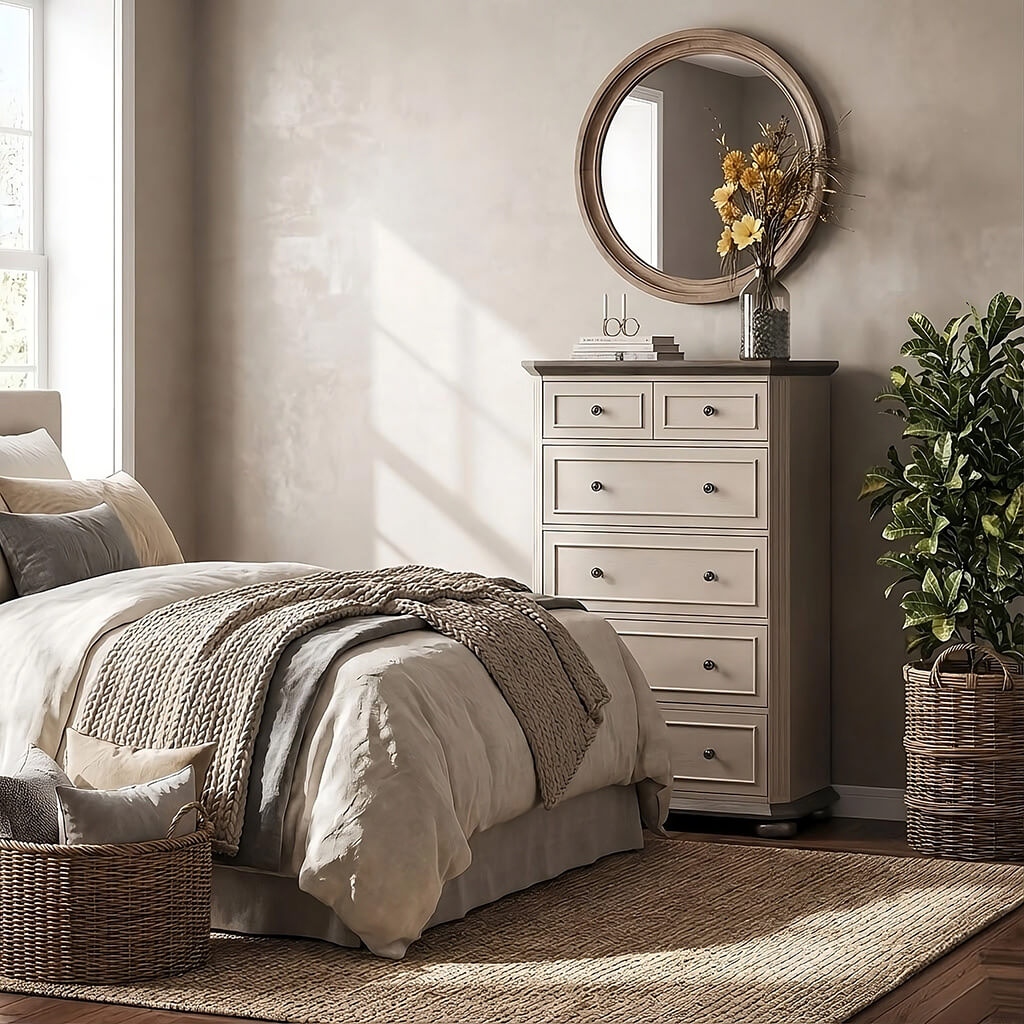
In a small bedroom, floor space is precious. A bulky dresser that juts into the walkway makes the room feel cramped before you even finish arranging your furniture. Deep drawers don’t just take up inches on the floor—they add a lot of visual weight too.
The goal is to choose storage that works with your layout, not against it. The right dresser should boost capacity and keep clutter contained while leaving the room easy to move through, instead of dominating the layout.
Choose the Right Dresser for a Small Room
The right dresser supports easy movement and keeps the room visually balanced. A piece that fits the scale of your space blends in naturally, while the wrong size can make everything feel heavier and more cramped.
Vertical, Slim Profiles
Tall, narrow dressers take advantage of height instead of floor area. You gain drawer capacity without spreading the piece across more of the room.
Their slim build also fits spaces where a standard dresser simply wouldn't work—tight corners, short wall sections, or that narrow gap beside a closet. By filling vertical zones that often go unused, they leave more open floor space for your bed, walking paths, and maybe a small accent chair.
Shallow-Depth Designs
Dressers with a depth of 14–18 inches project less into the room. That shorter reach keeps pathways clear and the space easier to navigate. This kind of dresser size and clearance planning is what keeps small layouts from feeling crowded.
Shallower drawers can open fully without hitting the bed frame or blocking a door swing, a practical detail in tight layouts. The reduced bulk also creates lighter visual lines, helping the dresser feel like part of the room rather than the thing crowding it.
If you need a dresser that won’t block walkways, a shallow design works best. The Jagger Fluted 3-Drawer Dresser stays under 16" deep, making it easier to fit into tight rooms.

Multi-Functional Dressers
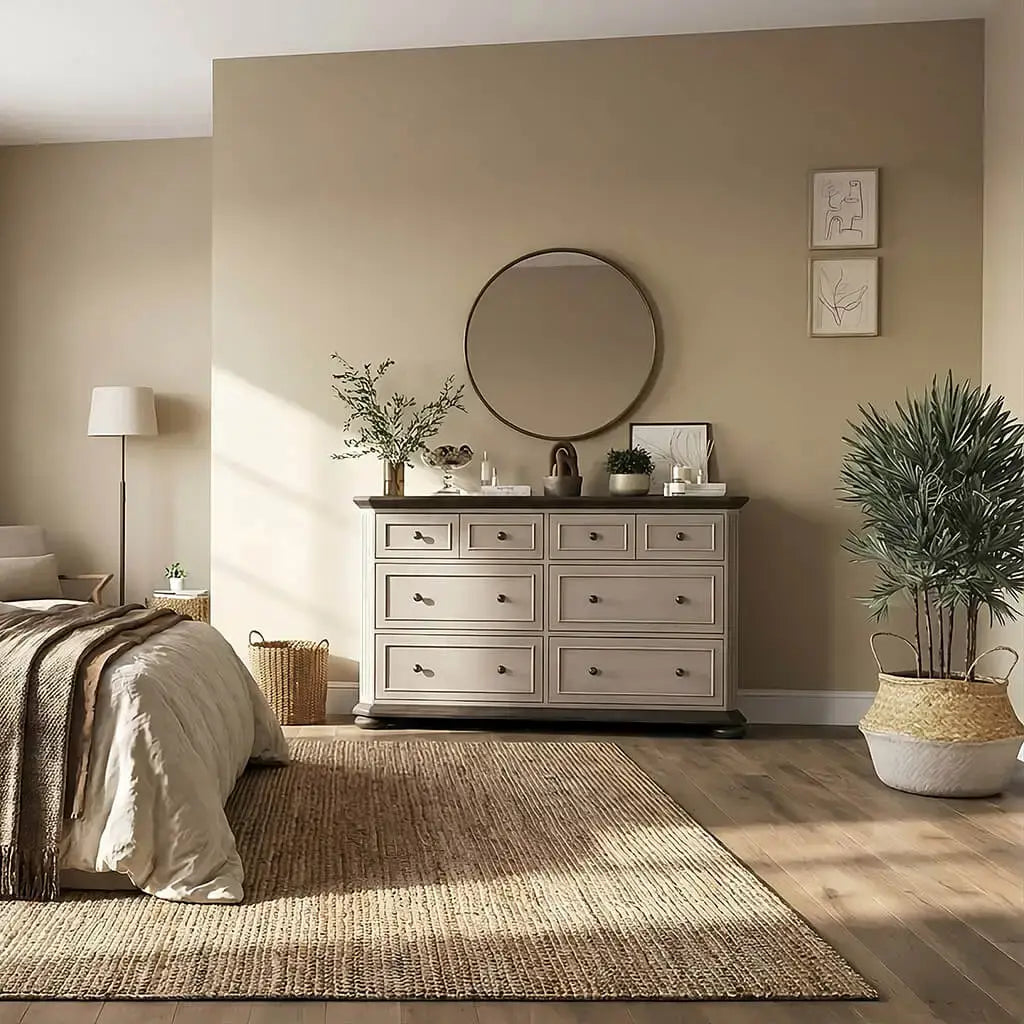
A dresser that doubles as a nightstand, media console, or vanity cuts down on separate pieces. One unit can handle several daily tasks, freeing wall space for movement or decor. With fewer items, the room looks cleaner and is simpler to maintain.
Smart Placement Ideas for Small Bedrooms
Where you position a dresser shapes the entire room. Placement affects how traffic flows, how light travels, and how spacious things feel. The right spot allows your dresser to do its job without crowding the layout.
Inside the Closet
A low dresser beneath hanging clothes puts empty closet floor space to work. Your bedroom stays more open as a result.
Tucking it inside the closet reduces visual clutter. Clothing storage is concentrated into one zone, streamlining your morning routine.
This arrangement also separates everyday basics from seasonal pieces. Grab what you need daily while keeping bulkier items out of the way.
As a Nightstand Replacement
A small dresser beside the bed offers more storage than a standard nightstand. You gain drawer space without claiming extra floor area.
This setup proves useful in rooms where door swings or wall angles limit furniture to one side of the bed.
Daily essentials stay within arm's reach, simplifying routines and eliminating the need for another storage piece elsewhere.

At the Foot of the Bed
A low dresser fits naturally at the bed's end, filling space that often goes unused in elongated or narrow rooms.
This position creates a subtle division between sleeping and dressing areas. It also keeps the main walkways along the sides clear.
Utilizing Awkward Corners
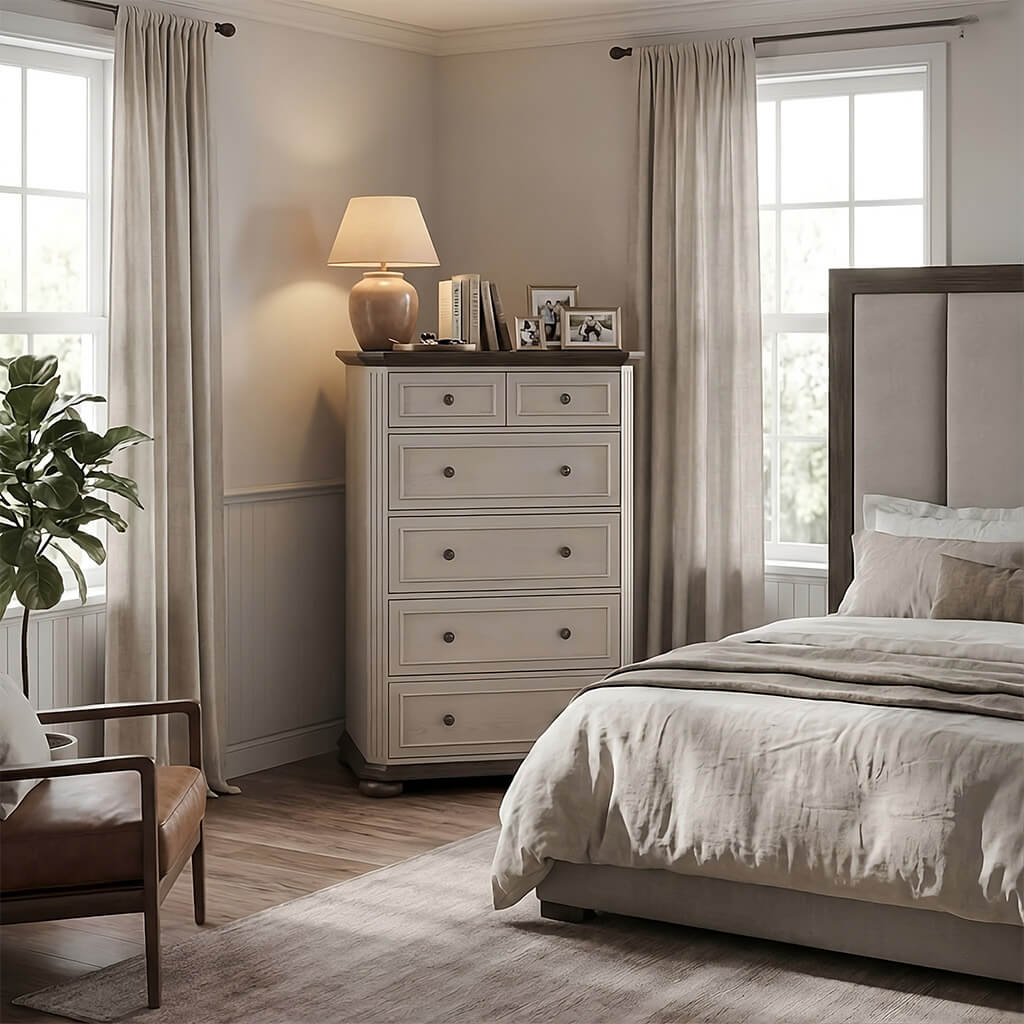
Corners too narrow for wide furniture can still accommodate a tall, slim dresser. Dead space becomes functional storage.
Angling it slightly softens the room's geometry and eases that cramped feeling in tighter spots. Claiming corners strategically frees your longest walls for larger pieces like beds or desks.

If the corner is especially tight, a tall option like the Belleze New Port 5-Drawer Tall Chest works well. It uses height instead of width, filling that narrow spot without making the room feel tighter.
Maximize Storage on the Outside of Your Dresser
A dresser in a small bedroom can do more than hold clothes. It can anchor a compact storage zone that builds upward and outward, all without expanding its footprint.
Floating Shelves Above
Floating shelves create vertical storage for baskets, accessories, and lightweight items. Drawer space stays reserved for clothing that actually needs it.
Items stored above the dresser won't pile up on the surface. The dresser maintains a cleaner, more intentional appearance as a result. This technique takes advantage of unused wall height without adding bulk to your room.

Hooks or Rails on the Side
Hooks or slim rails on the dresser side offer a discreet spot for bags, scarves, or next-day outfits. Frequently reached items stay accessible without cluttering the room or cramming drawers full. Because they're mounted on the side, they stay mostly out of sight. Your space feels tidier overall.
Create a Functional Top
Trays or small organizers group loose items, so the surface stays purposeful rather than chaotic. A mirror or lamp can transform the dresser into a mini vanity or landing zone, removing the need for extra furniture. A tidy, intentional top streamlines daily routines and keeps clutter from migrating to other surfaces.
Organize Inside the Drawers for Maximum Capacity
Drawer interiors often waste the most space in a dresser. The right structure and habits can help a dresser hold far more than you might expect.
Dividers and Bins
Drawer dividers keep categories like socks, undergarments, and accessories in their own sections. Items stay organized and easy to find each morning.
Bins prevent smaller things from shifting around during daily use. Over time, they help maintain a clear system that doesn't fall apart.
Structured sections encourage consistency and make the entire dresser work more efficiently.

File-Folding Techniques
File-folding positions clothing upright so every piece stays visible at a glance. You'll spend less time rummaging, and drawers stay neater longer.
This method stacks garments vertically rather than in flat piles. More items fit into a single drawer without compression or wrinkling.
Seeing everything at once increases the likelihood you'll actually wear more of your wardrobe.
Logical Drawer Layout
Small, frequently used items belong in the top drawer. Essentials stay within easy reach without bending.
Middle drawers suit daily clothing like shirts or loungewear, offering the quickest access where your hands naturally go.
Bottom drawers work best for bulkier pieces—jeans, sweaters, or seasonal wear. These don't need to be grabbed as often, so the extra reach makes sense.
Use Space Under and Around the Bed to Support the Dresser
Supporting storage areas reduces how much your dresser needs to hold. This takes pressure off your drawers and makes the entire system easier to maintain.
Under-Bed Storage
Rolling bins or vacuum bags beneath the bed move out-of-season or bulky items away from dresser drawers.
Space opens up for clothing you reach for weekly. The dresser becomes more functional as a result.
In small rooms, under-bed storage proves especially useful because it claims space that would otherwise sit empty.
Benches or Ottomans
Storage benches or ottomans near the bed provide a hidden spot for blankets, linens, or overflow clothing.
These pieces double as seating, adding function without demanding extra wall space. Their closed design keeps stored items out of sight and helps the bedroom maintain a calmer, uncluttered feel.

Consider Dresser Alternatives if Space Is Extremely Limited
Some bedrooms simply cannot accommodate a dresser. The right alternative can provide equal or better storage while maintaining room flow.
Armoires or Wardrobes
Full-height armoires offer both hanging and folded storage, eliminating the need for a deep dresser. Their vertical structure works well in rooms with limited floor space but generous ceiling height. Adjustable shelves inside allow them to adapt as your storage needs change over time.

Open Closet or Garment Racks
These options remove the bulk of traditional furniture while keeping clothing accessible—ideal for very small rooms.
Because storage stays visible, tidiness becomes easier to maintain day to day. Minimalist frames also help the space feel lighter and less crowded.
Shelving Units with Bins
Lightweight shelves paired with fabric bins create flexible organizing zones that can fit almost anywhere.
They're simple to rearrange, making them practical for renters or evolving layouts. Bins conceal clutter while open shelves keep everyday essentials within reach.
Keep Your Storage System Running Smoothly
A dresser performs best when supported by simple habits. These routines prevent clutter from building up and keep the system working over time.
Seasonal Rotation
Moving seasonal clothes out of the dresser ensures drawers stay reserved for what you actually wear.
This prevents overstuffing and makes daily dressing easier. It also gives you a natural moment to reassess what still fits your life each season.
Weekly Mini Reset
A quick weekly tidy—refolding shifted items or clearing the top surface—keeps disorder from spreading through the room.
Regular resets maintain function without requiring a full reorganization. In a small space, this routine helps preserve the visual calm you've worked to create.
One-In-One-Out Rule
Bringing in new clothing while letting go of an old piece keeps your dresser from exceeding its capacity.
This approach prevents drawer overcrowding and encourages a more intentional wardrobe. Over time, it supports lasting organization by keeping volume steady.
Quick Action Plan
A tall, narrow dresser suits small bedrooms well. Position it where the flow stays clear—inside a closet, in a corner, or at the foot of your bed.
Dividers and file-folding maximize drawer capacity. Walls, dresser sides, and the top surface expand storage without extra furniture. Under-bed bins or storage benches handle overflow.
Simple habits like seasonal rotation and weekly resets keep the system working long-term.
If you want a dresser that handles storage without crowding your layout, take a look at our Belleze dressers.
Related Articles:

Leave a comment
This site is protected by hCaptcha and the hCaptcha Privacy Policy and Terms of Service apply.