


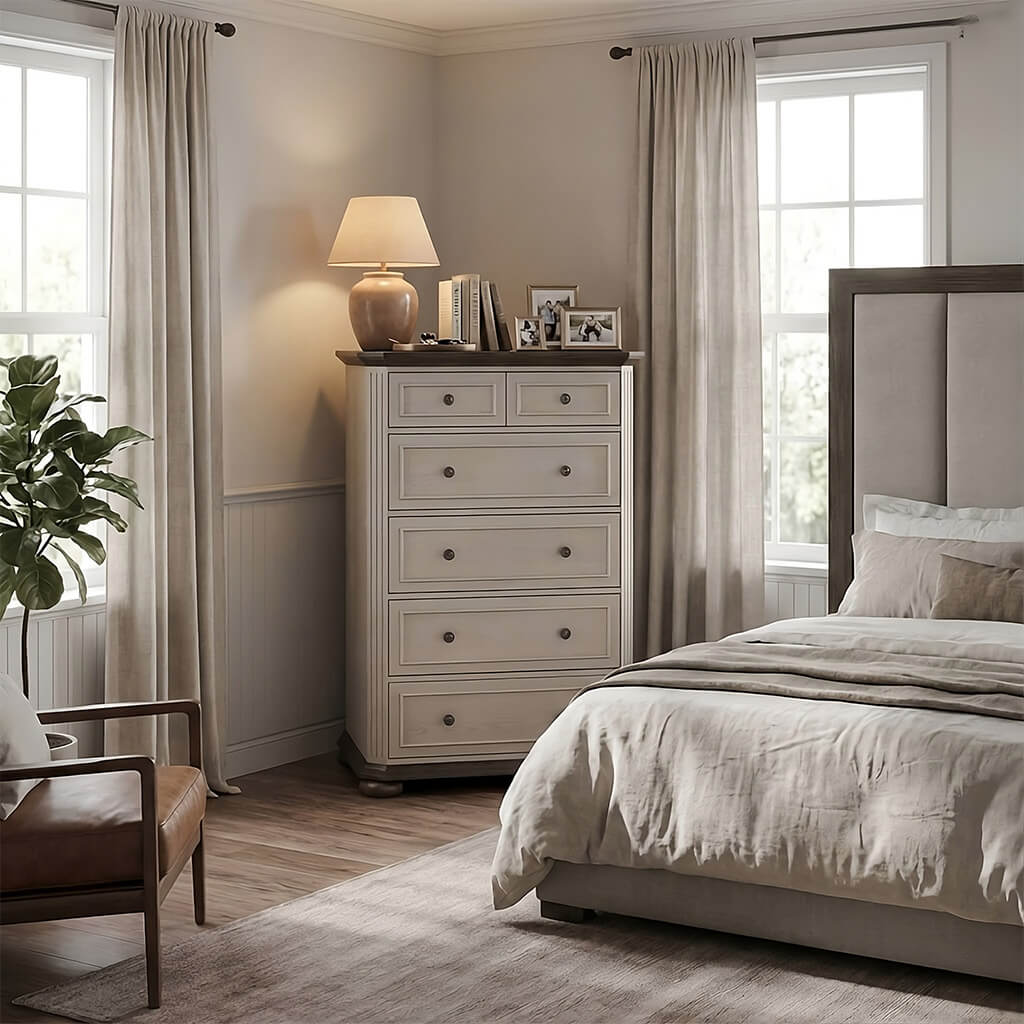
Dresser drawers tend to fall into disorder over time. Items shift with each use, categories blend together, and without a consistent system, clutter builds up quickly.
A clear organizing method makes a real difference. You'll see exactly what you own, maximize space in each drawer, and maintain order with minimal upkeep.
This guide covers practical steps that work for any bedroom. Whether your storage is limited or your space is small, these approaches help you get more from your dresser.
Declutter Before You Organize
Drawers stay organized only when they hold the right amount of clothing. Overfilled drawers tend to collapse into disorder because items shift and bunch up with daily use.
Editing your wardrobe first saves you time and effort. By removing the excess upfront, every step that follows becomes simpler to complete and easier to maintain long-term.
Remove What You Don't Need
Pull everything out and sort into three piles: keep, donate, and relocate. This gives you a clear view of what you actually own.
Look for duplicates, ill-fitting pieces, and items you consistently pass over. If something hasn't been worn in months, it's taking up space that could serve you better.
Match Items to Drawer Capacity
Keep only what fits comfortably without cramming. Forcing drawers to close is a sign that there's too much inside, and the contents will quickly become disorganized again.
Bulky sweaters and seasonal clothing can move to under-bed bins or closet shelves. This frees up drawer space for items you reach for regularly.

Sort Clothes by Category
Sorting provides structure and prevents different types of clothing from mixing again. It also helps you see how much space each group needs inside your drawers.
Organize clothing into clear categories:
- Socks
- Underwear
- T-shirts
- Loungewear
- Activewear
- Pajamas
Separate everyday essentials from occasional or seasonal pieces to keep frequently used items within easy reach.
Smaller categories like socks and underwear often benefit from containers or dividers. Larger groups, like t-shirts, can maintain order through the folding technique alone, giving you flexibility in how you arrange each drawer.
Use a Folding Method That Fits Your Drawers
How you fold determines how much fits inside and whether you can see everything at once. The right technique varies depending on clothing type and drawer depth.
Consistent folding also keeps stacks from collapsing. A reliable method reduces the daily frustration of rummaging through messy piles.

File-Folding
File-folding works especially well for t-shirts, leggings, kids' clothes, and loungewear. Fold items into neat rectangles and arrange them upright, similar to files in a cabinet. This approach keeps all pieces visible and easy to grab without disrupting the rest of the drawer.
Rolling
Rolling is ideal for gym wear, sleepwear, and small, flexible garments. It maximizes space and keeps lightweight fabrics from shifting or spreading.
Flat-Folding
Flat-folding suits denim, sweaters, and bulky knitwear. Lying these items flat helps preserve their shape and prevents stretching over time.
Add Dividers and Bins to Create Structure
Most drawers lose their order because items slide freely with each use. Dividers provide the boundaries that make any system last. Bins play a similar role, particularly in deep drawers. They prevent clothing from tumbling forward every time you reach inside.
Here are options to consider based on your storage needs:
- Adjustable dividers contain socks, underwear, accessories, and other small items.
- Shallow trays organize chaotic categories like tech accessories or delicate garments.
- Soft bins group larger items in deep drawers, keeping everything in place.
Containers create predictable zones within each drawer. Once items have a designated home, the system maintains itself with minimal effort on your part.

Assign Each Category to the Most Functional Drawer
Drawer position affects how quickly you can get dressed and how smoothly your routine flows. The right placement reduces bending, saves time, and keeps daily essentials within comfortable reach.
A practical layout tends to follow this pattern:
- Top drawer: Small daily items like underwear, socks, and accessories. These pieces get used constantly, so placing them at chest or eye level makes sense.
- Middle drawer: T-shirts, loungewear, and pajamas. High-frequency items benefit from a mid-height position that feels natural to access.
- Bottom drawer: Jeans, sweaters, and seasonal clothing. Heavier pieces belong lower, where their weight sits naturally and won't strain the dresser over time.
Avoid mixing too many categories in a single drawer. Keeping groups separate preserves clarity and helps you locate items quickly.
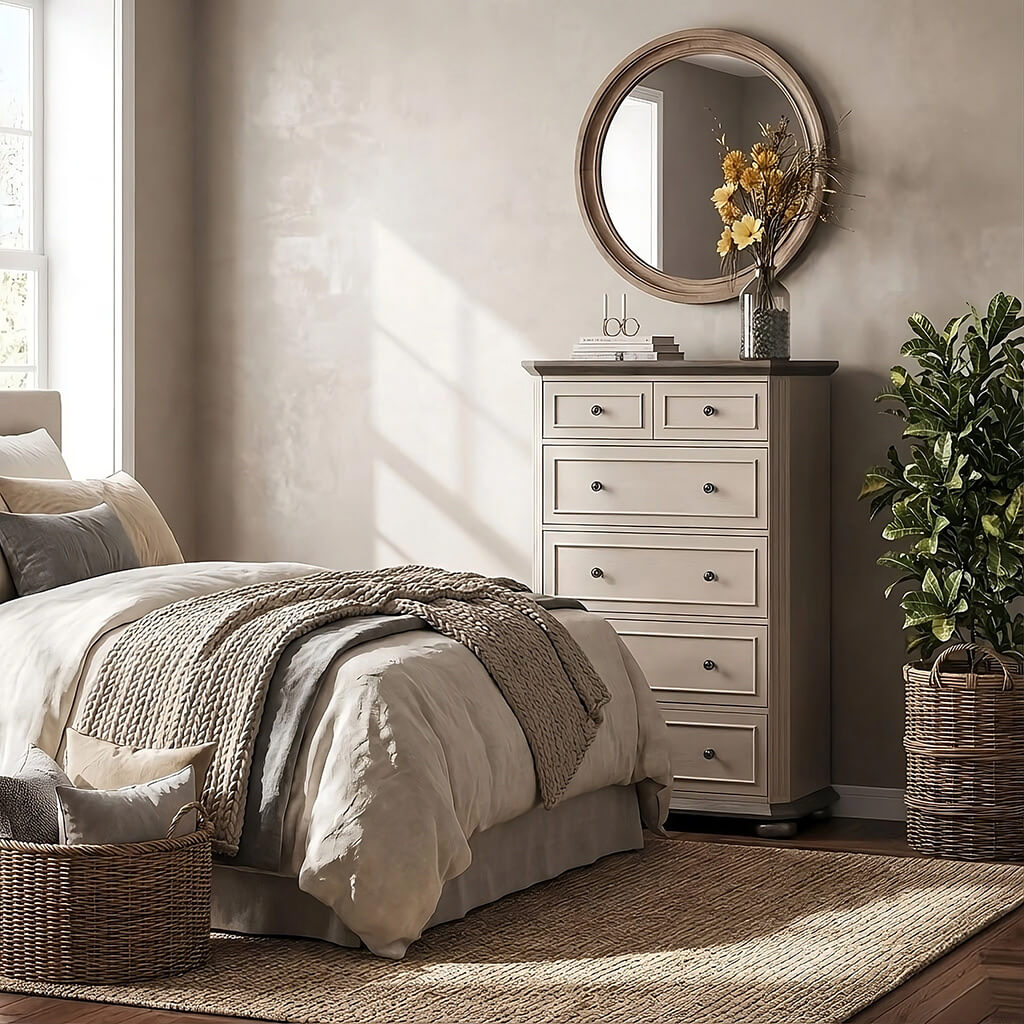
If your dresser lacks the depth or number of drawers to support this system, a vertical model like the Belleze New Port 5-Drawer Chest can make organization significantly easier.
Use Drawer Depth to Your Advantage
Not all drawers suit every item type. Matching depth to clothing prevents overcrowding and allows you to make the most of available space.
Shallow drawers work best for underwear, t-shirts, kids' clothing, and file-folding systems. Items remain visible and accessible without piling too high.
Deep drawers accommodate sweaters, loungewear, and denim well, though they typically require bins or dividers. Without structure, contents tend to collapse and mix together.
For dressers with mixed depths, assign small and lightweight items to the upper drawers. Reserve the deeper bottom drawers for bulkier clothing that benefits from the extra room.
Build a Simple Layout You Can Maintain
A system only works if you can repeat it easily after a laundry day. Overcomplicating your setup leads to frustration, and most people abandon methods that take too long to restore.
Follow a predictable layout pattern. Top drawers hold small items, middle drawers store daily wear, and bottom drawers fit bulky or seasonal pieces. Once this structure becomes familiar, putting clothes away feels automatic.
Leaving 10–20% of each drawer empty gives you flexibility. That extra space prevents constant overflow when freshly washed clothes need a home.
Stick to one folding method per drawer. Mixing techniques disrupts visual order and makes the system harder to maintain over time.
Use Supporting Storage Around the Dresser
Extra storage around your dresser reduces how much the drawers themselves need to hold. This approach helps small bedrooms function more efficiently and keeps individual drawers from becoming overcrowded.
Here are a few additions to consider:
- Bins beside or behind the dresser can catch overflow items or accessories that don't fit inside.
- Hooks, peg rails, or small shelves provide homes for lightweight pieces like scarves, hats, or bags.
- The dresser top, when used intentionally with a tray or two, can contain daily-use items like jewelry or wallets.
These small changes take pressure off your drawers and give everything a designated spot.
Maintain the System
Long-term success comes from simple habits rather than perfection. Regular mini-resets prevent drawers from gradually sliding back into disorder.
A few routines can keep things running smoothly:
- Weekly quick reset: Two minutes spent refolding shifted items or regrouping misplaced pieces makes a noticeable difference.
- Seasonal rotation: Moving heavy sweaters or off-season clothing to under-bed storage frees up drawer space for what you actually wear.
- One-in-one-out rule: Adding a new piece means removing something you no longer reach for. This keeps clothing volume stable and prevents gradual overload.
These habits require minimal time but help your system hold up week after week.
Quick Action Plan
Start by decluttering, so drawers aren't overloaded from the beginning. Sort clothing by category and stick to one folding method per drawer for consistency.
Dividers help maintain clear sections and prevent items from drifting together over time. Place daily essentials up top; reserve lower drawers for bulkier pieces.
If your current dresser doesn't support a straightforward system, browsing modern dressers designed for better storage can help you find one that fits your space.
Related Reading:

Leave a comment
This site is protected by hCaptcha and the hCaptcha Privacy Policy and Terms of Service apply.