


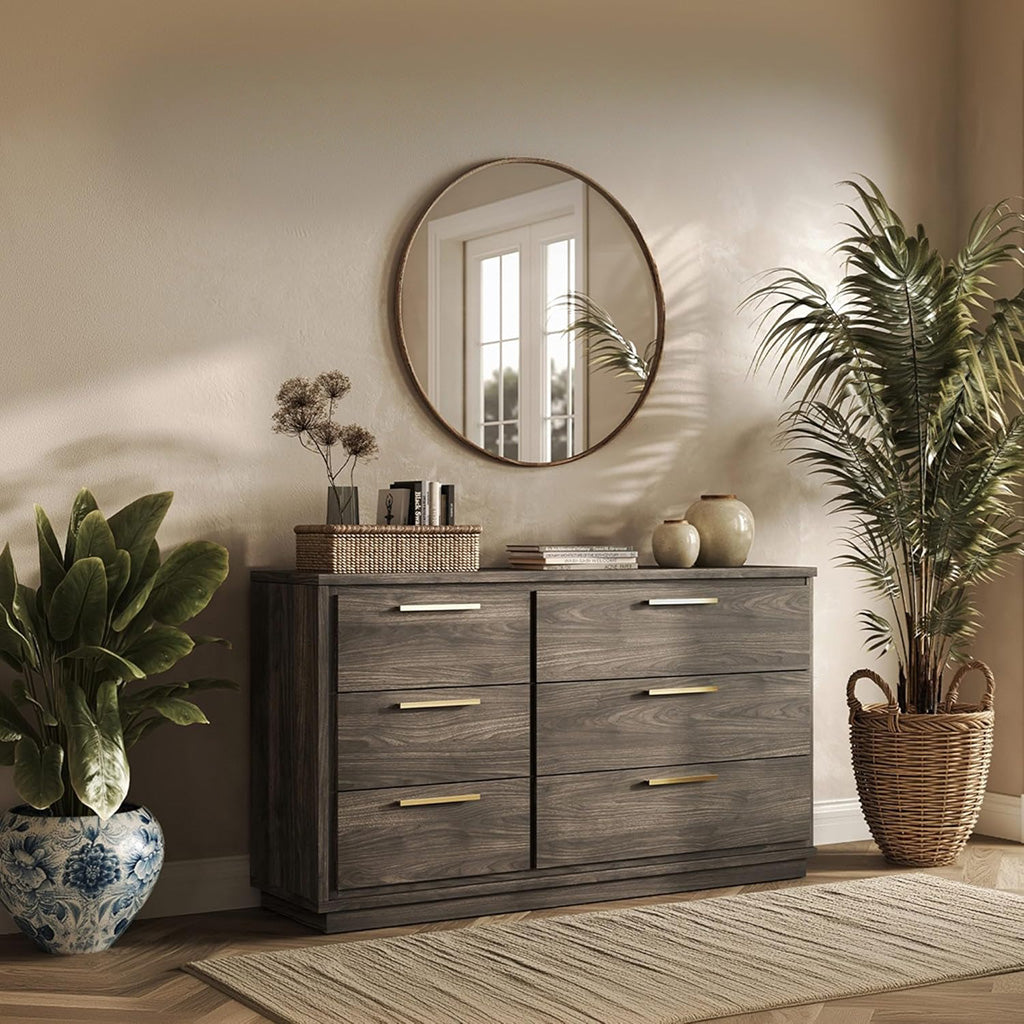
You're about to hang a mirror above your dresser. You search for the right height—and find conflicting advice everywhere. One source says 6 inches. Another says eye level.
Getting it wrong creates real problems. You might struggle to see your reflection while getting ready. The room could feel darker or more cramped than it should. Since a dresser mirror acts as a focal point, the height shapes how the whole bedroom looks and feels.
Standard Height Guidelines
The bottom of the mirror should sit 4–8 inches above the dresser top. This spacing keeps both pieces visually connected, so they feel like a cohesive unit rather than separate items on a wall.
You can also use eye level as your guide. Position the mirror's center 57–65 inches from the floor—a range that works for most adults. This placement lets you check your reflection comfortably without bending down or stretching up.
Typical Gap Range
For standard dressers standing 35–37 inches tall, a 4–6 inch gap maintains balanced proportions. The setup won't feel too heavy or cramped.
Larger gaps of 6–10 inches work better in specific situations:
- High-ceiling rooms where extra vertical space improves proportion
- Oversized mirrors that benefit from breathing room above the dresser
Eye-Level Position
Centering at eye level ensures you see your face and chest clearly while standing. This matters for everyday tasks like getting dressed or putting on jewelry.
Households with varying heights can adjust this center point slightly. The method offers flexibility without disrupting overall visual balance.

Factors That Change the Ideal Height
The right height shifts based on dresser size, mirror scale, user height, ceiling height, and what the mirror reflects. Pay attention to these variables to avoid awkward gaps or blocked reflections.
Dresser Height
Short dressers under 34 inches need a larger gap—around 8–12 inches. This prevents the mirror from appearing too low on the wall. Tall dressers over 40 inches call for a smaller 3–5 inch gap, keeping the mirror at a comfortable height.
Mirror Size
Large mirrors carry visual weight; they can sit slightly higher without losing connection to the dresser. Small mirrors should stay closer—around 4–5 inches—so they don't look lost on the wall.
Ceiling Height
Low ceilings benefit from a tighter gap. Too much space compresses the room visually. High ceilings allow more room above the dresser, preventing a top-heavy look.
User Height Differences
Taller users may prefer raising the center point a few inches. Shorter users often benefit from lowering it. For couples with significant height differences, a middle position typically accommodates both.
Proportion Rules for Mirror and Dresser
Scale matters as much as height. Many placement problems trace back to mismatched proportions rather than incorrect measurements. A well-proportioned mirror-to-dresser pairing creates visual stability and prevents arrangements from looking top-heavy or underwhelming.
Mirror Width
The ideal mirror width is ⅔–¾ of the dresser's width—a ratio that appears consistently across design guides.
A mirror that's too wide overwhelms the dresser beneath it. One that's too narrow leaves excess wall space on both sides, weakening the focal point.
If you're choosing a new dresser to pair with an existing mirror, a mid-width design works well. The Belleze New Port 54" 6-Drawer Dresser offers a balanced profile that fits the ⅔–¾ guideline easily.
Mirror Height
A mirror roughly ½–¾ of the dresser's height keeps the combination visually balanced. Tall mirrors may require adjusting the hanging height. You want to avoid reflecting the empty ceiling space above.
Placement and Centering
Centering goes beyond simple measurement—it affects how intentional your setup appears. Off-center placement can work, but only when decor compensates for the imbalance.
Horizontal Centering
Align your mirror with the dresser's midpoint, not the wall's midpoint. This common mistake appears frequently in online discussions. Off-center positioning only succeeds when balanced by tall decor, artwork, or grouped objects on the opposite side.
Vertical Balance
Check what the mirror actually reflects before final placement. Users often discover their mirrors show ceilings, clutter, or dark corners. Adjust the height so the mirror captures natural light or a pleasant view instead of distracting elements.
How to Measure and Test Placement
Testing your layout before drilling prevents unwanted holes and wasted effort. Painter's tape, cardboard cutouts, and temporary positioning let you fine-tune the height based on your specific dresser setup and who uses the mirror daily.
Step-by-Step Test
Outline the mirror's shape on the wall with painter's tape. Mark both the bottom edge and center height to visualize the final look.
Stand at your normal distance from the dresser. You should see your face and chest comfortably without crouching or stretching upward.
Evaluate Clearance
Consider items that typically sit on your dresser: lamps, vases, trays, perfume bottles. These can block the mirror's lower edge if the placement runs too low. Make sure drawer operation and daily decor arrangement won't interfere with typical mirror use.

Hanging Hardware and Safety
Heavy mirrors require proper anchors and secure mounting. Stability becomes especially important in households with children, pets, or tall mirrors that lean slightly forward.
Hardware Choice
Use wall anchors, toggle bolts, or screws rated for your mirror's weight. Nails alone lack the holding power for long-term stability. Heavy mirrors often benefit from two hanging points. This helps with leveling and prevents gradual tilting over time.
Safety Checks
Rubber bumpers on the back corners prevent sliding and protect wall surfaces. They also help keep the mirror flush against the wall. Anti-tip straps or securing hardware add protection for leaning mirrors or those positioned low enough to be bumped.
Styling Considerations
The dresser top, mirror frame, and reflected view form one composition. Your styling choices affect how much breathing room the mirror needs above the dresser.
Decor Height
Tall objects, such as lamps, large vases, or decorative branches, can visually bridge the gap between the dresser and mirror. This allows for slightly higher placement without losing connection. Short decor requires the mirror to sit lower; otherwise, a large dead space breaks the visual flow.
Reflection Planning
Position your mirror to capture natural light, windows, or appealing areas of the room. This brightens the space and adds visual depth. Avoid reflections of clutter, open doors, or ceilings. These make the room feel smaller and less intentional.
Special Situations
Standard guidelines don't apply to every room. Some spaces and arrangements call for flexibility, and understanding these exceptions helps you adapt the rules to your setup.
Small Bedroom
Minimal gaps maintain visual continuity in compact spaces. Fragmented vertical lines can make a tight room feel even smaller.
Position the mirror to reflect light from windows or lamps—this helps counteract the room's limited scale.
Large Mirror or Gallery Arrangement
Oversized mirrors carry strong visual weight; they can sit slightly higher while still anchoring the dresser below. For gallery-style arrangements with multiple mirrors, focus on equal spacing between frames rather than centering at eye level.
Common Mistakes to Avoid
Hanging the mirror too high creates a disconnection from the dresser and reduces daily functionality.
A mirror too small for the dresser results in weak visual impact and awkward empty space on either side.
Summary of Key Measurements
- Gap: 4–6 inches typical; 3–12 inches depending on dresser height, ceiling height, and decor
- Eye-level center: 57–65 inches from the floor
- Width ratio: ⅔–¾ of dresser width
- Proportion: Balance dresser height, mirror size, and room scale together
Conclusion
No single measurement suits every room. The ideal height shifts based on dresser size, mirror scale, ceiling height, user height, and how you style the dresser top.
By following core principles—proportion, balance, and eye-level placement—you'll create a dresser area that feels intentional, practical, and visually connected to the space around it.
Related Articles:

Leave a comment
This site is protected by hCaptcha and the hCaptcha Privacy Policy and Terms of Service apply.