


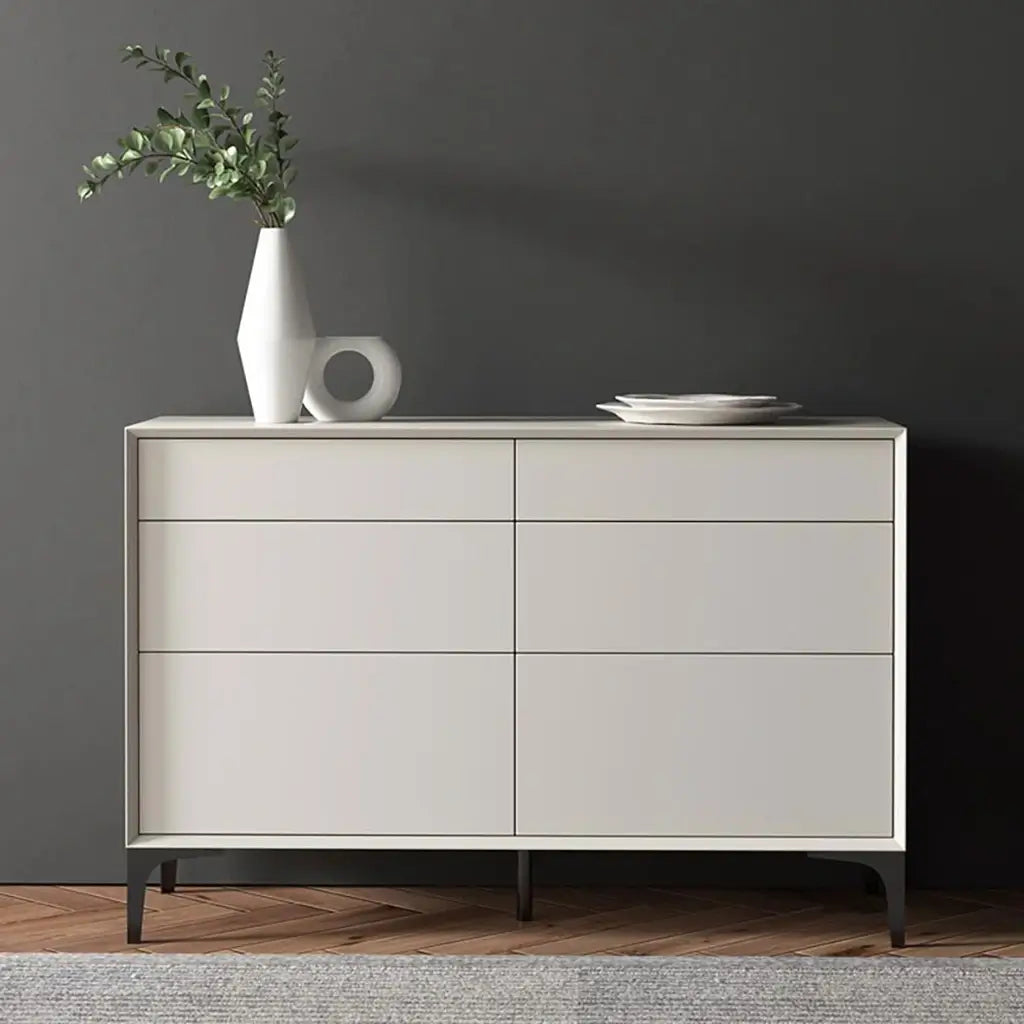
A dresser tends to attract everyday items, loose change, phone chargers, and random receipts. Styling turns that clutter into something intentional.
Beyond organization, a well-decorated dresser becomes a visual anchor. It ties your bedroom together without any major space changes.
Decorating a dresser starts with a few simple decisions. Proportion, balance, and height variation guide the process. These principles work for anyone, regardless of design experience.
Choosing the Right Dresser Before You Start Decorating
Your dresser sets the foundation for everything that goes on top of it. Height, width, finish, and storage all influence the balance and flexibility of your styling choices.
Dresser Height
A taller dresser changes where mirrors or artwork should hang. It also guides whether your arrangement should build upward or spread horizontally across the surface.
Dresser Width
The width of your dresser determines the scale of any focal piece above it. It also sets boundaries for spacing and layering décor items. If your room calls for generous surface space without visual weight, the Belleze New Port 54" 6-Drawer dresser offers that balance while keeping storage organized.

Finish and Color
The finish affects whether your décor blends with the dresser or creates contrast against it. It also connects to your room's overall palette and mood.
Storage vs. Styling Space
Deeper drawers give you more room for clothes and linens inside. A wider surface lets you arrange more pieces on top without crowding.
Style Compatibility
Modern dressers pair naturally with clean, minimal arrangements. Traditional shapes welcome layered textures and warmer materials like wood or woven pieces.
Overall Fit
Shape, proportion, and hardware all guide the visual balance of your setup. A dresser that fits your space gives you more flexibility in the arrangements you'll build next.
Start With a Clean Slate
Clearing your dresser gives you a fresh perspective on its size, surface condition, and placement in the room. It also removes visual noise, making your styling decisions more deliberate.
Before adding anything back, take care of a few basics:
- Wipe down the surface and polish the wood if needed
- Check for small scratches or dust that could distract you from your décor
- Step back and see how the dresser relates to the bed, window, or nearest corner
- Notice the lighting—both natural and lamp light affect how colors and textures appear
Only return items that serve a clear purpose. Everything else stays off.

Anchor the Space With a Focal Point
A focal point ties your dresser to the wall behind it and gives the arrangement a foundation. Without one, smaller décor items tend to look scattered.
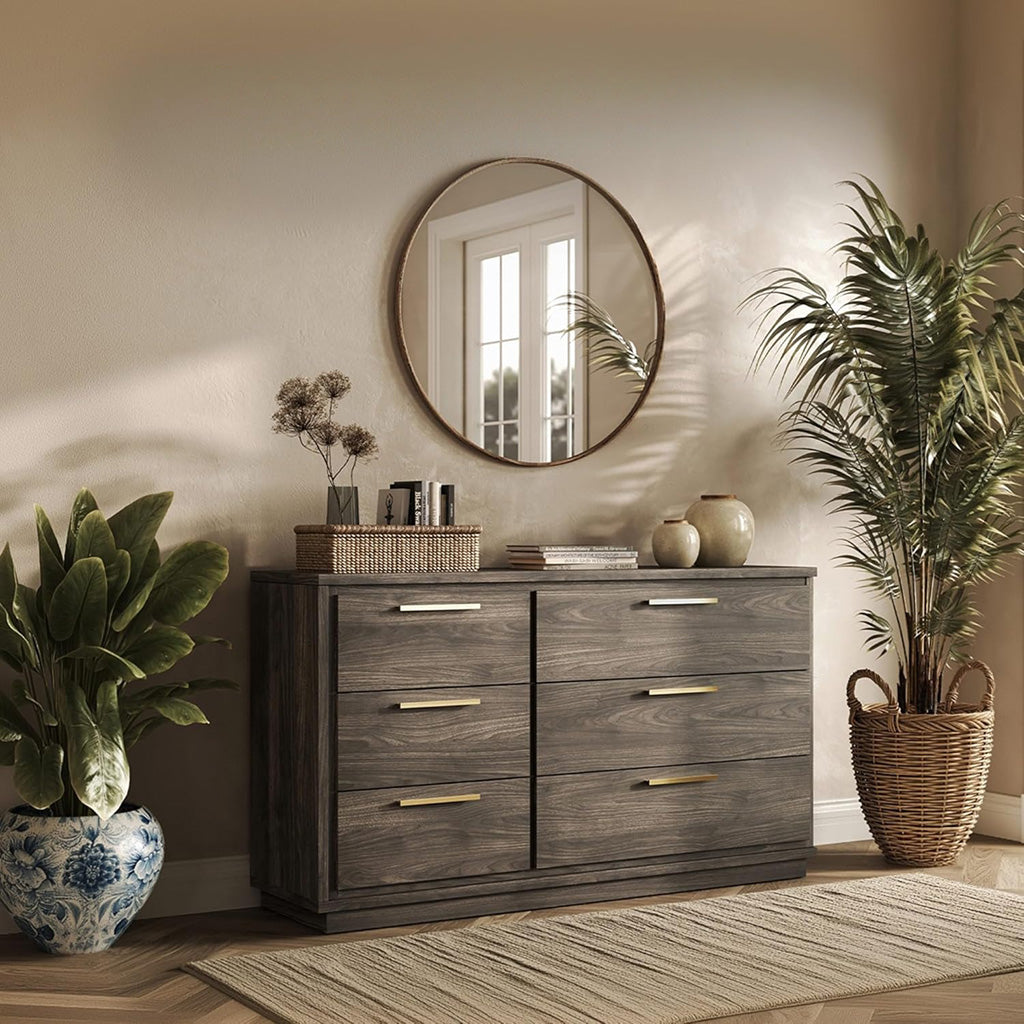
Mirrors and artwork both work well here. For balanced proportion, choose a piece that measures about half to two-thirds of the dresser's width. Round mirrors soften straight edges, while rectangular frames create a more structured appearance.
Hang artwork or mirrors about 6–8 inches above the dresser top. Leaning a large piece against the wall creates a relaxed feel; hanging it gives you a cleaner, more finished look. You can go with one statement piece or group several frames in varied sizes for added personality.

Build Height and Layers
Height variation keeps the arrangement from looking flat. Layering items from front to back adds depth and creates a more intentional setup.
A few ways to build dimensions:
- Add height with a table lamp, tall vase, or branches—place it off-center to form a visual triangle
- Combine tall, medium, and small pieces so the eye moves naturally across the surface
- Use books as risers for shorter items while adding texture through their bindings
- Position deeper objects near the wall and lighter pieces toward the front
For a formal look, go with symmetrical balance. Asymmetrical arrangements feel more modern and relaxed.

Use Trays and Bowls to Organize Small Items
Trays and bowls do more than contain clutter—they turn everyday items into part of the design. Perfumes, jewelry, and accessories look intentional when grouped together rather than scattered across the surface.
Trays also divide the dresser visually, making it easier to style and maintain. For contrast, choose materials that play off your dresser's finish:
- Marble or stone trays on natural wood
- Rattan or woven pieces on painted surfaces
Decorative boxes offer hidden storage while acting as sculptural accents. Small bowls or dishes contain tiny items that would otherwise create a messy look.

Add Decorative Objects With Purpose
A few well-chosen pieces bring personality to your dresser without overwhelming the space. The key is mixing materials and shapes to keep things visually interesting.
Consider these approaches:
- Group objects in odd numbers (3 or 5) for natural balance
- Mix textures—glass, ceramic, wood, metal—for depth
- Include personal items like framed photos or collected souvenirs
- Use geometric pieces, sculptures, or candles to add structure
Smaller pieces tend to create visual clutter. Larger objects make a stronger impact. You can also play with style contrast—pairing vintage with modern, or minimal with ornate—to add energy to the arrangement.

Bring in Greenery or Florals
Plants soften the dresser's hard lines and introduce life to the space. They also help balance the visual weight of other décor.
A few options work well here:
- A small potted plant or stems in a vase for height and color
- Faux greenery for low-maintenance styling with the same softness
- Dried florals for lasting texture
Placing a taller plant beside the dresser expands the arrangement and adds height beyond the surface itself.

Use Wall Space for Extra Style
Dresser surfaces can only hold so much. The wall behind it offers additional styling space that adds height and creates a fuller arrangement.
Gallery walls work well here—go symmetrical for a clean look or mix frame sizes for something more artistic. Floating shelves give you extra display room without crowding the dresser top.
Sconces free up surface area while adding accent lighting to the arrangement. For a bolder statement, sculptural wall art or unique pieces can serve as a dramatic focal point.

Consider Style, Color, and Material Harmony
Cohesion ties your dresser to the rest of the bedroom. The colors and finishes you choose affect warmth, contrast, and overall mood.
Pull décor colors from the room's existing palette, then introduce one accent tone for visual interest. Light pieces can brighten a dark dresser, while deeper accents add richness to white or pale finishes. Hardware plays a role too—brass, black, or silver pulls each shift the feel of the space.
To keep things balanced:
- Stick to 2–3 main colors so the arrangement doesn't look busy
- Combine smooth and textured pieces to add depth

Advanced Tips for a Designer Look
Small refinements make the difference between a decorated dresser and a polished one.
Negative space matters. Leaving some areas empty gives the eye a place to rest and keeps the surface from feeling crowded. Step back to check balance—larger items should visually counterbalance each other across the arrangement.
A few more ways to elevate the look:
- Scale up your anchor piece or use larger décor if proportions feel off
- Rotate florals, candles, and small accents seasonally to refresh without a full restyle
- Align by visual weight, not just size—dark or textured objects feel heavier and need balancing
Create a Dresser Setup That Works for You
Styling a dresser involves more than just filling the surface. The goal is selecting pieces that bring visual interest while fitting into your daily life.
Proportion, height variation, color harmony, and a clear focal point all work together to anchor the arrangement. You can keep the setup flexible so you can swap pieces seasonally or adjust as your taste evolves.
A few thoughtful choices turn your dresser into both functional storage and a polished part of your bedroom.
Related Reading:

Leave a comment
This site is protected by hCaptcha and the hCaptcha Privacy Policy and Terms of Service apply.