


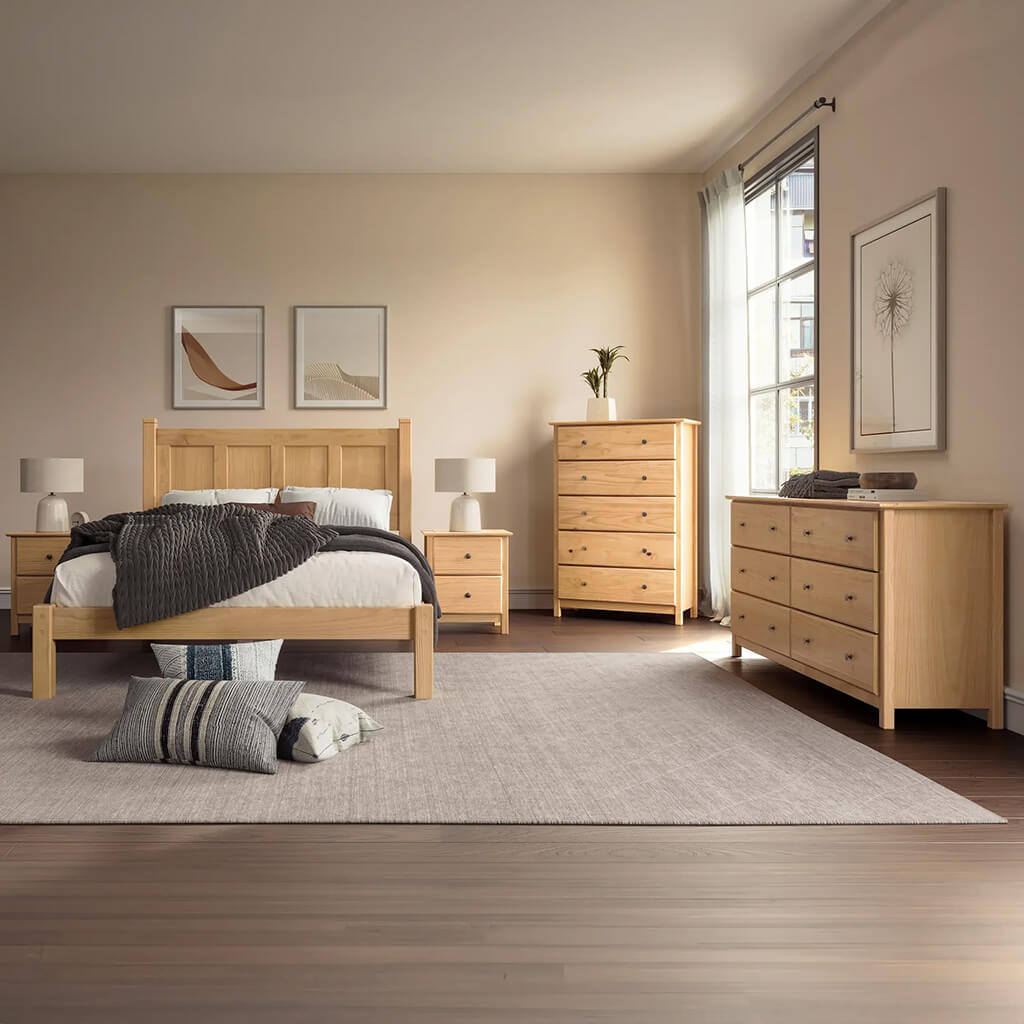
A dresser does more than hold your clothes. It's one of the largest pieces in your bedroom, so where you place it—and how you style it—affects whether the room feels balanced or tight.
The dresser also guides where your eye goes. A tall one draws attention upward. A wide one stretches the room horizontally.
Add a mirror or place it near a window, and you change how light moves through the room—brightening corners or reducing harsh glare.
Choose the Right Dresser Size for the Room
Getting the size right keeps your bedroom comfortable to walk through. It also prevents one wall from looking heavier than the others.
Thinking in proportions, not just inches, helps you find a piece that feels intentional rather than random.
Width vs Wall Ratio
A dresser tends to look best covering about 60–70% of the wall behind it. Go below 50%, and the piece can feel lost. Push past 80%, and the space starts to feel tight.
Height vs Bed Height
Your dresser should sit at or slightly below your mattress height. If you have a tall headboard, a lower dresser helps the room stay balanced and avoids a top-heavy feel.
Depth vs Walkway Condition
Narrow bedrooms call for shallower dressers—under 16–17 inches deep—to keep walkways clear.
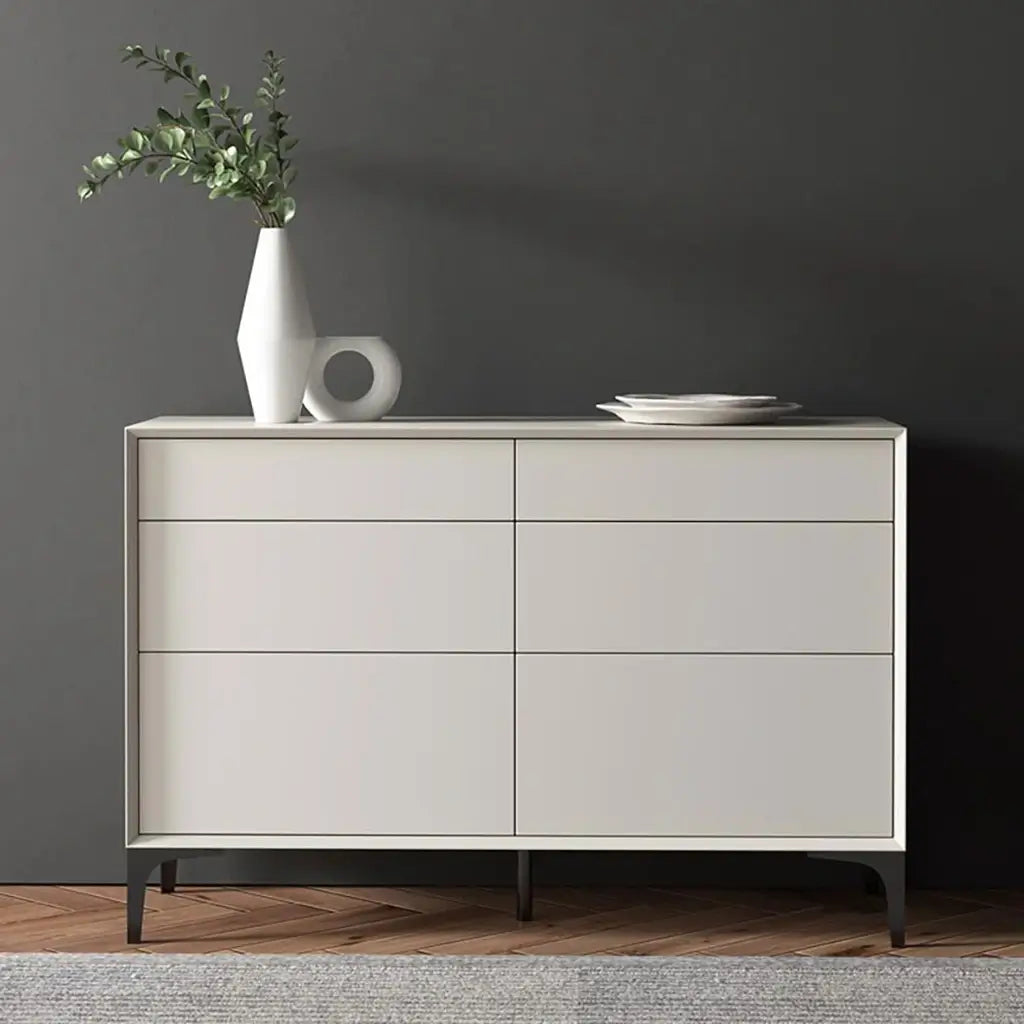
For spaces that need a lower, wider silhouette under a mirror or TV, a 6-drawer option like the Belleze New Port 54" Wide Cabinet offers balanced proportions without overwhelming the wall.

Find the Best Placement for the Dresser
Placing your dresser thoughtfully helps it feel grounded—like it belongs in the room rather than floating against a random wall.
The goal is to give the dresser a clear role: anchor, counterbalance, or dedicated storage zone.
- Long rooms: Position the dresser on the shorter wall to visually widen the space and soften that hallway effect.
- Square rooms: Use the dresser to create one strong focal wall, typically opposite the bed. This gives the eye a clear place to land.
- Rooms with multiple doors or windows: Select the wall with the fewest openings. Fewer interruptions mean better visual stability.
- Off-center beds: Let the dresser anchor the opposite wall to bring the layout back into balance.

Maintain Comfortable Traffic Flow Around the Dresser
Moving through your bedroom should feel easy—during the day and in the middle of the night. The dresser shouldn't force awkward detours or tight squeezes.
A few key measurements help you plan:
- Drawer swing zone: Allow for drawer extension plus standing room. That's typically 48–54 inches total in front of the dresser.
- Pinch points: Keep corners between the dresser and bed—or dresser and door—at least 26–28 inches wide.
- Nighttime movement: Avoid blocking the path between bed and bathroom. A clear route matters more than you'd think at 2 a.m.

Pair the Dresser with the Bed for a Balanced Layout
Your bed serves as the primary anchor in the room; the dresser acts as the secondary anchor. Problems arise when both pieces compete for attention—the space starts to feel visually scattered.
Matching their visual weight creates harmony:
- Heavy beds with thick frames pair naturally with lower, wider dressers.
- Lighter platform beds can handle taller dressers without throwing off the balance.
Aligning the centerlines of both pieces produces a calm, cohesive look. Your eye travels smoothly from one to the other.
If your bed sits off-center due to windows or doors, positioning the dresser on the opposite side helps restore equilibrium to the room.

Pair the Dresser with a Mirror or TV
What you place above the dresser affects height, balance, and how the eye travels through the room. Getting this pairing right ties the whole wall together.
Mirror placement
The bottom of the mirror should sit about 6–10 inches above the dresser surface. This creates visual breathing room without making the two pieces feel disconnected.
Shape plays a role too:
- Round mirrors soften angular furniture lines and add warmth to the space.
- Tall mirrors help low ceilings feel higher by drawing the eye upward.
TV placement
TVs tend to feel visually heavy compared to mirrors. You can balance that weight with warmer elements like plants, lamps, or textured objects on the dresser surface.
If the TV extends wider than the dresser, consider choosing a wider piece or adding side shelving. Otherwise, the setup can look top-heavy.

Balance Room Proportions Using the Dresser
A dresser can do more than hold your clothes—it can correct uneven proportions, break up long walls, or anchor empty corners. Depending on your room's needs, it pulls the eye upward or outward.
A few guidelines to consider:
- Wide dressers visually stretch narrow rooms, making them feel less cramped.
- Tall dressers lift the eye in rooms with high ceilings. Keep the top décor simple to avoid visual clutter.
- Dark dressers feel heavier. Balance them with lighter accessories like white lamps or pale artwork.
- Light dressers feel airy. Ground them with natural textures like wood trays or stone accents.
For rooms with sloped ceilings, place the dresser on the higher side to lift the overall feel of the space.

Style the Dresser Surface Based on Room Layout
Surface styling should support your room's proportions, not just look pretty. The pieces you choose can reinforce height, balance, and visual weight throughout the space.
A few approaches to try:
- Use tall décor like vases or candlesticks to bridge the gap between the dresser height and the mirror or TV above.
- Keep items low if the dresser sits near a walkway. This prevents the area from feeling crowded or tight.
- Stagger pieces left to right in wide rooms that need more visual fullness. This spreads attention across the surface rather than clustering it in one spot.
Ensure the Room Remains Functional for Daily Use
A beautifully styled dresser means little if it doesn't support your daily routine. The final arrangement should make getting dressed effortless.
Keep the center of the surface clear so drawers open freely. Place everyday items—like jewelry or your watch—on your dominant-hand side for easy reach.
If clutter tends to accumulate, trays or small boxes help contain loose items while keeping essentials visible.
Once you’ve worked out the right size, placement, and layout, the next step is choosing a piece that fits those decisions. Explore dressers for bedroom layouts designed to work with real spaces and daily use.
Related Articles:

Leave a comment
This site is protected by hCaptcha and the hCaptcha Privacy Policy and Terms of Service apply.