


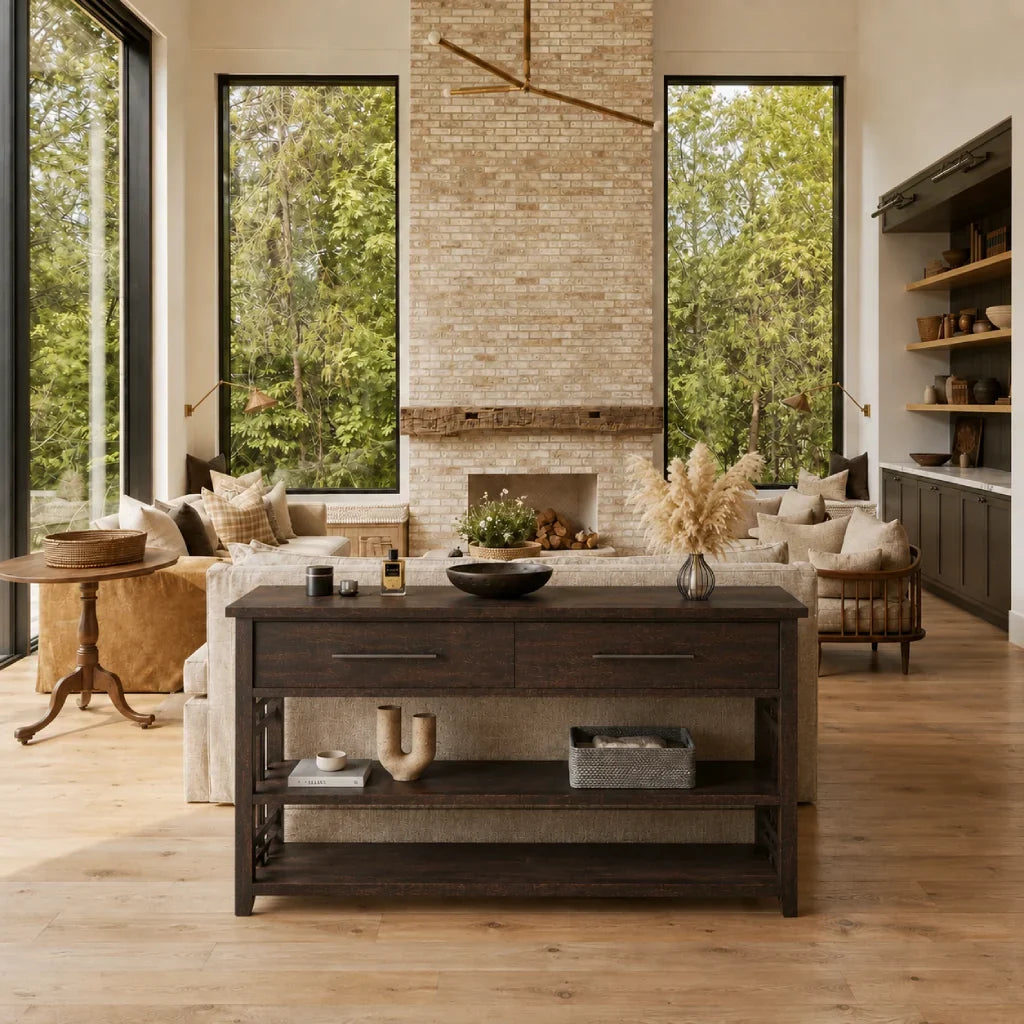
Start beside the entry, along an empty wall, or behind a sofa that sits away from the wall. A console table can work in any of these places if it gives you a useful surface without blocking the way.
The room may look spacious until the front door opens or someone comes through with grocery bags. Before you shop by style, mark out the table's footprint, walk the route you use each day, and make sure a console is the right piece for the job.
| What the room needs | Try this | Choose another piece when |
| A landing spot near the entry | Keep the console clear of the door swing and walking path | Shoes, bags, and everyday clutter need to be hidden |
| Something to ground a blank wall | Check the footprint and the wall's scale before choosing a console | The wall needs a longer storage run or more visual weight |
| A clear edge behind a floating sofa | Use a console if the path behind it still feels open | People would have to squeeze past it |
| Furniture for a TV wall | Treat the TV setup as a separate furniture decision | Support, cable routing, ventilation, or load limits are still unclear |
Start with the job
Decide what you expect the table to do before you look at styles. It might catch keys and mail or hold a lamp and a few display pieces. Behind seating, it can mark the edge of the room. If none of those jobs matches your need, an open table may be the wrong choice.
If you need to hide everyday items instead of setting down or displaying a few things, compare a console with closed storage before giving up the wall space. The console table vs sideboard guide can help you decide which furniture type fits that job.
Test the space first
Use removable tape to mark the table's full footprint on the floor. Open each nearby door as far as it goes, paying attention to the outer edge near the handle. Then walk the route with a bag, laundry basket, or whatever you tend to carry through the room. A floor plan will not show how the turn feels when your hands are full.
Use any clearance number as a reference, then test the taped path in your room. Door placement and the amount of foot traffic change how much space you need. If someone in your home uses a mobility aid, include it in the test instead of relying on a generic number.
Measure the taped rectangle and keep the numbers with you while you shop. Compare each table's listed width and depth with that space, then check its height against the wall or sofa. For a table with doors or drawers, add their opening path to the floor test.
Three places that work in many rooms

Beside an entry
An entry console works when it gives keys, mail, or a lamp a place to land and stays outside the door's path. Test the location with the door open and the entry in normal use. An empty floor on a quiet afternoon does not show you how the space will feel during the morning rush.
Choose concealed storage if the entry fills up with shoes, bags, and loose household items. An open console gives the clutter another surface. It will not contain what your household drops there.
Along a blank wall
A console can give an empty living-room wall some weight without adding the bulk of a full cabinet. View the taped footprint as you enter the room and again from across it. The walkway may feel fine while the table still looks lost beneath a large TV or between built-ins.
After the walkway works, step back and judge how much of the wall the piece occupies. If the wall needs more presence or the room needs storage, a longer cabinet may suit the space better than a slim table. Make that call before you start comparing statement pieces.

Behind a floating sofa
A console can go behind a floating sofa and give the seating area a clean edge. Mark the sofa and table footprints at the same time, then walk the space behind them as you would on a normal day. If you have to turn sideways or change your path, the table is taking up too much room.
Compare the listed table height with the sofa back. If you want an uninterrupted sightline, keep the table at or below the top of the sofa back. Then retest the route with a bag or laundry basket, since the view from the front will not tell you whether the path works.
When a console is the wrong fit
You need closed storage
Choose a compact sideboard if you want to keep clutter out of sight. Compare sideboards for small spaces if a tight entry or compact room needs a place for shoes, bags, linens, or toys. Hidden storage will be more useful there than another display surface.
You are furnishing a TV wall
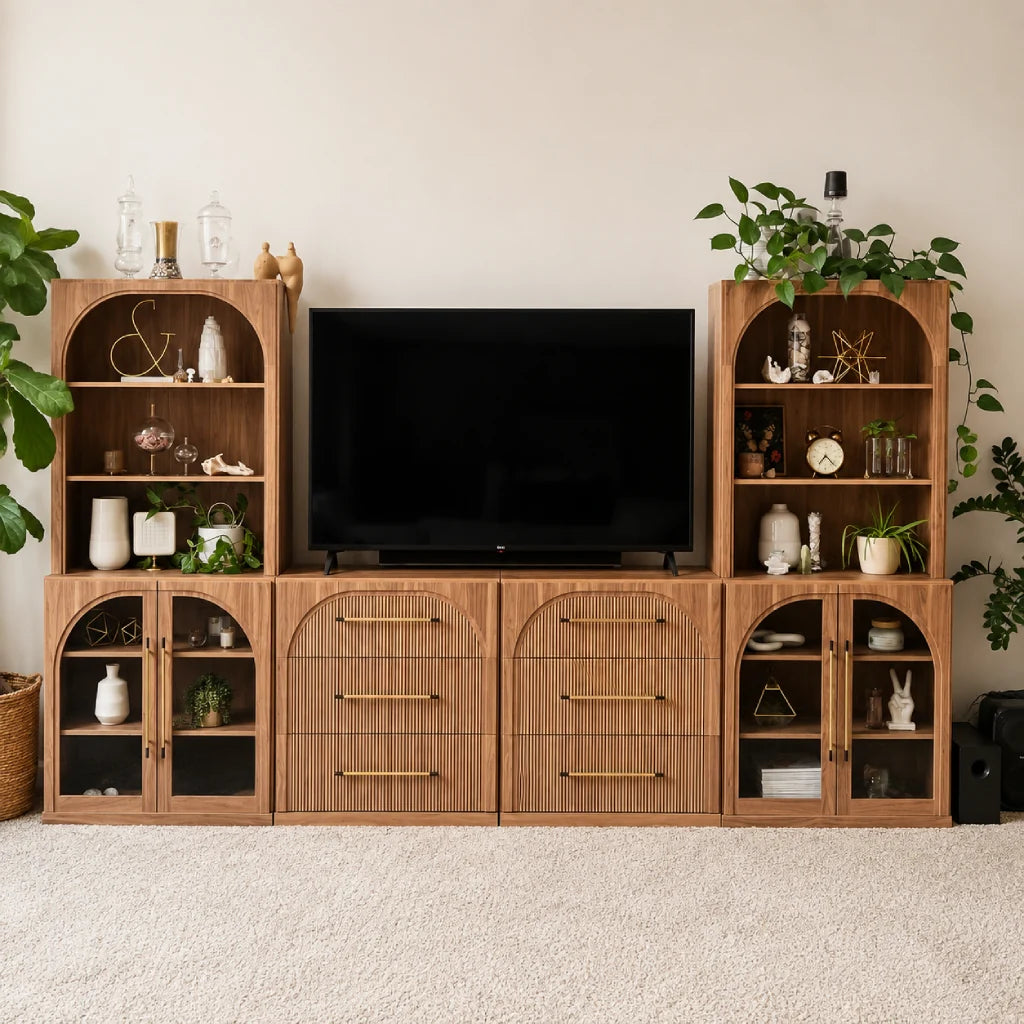
If you plan to use the piece on a TV wall, confirm support, cable management, ventilation, and load suitability for the exact setup. Use can you put a TV on a console table? to make that separate product decision before you treat any console as a TV unit.
The wall needs more visual weight
One small console may look stranded on a long wall. If the room also needs closed storage, compare modular sideboards to see whether a longer run matches the wall. Choose the longer run if it gives you the storage you need and fills the wall with better proportion.
Choose a statement console last
Move on to style after the walking path works and you know that an open display surface fits the job. Compare each product's listed footprint and height with your notes from the room. Read the assembly instructions as part of that comparison so you know how the table will get into position.
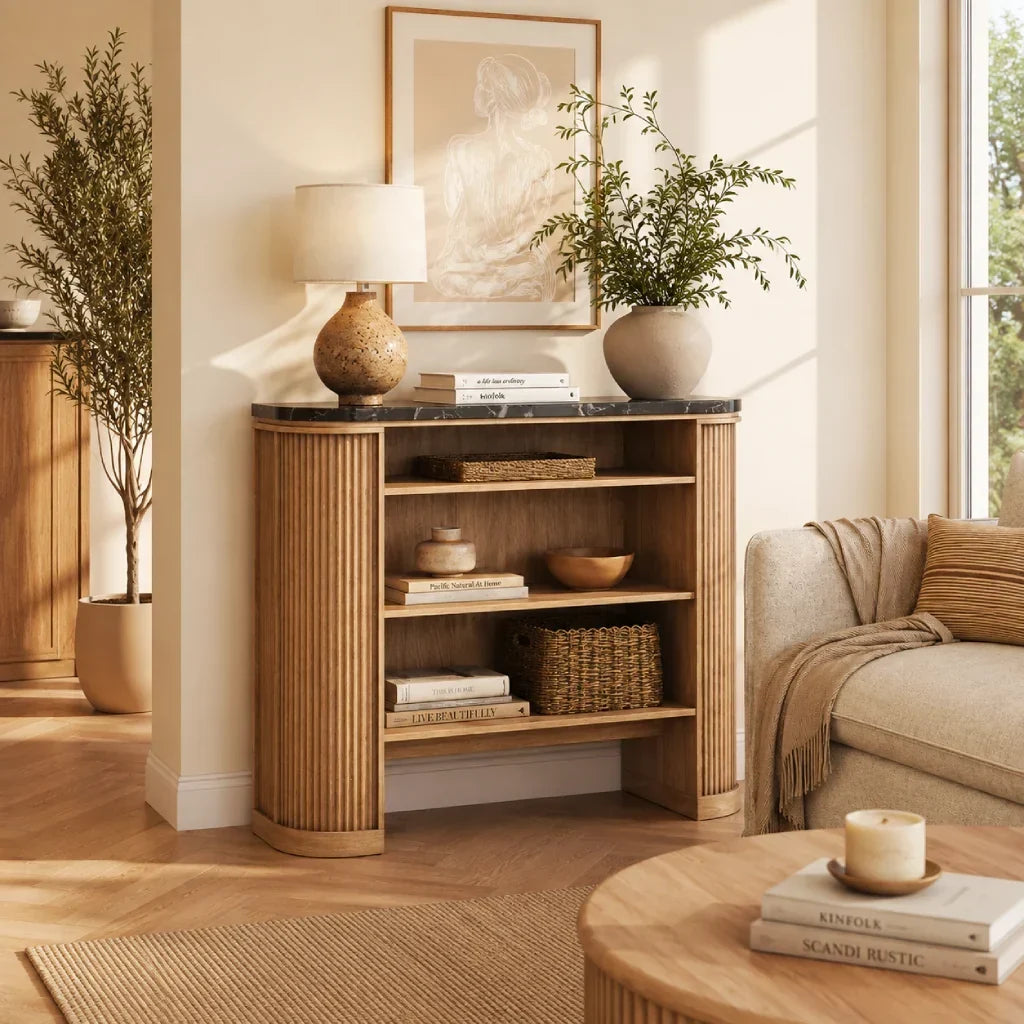
After those checks, compare the Jagger 44" black marble top fluted console table with the footprint you marked. Read its current dimensions and assembly details on the product page, then decide whether its footprint and height match your wall or sofa.
Make the final fit check
- Match the footprint. Compare the listed width and depth with the taped area.
- Check the height. Compare the listed height with the sofa back or the amount of wall the table needs to fill.
- Retest what moves. Open nearby doors and any doors or drawers on the table, then walk the route with something in your hands.
- Plan the assembly. Read the instructions and make sure you have room to assemble the table or move it into position. Ask Belleze about any product detail the page does not explain.
Choose the table only if it fits the route and does the job you need. After that, use style as the final filter. A different furniture type is the better purchase when the space needs hidden storage or a longer storage run.

Leave a comment
This site is protected by hCaptcha and the hCaptcha Privacy Policy and Terms of Service apply.