


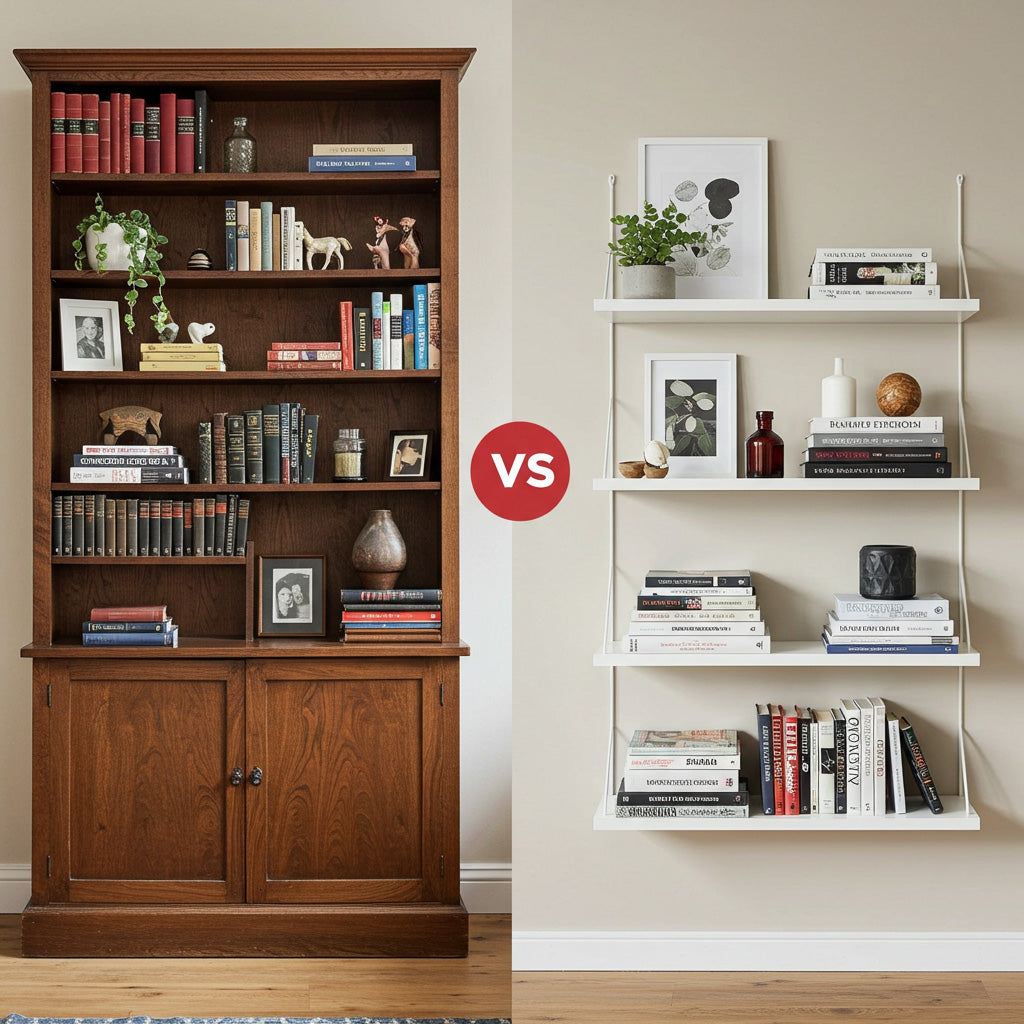
Bookshelf and bookcase are often used interchangeably, but they usually describe slightly different furniture structures. A bookshelf typically emphasizes open shelving and easy access, while a bookcase is usually a more fully framed shelving unit with side panels, a back panel, or both.
The distinction is not absolute. A bookcase can have an open front, glass doors, or solid doors, and retailers do not always use the terms consistently.
For most buyers, the more useful question is not only whether to choose a bookshelf or bookcase, but whether the contents should stay open, visible behind glass, or concealed behind solid doors. This guide compares both decisions so you can choose the right storage for what you actually plan to keep on the shelves.
What Is a Bookshelf?
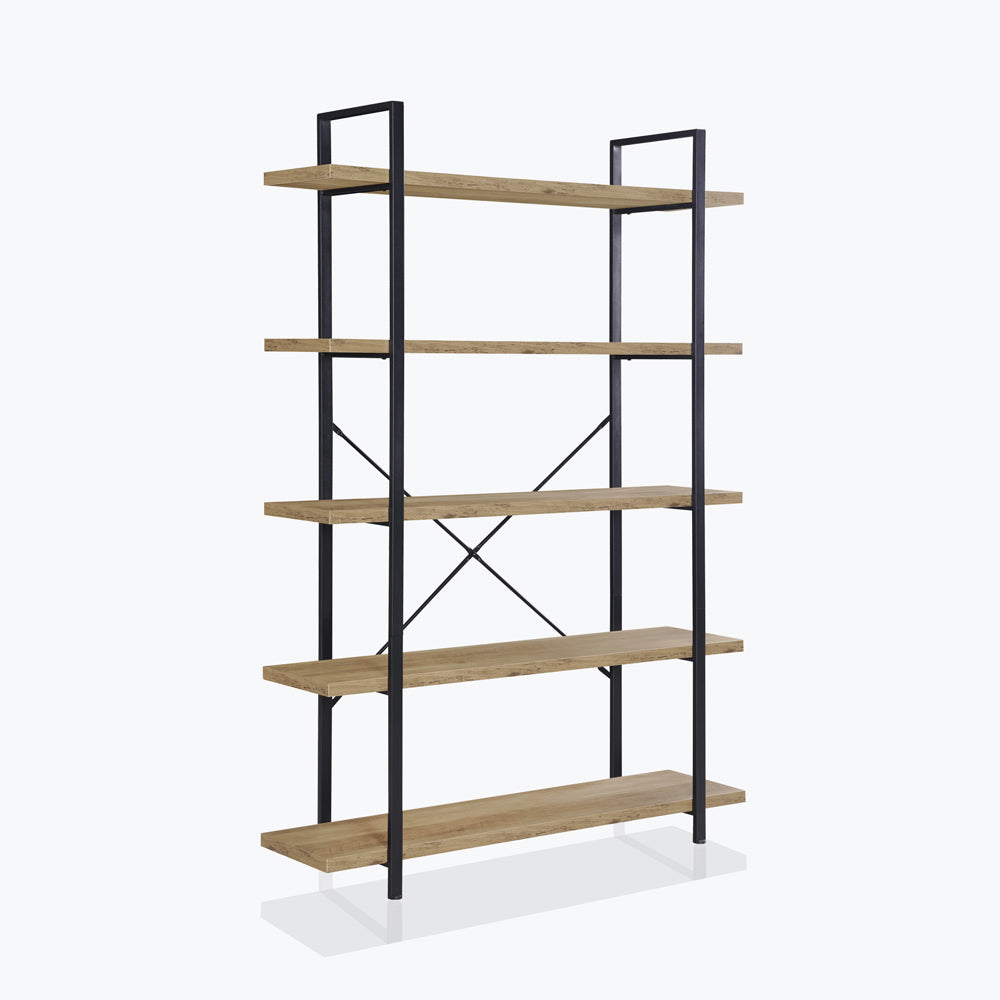
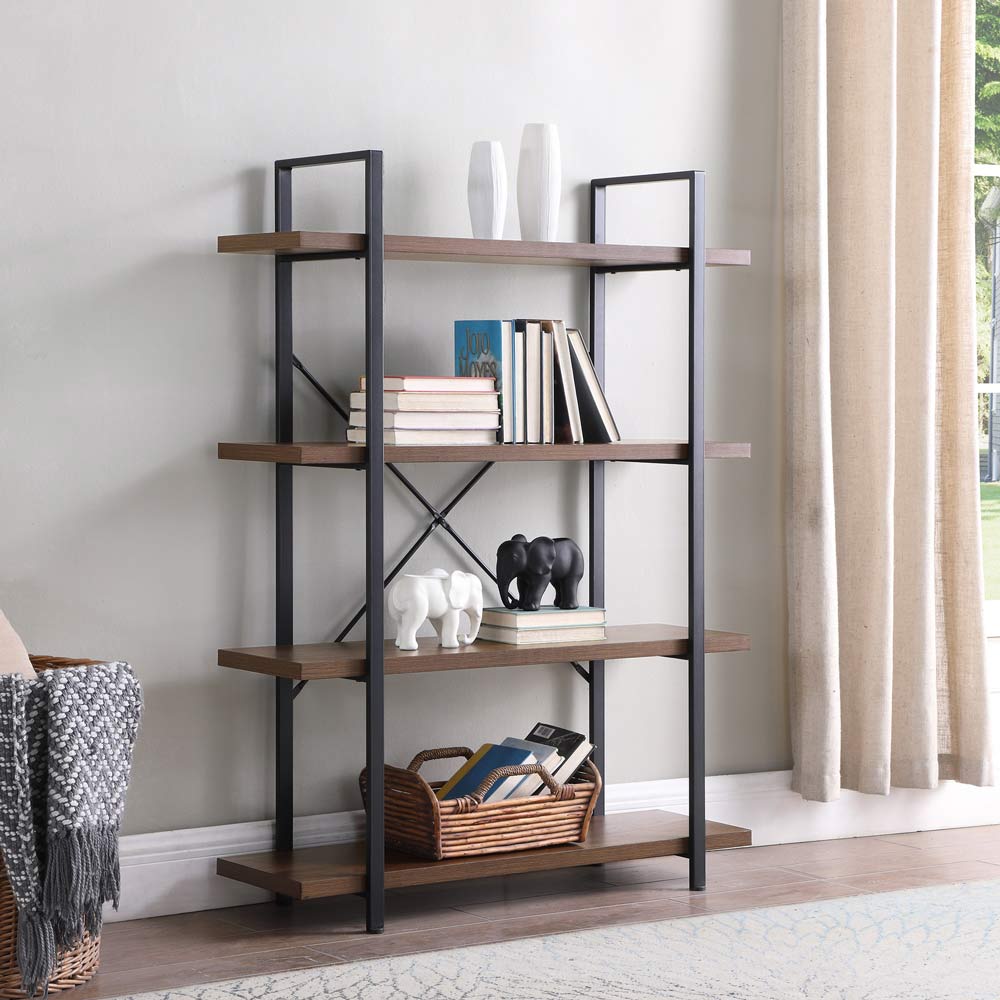
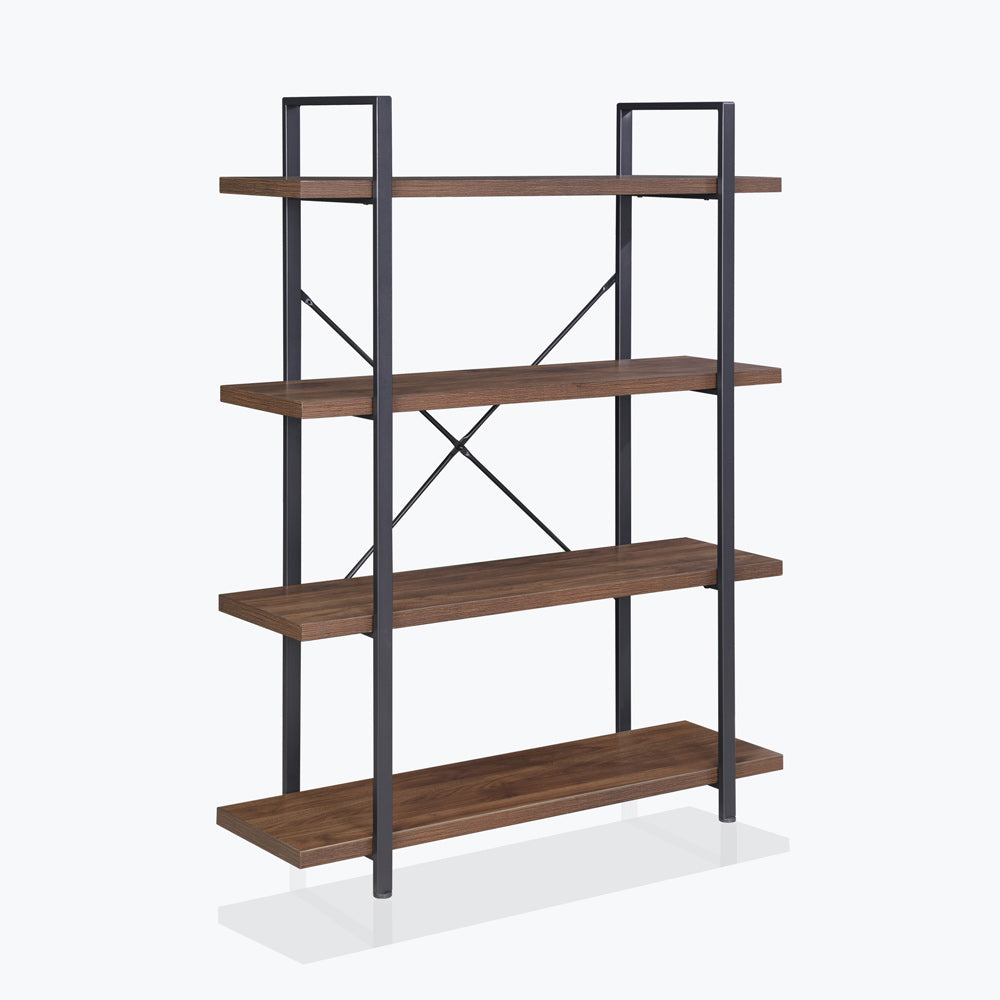
A bookshelf is a shelving unit designed to hold books, décor, plants, collectibles, and other items. It is commonly open at the front and may be freestanding or mounted to a wall.
Some bookshelves have exposed sides and backs, while others use partial framing, so an open shelving layout is a more useful characteristic than assuming every bookshelf has no side or back panels.
Common bookshelf designs include:
- Traditional bookshelves: Freestanding units with open shelves.
- Modular bookshelves: Units designed to be combined, expanded, or rearranged.
- Ladder bookshelves: Shelving with a leaning or graduated profile.
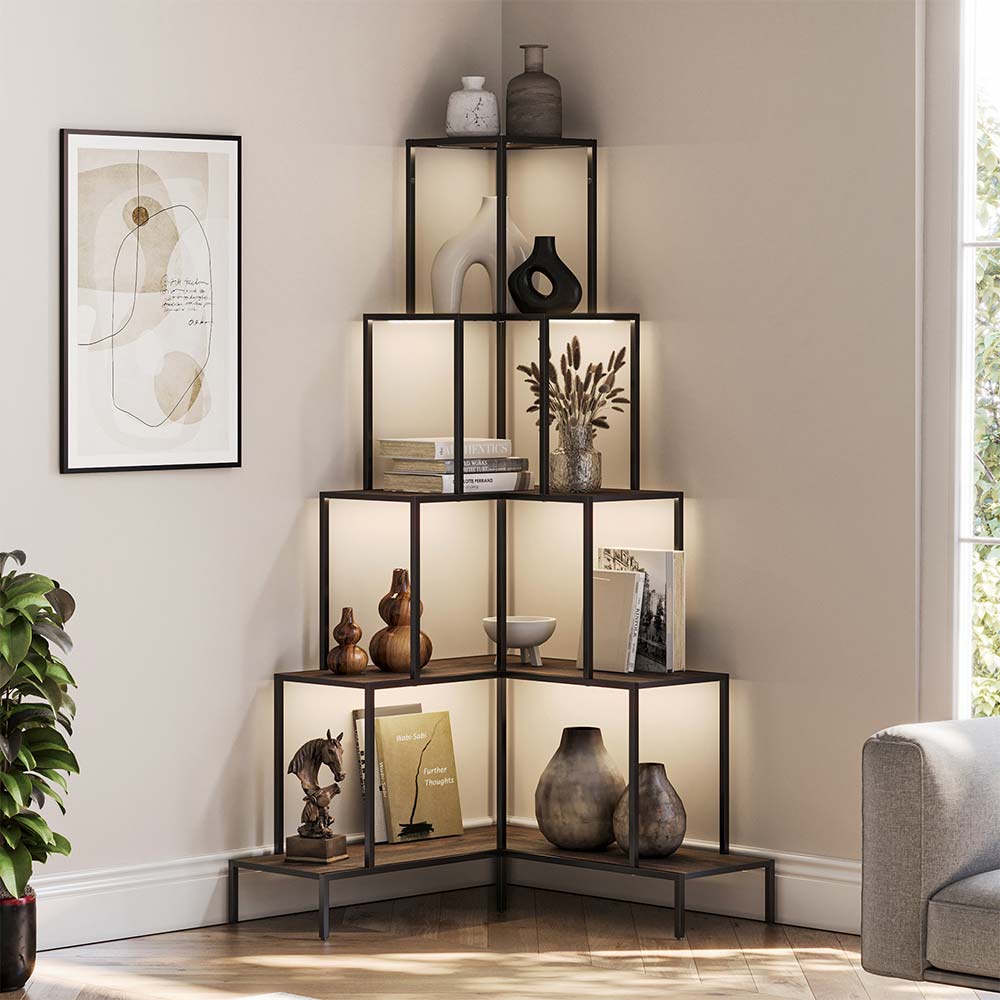
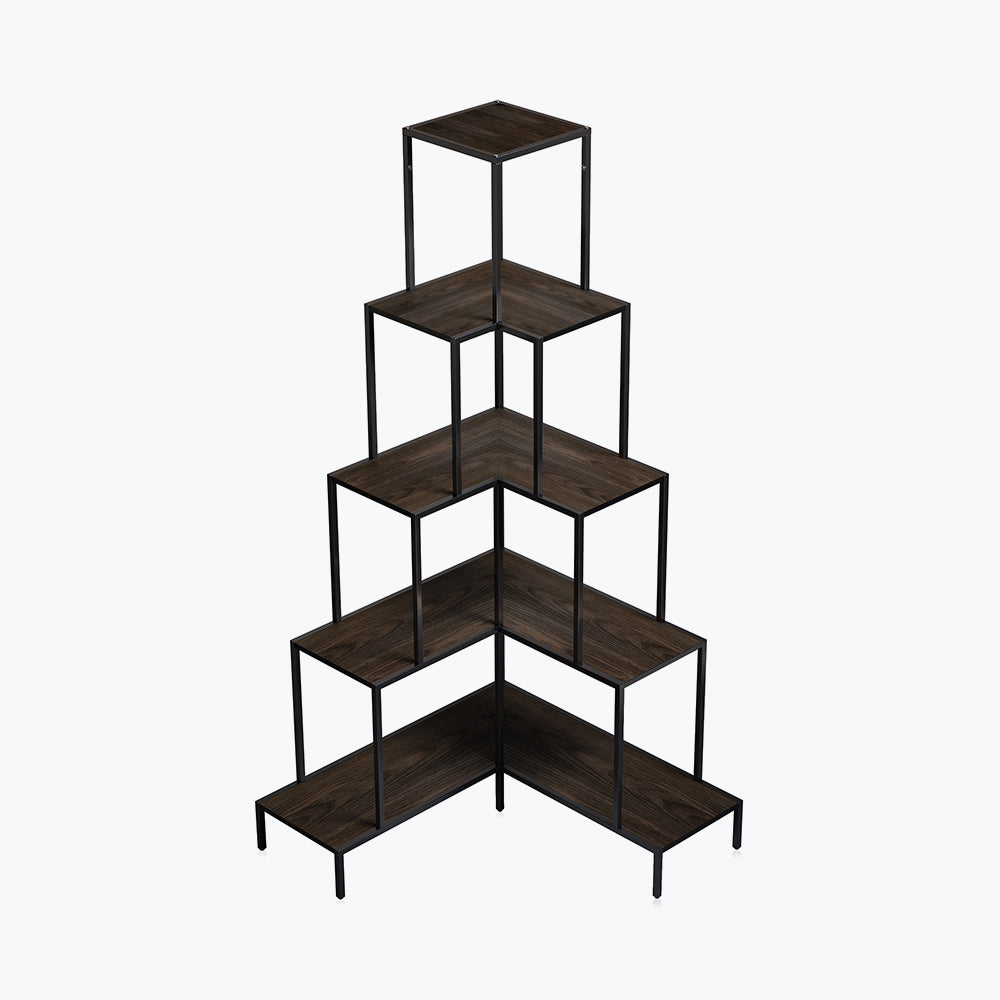
- Corner bookshelves: Units shaped to use an otherwise underused corner.
- Floating bookshelves: Shelves mounted directly to a wall without a floor-standing frame.
Open bookshelves are especially useful when easy access and visibility matter. Books, plants, décor, and frequently used objects remain easy to reach, although exposed shelves generally require more regular dusting and visual organization.

What Is a Bookcase?
A bookcase is typically a more fully framed shelving unit designed for books, collectibles, décor, and household storage. Many bookcases have side panels and a back panel and are designed to stand on the floor, although built-in versions also exist.
A bookcase does not have to be closed at the front. Some use completely open shelves, while others have glass doors, solid doors, drawers, or a combination of storage types.
Because furniture retailers use “bookshelf” and “bookcase” somewhat loosely, the product label alone should not determine your choice. Look at the actual frame, dimensions, shelf configuration, doors, and weight capacity instead.
What is the Difference Between a Bookshelf and a Bookcase?
Bookshelves and bookcases can perform many of the same jobs, but they usually differ in how the shelving is framed and configured. Instead of relying on size or furniture labels alone, compare the structure, placement, front closure, and way you plan to use the shelves.
Are Bookshelves and Bookcases the Same Thing?
Not exactly, although the terms overlap considerably in everyday shopping. A bookshelf usually emphasizes shelving that remains open and easy to access. It can be floating, ladder-style, corner-shaped, wall-mounted, or freestanding. A bookcase usually refers to a more complete floor-standing furniture frame, often with side panels and a back.
The front of a bookcase, however, can still be open. Glass doors and solid doors are optional storage features rather than requirements for something to qualify as a bookcase.
When the product name is unclear, compare the furniture itself. Its dimensions, frame, shelf arrangement, doors, and intended use matter more than whether the retailer calls it a bookshelf or bookcase.
| Feature | Bookshelf | Bookcase |
| Typical structure | Shelving is usually the dominant feature | More complete furniture frame, often with sides and a back |
| Front | Usually open | May be open, glass-door, or solid-door |
| Placement | Wall-mounted or freestanding | Usually freestanding or built in |
| Best for | Easy access, books, plants, décor, and display | Books, collections, display, and more structured storage |
| Visibility | Contents are usually fully visible | Depends on whether the front is open, glass, or solid |
| Protection from direct contact and dust | Limited when fully open | Greater with doors, although doors do not make storage dustproof |
| Visual weight | Often feels more open | Often has a more substantial furniture presence |
Overall Size and Design
The biggest structural difference is usually the amount of framing around the shelves rather than the overall size.
Bookshelves can range from small floating shelves to tall freestanding units. Bookcases can also vary widely in height and width, but their side panels, back panels, doors, or cabinet-style construction may give them a more substantial visual presence.
Style is not determined by the label. Both bookshelves and bookcases are available in modern, industrial, traditional, minimalist, and transitional designs.
Compare the actual width, depth, height, and shelf layout rather than assuming that a bookshelf will automatically be smaller than a bookcase.

Related Reading: Where to Put a Bookcase?
Functionality and Use
Function depends more on whether the storage is open or enclosed than on whether the product is called a bookshelf or bookcase.
Open shelves keep books, plants, photographs, and décor visible and easy to reach. That makes them useful for frequently handled items and objects you intentionally want to display, but it also leaves everything more exposed to dust and visual clutter.
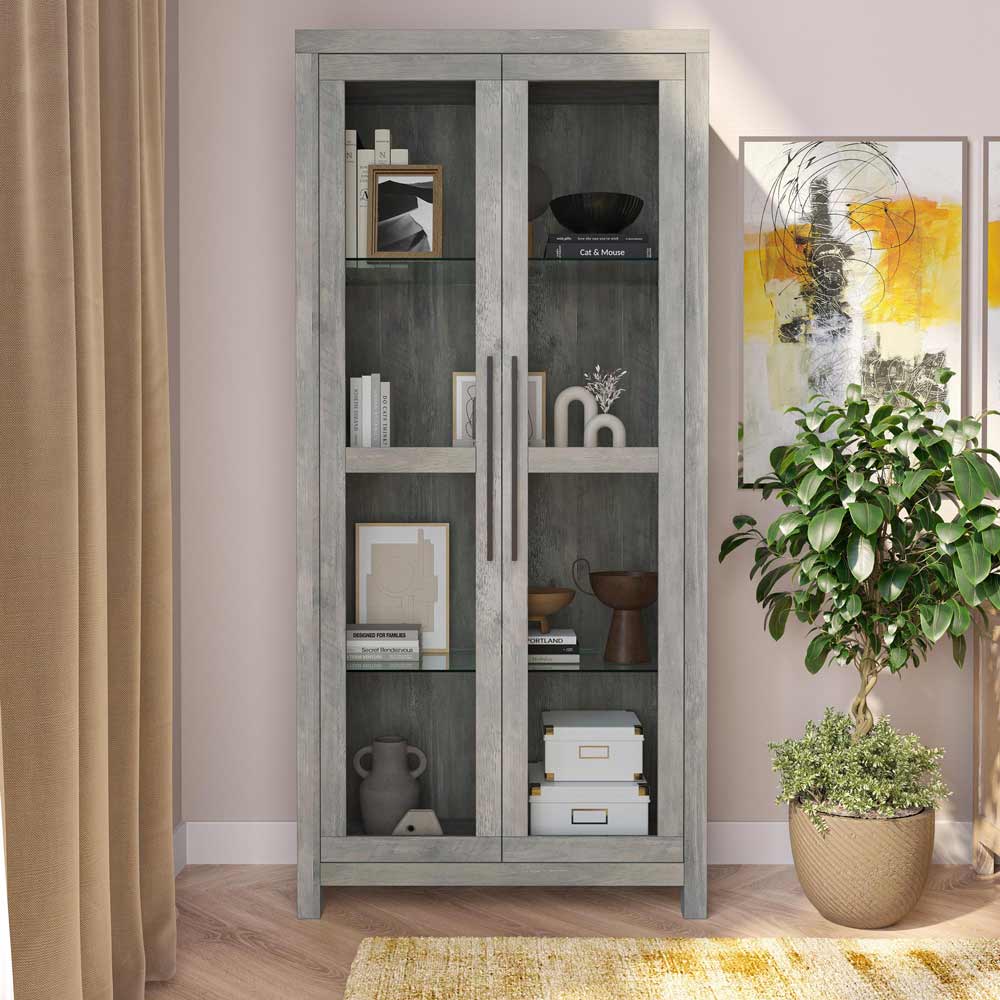
Glass doors keep the contents visible while adding a physical barrier between stored items and the room. They can reduce direct dust exposure and accidental contact, but the contents remain visible and the glass itself still requires cleaning.
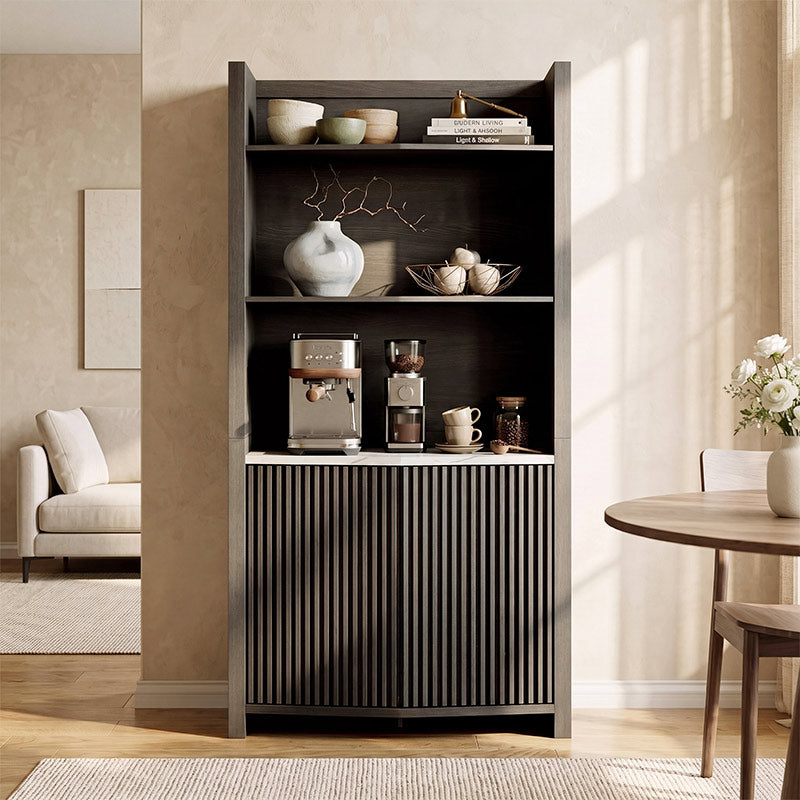
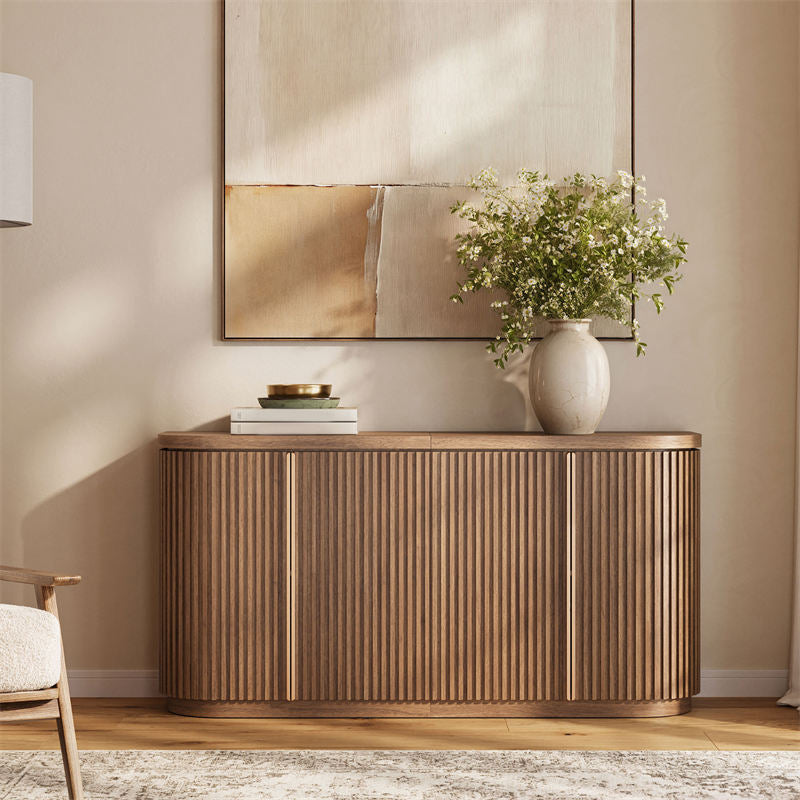
Solid doors provide the most visual concealment. They are useful for papers, games, household supplies, and mixed items that you want nearby without keeping everything permanently on display.
Placement and Mobility
Mobility depends on the actual size, materials, mounting method, and construction of the furniture rather than whether it is called a bookshelf or bookcase.
Floating and wall-mounted shelves are fixed once installed, while freestanding shelves and bookcases can usually be repositioned after they have been emptied. Larger framed units may simply require more effort to move.
For tall freestanding furniture, also check the manufacturer’s stability and anchoring instructions. Placement should account for the unit’s footprint, nearby walkways, and any clearance required to open doors.
Open vs. Closed Bookcase: Which Is Better?
Neither open nor closed storage is better for every room. Choose open shelving when easy access, full visibility, and display matter most. Choose a bookcase with doors when you want a physical barrier around the contents or want to reduce how exposed stored items are to the room.
Within closed storage, glass and solid doors solve different problems. Glass doors preserve visibility, while solid doors are better when the goal is to hide visual clutter.
Open Bookcases and Bookshelves: Best for Access and Display
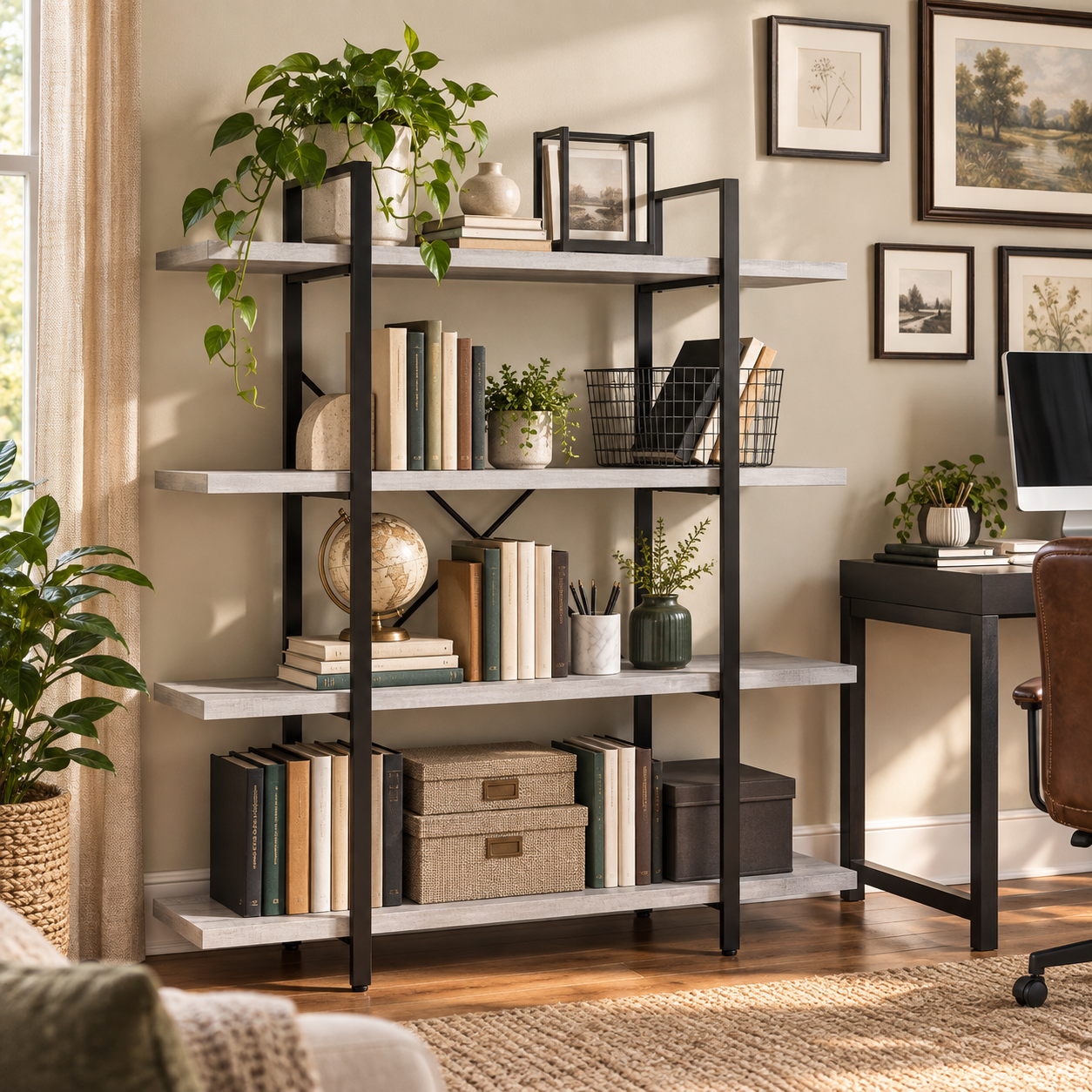
Open shelving works best for items you use regularly or intentionally want to keep visible. Books, plants, framed photos, decorative objects, and collectibles are easy to reach without opening a door.
Open designs can also feel visually lighter because there is less furniture mass blocking sightlines. The tradeoff is that every stored item remains exposed, so open shelves generally require more dusting and more attention to how the contents are arranged.
The Eden 66" LED Tall Corner Bookshelf is one example of this approach. Its five open tiers keep books, plants, décor, and collectibles visible while its L-shaped design uses a 90-degree corner that might otherwise remain empty.
Glass-Door Bookcases: Best for Visible but More Protected Display
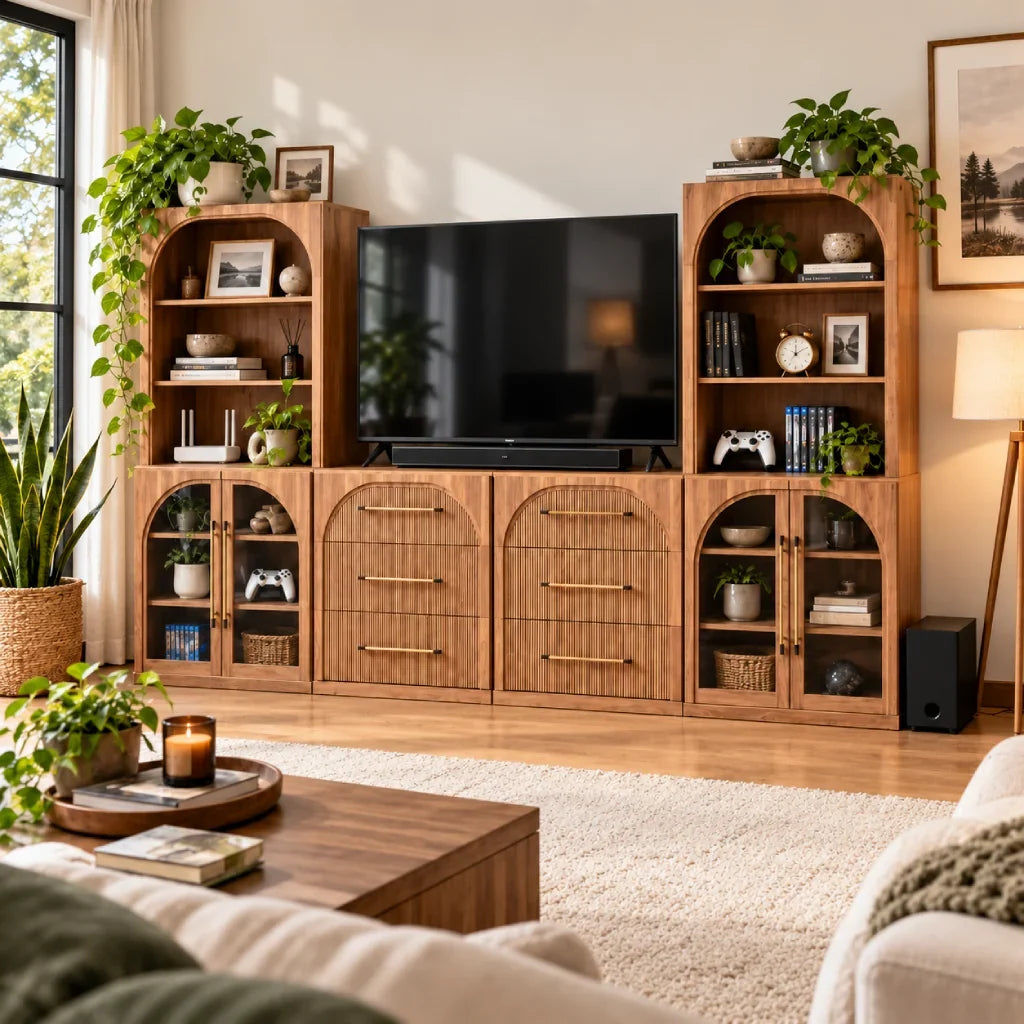
A glass-door bookcase is a middle ground between completely open shelving and concealed storage. The doors create a physical barrier around the contents while allowing books, glassware, décor, or collections to remain part of the room visually.
This makes glass doors useful when display still matters but you want stored objects to be less directly exposed to dust or accidental contact. However, glass doors do not hide clutter, and you need enough space in front of the cabinet for the doors to open comfortably.
The Jagger 67" Tall Display Cabinet illustrates this type of enclosed display. It uses double glass doors, five shelves within a six-tier layout, adjustable upper and lower shelving, and soft-close door hardware, so the contents remain visible while sitting inside a framed cabinet.
Solid-Door Bookcases: Best for Hiding Visual Clutter
Solid doors make more sense when visibility is not the priority. Papers, games, office supplies, cables, household items, and mixed storage are easier to keep visually contained behind an opaque door.
The tradeoff is that you lose the display benefit of open or glass-front storage. As with glass doors, you also need to account for door-opening clearance when deciding where the furniture will go.
Open vs. Glass-Door vs. Solid-Door Storage
| If you mainly store... | Better choice | Why |
| Frequently read books | Open | Fastest access |
| Plants and decorative objects | Open | Maximum visibility |
| Collections you want to display | Glass-door | Visible with a physical barrier |
| Books you want visible but less exposed | Glass-door | Combines display with enclosure |
| Papers, games, and household supplies | Solid-door | Hides visual clutter |
| Mixed decorative and everyday items | Combination storage | Separates display from concealed storage |
If you are deciding specifically between open and closed bookcases, start with one question: Do you want to see the contents all the time? If yes, choose open shelves or glass doors. If no, solid-door storage is usually the better fit.
Bookshelf vs. Bookcase: Which Is Right for Your Home?
Once you understand the structural difference between a bookshelf and a bookcase, choose based on the actual job the furniture needs to perform. Consider what you plan to store, how visible it should remain, how often you need access to it, and how much room the furniture can occupy.
Then compare the dimensions, shelf configuration, door clearance, materials, weight capacity, and price of the individual products rather than relying on the bookshelf or bookcase label alone.
Price
Price varies more by size, material, construction, hardware, finish, and storage features than by the words “bookshelf” or “bookcase.”
A simple open shelf may cost less than a large cabinet with glass doors and soft-close hardware, but that does not mean every bookshelf is cheaper than every bookcase.
Compare products based on the storage capacity and features you actually need. Paying more for doors, adjustable shelving, or a larger frame only makes sense if those features solve a real storage or display problem.

Size and Dimensions of Your Living Space
Measure the space before choosing either option. Width and height determine whether the furniture fits the wall, but depth often determines whether it interferes with a walkway, doorway, or nearby furniture.
Corner bookshelves can make use of space that a conventional rectangular unit may not use efficiently. Wall-mounted shelves preserve floor area, while tall freestanding units can add storage vertically.
If you choose a glass-door or solid-door bookcase, also measure the space needed for the doors to open. Do not compare products by the number of shelves alone; shelf spacing and weight capacity also affect what the unit can actually store.
Storage and Display Needs
Start with the contents rather than the furniture name.
Frequently used books and decorative objects usually benefit from open storage because they remain immediately accessible. Collections that you want to display but keep behind a physical barrier are better suited to glass-door storage. Everyday items that do not need to be displayed are easier to visually organize behind solid doors.
For books and heavier objects, also check shelf dimensions and stated weight capacities. A large-looking bookcase is not automatically better for a large collection if its individual shelves are not appropriate for the items you plan to store.
Style and Décor
Open shelving generally creates a lighter visual effect because more of the wall and surrounding room remain visible through the furniture.
Glass-door bookcases have more visual mass but still keep displayed objects visible, making them useful when you want the cabinet itself and its contents to contribute to the room.
Solid-door storage creates a quieter appearance because everyday items disappear behind the doors. Beyond that, style depends on the individual design, material, finish, hardware, and proportions rather than whether the product is called a bookshelf or bookcase.

Final Thoughts
The difference between a bookshelf and a bookcase is useful, but the product label should not make the final decision for you. A bookshelf generally emphasizes open, accessible shelving, while a bookcase usually has a more complete furniture frame. Either way, the actual dimensions, shelf configuration, capacity, and front closure matter more than the name.
If display and easy access are the priority, an open design such as the Eden 66" LED Tall Corner Bookshelf is the more natural fit. If you want your collection to remain visible behind doors, the Jagger 67" Tall Display Cabinet represents the glass-door approach.
For other layouts, compare Belleze’s Tall Bookshelves & Bookcases and choose based on what you need to store, how visible you want it to remain, and how much room the furniture can occupy.

Leave a comment
This site is protected by hCaptcha and the hCaptcha Privacy Policy and Terms of Service apply.